Abstract
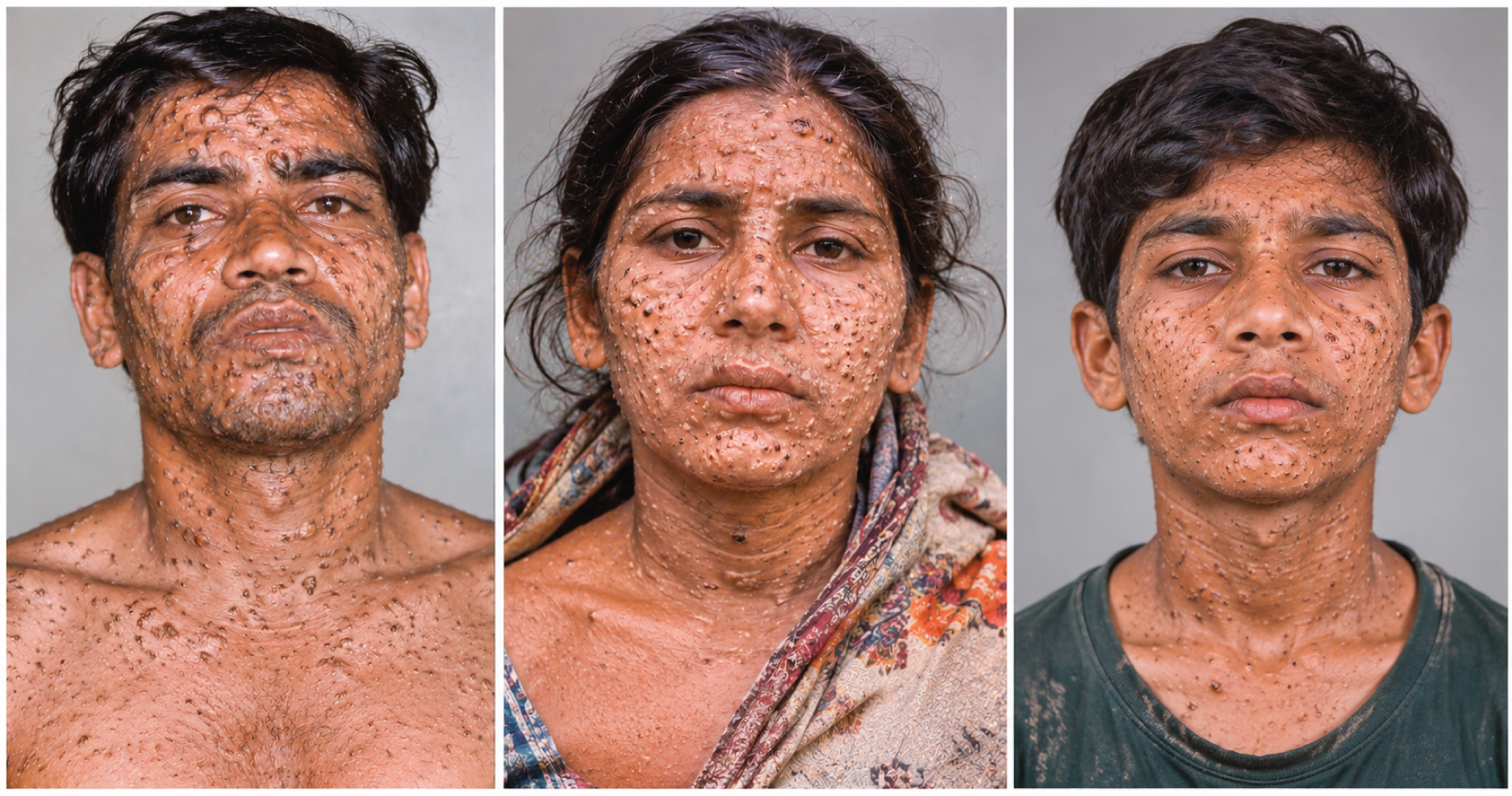
Imagine a disease that first entered the body as a high fever and, just a few days later, left painful blisters across the face and entire body. Many people survived it, but the deep scars on their faces reminded them of the disease for the rest of their lives. Others were left permanently blind by it.
This disease was called Smallpox. It was one of the most dangerous infectious diseases in human history. According to the World Health Organization (WHO), Smallpox remained a threat to human society for nearly 3,000 years. In its severe form, about 30% of those infected died.
But the most astonishing thing is that humans completely eradicated from the world the disease that had devastated millions of families for centuries. In 1980, the WHO officially declared Smallpox eradicated.
So what causes smallpox disease, what were its early symptoms, how was Smallpox diagnosed, and how did scientists manage to eradicate it even without modern medical facilities? In this article, we will explore the full story of Smallpox—its history, scientific causes, types, transmission, treatment, and eradication.
Introduction:
When people used to be afraid at the mention of Smallpox Today, if someone develops a fever along with red rashes on their body, they might think of Chickenpox, an allergy, or another infection. But a few decades ago, this same situation could have been terrifying for a family.
At that time, Smallpox was not just a disease. It was a threat that could spread throughout an entire village or city. An infected person had to be kept separate from others. The biggest question facing family members was whether the patient would survive.
One interesting fact about Smallpox is that many people mistake it for Chickenpox, or “small pox.” Both diseases can cause rashes and blisters on the skin, but their viruses, symptoms, and severity are different.
Today, Smallpox is no longer spreading naturally anywhere in the world. The last known naturally occurring case was reported in Somalia in 1977. Even so, it is important to understand the history of this disease, because Smallpox played an important role in the development of modern Vaccination, Disease Surveillance, and public health systems.
1. What Is Smallpox? What kind of disease was smallpox, after all?
Smallpox was a serious, highly contagious viral disease caused by the Variola virus. This virus belongs to the Poxviridae family and the Orthopoxvirus genus. If someone asks, “Is smallpox a disease?”, the answer is yes: Smallpox was a real infectious disease that affected human populations for thousands of years. Similarly, the answer to the question “Is smallpox a viral disease?” is also yes, because it was caused not by a Bacterium, Fungus, or Parasite, but by the Variola virus.
How did Smallpox affect the body?
After entering the body, the virus established an infection and did not show symptoms for several days. Then a sudden high fever, headache, fatigue, and back pain could begin. A few days later, red spots appeared on the skin, gradually becoming raised bumps and then pus-filled blisters. One distinctive feature of this disease was that most of the spots on any given part of the body appeared to be at roughly the same stage.
What Causes Smallpox Disease? What was the real cause of smallpox?
The most important question in understanding any disease is how it actually begins. In the case of Smallpox, the answer is the Variola Virus. It is a DNA Virus that infects cells in the human body and makes copies of itself. This activates the body’s Immune System, which begins to respond to the infection.
2. How did the Variola Virus enter the body?
Historically, Smallpox spread mainly through close and relatively prolonged Face-to-Face Contact with an infected person. Infectious particles released from an infected person’s mouth and throat could reach another person. Contaminated bedding, clothing, and other objects could also spread the infection in some circumstances. That is why, during Smallpox outbreaks, it was essential to isolate patients and identify people who had come into contact with them.
Did Smallpox spread from animals?
Natural infection with Smallpox was found only in humans. No animal or insect was considered a natural Reservoir for it. This characteristic later proved beneficial in eradicating the disease. When a virus naturally infects only humans and an effective Vaccine is available against it, it may be possible to break the chain of transmission.
Was it an airborne disease?
Smallpox spread mainly through Respiratory Droplets and other infectious respiratory particles during close contact. Historical cases of infection spreading over longer distances through the air have also been documented in certain circumstances. Therefore, simply not touching an infected person was not enough. The duration of contact, the environment, and infection control were also important.
3. Signs and Symptoms of Smallpox:
The First Signs of Infection in the Body The most frightening thing about Smallpox was that the virus did not show symptoms immediately after entering the body. A person could feel normal for several days. But as soon as the early symptoms appeared, the illness could quickly become severe. According to the CDC, Smallpox infection developed in different stages.
First stage: Incubation Period
Generally, no clear symptoms appeared for 10 to 14 days after infection. The broader range could be approximately 7 to 19 days. During this time, the virus was establishing an infection in the body, but the person was generally not contagious.
Second stage: Sudden high fever
At this stage, the patient would begin to experience severe flu-like illness. Its main symptoms were: Fever of approximately 38.3°C or higher
- Severe headache
- Severe lower back and back pain
- Extreme weakness and fatigue
- Chills and loss of appetite
- In some cases, vomiting and abdominal pain
These symptoms could resemble a common viral infection. But the distinctive rash that appeared afterward was important in identifying Smallpox.
Third stage: Rash develops on the skin
A few days after the fever began, small red spots would start appearing on the skin. The rash usually appeared inside the mouth, on the face, and on the hands and feet. Later, it could spread to other parts of the body.
It developed gradually:
1 Macules
Flat spots
2 Papules
Raised bumps
3 Vesicles
Fluid-filled blisters
4 Pustules
Pus-filled bumps
5 Scabs
Dry scabs
The typical historical progression of smallpox lesions
Fourth stage: Deep blisters and scabs
After a few days, the blisters would become hard, round, and deep. A pus-like substance would begin to appear in them. After this, scabs would form over the blisters. After the scabs fell off, many people were left with permanent pitted scars on their skin.
Fifth stage: Recovery or serious complications
Patients who survived the infection would gradually begin to recover. But in severe cases, several organs of the body could be affected. Some people developed permanent scarring, eye damage, or other serious complications.
4. Types of Smallpox: How many types of smallpox were there?
Not all Smallpox infections were alike. In some patients, the disease was relatively mild, while in others, the infection became life-threatening very quickly. Two classifications are important for understanding this. The first is based on Variola Major and Variola Minor, and the second is based on the Clinical Forms of the disease.
Variola Major and Variola Minor
Variola Major was the more severe and historically more common form. It had a recorded mortality rate of about 30%. Variola Minor was a relatively mild form, with a mortality rate of about 1%. However, it was also an infectious disease, and it would be wrong to mistake it for a common skin infection. WHO has documented the significant difference in mortality rates between these two forms.
Four Major Clinical Forms of Smallpox
| Type | Key Characteristics | Severity |
| Ordinary Smallpox | Characterized by deep skin lesions and fluid-filled pustules | Severe |
| Modified Smallpox | A relatively mild form occurring in previously vaccinated individuals | Usually less severe |
| Flat-Type Smallpox | Skin lesions remain flat and may merge together | Extremely severe |
| Hemorrhagic Smallpox | Bleeding into the skin and other body tissues | Extremely life-threatening |
Ordinary Smallpox
This was the most common Clinical Form. About 85% of historical Smallpox cases were of this type. A characteristic rash appeared in the patient after a high fever. The process of blister formation and scab shedding continued for several days.
Modified Smallpox
This form was seen in people who had previously received the Smallpox Vaccine but still became infected. These patients could have fewer lesions. The disease progressed relatively quickly, and symptoms were often mild.
Flat-Type Smallpox
In this rare form, the skin lesions did not develop into typical blisters. They could appear flat, soft, and confluent. This was an extremely severe infection, with a very high risk of death.
Hemorrhagic Smallpox
This was one of the most terrifying forms of Smallpox. Bleeding could occur in the skin and Mucous Membranes. High fever, severe weakness, and impaired organ function could cause the patient to die very quickly. According to the CDC, both Hemorrhagic and Flat-Type were extremely severe Clinical Forms.
5. Smallpox Diagnosis: How did scientists identify this disease?
Suppose a person suddenly develops a high fever. A few days later, blisters begin to appear on their face, hands, and body. Can we say they have Smallpox based only on these symptoms? No. This is because many other diseases also show similar symptoms. For Smallpox diagnosis, the patient’s symptoms, the appearance of the rash, the order in which it develops, and information related to the infection were taken into account.
Clinical Examination: Identifying the disease from the appearance of the rash Smallpox lesions usually formed deep within the skin. They could appear firm and round. Another characteristic was that most lesions on a particular part of the body were at roughly the same stage.
For example, if the lesions on the face were at the Pustule stage, most lesions could appear to be at the same stage. In contrast, with Chickenpox, new red spots, fluid-filled blisters, and dry scabs may all appear at the same time in one area.
Laboratory Testing and PCR
In modern settings, a special PCR Test that identifies Variola Virus DNA can be used to confirm Smallpox. However, in a suspected case, it is not appropriate to send a Sample to a general laboratory on your own. Testing should be carried out only through authorized public health systems and under special safety protocols.
What do doctors examine?
According to the CDC’s Clinical Guidelines, suspected patients are assessed particularly for the following: the sequence in which the rash appears after the fever, the depth of the lesions, whether they are at the same stage, whether there are more lesions on the face and limbs, and signs of infection on the palms and soles. Natural Smallpox infection has now been eradicated. Therefore, it would be wrong to assume that any ordinary Rash that looks similar is Smallpox.
6. What was the difference between Smallpox and Chickenpox?
Chickenpox (small pox): Even today, many people in India may be confused about the names Smallpox and Chickenpox. The two diseases are caused by different viruses. Their transmission, distribution of lesions, and severity may also differ.
Difference Between Smallpox and Chickenpox
| Comparison | Smallpox | Chickenpox |
| Causative Virus | Variola Virus | Varicella-Zoster Virus |
| Disease Status | Eradicated worldwide | Still occurs today |
| Initial Symptoms | Often begins with high fever | Symptoms are often milder |
| Distribution of Rash | Mainly affects the face, arms, and legs | More commonly affects the trunk (chest, back, and abdomen) |
| Stages of Skin Lesions | Lesions in the same area are usually at the same stage | Lesions at different stages may appear simultaneously |
| Depth of Skin Lesions | Deep and firm lesions | Relatively superficial lesions |
| Historical Severity | Very high | Generally less severe, but complications can occur |
Note: This comparison is for general informational purposes only. A disease cannot be definitively diagnosed based solely on the appearance of skin rashes or lesions.
7. The history of Smallpox: Why was humanity helpless for thousands of years?
Today, we live in a world where Vaccines are available for many infectious diseases. But a few centuries ago, this was not the case. Smallpox has been part of human history for thousands of years. It is difficult to determine exactly when the disease first emerged, but according to the WHO, it is believed to have existed for at least 3,000 years.
In ancient times, people had no knowledge of the structure of viruses or the scientific reasons behind their spread. Infection was often understood in terms of religious beliefs, social traditions, and unknown natural forces.
When people had no knowledge of the virus behind the disease
Imagine someone in a village falls ill. First, they develop a high fever. A few days later, lesions appear on their face. Then the same symptoms begin to appear in other members of the family as well.
Did Smallpox affect only poor countries?
No. Throughout history, this disease affected different regions and social classes around the world. Smallpox epidemics were recorded in Europe, Asia, Africa, and the Americas. The disease could spread from one place to another through trade, travel, and human contact. At one time, the threat of Smallpox was not limited to any one country or community.
8. Edward Jenner: A Discovery That Changed Medical History
The year 1796 proved to be extremely important in modern medical history. The English physician Edward Jenner made a discovery that would go on to change the course of Vaccination. He observed that some milkmaids appeared to be protected from Smallpox after contracting Cowpox. Cowpox was an infection caused by a related but different virus.
How did the idea that Cowpox could protect against Smallpox arise?
Jenner hypothesized that exposure to Cowpox could develop immunity in the body that might help protect against Smallpox. In 1796, he tested this idea. In his historic experiments, a child was given Cowpox material, and protection against Smallpox was later tested.
This experiment would not be acceptable under today’s standards of Medical Ethics. But historically, it played an important role in understanding the effectiveness of Vaccination. Jenner’s contribution was not limited to just one disease. This principle later paved the way for the development of Vaccines against many other infectious diseases.
9. Smallpox in India: When Smallpox Was a Major Public Health Challenge
India was also among the countries where Smallpox caused a serious health crisis for a long time. Limited medical facilities in rural areas, a large population, people’s movement, and difficulties in identifying cases of infection increased the challenge of controlling the disease.
1974: A Severe Period of Smallpox in India
A large number of infections were recorded during India’s Smallpox Eradication Campaign in 1974. According to historical records, approximately 11,000 new cases were reported over the course of one week in May 1974.
This number shows how great a challenge Smallpox was in India at that time. But during this same period, efforts to detect and report infections, carry out Vaccination, and identify people who had come into contact with patients advanced rapidly.
How Did India Become Free of Smallpox?
Potential patients were sought out door to door in India. Health workers identified people who had come into contact with infected individuals and conducted a Vaccination Campaign. Campaigns such as Operation Smallpox Target Zero in 1975 played a role in eliminating the remaining chains of infection.
India’s last known Smallpox case was recorded in May 1975. Surveillance continued even after that, so that hidden cases of infection could be detected. In 1977, based on extensive surveillance, India was confirmed to be free of Smallpox.
10. How exactly was Smallpox eradicated from the world?
Could a disease that had existed for nearly 3,000 years be completely eliminated? Smallpox proved that it was possible. The World Health Organization launched its Intensified Eradication Programme against Smallpox in 1967. This campaign focused not only on Vaccination, but also on finding every new case of infection and controlling it immediately.
Surveillance: Reaching every infected person
Surveillance means continuously monitoring cases of infection. Health workers gathered information about sick people by visiting villages, towns and cities. When a suspected patient was identified, they were examined, and the people who had been in contact with them were monitored.
Ring Vaccination: A protective ring around the infection,
Under this strategy, the close contacts of an infected person, and, as needed, their contacts, were vaccinated. This helped reduce the likelihood of the virus spreading further. Along with Ring Vaccination, Case Isolation, Contact Tracing and active monitoring played an important role in eradicating Smallpox.
The final natural case and the historic declaration
Ali Maow Maalin’s infection began on 26 October 1977 in Somalia. He was recorded as the last known natural case of Smallpox. Global eradication was certified in December 1979, and in May 1980 the World Health Assembly endorsed the historic declaration of Smallpox eradication. This became one of the most important public health achievements in human history.
11. Was any treatment available for Smallpox?
Before understanding the treatment for Smallpox, it is important to know one key distinction. Preventing a disease and successfully treating it after it occurs are two different things. Vaccination played a decisive role in the eradication of Smallpox. However, historically, the main treatment for patients infected with the disease was Supportive Care.
What is Supportive Care?
Its purpose is to support the patient’s body during the infection. This may include maintaining water and Electrolyte Balance, controlling fever and pain, providing nutrition, and caring for serious complications when needed. Patients were also kept in special Isolation to prevent the infection from spreading.
Modern Antiviral Medicines
Today, Antiviral Medicines such as Tecovirimat and Brincidofovir are approved in the United States for the treatment of Smallpox. But there is an important scientific limitation concerning these medicines.
Their effectiveness was established mainly through Laboratory and Animal Studies. Because naturally occurring Smallpox has been eradicated, these medicines could not be tested in Clinical Trials to demonstrate their effectiveness in humans infected with the disease.
Therefore, it would not be correct to claim that these medicines can definitely cure Smallpox in humans. They would be used in a potential emergency situation according to the decisions of medical specialists and public health officials.
12. Smallpox Vaccine: Is it still necessary to get it today?
After Smallpox was eradicated, Routine Smallpox Vaccination was discontinued for the general population worldwide. Today, regular Smallpox vaccination is not recommended for the general public because natural Smallpox infection no longer exists. However, Vaccines continue to play a role for some Laboratory Workers at special risk and in preparations for public health emergencies.
How useful can the Vaccine be after exposure?
According to the CDC, if an appropriate Vaccine is given within approximately 2 to 3 days of exposure to Smallpox, it can prevent the disease or reduce its severity. Vaccination within the first week after exposure may reduce the severity of symptoms in some cases. But this is a strategy used by public health officials only in the context of a potential Smallpox Emergency. It should not be understood as a recommendation to get vaccinated on your own.
13. What effects did Smallpox have on the body even after recovery?
The problem with Smallpox was not limited to the risk of death during infection. Many people who survived it faced physical problems for the rest of their lives.
Permanent scars on the face
The deep blisters caused by Smallpox damaged the skin tissue. When these blisters healed, some people developed deep, pitted scars on their faces and bodies.
These are called Pockmarks.
According to WHO historical accounts, large numbers of people who survived Smallpox were left with such scars.
Effects on eyesight
In some severe cases, Smallpox could affect the cornea of the eye. Complications such as Keratitis or Corneal Ulceration could cause permanent vision loss.
Other serious problems
In rare circumstances, complications such as Encephalitis, or inflammation of the brain, and Osteomyelitis, or bone infection, were also recorded. Smallpox infection during pregnancy could pose a serious threat to both the unborn child and the mother. The severity of these complications explains why Vaccination against Smallpox was important not only for preventing infection, but also for protecting against lifelong physical damage.
14. Could Smallpox Return in the Future?
The answer to this question is somewhat complex. Naturally spreading Smallpox has been eradicated. Therefore, there is no known source of ordinary infection today. However, samples of the Variola Virus are kept in highly secure laboratories under international oversight.
For this reason, public health institutions remain prepared for potential Laboratory Accidents or biological security emergencies. This does not mean that Smallpox is spreading again or that its return is likely. Rather, it means that scientists do not completely ignore the risks associated with this historic disease.
15. Some Common Misconceptions About Smallpox
Are Smallpox and Chickenpox the same disease? No. They are caused by different viruses. Is Smallpox still spreading naturally today? No. No known case of natural Smallpox has been recorded since 1977.
Did Smallpox affect only children? No. It could infect both children and adults. Did every patient die from it? No. Many patients recovered, but the historical mortality rate for Variola Major was approximately 30%. Could natural home remedies cure Smallpox? There is no reliable scientific evidence for this. Infection control and medical care were extremely important for a serious disease like Smallpox.
Conclusion:
When science defeated one of history’s deadliest diseases There was a time when just hearing the name Smallpox filled people with fear of death, permanent scars, and the spread of infection. This disease affected human societies for thousands of years. Some lost family members, while others survived the infection but lived with its memory on their faces for the rest of their lives.
But the history of Smallpox is not only a story of grief and fear. It is also the story of a scientific effort in which Vaccination, Infection Surveillance, Contact Tracing, and international cooperation came together to eradicate a disease once considered a permanent threat to human life.
Today, perhaps the most important question when reading about Smallpox is not how dangerous the disease was, but how scientific cooperation made it possible to eradicate a disease that humans had endured for thousands of years. The answer offers us the greatest lesson in modern public health: accurate scientific information, effective prevention, and collective effort can overcome even challenges that seem impossible.
Disclaimer:
This article is intended only for educational and general health information. Smallpox has been eradicated naturally. If someone develops a high fever along with unusual blisters or severe skin symptoms, contact a trained healthcare professional immediately. Do not identify any illness based solely on online information.

Emanual Massey is a healthcare, lifestyle, and beauty content writer with over 7 years of professional experience. He specializes in writing SEO-optimized, research-based articles on health, wellness, nutrition, skincare, beauty, and Ayurveda. His mission is to simplify complex topics into practical, reader-friendly content that empowers people to make healthier lifestyle choices. Passionate about continuous learning and evidence-based writing, Emanual creates informative and engaging blogs that combine accuracy, readability, and search engine optimization.