Abstract:
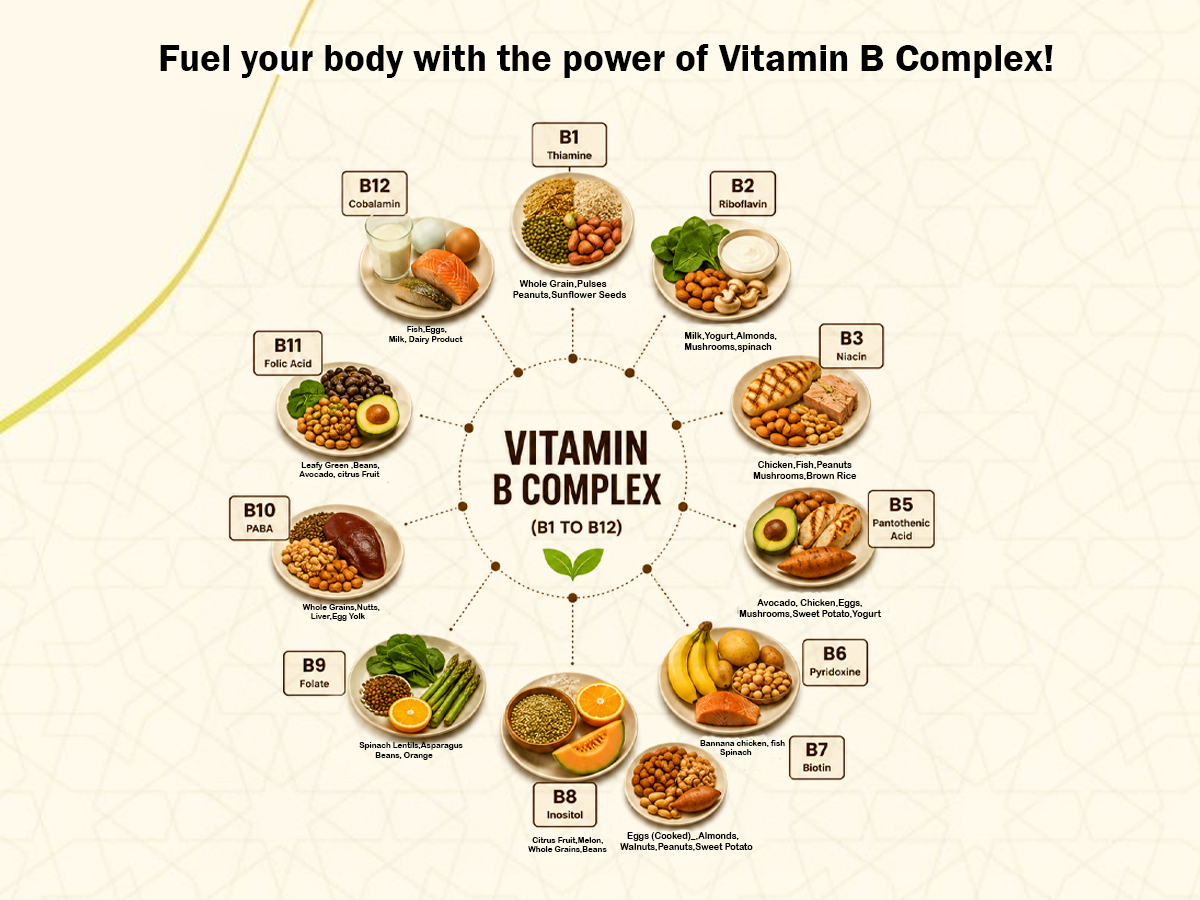
Vitamin B is a group of water-soluble vitamins essential for the body, which is also known as the Vitamin B complex. It contains a total of 8 major vitamins (B1, B2, B3, B5, B6, B7, B9, and B12), which play important roles in energy production, the brain, the nervous system, the formation of red blood cells, skin, hair, nails, and overall health.
Today in this article, we will know in detail what vitamin B is, what vitamin B complex is, all its types, functions in the body, health benefits, causes of deficiency, vitamin B12 deficiency, daily requirements, natural food sources, supplements, disadvantages of overdose, scientific research, and common myths and facts. If you want to know complete and authentic information related to vitamin B in Hindi, then this article is a complete guide for you.
There is no doubt that every day our body completes many types of things and functions, from converting food into energy to building the brain, nervous system, and red blood cells and giving complete strength to the skin and hair; various types of nutrition and elements are required for every task. In this, vitamin B is said to be one of the most special groups of vitamins.
Not only this, people always consider Vitamin B to be the same, but this is not completely true, and people have neither done research on it openly nor gathered detailed information about it, whereas the reality is that it is actually a group of 8 different types of water-soluble vitamins, which, when combined together, are called Vitamin B complex. After the work of all these vitamins is different, they provide many important functions to the body. We also cooperate with each other.
Discovery of Vitamin B:
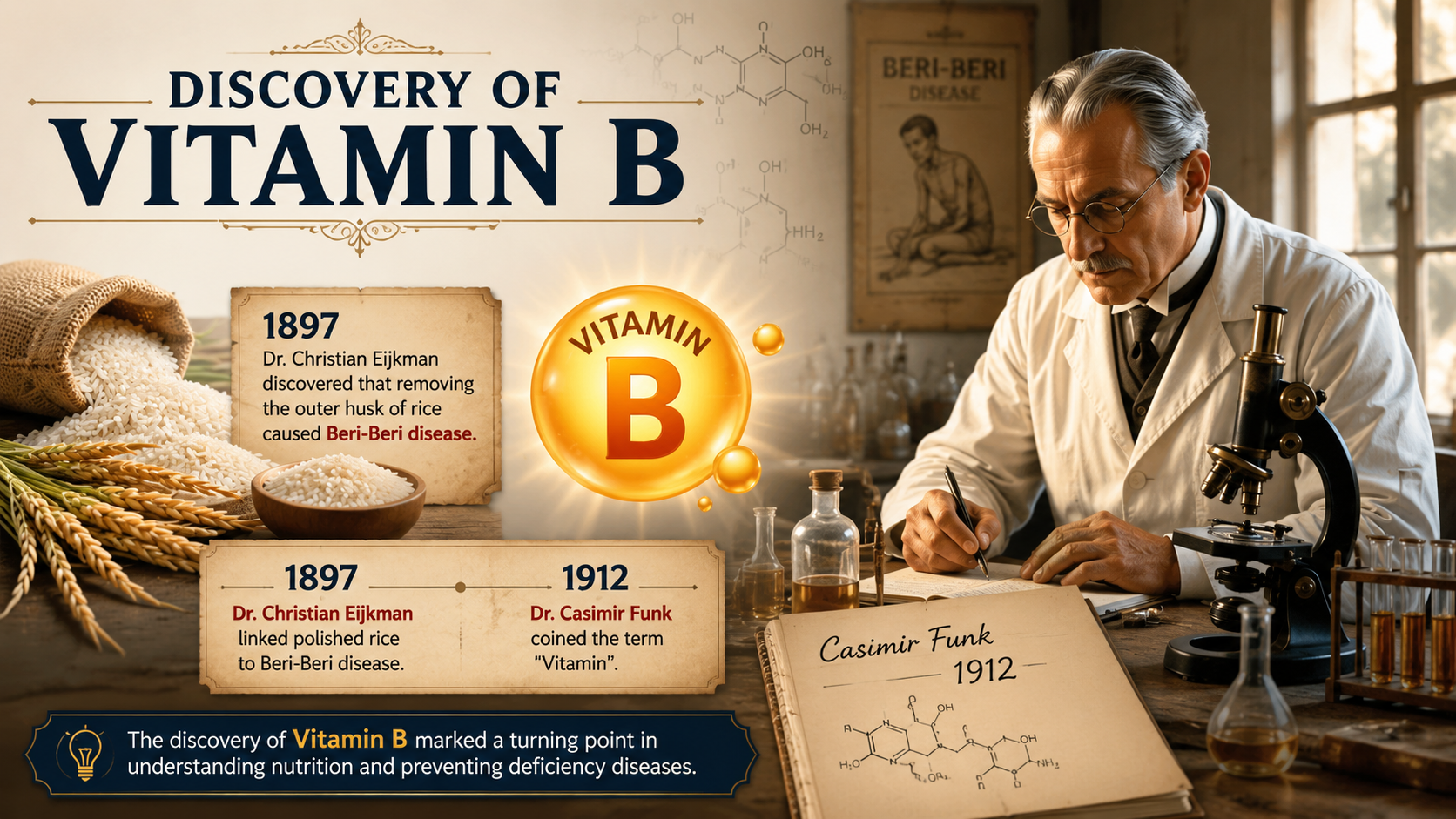
Even today, more than 50 percent of the people would be unaware of the fact that it was discovered by Christian Eijken in the year 1897. He had discovered that removing the peel of rice causes a disease called Beri-Beri. Only then, in the year 1912, did Casimir Funk name it vitamin.
Why is vitamin B so important?
Vitamin B also plays a very important role in strengthening the cells of the body, producing DNA, making red blood cells, improving brain function, and balancing hormones. Not only this, but if there is a deficiency of vitamin B in the body due to any reason, then there are some things that will first start appearing in your body, such as fatigue, weakness, loss of memory, tingling in hands and feet, anemia, many types of skin-related problems, and along with this, the risk of deteriorating your mental balance also starts increasing rapidly.
How common is vitamin B deficiency?
Now it is completely worth thinking about that in India, deficiency of vitamin B, i.e., B12, is considered very common among people. Approximately 47 percent to 75 percent of the Indian population is facing this type of problem. An important reason for this could also be lack of vegetarian food and eating habits.
Its main reasons are
- increased consumption of vegetarian food
- nutritional deficiency
- pregnancy
- growing age
- diseases of the digestive system
- excessive alcohol consumption
- long-term use of certain medications
Why is vitamin B called a water-soluble vitamin?
It is very easy to find out that vitamin B is called a water-soluble vitamin because it dissolves easily in water, and it also completely prevents fat from accumulating in the body. Along with this, it dissolves in the fluids present in the body and expels the bad substances through urine. Because they cannot be allowed to accumulate in the body, to stay healthy, you will have to take special care that you consume only foods rich in vitamin B daily.
What is vitamin B?
Until now, in this article, we have learned how important vitamin B is for our body, but now we will know about vitamin B and what it is. Actually, it is a group of 8 water-soluble vitamins, which are also known as the vitamin B complex in common language. Which is considered very important for converting food into energy and producing red blood cells in the body.
Definition of Vitamin B:
If it is understood in common language, then it is a group of 8 vitamin compounds that dissolve easily in water, and it is known as the vitamin B complex; it has special properties for converting food into energy and creating new cells in the body. Vitamin B is considered very important for your body, and the body cannot store all these vitamins; that is why it is very important to take them every day through food or supplements.
What is a water-soluble vitamin?
Now it is very important to know about what water-soluble vitamins are. In fact, water-soluble vitamins are called those essential nutrients that easily dissolve with water and do not get stored in our bodies. Now you must be thinking that after all such things happen; through this article, we also make it clear that our bodies cannot hold them inside themselves for a long time. That is why the extra substance comes out through urine, and this is the reason. It is important that we include these regularly in our daily life.
What is the vitamin B complex?
There is a group of 8 such essential water-soluble vitamins that are said to be very important for the needs of the body and its development, but even today some people are considering vitamins to be the same even though they are not fully aware of it till now, but in reality these are a total of 8 types of vitamins that provide energy to the body in different forms. And all these vitamins are very important for converting food into energy as well as for the formation of the brain, nervous system, red blood cells, hair, skin, and healthy DNA.
But all the vitamins of the vitamin B group dissolve easily with water, due to which the body is not able to hold them for long, and after some time they start excreting them through the urinary tract, and to fulfill this requirement, it is very important for you to consume nutritious food regularly.
How does the vitamin B complex work in the body?
Now the thing to think about is that when all types of vitamin B are soluble in water, then how do they work? Then the answer is clear: when we eat food, the carbohydrates, proteins, and fats present in it do not directly provide energy to the body, but the vitamin B complex is required to convert them into ATP. Along with this, they start creating new cells to nourish the body cells and help the organs maintain normal functioning.
Role of Vitamin B in the body
The vitamin B group is involved in many biological processes of the body.
Their main roles are
- converting food into energy
- Carbohydrate, fat and protein metabolism
- Formation of DNA and RNA
- formation of red blood cells
- protection of brain cells
- normal function of the nervous system
- Aid in hormone production
- Maintaining skin and hair health
- Helps in the development of the baby’s brain and spinal cord in the womb.
How is the vitamin B complex divided into different vitamins?
When we are talking about vitamin B, we should also keep in mind why it was divided into 8 different parts, but initially it was not; all these vitamins were considered the same. As the research of scientists increased, they were divided into many different compounds, and that is why today we also know it by the name of the vitamin B complex.
Why was vitamin B initially considered a single vitamin?
Research has found that in the beginning of the 20th century, scientists were engaged in searching for some elements in food, due to the deficiency of which diseases named beriberi and pellagra arise. At that time, the researchers isolated a substance from rice peel, i.e., husk, and yeast, which helps in protecting from these diseases.
Because the kind of technology available at that time was limited, these scientists did not know that it was a special mixture of many different nutrients; that is why it was first named Vitamin B.
How did scientists know that vitamin B was a group?
During the years 1920 and 1930, when scientists started research on vitamin B in their laboratories using various techniques, they found that if some of these compounds were removed, a different disease would arise, whereas if another element were removed, another disease would arise. It is a little difficult to understand this, so let us understand it with an example.
- Deficiency of an element caused beriberi.
- Deficiency of the latter caused skin and mouth problems.
- A deficiency of one of the others causes pellagra to develop.
- Deficiency of a different element can lead to anemia and nervous system problems.
This led scientists to conclude that vitamin B is actually a group of several different vitamins.
How was the vitamin B complex divided?
There is no doubt that when scientists separated each vitamin according to its chemical structure and its function, they decided to put them in serial numbers; in this way Vitamin B was divided into a total of eight essential vitamins, which were something like this—
| Vitamin | Scientific Name | Main Function |
|---|---|---|
| Vitamin B1 | Thiamine | Converts food into energy and supports a healthy nervous system. |
| Vitamin B2 | Riboflavin | Helps in energy production and supports healthy skin and eyes. |
| Vitamin B3 | Niacin | Supports metabolism, skin health, and the digestive system. |
| Vitamin B5 | Pantothenic Acid | Essential for hormone production and energy metabolism. |
| Vitamin B6 | Pyridoxine | Involved in protein metabolism, hemoglobin production, and neurotransmitter synthesis. |
| Vitamin B7 | Biotin | Supports healthy hair, skin, and nails. |
| Vitamin B9 | Folate | Required for DNA synthesis and proper fetal development during pregnancy. |
| Vitamin B12 | Cobalamin | Helps in the formation of red blood cells and maintains a healthy nervous system. |
Why Are Some Vitamin B Numbers Missing?
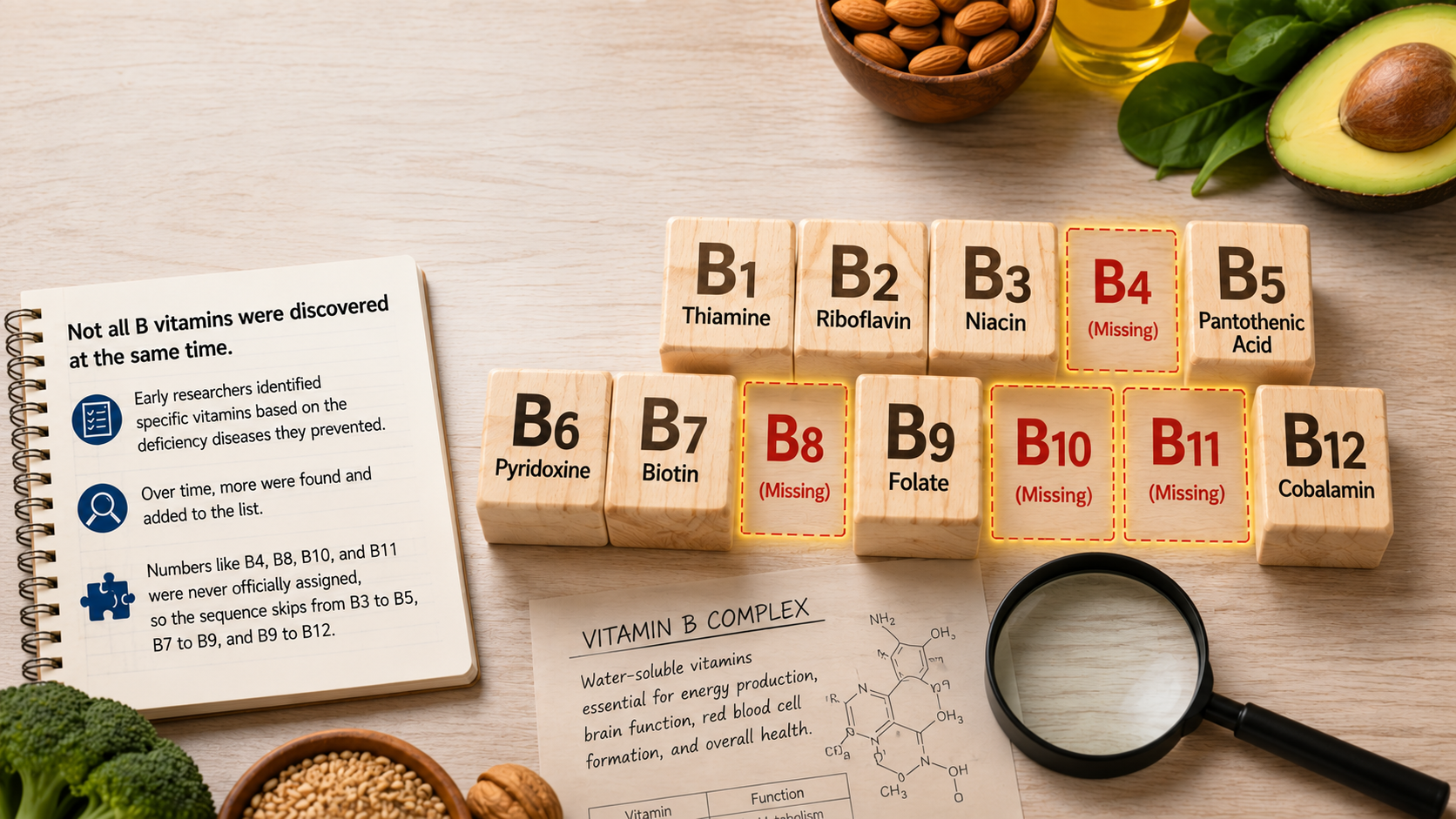
Now it is worth noting that B4, B8, B10, and B11 have not been added to the vitamin B complex; the reason behind this is quite surprising as well as interesting. Actually, the reason for this is that at the time of initial discovery, some other chemical components were also considered a part of vitamin B, but after some time, when scientists carried forward their research, they found that they were not real vitamins; either the body could make them on its own, or hence they were not needed. And this is the reason why they were officially removed from the list of vitamin B’s.
For example:
Vitamin B4 (Adenine) was not considered a vitamin until later.
Vitamin B₈ (inositol) can be made by the body itself, so it is not classified as an essential vitamin.
Vitamin B10 (PABA) and vitamin B11 are also not considered essential human vitamins.
For this reason, today only B1, B2, B3, B5, B6, B7, B9, and B12 are considered part of the official vitamin B complex.
8 types of vitamin B:
After the discovery of Vitamin B, it became clear that there are not just one but eight types of Vitamin B, and now we are going to talk about them. So let’s know…
Vitamin B1 (Thiamine):
What is vitamin B1?
Vitamin B1, also known as thiamine, is the first member of the vitamin B complex family, as it is essential for the body’s ability to convert carbohydrates into energy and for normal nervous system function.
Main functions of vitamin B1:
- converting food into energy
- keeping the brain and nervous system healthy
- maintain normal heart function
- aid muscle function
- Contributes to the energy production of cells
Major sources of Vitamin B1
Vegetarian Source: whole grains, brown rice, oats, pulses, peanuts, sunflower seeds, sesame seeds,
Animal Source: pork, fish, eggs (small quantity), lean meat,
Symptoms of Vitamin B1 deficiency: Vitamin B1 deficiency can cause the following problems:
- constant fatigue
- weakness
- loss of appetite
- irritability
- tingling in hands and feet
- muscle weakness
- Beriberi disease
- Nervous system and heart problems in severe cases
Vitamin B2 (Riboflavin):
What is vitamin B2?
Vitamin B2, the second member of the vitamin B complex family, is known as riboflavin in scientific language. It is a completely water-soluble vitamin that works to generate energy in the body and is also considered good for the growth of cells and skin and eye health.
Perhaps very few people would know that riboflavin helps in making two important coenzymes, FAD (Flavin Adenine Dinucleotide) and FMN (Flavin Mononucleotide), in the body, both of which participate in many biochemical processes of the body.
Main functions and benefits of Vitamin B2
Energy production: It has been mentioned in the beginning of the article that it works by breaking down carbohydrates, proteins, and fats found in food and converting them into energy (ATP) for the body’s use.
Eye health: Deficiency of vitamin B2 is seen in people whose eyesight decreases. It also helps in keeping the skin, hair, and nails good.
Prevention of Migraine: After various research studies, it has been found that taking an appropriate amount of Vitamin B2 helps in fighting the problem of migraine and headache.
Natural sources of Vitamin B2
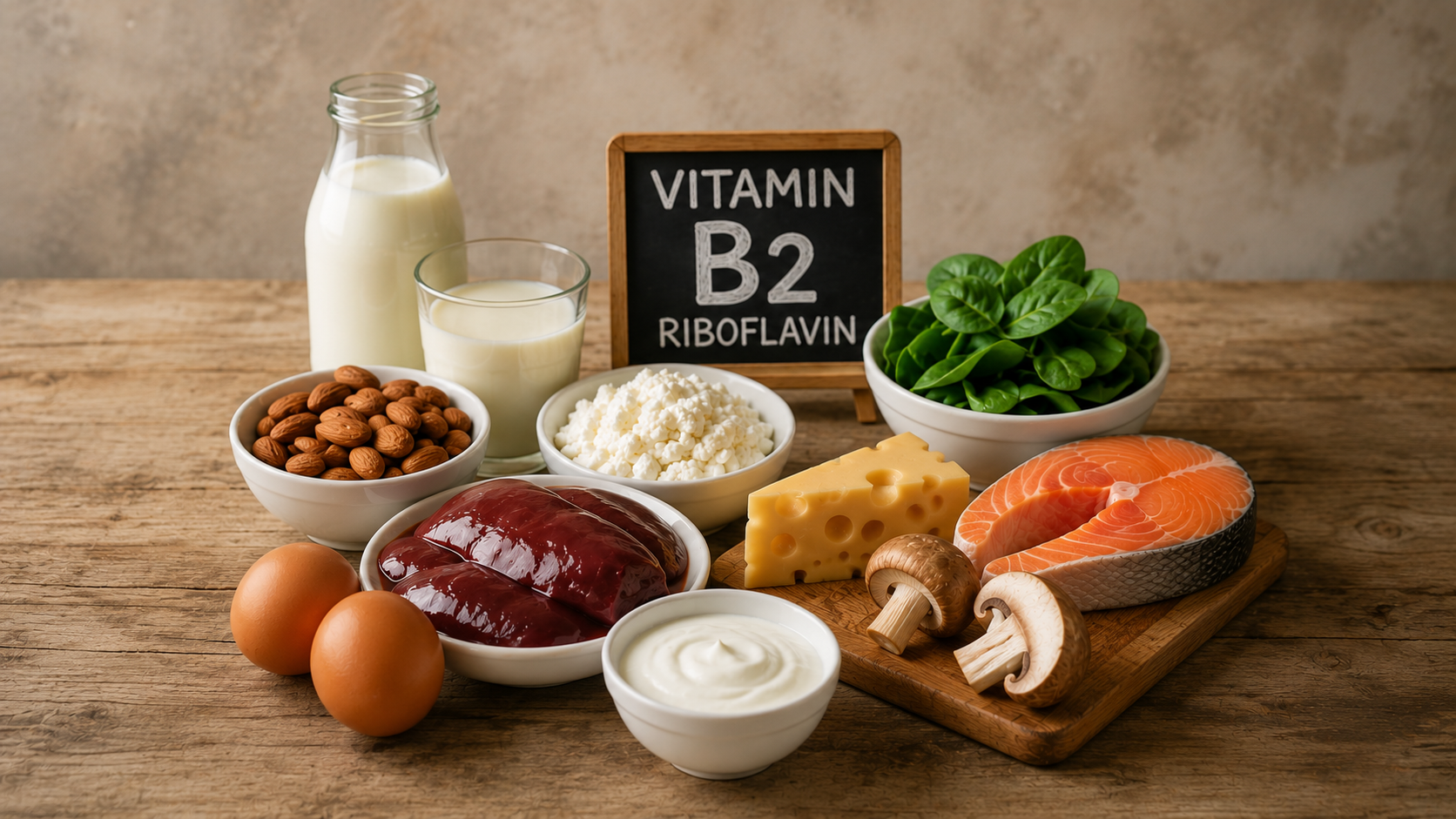
Vegetarian Sources: Milk, curd, cheese, almonds, mushrooms, spinach, broccoli, oats, whole grains, soybeans,
Animal Sources: Egg, Fish, Chicken, Liver, and Dairy Products.
Symptoms of Vitamin B2 deficiency
Chapped lips, cracks at the corners of the mouth, redness of the tongue, burning sensation in the eyes, discomfort in light, dryness of the skin, weakness, and fatigue.
Vitamin B3:
This vitamin is also known as niacin. It is the third most important member of the vitamin B complex, and it is also water-soluble, which plays a special role in completely converting food into energy in the body and keeping the brain, skin, digestive system, and nervous system good.
Research has found that Vitamin B3 also helps in the formation of two important coenzymes called NAD (Nicotinamide Adenine Dinucleotide) and NADP (Nicotinamide Adenine Dinucleotide Phosphate) in the body, as well as these two coenzymes participating in more than 400 enzyme-based biochemical reactions of the body. Without these, the body cannot obtain enough energy from food, and cells cannot function normally. Although the body can make a small amount of vitamin B3 from the essential amino acid tryptophan, most of the requirement is met by a balanced diet.
Types of Vitamin B3 (Niacin)
Vitamin B3 is mainly found in two forms—
1. Nicotinic Acid:
These are called natural forms of vitamin B3, which is sometimes used by doctors to control cholesterol and triglycerides in the blood. If for some reason its quantity increases in the body, then red spots start appearing on the skin along with a feeling of warmth.
2. Nicotinamide (Niacinamide):
Niacinamide is called another form of vitamin B3, which is considered very special for the skin and cells; even after its quantity is high in the body, no redness or related problems of any kind are visible on the skin.
How does vitamin B3 work in the body?
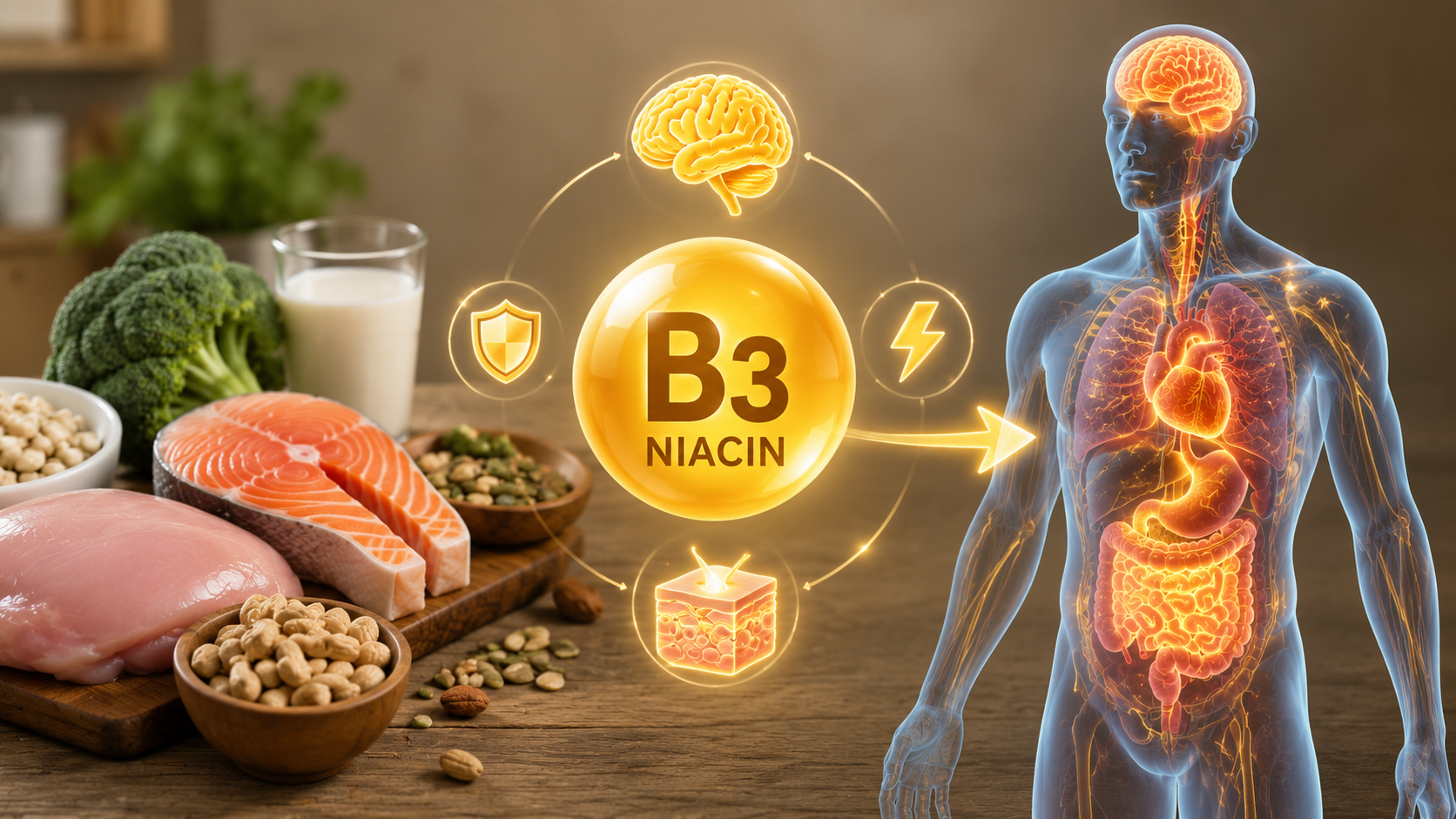
It dissolves with water in the body to form glucose, which provides energy to the body. Along with this, bread helps in eliminating cholesterol from the body. This is very important for people who have frequent skin problems. Not only this, it helps the brain and nerves to function properly.
Natural sources of Vitamin B3
Vegetarian sources: Peanuts, brown rice, whole wheat, oats, mushrooms, potatoes, peas, sunflower seeds, sesame, and soybeans.
Animal sources: Chicken, turkey, fish (tuna, salmon), egg, lean meat, liver,
Types of Vitamin B5:
Vitamin B5 is mainly found in the following forms—
1. Pantothenic Acid
This is said to be the most natural form of vitamin B5, which is available in all types of food. Now let’s talk about its main features, so let us know…
- Found in natural foods.
- It is necessary to make Coenzyme A in the body.
- Participates in energy production and metabolism.
- A balanced diet fulfills the needs of most people.
2. Calcium Pantothenate:
It is a type of stable acid that is mostly used in vitamin B complex tablets, capsules, and multivitamin supplements.
Key Features:
- Widely used in supplements.
- Absorbed in the body and converted into pantothenic acid.
- Used to overcome the deficiency of vitamin B5.
3. Dexpanthenol:
Dexpanthenol is said to be a provitamin form of pantothenic acid. After entering the body, it gets converted into vitamin B5.
It is mainly used in moisturizers, skin creams, hair care products, wound healing creams, and cosmetic products. This is very important to maintain the moisture of the skin and its natural safety.
Other main functions of vitamin B5:
- Energy production: It produces an element called coenzyme-A, which is necessary for energy production.
- Skin and Hair: It moisturizes the skin and makes hair strong and thick.
- Reduces stress: It is helpful in producing stress-fighting hormones.
Natural sources of Vitamin B5
- Vitamin B5 is found in almost all foods.
- Vegetarian sources: mushrooms, avocado, broccoli, sweet potatoes, sunflower seeds, peanuts, almonds, oats, brown rice, whole grains, pulses, soybeans, milk, and yogurt.
- Animal sources: egg, chicken, fish, liver, beef, and dairy products.
Symptoms of vitamin B5 deficiency:
The following symptoms may appear due to deficiency of vitamin B5:

Constant fatigue, weakness, headache, irritability, insomnia, burning feet syndrome, muscle cramps, difficulty concentrating, loss of appetite, and nausea.
What is vitamin B6 (pyridoxine)?
It is very important to know that vitamin B6, which we also know as pyridoxine, is a water-soluble vitamin. Not only this, but it is also an important member of the vitamin B complex group, which helps in the better functioning of more than 100 enzymes in the body.
When research was done in this regard, it was found that Vitamin B6 mainly plays an important role in keeping protein metabolism, brain function, the nervous system, red blood cell formation, hormone regulation, and the immune system healthy.
While it is a water-soluble vitamin, our body is not able to store it for long and expels the remaining residues from the body through urine; hence, it is required regularly.
Other names of Vitamin B6
- Pyridoxine
- Pyridoxal
- Pyridoxamine
- Pyridoxal-5-Phosphate (PLP)—Active Form
It is also known by many similar names, and the body converts all three forms into the active form PLP (Pyridoxal-5-Phosphate), which does the actual work in the body.
How does vitamin B6 work in the body?
Now the thing to think about is whether it also works like a vitamin. If it does, then this question will not arise; its way of working is a little different. In common language it is called a “coenzyme” because it helps many enzymes.
It mainly performs the following functions:
Converting Protein to Amino Acid
Creating New Cells Using Amino Acids
making hemoglobin
Making Brain Chemicals (Neurotransmitters)
Activating Immune Cells
Getting Energy from Glycogen
Lowering Homocysteine Levels
Worth knowing: If Vitamin B6 is considered very important for our human body because it improves mental balance, it can be used to reduce morning sickness during pregnancy in women who are pregnant. Apart from this, it is considered very good for skin and hair, along with this it supports heart health by playing a role in controlling the level of Homocysteine.
Symptoms of vitamin B6 deficiency:
Symptoms like extreme fatigue, weakness, irritability, depression, poor memory, tingling in hands and feet, chapped lips, redness of the tongue (glossitis), cracks on the sides of the mouth, rashes on the skin, frequent infections, and anemia.
What is vitamin B7 (biotin)?
This is a vitamin that is also known as biotin or vitamin H, which is easily soluble in water, and it is said to be the most important part of the vitamin B complex. Along with this, it works to completely convert carbohydrates, fats, and proteins into energy in the body.
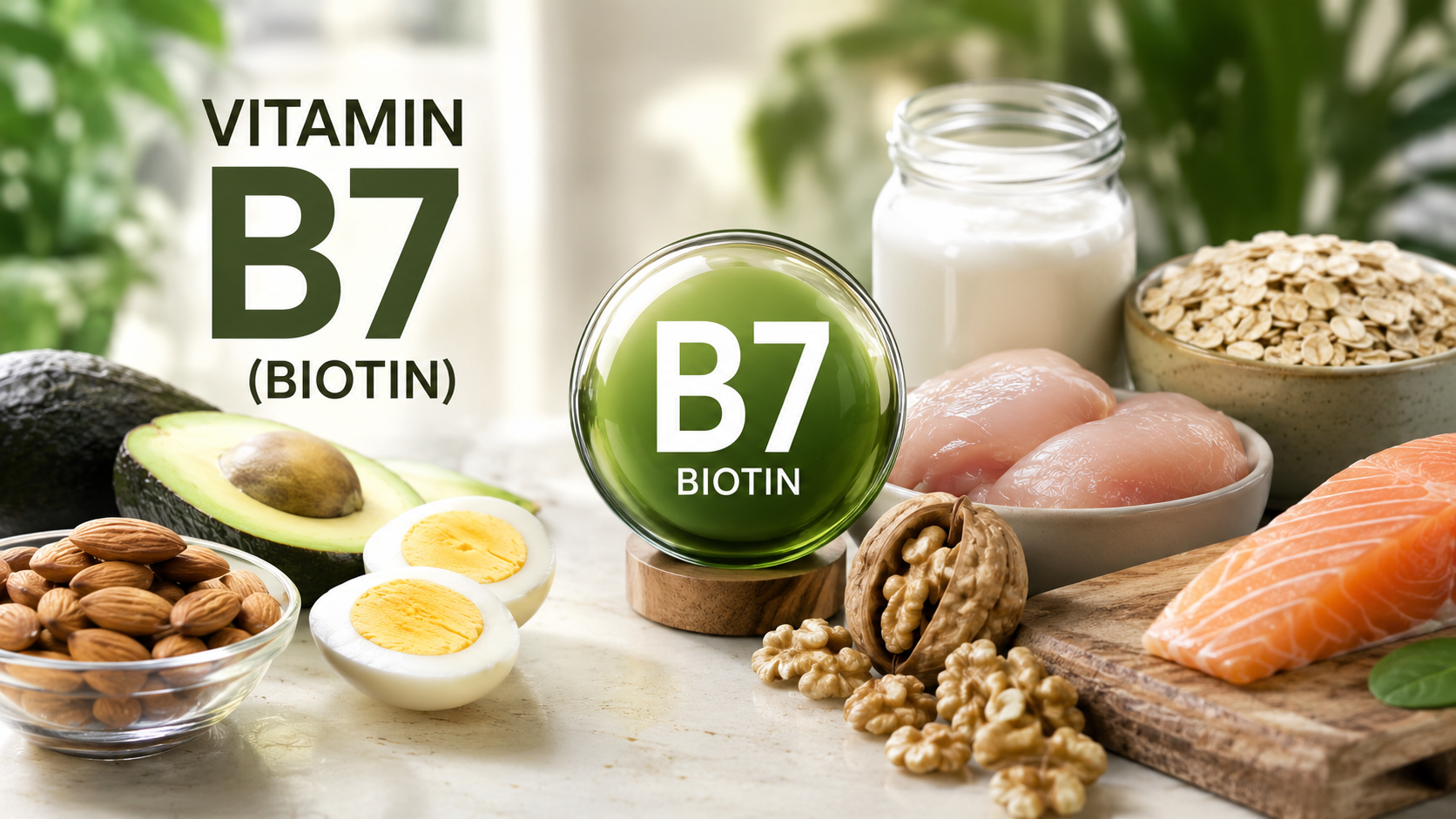
Perhaps very few people would be aware of the fact that biotin is always known as the beauty vitamin. Not only this, but it is considered good for the health of hair, skin, and nails, and its work is not limited only to beauty; it is also said to be very important for metabolism, the nervous system, gene regulation, and cell growth.
Other names of Vitamin B7
- Biotin
- Vitamin H
- Coenzyme R (old name)
How does vitamin B7 work in the body?
Biotin also works as a coenzyme in the body and helps many important enzymes that convert food into energy.
Vitamin B7 mainly participates in these processes—
- Carbohydrate Metabolism
- Fat Metabolism
- Protein Metabolism
- Fatty Acid Synthesis
- Glucose Production (Gluconeogenesis)
- Gene Expression
- Cell Growth
Causes of Vitamin B7 deficiency
- chronic malnutrition
- Excessive consumption of raw egg white for a long time
- Malabsorption Disorders
- certain genetic disorders
- Long-term use of certain medications (such as some anti-seizure medicines)
- Prolonged Total Parenteral Nutrition (TPN) without adequate Biotin
Symptoms of Vitamin B7 deficiency
Hair fall, skin rash, rash around the eyes, nose, and mouth, weakening of nails, extreme fatigue, muscle pain, and depression.
Lethargy, tingling in hands and feet, loss of appetite,
In case of serious deficiency—
Seizures and developmental problems (in infants) may also occur.
What is vitamin B9 (folate)?
Vitamin B9, also known as folate and commonly known as folic acid, is also a water-soluble vitamin and is considered very important for the formation of new cells in the body, which is essential for the formation of DNA and RNA, the production of red blood cells, and the development of the baby in the womb. Also, it is a synthetic form of folic acid—vitamin B9—which is added to supplements and fortified foods.
Other names of Vitamin B9
- Folate
- Folic Acid
- Vitamin B9
- folate
- Pteroylmonoglutamic Acid (scientific name of Folic Acid)
Vitamin B9 deficiency:
Vitamin B9 deficiency can occur due to many reasons.
reason: Lack of balanced diet, excessive alcohol consumption, pregnancy, Malabsorption Disorders (like celiac disease), and certain medicines (Methotrexate, phenytoin, etc.)
dialysis: chronic nutritional deficiency
What is vitamin B12 (cobalamin)?
Vitamin B12, also known as cobalamin, is a water-soluble vitamin. It is said to be the last and most important vitamin of the vitamin B complex group. It plays an important role in the formation of red blood cells, DNA synthesis, normal functioning of the nervous system, and energy production.
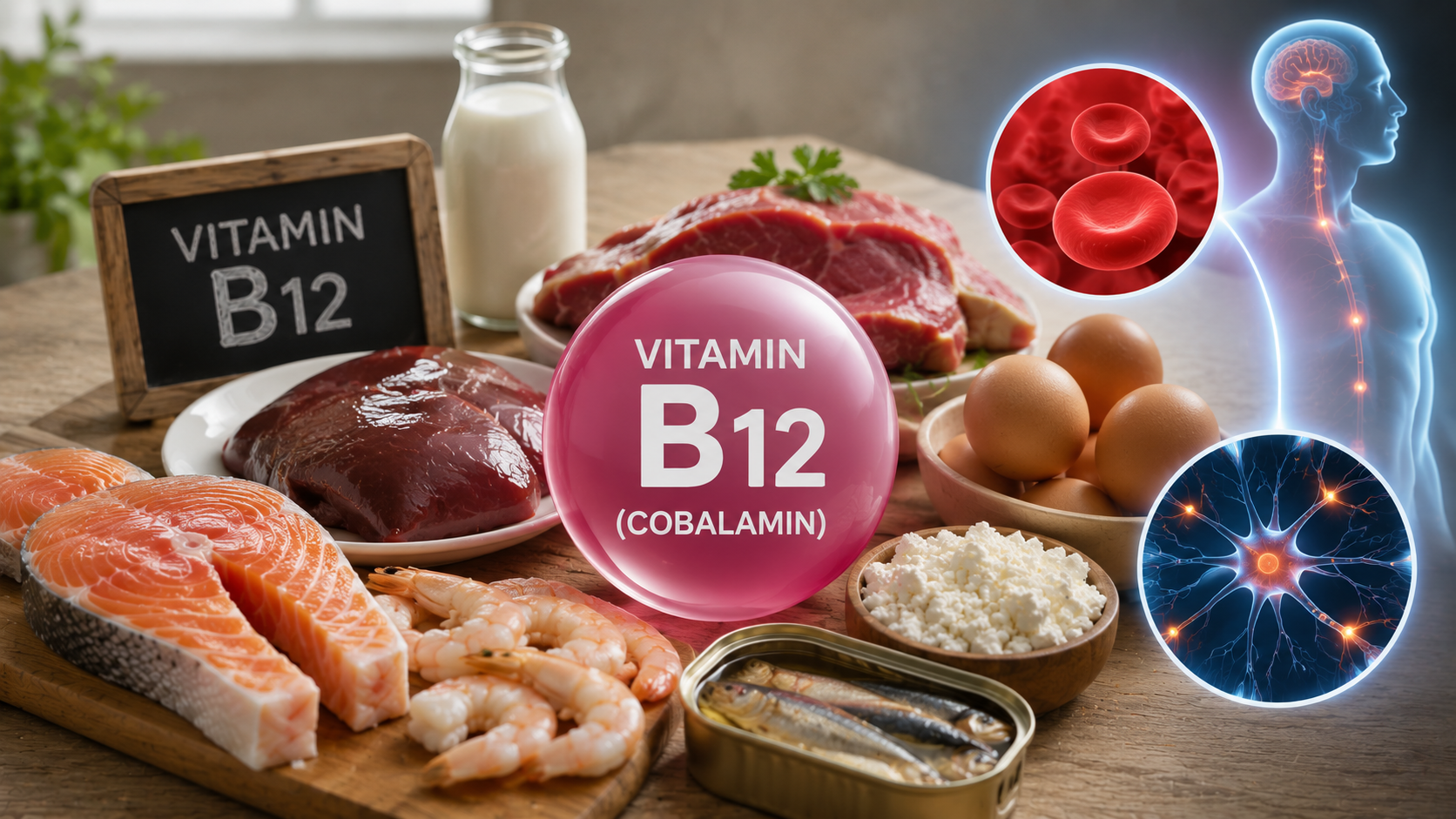
Other names of Vitamin B12
- Cobalamin
- Cyanocobalamin (Supplement Form)
- Methylcobalamin (Active Form)
- Hydroxocobalamin
- Adenosylcobalamin
How does vitamin B12 work in the body? Many people may have this question in their minds: How does vitamin B12 work in the body? Then let us tell you that it acts as a coenzyme in the body and takes part in many important biochemical processes.
This mainly
- DNA manufacturing
- Manufacture of Red Blood Cells
- Normal Function of the Nervous System
- Maintenance of Myelin Sheath
- Protein and Fat Metabolism
- Homocysteine Control
- Plays an important role in energy production.
Main functions of Vitamin B12
1. Manufacture of Red Blood Cells:
Vitamin B12 helps in the formation of healthy red blood cells in the bone marrow. But if it is deficient, it can prove fatal for the body.
profit
- Better transport of oxygen in the body
- Prevent fatigue and weakness
- healthy blood formation
2. Formation of DNA and RNA:
Along with the formation of red blood cells, it also helps in making DNA rapidly and this is especially necessary for those cells which divide rapidly, like
- blood cells
- skin cells
- intestinal cells
3. Keeping the Nervous System Healthy:
Our nervous system works in many ways, and vitamin B12 is considered very important for its protection. Myelin found in it is like a protective layer around the nerves, which helps in fast transmission of nerve signals.
4. Brain Function:
Vitamin B12 is considered good for mental balance and normal functioning of the brain. Along with this, it contributes to maintaining memory, attention, learning ability, and mental clarity.
5. Controlling Homocysteine:
Vitamin B12, along with Vitamin B6 and Vitamin B9, works to control homocysteine. High levels of homocysteine are said to be a risk factor for the health of the heart and blood vessels.
6. Energy Metabolism:
Vitamin B12 helps in the use of energy obtained from food. But due to some reason, if there is a deficiency of it in the body, then the body has to suffer huge loss due to it, although this is rarely seen.
7. Cell Growth:
Vitamin B12 plays an important role in the formation of new cells and repair of tissues.
Scientific research related to vitamin B:
For many years, scientists around the world have done many types of research on vitamin B complex, and after doing many types of research, every time a new thing came to light, it became clear to them from this research that vitamin B is not limited only to energy production but is also very important for the brain, nervous system, blood formation, pregnancy, heart health, cell development, DNA formation, and overall metabolism. And some such research has been mentioned below in this article. So let us know about this in detail…

1. Perspective of the World Health Organization (WHO):
WHO says about this that the vitamin B group is very important for good health, and their quantity is considered essential for the normal growth, development, and metabolic processes of the body.
According to WHO—
Vitamin B1 is essential for energy production and normal function of the nervous system.
Vitamin B2 contributes to the growth and energy production of body cells.
Vitamin B3 supports normal metabolism and skin health.
Vitamin B6 plays an important role in protein metabolism, the immune system, and the formation of neurotransmitters.
Folate (Vitamin B9) is considered helpful in reducing the risk of neural tube defects in the fetus during pregnancy.
Vitamin B12 is essential for the formation of red blood cells and normal function of the nervous system.
WHO has also informed that vitamin B deficiency can become a major public health challenge due to malnutrition, unbalanced diets, and limited health services in developing countries.
2. National Institutes of Health (NIH), USA:
The US National Institutes of Health (NIH) and its Office of Dietary Supplements (ODS) have provided detailed facts on vitamin B complex.
According to NIH-
All B vitamins play important roles in the enzyme processes in the body that convert food into energy.
Vitamin B12 and folate are essential for DNA synthesis and the formation of new cells.
Vitamin B6 contributes to the immune system, brain development, and hemoglobin formation.
Biotin (Vitamin B7) participates in the metabolism of carbohydrates, fats, and proteins.
Pantothenic acid (vitamin B5) is essential for the formation of coenzyme A.
While issuing reports in this regard, the NIH had said that the vitamin B requirement of most healthy people is fulfilled by a balanced diet, while supplements should be taken only as per requirement or medical advice.
3. Harvard T.H. Chan School of Public Health
According to Harvard Health, vitamin B complex is considered essential for almost every cell of the body.
Harvard experts say that the vitamin B group provides essential coenzymes in the process of obtaining energy from food. Folate and vitamin B12 are considered very important for DNA formation and cell division. Not only this, but by taking adequate folate before conception and in the early stages of pregnancy, the risk of neural tube defects in the baby can be reduced.
Vitamin B12 deficiency is especially common in older individuals, vegans, and patients with malabsorption disorders.
Vitamins B6, B9, and B12 play a role in controlling homocysteine levels in the body, although simply having lower homocysteine does not automatically mean the risk of heart disease will be reduced.
4. National Library of Medicine (NLM)
According to several scientific studies published in the National Library of Medicine—
energy production
B vitamins act as coenzymes essential for the energy production process (cellular energy metabolism) in cells.
brain health
Vitamins B6, B9, and B12 contribute to the production of neurotransmitters and the normal function of nerve cells.
pregnancy
Adequate amounts of folate are considered essential for normal development of the fetal brain and spinal cord.
old age
Research suggests that absorption of vitamin B12 may decrease with age, so some older individuals are at increased risk for deficiency.
Conclusion:
Vitamin B complex is not just a single vitamin but a group of 8 essential water-soluble vitamins, which participate in at least every important function of the body. These vitamins are essential for converting food into energy; keeping the brain and nervous system healthy; producing red blood cells, DNA synthesis; the health of skin, hair, and nails; and the normal function of the immune system.
Most people believe that the requirement of vitamin B is fulfilled by a balanced and nutritious diet. However, the risk of vitamin B deficiency increases manifold in pregnant women, elderly people, vegans, people suffering from digestive diseases, and people with certain medical conditions; in such cases, testing and proper treatment as per medical advice are very important.
Vitamin B supplements are to be taken only when needed or as per the doctor’s advice. Especially taking excessive amounts of vitamin B6 and niacin (vitamin B3) for a long time can also cause side effects. Therefore, instead of starting any supplement on your own, taking expert advice is the safest option.
Adequate amounts of vitamin B can be produced through a balanced diet, healthy lifestyle, and periodic health checkups, which helps the body remain healthy and active for a long time.
Disclaimer:
The information given in this article is only from the perspective of educational and general awareness. It is in no way a substitute for a doctor’s advice, diagnosis, or treatment.
If you are experiencing persistent fatigue, weakness, anemia, tingling in hands and feet, loss of memory, hair fall, or other symptoms related to vitamin B deficiency, then consult a qualified doctor instead of taking medicine yourself. Use any type of Vitamin B supplement, tablet, capsule, or injection only as per the doctor’s advice.
FAQs (Frequently Asked Questions)
1. What is Vitamin B?
Vitamin B is a group of water-soluble vitamins, which includes a total of 8 essential vitamins. These are essential for energy production, brain, nervous system, blood formation and normal functioning of cells in the body.
2. What is Vitamin B Complex?
Vitamin B Complex is a group of eight different B vitamins (B1, B2, B3, B5, B6, B7, B9, and B12) that play important roles in various biochemical processes in the body.
3. What is Vitamin B used for in the body?
Vitamin B is essential for converting food into energy, making red blood cells, keeping the brain and nervous system healthy, DNA synthesis, and the health of skin, hair and nails.
4. What are the main symptoms of Vitamin B deficiency?
Constant fatigue, weakness, anemia, hair fall, mouth ulcers, tingling in hands and feet, skin problems, poor memory and irritability can be common symptoms of Vitamin B deficiency.
5. How to identify Vitamin B12 deficiency?
Vitamin B12 deficiency can be detected by the doctor through Vitamin B12 Blood Test, CBC and other tests if necessary.
6. In which foods is Vitamin B found most?
Milk, curd, cheese, whole grains, pulses, green leafy vegetables, mushrooms, eggs, fish, chicken and liver are good sources of Vitamin B.
7. Should Vitamin B be taken daily?
If your diet is balanced, most people do not need additional supplements. Supplements should be taken only on the advice of a doctor.
8. Is Vitamin B good for hair?
Vitamin B7 (Biotin), vitamin B12, and Folate play roles in general hair health. However, taking supplements alone has not been scientifically proven to result in hair growth in all people.
9. Does Vitamin B increase weight?
Vitamin B itself does not increase weight. It helps convert food into energy and maintain normal metabolism.
10. What is the difference between Vitamin B and Vitamin B12?
Vitamin B is a complex, while Vitamin B12 is a special vitamin of the same group, which is important for red blood cells and the nervous system.
11. Can Vitamin B deficiency cause dizziness?
If anemia or Vitamin B12 deficiency occurs due to lack of Vitamin B, some people may have symptoms like dizziness.
12. Can hands and feet become numb due to deficiency of Vitamin B?
Yes, especially severe deficiency of Vitamin B12 can cause tingling and numbness in hands and feet.
13. How is Vitamin B tested?
Vitamin B deficiency is detected through blood test. The doctor may prescribe CBC, Vitamin B12, Folate and other tests as per requirement.
14. Are Vitamin B12 deficiency more common in vegetarians?
Yes, because Vitamin B12 is mainly found in animal-based foods. Therefore, the risk of its deficiency may be higher in vegan people.
15. What are the side effects of excessive amounts of Vitamin B6?
Taking Vitamin B6 supplements in excessive amounts for a long time can cause nerve related problems (Peripheral Neuropathy).
16. What happens if you take excessive amounts of Vitamin B3 (Niacin)?
Taking Niacin in large amounts can cause skin flushing, itching, nausea, and in some cases, liver side effects.
17. Which Vitamin B is most important during pregnancy?
Vitamin B9 (Folate/Folic Acid) is considered extremely important during pregnancy for the normal development of the brain and spinal cord of the fetus.
18. Does Vitamin B deficiency occur only in the elderly?
No. Deficiency can occur at any age, but older people, pregnant women, vegans, and people with digestive diseases are at higher risk.
19. When should Vitamin B Supplements be taken?
Vitamin B supplements should be taken only when tests confirm a deficiency or when the doctor advises for a specific medical reason.
20. Can the requirement of Vitamin B be fulfilled by food alone?
In most healthy people, a balanced and varied diet meets the daily requirement of Vitamin B. Doctors may recommend supplements in special circumstances.

Emanual Massey is a healthcare, lifestyle, and beauty content writer with over 7 years of professional experience. He specializes in writing SEO-optimized, research-based articles on health, wellness, nutrition, skincare, beauty, and Ayurveda. His mission is to simplify complex topics into practical, reader-friendly content that empowers people to make healthier lifestyle choices. Passionate about continuous learning and evidence-based writing, Emanual creates informative and engaging blogs that combine accuracy, readability, and search engine optimization.