

Abstract:
Omega is an important nutritional component, considered part of the healthy fats essential for normal functioning of the body, skin, hair and overall health. Although many people only know Omega in supplement form, it can also be obtained from natural foods. In this article, what is Omega, how was it discovered, how does it work in the body, what is the difference between Vitamin and Omega, what is its importance for skin and hair, common signs of its deficiency, natural sources, Beauty Tips, Health Tips and common myths and facts related to it have been explained in simple language. If you want reliable and easy information about Omega, then this article can prove to be a useful guide for you.
Whenever there is talk related to health and nutrition, there is one name that is heard the most, and that name is Omega. Sometimes it is mentioned for skin care, sometimes it is said to be good for hair strength, not only this, sometimes it is also said to be most useful for overall health. Now the thing to think about is that when it does so much work then why do many people consider it only a supplement or medicine. Whereas in reality it is very important for our body and it is believed that it plays a special role in the normal functioning of cells and balanced development of the body.
Because when research on this started, it was found that the human body produces millions of new cells every day, along with this it also helps in repairing old cells. For this entire work, the body needs carbohydrates, proteins, vitamins, and minerals as well as some special types of fats. Omega is said to have a special place among these essential fats. It also works to maintain the structure of body cells and the natural moisture of the skin, along with this it also makes a special contribution to the overall nutritional balance and normal functions.
But even today, there are many types of myths in the minds of people about Omega, due to which some people consider it only as high-priced capsules and supplements, but its reality is still not known to many people, whereas this is not completely true, in fact it can be obtained through natural foods also. But even today there are many people who consider Omega and Vitamin to be the same, while the way of working of both is always different, it would not be wrong to say that the structure, function and role of the days in the body are different.
Today in this article we will know in detail about what Omega is, when and how it was discovered, by what names it is known, what is the difference between Vitamin and Omega, what kind of work it does for the body.
What is Omega?
Omega is a nutrient related to nutrition which you and I know in common language as healthy fat or essential fatty acid. Because along with being a source of energy for the body, it works to create new cells and improve its normal functions.
Perhaps even today many people may not be aware that the human body needs many types of nutrients. In these, carbohydrates provide instant energy to the body, proteins help in building muscles and tissues. While vitamins and minerals help control many biological processes, omegas help the body obtain essential fats that are needed for normal cell function.
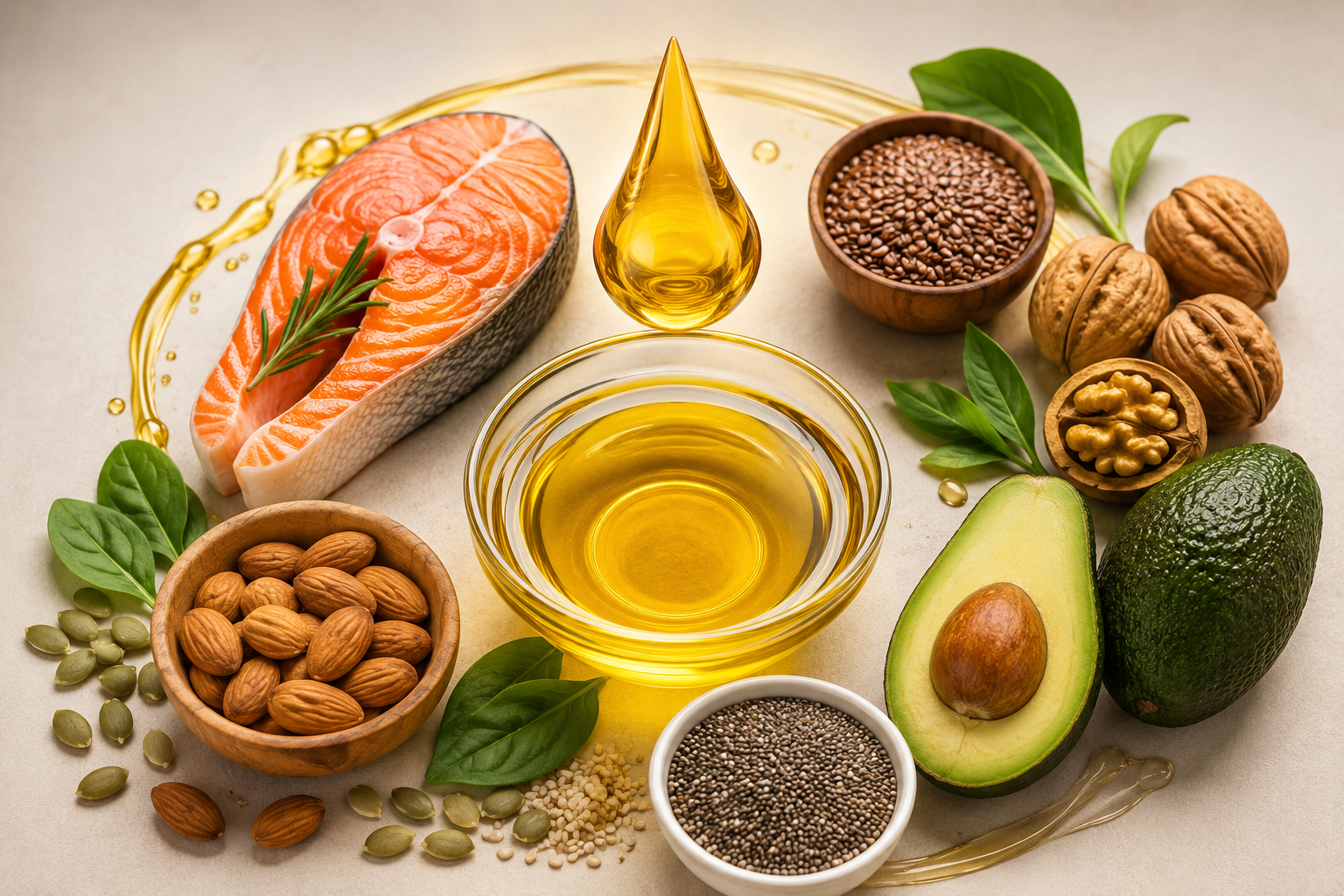
Research has found that Omega works in different ways in every part of the body, and its usefulness has been seen from the outer layer of the skin to the brain, heart, eyes and many cells of the body and this is why it is advisable to include Omega-rich foods in a balanced diet.
But it is very important for all of us to understand that Omega itself is not a vitamin, mineral or any kind of medicine. Rather, it is a type of essential nutrition which helps in supporting the normal functioning of the body. If there is a lack of healthy fats in the diet for a long time, then a state of nutritional imbalance can arise in the body, and its effect becomes visible on your skin as well as your hair and entire body.
Key Features of Omega
- It is considered an important source of healthy fats.
- Plays a role in the formation and protection of body cells.
- Helps in maintaining the natural moisture of the skin.
- It is an essential part of balanced nutrition.
- It is considered to contain nutrients that support overall health.
When and how was Omega discovered?
The story of Omega is like its name, because it is not limited to just a laboratory, but it is the result of continuous scientific research studies conducted over many decades. So the beginning of its story was that in the beginning of the 20th century, scientists decided to conduct a special study, at that time all types of fat were not the same for the body.
The most surprising thing in this is that till that time fat was known only as an energy-giving nutrient. But when this research was gradually carried forward, many more revelations came to light which were really surprising, and only after this it started to be understood that some fats are especially necessary for the normal functioning of the body.

In the 1920s, scientists first decided to test it on animals. During this experiment, it was observed that if certain types of fat were completely removed from their diet, their growth, skin and general health could be negatively affected. These studies indicated that the body’s need for some fats has to be met from food.
After this, scientists from many different countries started experimenting with it on humans, but even before that, they decided to conduct their study on a large scale, and in this study, they found that people whose diet includes adequate amounts of fat obtained from natural sources have better nutritional balance.
But as time progressed and research on this was carried forward, the development of modern technologies helped in understanding that Omega is an important part of the cell membrane. But this study did not stop here, there were many things in it which were yet to be known and only after this, the scientists doing research found that it is not limited to just providing energy, but it also plays a role in many normal biological processes of the body.
The scientists who discovered Omega are none other than the couple George Burr and Mildred Burr, and today Omega has been repeatedly and continuously researched in the field of nutrition science and public health all over the world. The main purpose of these studies is to understand why maintaining adequate amounts of healthy fats in a balanced diet is important for overall health.
By what names is Omega known?
When studies on Omega were started, it got many different names at that time, even though these names are different today, their main purpose is to understand the nutritional importance in detail.
1. Essential Fatty Acids:
This name is the most popular name, it means such fatty acids which are always needed by the body and it is considered good to get adequate quantity of them from a balanced diet.
2. Healthy Fats:
In common language, Omega is also known as Healthy Fat, this is because it is considered an important part of a balanced diet.
3. Good Fats:
This is used to explain to people that not all fats are harmful for health but some fats are very important for the body.
4. Nutritional Lipids:
Omegas are sometimes identified as Nutritional Lipids in scientific and academic literature.
5. Cell Supporting Nutrients:
There is no doubt that Omega plays a special role in the formation and functioning of cells, that is why it is also known by this name.
6. Functional Fats:
Some experts also call it functional fat, because it is not limited to just providing energy but it also helps in better functioning of the body.
What is the difference between Vitamin and Omega?
| Basis | Vitamin | Omega |
|---|---|---|
| What is it? | A micronutrient required by the body in small quantities to support normal growth and body functions. | A group of essential healthy fats (fatty acids) that are important for the body’s structure and normal functioning. |
| Primary Function | Supports immunity, metabolism, growth, tissue repair, and various biological processes. | Helps maintain cell structure, supports normal body functions, and contributes to overall nutritional balance. |
| Provides Energy? | No. Vitamins do not provide calories or energy. | Yes. Omega fatty acids are a type of fat and provide energy (9 kcal per gram). |
| Role in the Body | Helps enzymes, hormones, organs, and body systems function properly. | Supports healthy cell membranes, skin, hair, and overall body structure and function. |
| Required Quantity | Needed in very small amounts, but regular intake is essential. | Needed in balanced amounts as part of a healthy diet to meet the body’s fat requirements. |
| Natural Sources | Fruits, vegetables, dairy products, eggs, whole grains, legumes, and other nutrient-rich foods. | Nuts, seeds, vegetable oils, and other natural plant- and marine-based food sources. |
| Effect of Deficiency | Different vitamin deficiencies cause different health problems depending on the vitamin lacking. | Long-term lack of healthy fats may affect skin, hair, and overall nutritional balance. |
| Can One Replace the Other? | No. Vitamins and Omega are different nutrients with different functions. | No. Omega cannot replace vitamins, and vitamins cannot replace Omega. |
| Are Both Necessary? | Yes. Vitamins are essential for maintaining normal health and body functions. | Yes. Omega fatty acids are also an important part of a balanced and nutritious diet. |
Are Vitamins and Omegas necessary together?
While reading this article till now, this question must have come in your mind that whether vitamins and Omega are necessary together, then the answer to your question is yes. Because vitamins, minerals, proteins, carbohydrates and healthy fats—all have their own roles to play in a balanced diet. It is not considered good to depend on only one nutrient, hence a diverse and balanced diet is very important for better health.
How does Omega work in the body?
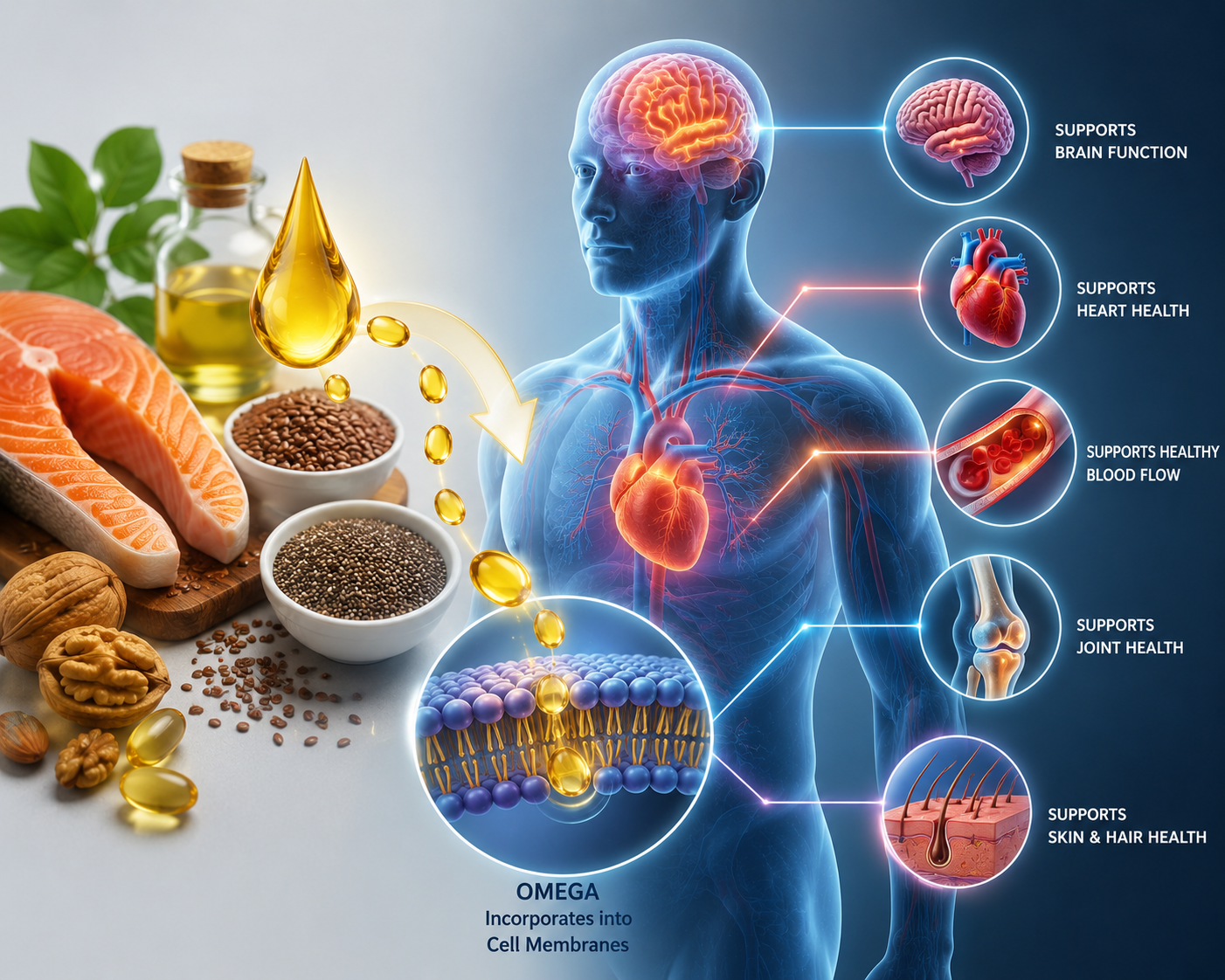
It is clear by now that the function of Omega is not only to provide energy to the body but it is considered important for the normal structure of the body and for many important functions.
1. Supports the structure of cells:
The human body is made up of trillions of cells. Healthy fats play a special role in maintaining the normal structure and flexibility of the cell membrane of every cell. This allows the cells to function normally.
2. Contribution in maintaining the natural moisture of the skin:
Adequate nutrition is needed to keep the upper layer of the skin healthy. Omega helps retain moisture by supporting the skin’s natural protective layer (skin barrier), making the skin look more healthy and balanced.
3. Role in the body’s nutritional balance:
When combined with healthy fats in a balanced diet, it helps the body use various nutrients. Therefore Omega is called an important part of complete nutrition.
4. Source of energy:
Fat is said to be one of the major energy sources of the body. When needed, the body uses these factors to get energy, which is why it is considered important to take healthy fats in balanced quantities.
5. Support overall health:
Omega is also a part of many nutrients that support the normal functioning of many organs and different systems of the body. When a balanced diet, adequate water, regular exercise and a healthy lifestyle are adopted, Omega-rich foods also become an important component of that balanced nutrition.
Omega and Skin Health:
A healthy skin is not only due to external skin care products, but for this it is very important for your body to get proper nutrition from inside also, and if the body is getting the essential nutrients in balanced quantity, then it can help in maintaining the natural glow, softness and healthy texture of the skin, and Omega is also included in these nutrients.
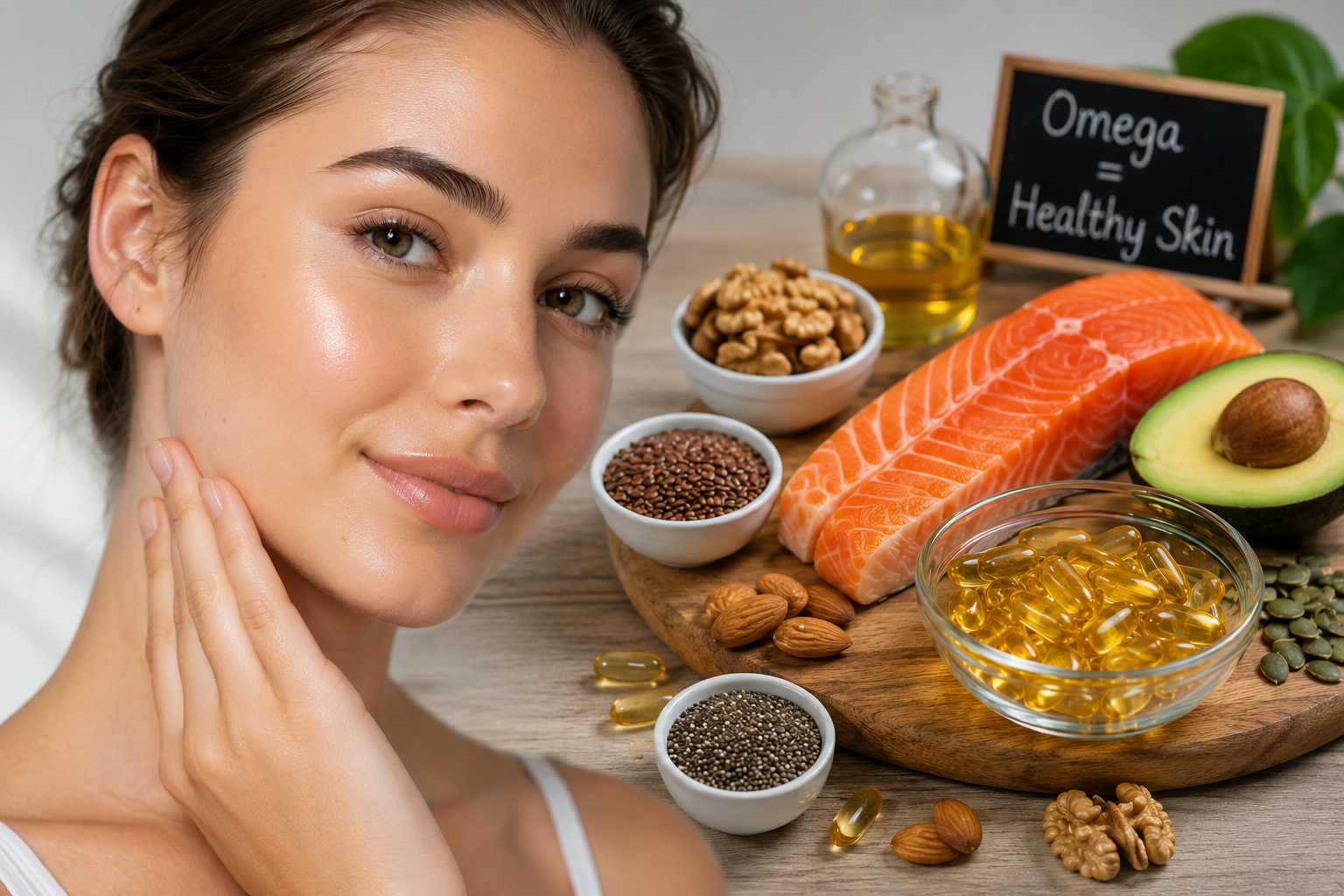
Omegas are part of the nutrition that supports the structure of skin cells, helping the skin’s external defenses function normally. When the protective layer of the skin is good, it can better withstand conditions like external environment, dust, soil, pollution and dryness.
1. Helpful in maintaining the natural moisture of the skin:
External moisturizer alone is not enough for healthy skin. Balanced nutrition received from inside the body is also considered very important. Not only this, a balanced diet rich in Omega can help in maintaining the natural moisture of the skin, making the skin feel more soft and comfortable.
2. Support to Skin Barrier:
The outermost layer of the skin is called the first protected wall of the body. It plays an important role in protecting from external harmful elements. Omega is considered a part of nutrition that supports the normal functioning of this natural defense system.
3. Contribution in maintaining healthy and natural glow:
Whenever a balanced amount of essential nutrients is required, its full effect becomes clearly visible on the skin. Omega-rich foods along with adequate nutrition, adequate water and a balanced lifestyle can contribute to maintaining healthy-looking skin.
4. Help in maintaining better skin texture:
The effects of time, weather, pollution and unbalanced eating habits are also clearly visible on our skin. As part of a balanced diet, Omegas help support the normal structure of the skin and maintain its natural suppleness.
5. Skin care with increasing age:
With increasing age, many natural changes are seen in the skin. Balanced nutrition, adequate water, regular skin care and omega-rich diet can also be part of a lifestyle that maintains healthy skin for a long time.
Omega and Hair Health:
Everyone would be aware that the health of hair does not depend only on good shampoo or oil but the roots of the hair also depend on the nutrition received from the body. If the body does not get adequate nutrition, its effect can be seen on the quality of hair.
And this is why Omega is considered one of the most important nutrients for hair. Because it is a part of a balanced lifestyle that provides necessary nutrition to the skin and hair cells of the head.
1. Scalp Nutrition:
Good and healthy hair starts with a healthy scalp. Including omega-rich foods in a balanced diet can help with general scalp health.
2. Helps maintain hair’s natural shine:
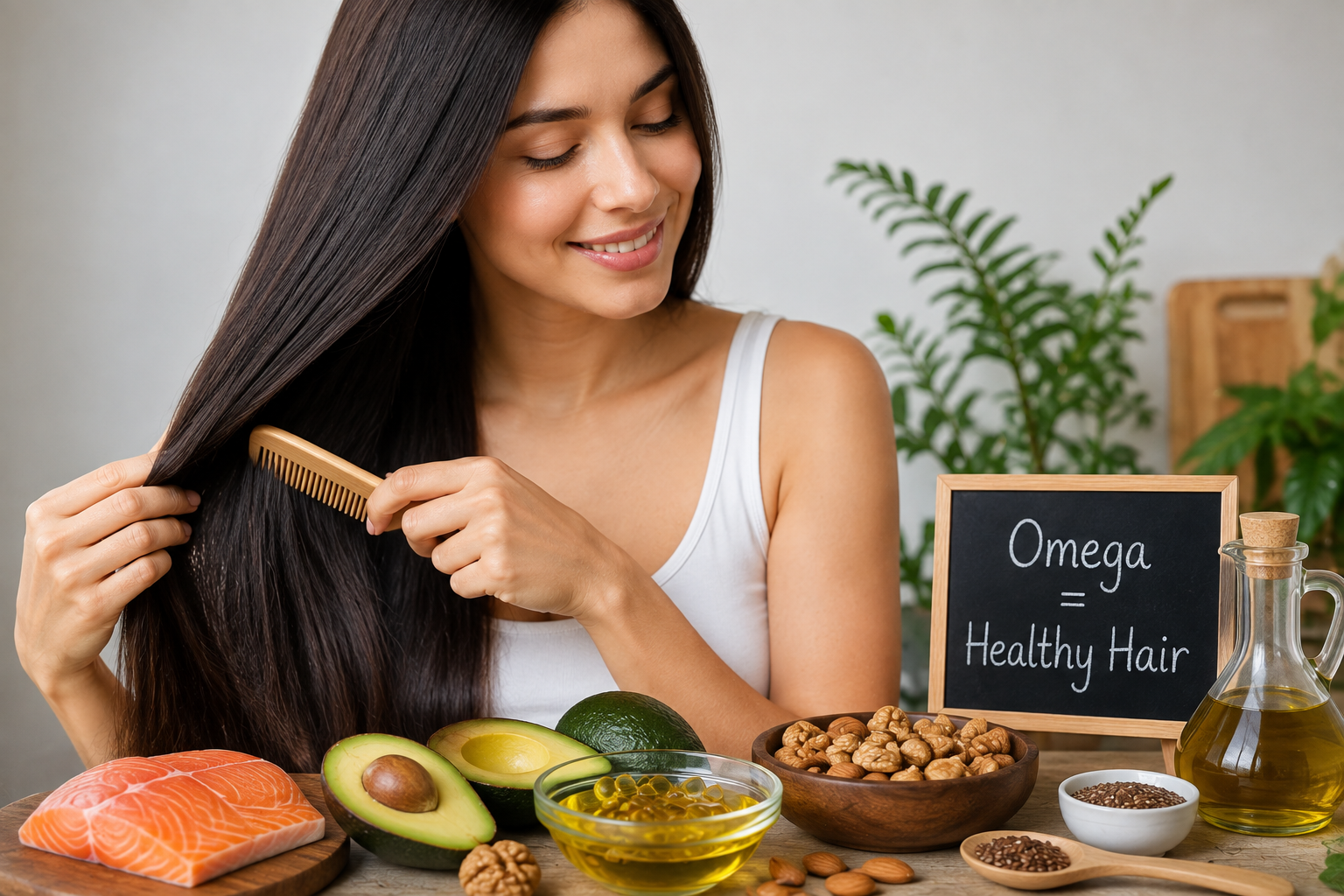
When hair is fully nourished from within, it appears more healthy and shiny, and a balanced diet rich in omegas helps support this natural process.
3. Helps in maintaining hair texture:
Dry, lifeless or rough hair can occur in many ways. Omega along with balanced nutrition is also said to be helpful in maintaining normal hair texture.
4. Nutrition for hair strength:
Hair is mainly made up of protein, but it also requires other nutrients for its normal health. A balanced diet rich in Omega is said to be part of a lifestyle that nourishes the hair roots.
5. Part of the complete Hair Care Routine:
But if you still want good hair health, then instead of relying only on external products, it can be useful to include a balanced diet, adequate water, good sleep and Omega-rich natural foods in your routine.
Omega and Overall Health:
Now the thing to think about is that Omega is not limited to just skin and hair, it is said to be a part of nutrients that contribute to many normal and biological processes of the body.
Support in normal functioning of cells: Every cell in the body needs balanced nutrition to function properly. Omega works to support the structure and normal functions of cells.
Contributes to maintaining energy balance: Healthy fat is said to be one of the main energy sources of the body, and our body starts taking energy from it when needed.
Support of normal brain functions: The brain is considered to be the most important organ of the body, which requires balanced nutrition for its normal functioning. Omega is said to be a nutritional component that supports general brain health.

Balanced nutrition for heart health: A balanced diet, regular exercise, stress control and a healthy lifestyle are essential for general heart health. Omega-rich natural foods can also be a part of such a balanced diet.
An important part of overall wellness: Better health is not achieved by any one nutrient, but by a balanced lifestyle. Omega is considered an important component of this balanced nutrition system.
Common signs of Omega deficiency: If the body does not get the right amount of food for a long time, some common signs of nutritional imbalance may appear in the body. Although these symptoms may be caused solely by Omega deficiency, it is not necessary. There can be many reasons behind this.
Possible common signs include—
- Skin feeling more dry.
- Hair appearing lifeless or dry.
- Weak or early breakage of nails.
- Feeling general tiredness or lack of energy.
- Decrease in natural glow of the skin.
- Other common symptoms of nutritional imbalance appear.
If such signs persist for a longer period, it is important to consult a qualified health professional rather than guessing on your own.
Who should pay special attention to Omega?
Balanced nutrition is important for every person, but some people need to pay special attention to adequate amounts of healthy fats in their daily diet.
1. Aging people: The nutritional requirements of the body change with increasing age. Therefore, taking a balanced diet becomes more important.
2. People who work sitting in the office for long hours: Nowadays, most of the people sit in front of the computer for hours, it is necessary for such people to adopt a balanced diet and healthy lifestyle.
3. People with Dry Skin: If a person has skin related problems then he should pay special attention to diet and hydration. Omega-rich natural foods can become part of a balanced diet.
4. Beauty Conscious People: People who focus on natural care of their skin and hair should pay equal attention to nutrition instead of relying only on external products.
5. All people seeking balanced nutrition: From children to young and old, a varied and balanced diet is important for every person. Healthy fats are also an important part of a balanced diet.
Natural Sources of Omega:
The best way to get Omega is to include a balanced and varied diet in your daily routine. Natural foods also provide many other essential nutrients to the body.
Flaxseeds: Flaxseeds are said to be nutrition-rich seeds, which can be consumed by making powder, mixing them in curd or other dishes.
Chia Seeds: You can consume chia seeds by soaking them in smoothies, oats, salad, or water.
Walnuts: Walnuts can be included as a healthy snack. It is said to be a source of many important nutrients.
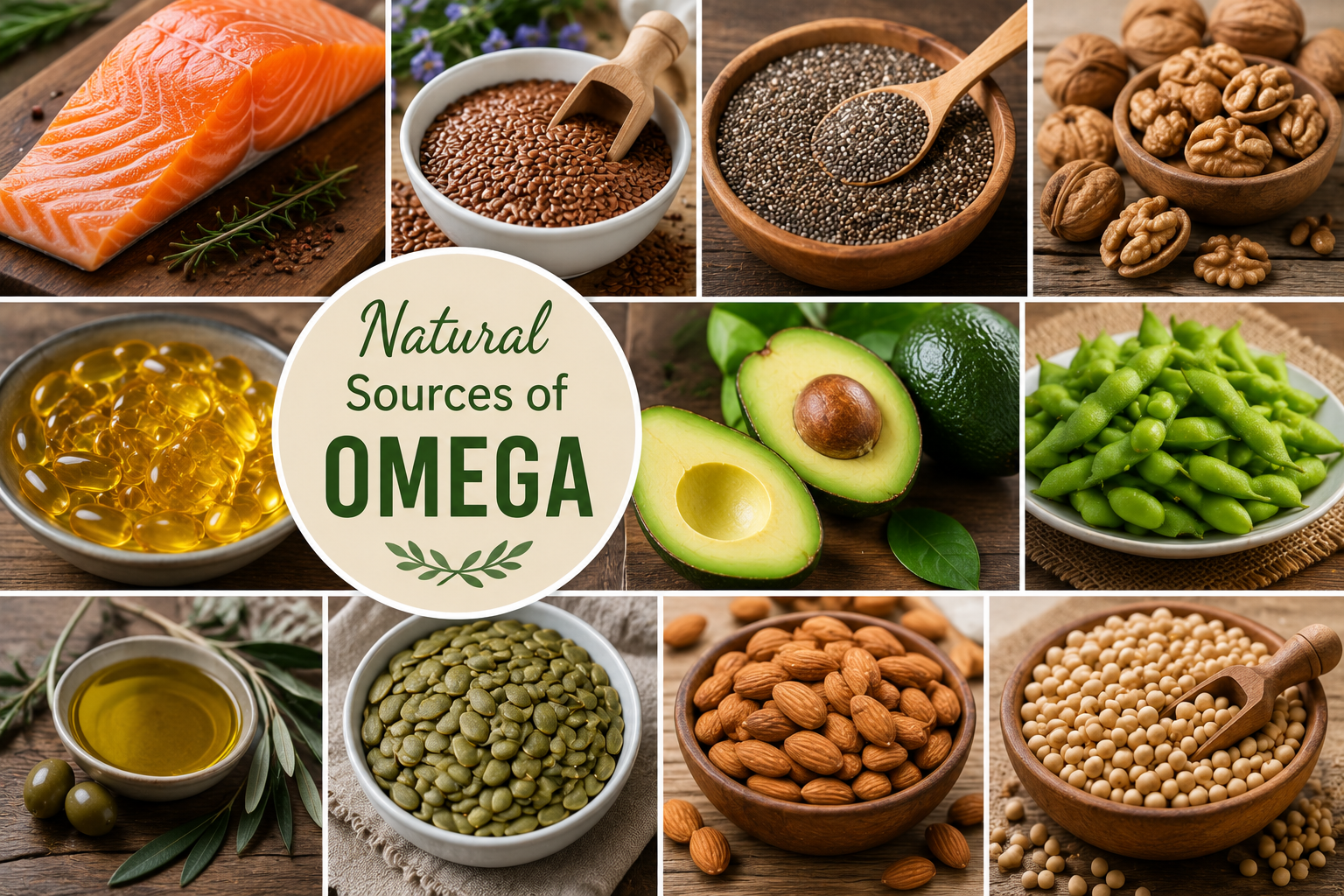
Pumpkin Seeds: Many types of nutrients are found in pumpkin seeds; you can include them in salad or breakfast also.
Soybean and foods made from soya: Soybean is said to be a very good source of protein as well as many other nutritional elements.
Green leafy vegetables: You should keep in mind that spinach, fenugreek and other green leafy vegetables are an important part of a balanced diet and provide overall nutrition.
Mixed Nuts and Seeds: A balanced intake of almonds, sesame seeds, sunflower seeds and other nuts and seeds can also be a part of a healthy lifestyle.
How to make Omega a part of your lifestyle for healthy skin and hair?
Beautiful skin and strong hair are not achieved by expensive skincare or haircare products alone. In fact, beauty starts from inside the body. If your diet is balanced, your body is getting the necessary nutrients easily and your lifestyle is healthy, then its positive effect becomes visible on your skin and hair as well.
Omega is said to be an important part of a balanced nutrition. Although relying on Omega alone is not enough, incorporating it into a healthy lifestyle can also support general skin and hair health.
1. Give priority to a balanced diet:
The most important beauty tip for skin and hair is that it is good to have variety in your diet. Instead of relying on just one nutrient, add fruits, green vegetables, whole grains, nuts, seeds and adequate protein to your daily diet.
2. Drink adequate amount of water:
It is very important for the body to remain hydrated to maintain the natural moisture of the skin. Drinking enough water throughout the day keeps the normal functioning of the body good and the skin will also look more healthy.
3. Do not ignore healthy fats:
Many people have a different fear regarding increasing weight. While the body also needs healthy fats in balanced amounts. Therefore, make healthy fats from natural sources a part of your diet in balanced quantities.
4. Get enough sleep:
7–8 hours of quality sleep daily will help improve the body’s natural repair processes. Good sleep is also said to be important for the freshness of skin and the general health of hair.
5. Do regular exercise:
Exercise is not only necessary for fitness but also for overall health. Regular physical activity helps maintain normal blood circulation in the body, which also helps in providing proper nutrition to the skin and hair.
6. Control stress:
Prolonged stress starts affecting many functions of the body. Habits like meditation, yoga, deep breathing exercises and adequate rest can prove beneficial for both mental and physical health.
7. Take care of your skin regularly:
Cleansing your face daily, using moisturizer according to your skin, and applying sunscreen before going out in the sun are important parts of a healthy skincare routine.
8. Avoid smoking and excessive junk food:
Habits like highly processed food, sugary drinks and smoking can have a negative impact on overall health as well as skin and hair. It would be better to give preference to natural and nutritious food.
Health Tips: How to include Omega in your lifestyle for better health?
Omega is not the name of any magical solution. A balanced diet, regular exercise and a healthy daily routine are most important for better health. If you include Omega-rich natural foods in your diet, it can contribute to improving your overall nutrition.
1. Eat a balanced diet:
Maintain a balance of carbohydrates, proteins, vitamins, minerals and healthy fats in every meal. Diverse food provides various essential nutrients to the body.
2. Choose natural foods:
As far as possible, give preference to natural foods like fresh fruits, vegetables, whole grains, nuts and seeds.
3. Be physically active daily:
At least 30 minutes of regular physical activity helps maintain the general health of the body.
4. Maintain a balanced weight:
A balanced diet and regular exercise help maintain a healthy weight, which is important for overall health.
5. Get enough sleep and rest:
Lack of sleep can affect the normal functioning of the body. Therefore, develop the habit of sleeping and waking up at regular times.
6. Get regular health checkups:
If you suspect any nutritional deficiency or health problem, consult a qualified health professional instead of self-medicating.
7. Take supplements only when needed:
If a person needs additional nutrition for special reasons, supplements should be used only after consulting a doctor or qualified health professional.
Omega Myths and Facts
| No. | Myth | Fact |
| 1 | Omega is obtained only from supplements. | Omega can also be obtained from natural food sources. A balanced diet is one of the best ways to include Omega in daily nutrition. |
| 2 | Only the elderly need Omega. | Healthy and balanced nutrition is important for people of all age groups. While nutritional needs may vary with age, Omega remains an important part of a balanced diet for everyone. |
| 3 | Omega and vitamins are the same thing. | No. Vitamins are micronutrients, whereas Omega is a type of healthy fat (essential fatty acid). Both have different functions and neither can replace the other. |
| 4 | “Healthy fat” means consuming large quantities of fat. | Healthy fat refers to consuming the right type of fat in appropriate amounts. Excess intake of any fat is not considered beneficial. |
| 5 | Taking Omega alone will make the skin glow. | Healthy skin depends on multiple factors, including a balanced diet, adequate hydration, sufficient sleep, proper skincare, and an overall healthy lifestyle. |
| 6 | Taking Omega eliminates all hair problems. | Hair health is influenced by genetics, hormones, nutrition, stress levels, and hair care practices. Omega is only one component of overall nutritional support. |
| 7 | If I eat nutritious food, I need less water. | Adequate water intake is essential for normal body functions, skin hydration, and overall health, regardless of how healthy the diet is. |
| 8 | The more Omega one consumes, the better. | More is not always better. Like any nutrient, Omega should be consumed in balanced amounts according to individual nutritional needs. |
Conclusion:
Omegas are considered an important part of a balanced nutrition, playing a role in supporting normal body function, cell structure, skin, hair, and overall health. Although it is not a cure for any disease nor does it alone guarantee better health, its proper consumption along with a balanced diet and healthy lifestyle can contribute to providing the necessary nutrition to the body.
It is also important to understand that relying on just one nutrient is not enough to stay healthy. The body needs a balanced amount of vitamins, minerals, proteins, carbohydrates, adequate water, and healthy fats.
Therefore, include natural and nutritious foods in your daily diet, do regular exercise, get adequate sleep and if necessary, consult a qualified health expert. Balanced nutrition and a healthy lifestyle are the strongest foundation for long-term good health.
Disclaimer:
This article has been prepared only for general educational and awareness raising purposes. The information provided herein is not a substitute for any type of medical advice, diagnosis or treatment.
Always seek the advice of a qualified doctor, nutritionist, or health professional before taking any omega-related supplements, making major changes to your diet, or treating any health problem. If you have any pre-existing medical conditions, are pregnant, breastfeeding or taking any medications, it is essential to consult a specialist before starting any new supplement or diet plan.
FAQs (Frequently Asked Questions)
1. What is Omega?
Omega is an important healthy fat nutritional component that plays an important role in the normal functioning of the body, cell structure and balanced nutrition.
2. Are Omega and Vitamin the same thing?
No. Vitamins are micronutrients, while omegas are considered an important part of healthy fats. The structure and functions of both are different.
3. How does Omega work in the body?
Omega plays a role in supporting the body’s cell structure, energy balance, and normal biological processes. It is considered an essential component of balanced nutrition.
4. Is Omega beneficial for the skin?
As part of a balanced diet, Omega can contribute to supporting the skin’s natural moisture, skin barrier and healthy-looking skin.
5. Are Omega important for hair health?
Yes. Along with balanced nutrition, Omega is known to contain nutrients helpful in maintaining the general health of the hair and scalp.
6. In which natural foods is Omega found?
Omegas can be found naturally in flax seeds, chia seeds, walnuts, pumpkin seeds, soybeans, green leafy vegetables and other nutritious foods.
7. Should Omega be taken only in supplement form?
No. Most people can also get omegas through a balanced and varied diet. Supplements should be used only on the advice of a health expert.
8. Can there be some common signs of Omega deficiency?
A chronic lack of balanced healthy fats can lead to signs such as dry skin, dull looking hair, weak nails or general nutritional imbalance. However, there may be other reasons behind these also.
9. Do people of all ages need Omega?
Yes. Balanced nutrition is important for every age group. Body requirements may vary according to age, lifestyle and health.
10. Is Omega alone enough for better health?
No. A balanced diet, regular exercise, adequate water, good sleep, stress management and a healthy lifestyle are all equally important for better health. Omegas are just one part of this balanced nutrition.
Also Read:
You probably don’t know these important facts about Vitamin K

Emanual Massey is a healthcare, lifestyle, and beauty content writer with over 7 years of professional experience. He specializes in writing SEO-optimized, research-based articles on health, wellness, nutrition, skincare, beauty, and Ayurveda. His mission is to simplify complex topics into practical, reader-friendly content that empowers people to make healthier lifestyle choices. Passionate about continuous learning and evidence-based writing, Emanual creates informative and engaging blogs that combine accuracy, readability, and search engine optimization.