Abstract
When we feel stressed or tense, the brain sends signals to the body that deal with the challenge in the present situation. The nervous system and hormones work together to change heartbeat, breathing, muscle activity and digestion. So during the times of stress, physical symptoms such as headaches, nausea, fatigue, or rapid heartbeat can happen they are not just a sign of anxiety. This reaction is useful in the short term, but can affect health if activated regularly for long periods. This article explains the causes of these changes, the relationship between stress and symptoms, and relief measures. It also tells when medical help is important.
Introduction
Feeling upset in the stomach before an important conversation, sweaty palms during an exam or stiffness in the shoulders due to work pressure is a familiar experience for many people; they think it’s anxiety. Problems seem to start from thoughts, while their effects are felt throughout the body. This often raises questions as to why one experiences pain in the stomach, head or chest when they worry.
The reason behind this is continuous communication between the brain and body. When the brain considers a situation challenging, it changes the activity of the organs through nerves and hormones for better performance. The reaction which the body has to sudden dangerous situations can also be activated in financial worries, sour relationships or uncertainty.
It is useful to understand these symptoms, as they can help you recognize the body’s reaction and seek help accordingly. However, just because a person is stressed does not determine the cause of his physical problems. Stress and other health problems can co-exist.
Constant pressure and short-term stress
Stress is the body’s reply to a demand or challenge. In limited quantities, it can increase alertness and help in completing important tasks and help with productivity. Applying brakes immediately to avoid a suddenly encountered obstacle is an example of such a useful response.
When stress is connected with a temporary event, the body usually returns to normal once the situation ends. In contrast, chronic stress can be triggered repeatedly in the body due to family conflict or persistent overwork or other worries. This is called long-term or chronic stress.
Stress messages from mind to body
Challenge identification and immediate preparation
The brain continues to study surrounding circumstances, past experiences, and possible outcomes. Whether the threat is real or just an anticipation of an upcoming problem, the body’s feeling can change when it feels challenged. In this process, a part called the hypothalamus plays a huge role in transmitting messages between the nervous system and hormone-producing glands.
The autonomic nervous system controls many activities without conscious effort, such as heartbeat and digestion. Under stress, its sympathetic part becomes much more active and prepares the body to react rapidly. Chemical messengers such as adrenaline and cortisol further this preparation. This is often called the fight-or-flight response of the body. During this, the heart may beat faster, breathing speed may increase, and muscles tightens. The body makes changes in available energy and circulation that allow immediate action to happen. Therefore, physical changes can be felt even just by hearing triggering news.
If the pressure starts feeling more than an individual’s ability to handle, then it can be called distress. To understand its severity, it is useful to look at the duration, intensity, and impact of symptoms on day-to-day life rather than the number of symptoms.
Role of cortisol
Another stress pathway connects the hypothalamus, pituitary and adrenal glands. This is called the HPA axis. Hormonal signals originating from the brain ultimately send a message to the adrenal glands located above the kidneys to increase cortisol production.
Hormones are chemical messengers that reach different organs through blood. Nerve signals and hormonal effects combine to create a response, so the effects of a single stressful event can be felt by multiple organs in the body during that phase.
Cortisol helps in providing energy, regulating metabolism and immune responses in the body. It is an important hormone for the body, and even under normal circumstances, its level keeps on changing during the day.
How the stress response can persist
Once the challenge is over, stress signals reduce, and parasympathetic activity helps the body return to normal. But if worries return again and again during the day, this rest may remain incomplete. A person may appear calm on the outside but still feel alert on the inside. For example, the immediate fear may reduce when the meeting is over. But if the worry about its consequences continues till the night, the body might become alert again. In such a situation like that, it is difficult to rest, and the next day, with less sleep, the same pressure may feel heavier than it was.
Chronic stress is connected with repeated physical activity and not getting enough rest. Hormonal responses change with the individual and circumstances; It is not compulsory that cortisol remains constantly high in everyone.
Symptoms occur in different parts of the body
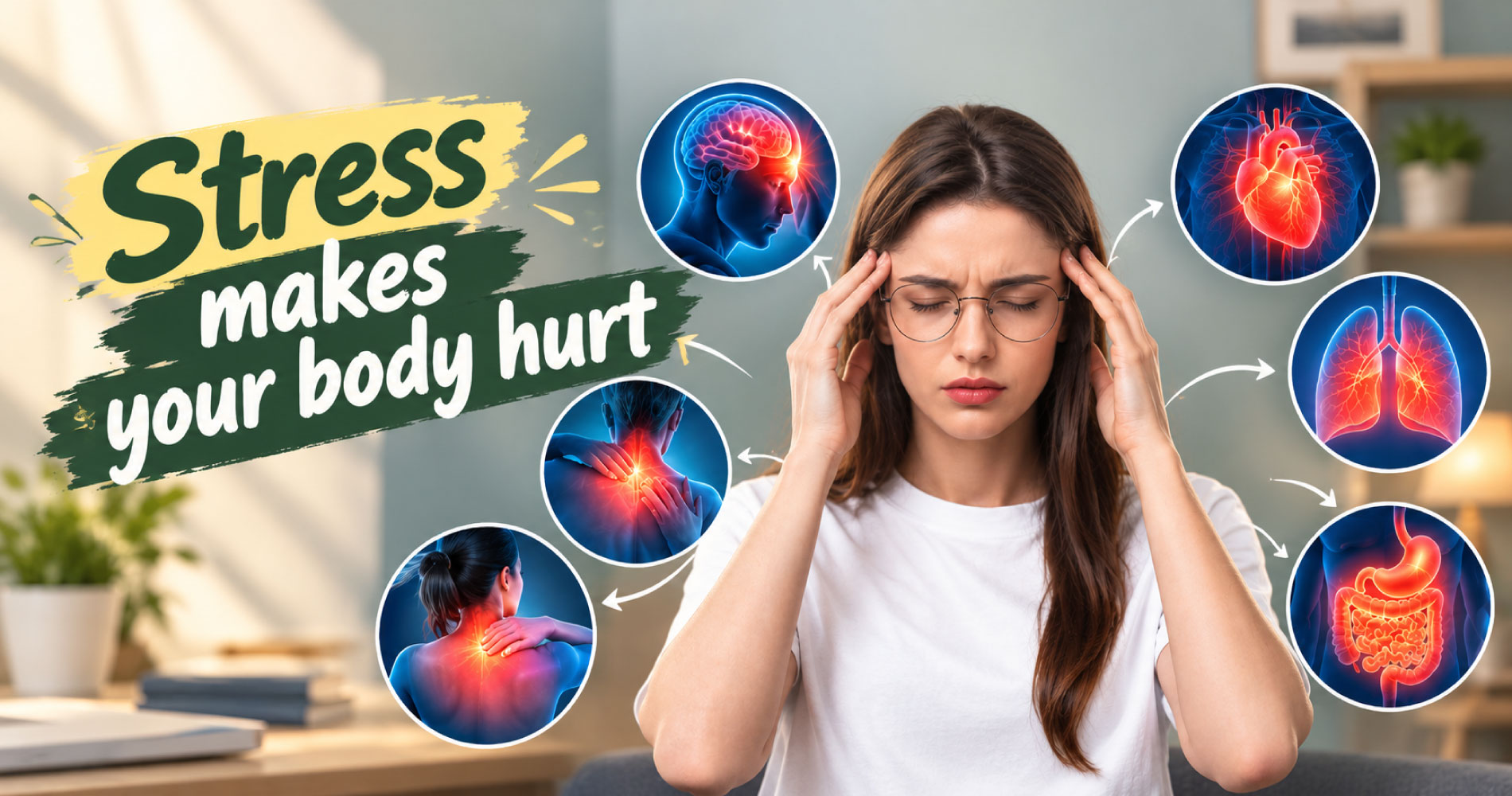
Muscle pain and Headaches
The tightening of muscles under stress is part of the body’s protective mechanism. If the neck, shoulders or back remain tight for a longer time than expected, stiffness and pain can be felt. Unknowingly clenching the jaw or grinding teeth can put extra strain on the jaw and face.
Stress can also trigger tension-type headaches or migraine attacks in people. However, the process of migraine is more complicated and involves neural and chemical signals in the brain. Considering it as just a strain on the neck would be an incomplete explanation. Less sleep and uncomfortable posture can also increase discomfort in the body.
Racing heart and chest Discomfort
The activation of adrenaline in the body can cause the heart to beat faster. Blood pressure may also increase for some time, so that the body is ready for the situation. The person may experience heart palpitations, chest movements, or discomfort. Sweating and shivering can also be the response to stress.
This temporary change in itself is not evidence of a heart disease. Yet new, persistent or unusual chest pain needs medical attention. The cause of the symptoms cannot be determined just by looking at their sensation.
Dizziness and shortness of breath
Under stress, some people start breathing deeper than necessary. This is called hyperventilation. This can reduce carbon dioxide in the blood and can cause dizziness, tingling around the mouth, or a feeling of being short of breath.
These sensations do not always mean just a lack of oxygen. Yet there are other medical causes for shortness of breath that should be taken seriously. If you already have a disease like asthma, stress can increase its severity. First-time, progressive, or severe respiratory problems require evaluation.
Digestive problems and Stomach cramps
The brain and gut communicate through nerves and biological signals. Stress can affect this communication and intestinal movement without you knowing. Constipation or diarrhea may occur due to these changes in the speed at which food moves inside your stomach. Some people also experience flatulence, cramps, nausea or vomiting.
Stress can also increase the sensitivity in the digestive system. This may make a normal amount of gas or strain feel more uncomfortable. If you already have Irritable Bowel Syndrome (IBS), the symptoms can be more concerning. But stomach upset during stress is not in itself a diagnosis of IBS and should be checked for a proper approach.
It would also not be right to connect every stomach disease with stress. For example, common causes of peptic ulcers include H. pylori infection and certain types of painkillers. Stress can also increase the experience of discomfort. Therefore, it is not right to consider the symptoms as stress and postpone necessary tests or treatment based on the cause.
Fatigue and Sleep Disturbances
Being alert all day and thinking about situations at night can make it difficult to sleep. Its manifestations can be late onset of sleep, or not feeling fresh after waking up in the morning. Not getting enough rest increases fatigue, irritability and difficulty concentrating the next day, making things worse.
Stress impairs sleep, and that makes it difficult to handle everyday challenges. This cycle can maintain fatigue even if the person has not done heavy physical work during the day. However, in the case of long-term fatigue, evaluation of other causes is recommended.
Effects on the immune and reproductive systems
Stress hormones also communicate with the immune system. Chronic stress can affect this control and inflammatory responses in a bad way. Its effect is different from person to person. Falling sick frequently should not be considered as a mere evidence of stress.
Long phases of stress, fatigue, and hormonal changes can lead to decreased sexual desire in people sometimes. Regularity of menstruation or problems related to it can also be affected. There are multiple possible causes for these changes, so testing is useful if persistent problems occur.
Acne and itchy skin
The skin can be affected by hormonal signals of stress. In some people, oily skin and may lead to blockage of pores and an increase in acne. This can make pre-existing skin problems more visible than they were.
In conditions like eczema, stress can increase itching, and the discomfort can last longer than normal. Skin discomfort can then cause stress and affect sleep. However, stress is not the only cause of eczema. It is more useful to treat skin problems and manage stress together with the help of a proper medical approach.
Physical symptoms and worry reinforcing each other
Sometimes the heartbeat increases due to stress, and the person tends to get worried, considering it to be a sign of a serious heart problem. Increased anxiety then reinforces the stress response, like it’s a cycle. Due to this, changes in heartbeat and breathing can be felt more. Constantly examining the body or focusing on every sensation can also increase the intensity of this cycle.
This does not mean that the person is causing the symptoms intentionally to themselves. The experience is real; His interpretation, attention and the body’s response influence each other as they are interconnected. Understanding this relationship after proper medical evaluation can help reduce fear.
Working on the state of mind along with physical discomfort can be a useful part of treatment. Even with normal test results, it is important to take persistent pain seriously and decide on appropriate care accordingly.
Different responses to stress
In a similar situation, someone gets a headache, someone gets an upset stomach, and one gets disturbed sleep. Behind this, things like past experiences, current health, sleep, workload and available social support play a major role. How much control one feels over the situation can also influence the reaction.
If you already have migraines, asthma or digestive problems, stress can increase the pain in the very same area. On the other hand, some people notice changes in the body before they can even recognize emotional discomfort. Therefore, it is not useful to consider your problem small by comparing it with someone else.
Long-term effects of stress
Stress can also change the behaviours of people with frequent physical activity. Someone starts skipping meals, someone starts eating more, while someone’s physical activity decreases overall. Resorting to alcohol or tobacco can put an additional burden on health of an individual even if he finds comfort in them.
Chronic stress may also be linked to high blood pressure and cardiovascular risk, such as heart attack. Along with the body’s biological reactions, sleep, food, activity and other habits also play a big role in this. This does not mean that due to stress, any serious disease is absolutely certain. Problems like stress, anxiety or depression can also co-exist and can affect each other. Increasing symptoms and decreasing functionality are signals to seek help. It is not necessary to wait until the condition gets very bad.
Reducing physical effects of stress
Identifying Connections Between Stress and Symptoms
For a few days, jot down when the pain occurred, what was going on at that time, and how your sleep was the night before. Changes related to food, caffeine and rest can also be recorded. The goal is not to monitor yourself frequently, but to identify useful patterns. Such information can help in conversation with a doctor or psychologist.
Gentle breathing and Muscle relaxation
Sit comfortably, leave your shoulders loose and inhale and exhale slowly and in a natural rhythm of body without applying force. Breathe as deeply as it feels comfortable. Practicing for a few minutes every day can be helpful in the long-term recovery. Seek medical help if new or severe breathing problems occur.
Paying attention to jaw clenching, short pauses between tasks, and gentle stretching can help in reducing muscle stiffness. Do not forcibly continue the activity that increases the pain, and it doesn’t mean something is wrong with you
Improving daily routines and sleep.
Keep regular bedtimes and wake-up times to calm down before sleeping. Most healthy adults need about seven to nine hours of sleep on a regular basis, although needs can vary. Reduce caffeine late in the day and the habit of constantly looking at the phone in bed before sleeping.
Adopt regular walking or other physical activity as per your capacity and needs. Regular meals and contact with trusted people can also help in maintaining the routine. Breaking work into smaller chunks, setting priorities, and sharing responsibilities as needed can also help with stress management
If work expectations consistently seem impossible or responsibilities at home are unequal, it is important to negotiate practical changes with management and partners. Along with relaxation, also try to improve the situation which is repeatedly causing stress or triggering it.
Seeking professional support
If you find stress difficult to handle alone, talk to a psychologist or other qualified mental health professional or even with a trusted person you know. Talk-based methods such as cognitive behavioural therapy can help work on patterns of anxious thoughts, avoidance, and behaviour. If there is any physical illness, its treatment should continue with the supervision of a medical expert.
When to seek help
If symptoms return frequently, gets worse, affect day-to-day tasks, or do not provide relief despite consistent efforts, contact your doctor. They can understand possible causes by taking a history of symptoms into consideration, examining you, and performing tests as needed. Stress is not assessed by just counting a fixed number of symptoms.
New or suddenly severe chest pain, pressure, or tightness, especially if it spreads to the arm or jaw, you should call for immediate help. If it is accompanied by sweating, nausea or shortness of breath, waiting for it to get better is not recommended. Severe shortness of breath, inability to speak, blue or gray lips, and sudden confusion are also signs of emergency.
In such situations, emergency help can be sought by calling 112 in India. Even if you are feeling stressed, do not automatically consider these signs to be a result of just anxiety. A trip to the doctor can’t hurt anybody.
Conclusion
Stress causes physical symptoms because the brain transmits information about the challenge or the surroundings to the entire body for a better approach to it. Nerves and hormones change the processes of heartbeat, breathing, muscles, and rest. Chronic stress and incomplete sleep can be the cherry on top and can make these changes last longer than they are needed for.
By understanding this simple relationship, it becomes easier to recognize body problems and take appropriate steps towards them. Regular rest, practical routines, social support and professional help when needed are useful. Also, investigation of new or serious symptoms is important. Understanding physical health and mental state together forms the basis of better care for an individual
Disclaimer
This article is made for the sole purpose of general health information and is not a substitute for personal medical advice, diagnosis or treatment one is going through. Apart from stress, the mentioned symptoms can also occur in other health conditions. Consult a qualified physician for persistent, new, or worsening symptoms. Get immediate emergency help for severe chest pain or shortness of breath by calling emergency services.

A passionate health and lifestyle content writer dedicated to making complex medical and psychological topics easy to understand. With a focus on mental health, lifestyle, and overall well-being, I curate informative, research-based articles that help readers better understand their health and make informed decisions. The goal is to spread awareness, simplify health information, and encourage healthier living.