
Abstract
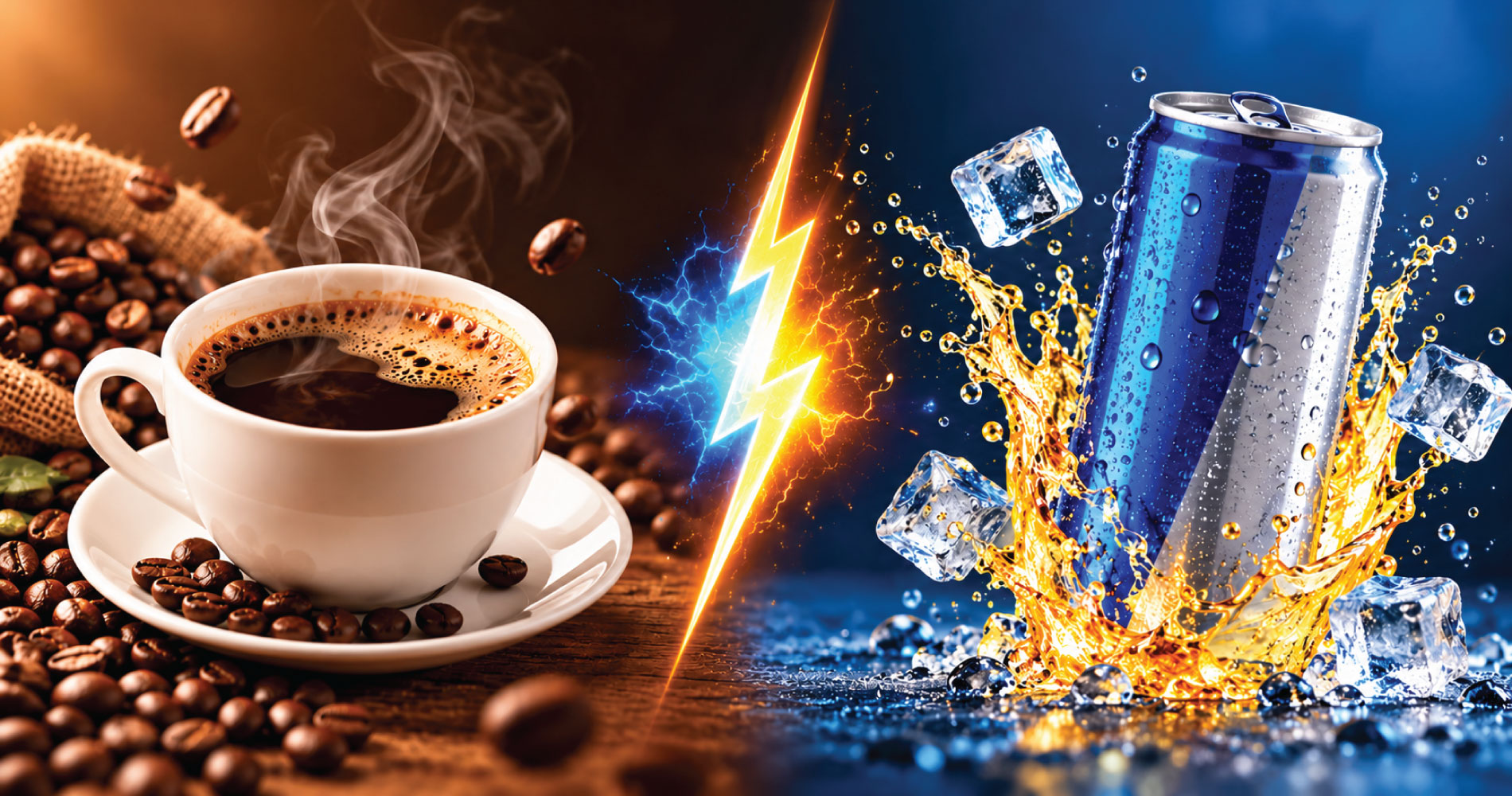
POV: You’ve only slept four hours, three deadlines are looming, and your brain is running on 2% battery. Coffee or energy drink? Choose your fighter. Coffee is the old and reliable morning habit, while energy drinks have become the preferred option for late-night studying, hours of gaming, and getting through those days when even getting out of bed feels like a task. Both claim to help you stay alert, but does one of them actually keep you awake longer?
Here’s the twist: the answer is not as simple as choosing a single winner. Both coffee and energy drinks can contain caffeine. It is a stimulant that affects the sleep-related signals in the brain. However, the amount of caffeine, serving size, sugar, and other ingredients in them can differ significantly.
Let’s understand the science behind this caffeine buzz, compare their effects on focus and sleep, and find out when a caffeine habit starts becoming excessive. Because feeling awake and being well-rested are two completely different things.
Understanding caffeine and how it wakes you up
Before declaring either coffee or energy drinks the winner, it is important to understand what caffeine does after it enters your body. Feeling suddenly awake is not magic; it is a biological process occurring in the body.
What happens in your brain when you consume caffeine?
Throughout the day, while you stay awake, a chemical called adenosine gradually accumulates in your brain. It binds to specific receptors and contributes to the feeling of sleepiness. Normally, the longer you remain awake, the greater the sleep pressure on your body becomes.
Caffeine works by blocking adenosine receptors. As a result, the signals associated with sleepiness may feel temporarily reduced, and you may feel more alert. In some situations, it can also improve focus and reaction speed, especially when you are tired.
But here it is important to understand one thing: caffeine does not eliminate your body’s need for sleep. It only affects the way you feel sleepy, not how much rest your body actually needs. You may feel ready to complete another assignment, but that does not mean your memory, decision-making ability, or thinking skills have fully returned to normal.
Why does caffeine sometimes become less effective?
Have you ever noticed that the first cup of coffee feels like something life-changing, but even after the third cup, writing emails still feels difficult? One reason for this may be caffeine tolerance. When you consume caffeine regularly, your body can adapt to it. As a result, the same amount that used to have an effect may now seem less effective. In such a case, you may feel like taking more caffeine to get the same old effect.
This does not mean that caffeine has become completely ineffective. It means that over time, your body may respond to it differently. Taking more caffeine is not always the solution, especially when you are already struggling with a lack of sleep.
Coffee: The OG productivity partner
The habit of drinking coffee has been passed down through many generations, and even today it remains a favorite among students, office workers, and those who cannot even imagine starting the day without coffee in the morning. But beyond its pleasant aroma and café aesthetic, what makes coffee effective?
How much caffeine does coffee actually contain?
The amount of caffeine in coffee depends on how it is prepared, how much of it there is, which coffee beans are used, and the method of preparation. According to the European Food Safety Authority (EFSA), 200 milliliters of filter coffee contains about 90 milligrams of caffeine, while 60 milliliters of espresso may contain about 80 milligrams. These are estimated figures, not fixed amounts for every coffee.
A large coffee from a café can contain significantly more caffeine than a small cup of coffee made at home. So if you order an extra-large coffee and assume it is just a normal serving, your caffeine intake may be higher than expected.
Can coffee improve concentration and alertness?
Caffeine can improve alertness, focus, and reaction speed for a short time. It can be useful when you need to start work, prepare for an exam, or try to concentrate after getting too little sleep. Another benefit of coffee is that it can be made according to your preference. You can drink it black, add milk, or prepare it with different flavors. Plain coffee without sugar usually has very few calories, while sugar, syrup, cream, and other ingredients can significantly change its nutritional profile.
However, drinking more coffee does not automatically mean better concentration. Taking too much caffeine can cause problems such as restlessness, trembling hands, or difficulty focusing. In other words, the drink you consume to improve focus can sometimes make it harder to concentrate.
What are the disadvantages of drinking coffee?
Coffee is not a magical solution for getting rid of fatigue. Caffeine can cause anxiety, headaches, stomach discomfort, a feeling of a rapid heartbeat, or difficulty falling asleep in some people. In some people, coffee can also worsen heartburn or acid reflux. Its effects depend on a person’s sensitivity, health conditions, medications, and caffeine habits.
Simply put, coffee can be a practical way to consume caffeine, but its benefits depend on how much coffee you drink and how your body responds to it.
Energy drinks: Instant motivation in a can
Energy drinks have built their identity around convenience, bold flavors, colorful packaging, and the promise of staying alert when your schedule leaves you no time to rest. Whether it is gaming, studying, working late into the night, or getting through a long day, grabbing a cold can of energy drink may seem like the easiest solution. But what is actually inside it?
What makes energy drinks different?
Energy drinks usually contain caffeine. Some also include other ingredients such as taurine, guarana, vitamin B, and sugar or sugar-free sweeteners. The formula can vary from one brand and product to another. Special attention should be paid to guarana, because it naturally contains caffeine and can contribute to a product’s total caffeine content.
Vitamin B helps support the body’s normal metabolic processes. However, the presence of added vitamins in an energy drink does not mean it will automatically give you more energy, especially if your body is already getting enough nutrients. Similarly, the presence of taurine or other ingredients does not prove that an energy drink will work better than coffee. Its effect depends on the product’s formula, the quantities of the ingredients, and the scientific evidence available for each ingredient.
Do energy drinks provide a stronger boost?
Some energy drinks contain as much caffeine as coffee, while some may contain significantly more. Serving size matters just as much as the brand. Energy drinks are convenient because their packaging often lists the serving size and caffeine content. However, it is important to check whether the stated amount is for the entire can or only for a small serving.
Regular energy drinks may also contain a significant amount of added sugar. Sugar-free options may contain little or no sugar, but they can still have a high caffeine content.
Therefore, it is not correct to automatically consider energy drinks bad, but it is also not correct to consider them better than coffee. Because of their convenience, people sometimes consume caffeine quickly without thinking about how much caffeine they have already had during the day.
Coffee vs Energy drinks: The head to head comparison
Now let us come to the real comparison. If both drinks can make you feel more awake, then which one should take the first place? The answer is not determined only by the name written on the cup or can.
1. Caffeine content: Which one has more caffeine?
There is no single universal winner. According to the U.S. Food and Drug Administration (FDA), a typical 12-fluid-ounce serving of brewed coffee can contain about 113–247 milligrams of caffeine. Energy drinks of the same serving size can contain about 41–246 milligrams of caffeine. These figures are based on American products. They should not be taken as the exact amount for every brand and product available in India or in other countries.
The main point is that coffee can contain more caffeine than an energy drink, but an energy drink with a higher caffeine content can also contain more caffeine than a small coffee. Always compare the actual amount of caffeine based on the entire container and the serving size. Two drinks that look similar in size can deliver very different amounts of caffeine to the body.
2. Alertness and concentration
Both drinks can provide caffeine, so both can improve alertness. If the amount of caffeine in coffee and an energy drink is roughly equal, it would not be correct to assume that the energy drink will necessarily have a better effect simply because it is an energy drink. Your response also depends on whether you have eaten, how much sleep you have had, how accustomed you are to caffeine, and how quickly your body processes it.
For studying or work, the goal should be to stay alert without uncomfortable side effects. If a drink makes you restless or anxious, its extra stimulation may make it harder for you to concentrate.
3. Sugar and Calories
Black coffee contains very few calories and, unless you add something to it, it has no added sugar. Energy drinks vary in composition. Regular energy drinks may contain added sugar, while sugar-free options may use other sweeteners. Flavored coffee can also contain a lot of sugar, especially when syrups, whipped cream, or sweet sauces are added.
So if you want to reduce added sugar, unsweetened coffee can be an easy option. However, sweet café coffee should not be considered nutritionally equivalent to plain black coffee.
The most useful comparison is between the actual products you are considering buying, rather than between two broad categories such as coffee and energy drinks.
4. Convenience and Price
Home-brewed coffee can be economical, but buying coffee frequently from a café can increase expenses. Energy drinks are easy to carry and do not require a machine or brewing equipment to prepare. Which option is cheaper will depend on your city, preferred brand, serving size, and how often you drink it. However, convenience should not become a reason to ignore your caffeine intake. A drink that is easy to obtain can also be easy to consume repeatedly.
5. Which option is healthier?
Plain black coffee can be a practical source of caffeine for adults who tolerate it well. Energy drinks may contain added sugar and other ingredients, which need to be considered.
But this does not mean that coffee is safe in unlimited amounts or that all energy drinks are the same.
The real winner is determined by the amount of caffeine, the ingredients, the time of consumption, and your body’s response. It is not right to consider a drink healthy just because of branding or marketing.
Which one kicks in faster, and how long does the buzz last?
You have finished your drink, opened your laptop, and are now waiting for your brain to start working. But how long does it actually take?
How quickly does caffeine work?
After you drink caffeine, it begins to be absorbed into the bloodstream. Its effects may be felt in about 15 to 45 minutes, although this can vary from person to person. The amount of caffeine, whether you have eaten, individual metabolism, and other factors can affect how quickly you feel its effects.
An energy drink does not necessarily start working faster than coffee. If both contain roughly the same amount of caffeine, the difference between them may not be as large as the packaging suggests. It cannot be said for certain which one will work faster simply on the basis of whether the drink is in a cup or a can.
How long does caffeine stay in the body?
Caffeine has a half-life. This means the time it takes for about half of the caffeine present in the body to be eliminated is called the half-life. According to the U.S. CDC’s National Institute for Occupational Safety and Health, the half-life of caffeine is often about five to six hours, although it can vary from person to person.
This means that the caffeine from coffee consumed in the afternoon may still be present in the body at bedtime. For example, if you take 100 milligrams of caffeine and assume a five-hour half-life, then after five hours about 50 milligrams may remain, and after another five hours about 25 milligrams of caffeine may still be left. This is only an illustrative example, not an estimate of the exact amount of caffeine in your body. Even if you stop feeling the initial buzz, caffeine can still affect your sleep.
What about the caffeine crash?
After the effects of caffeine wear off, you may feel tired, especially if you are already sleeping less or relying on caffeine to keep working despite fatigue. However, not everyone experiences a caffeine crash, and caffeine is not always the only factor responsible. Lack of sleep, prolonged concentration, irregular meals, and other causes can also contribute to fatigue.
The best approach is not to use caffeine as a substitute for rest. It may temporarily make you feel more alert, but it cannot provide the full benefits of adequate sleep.
Studying, gaming, gym: Which drink fits which situation?
People have different reasons for consuming caffeine in different situations. But the most useful option is the one that meets your needs without creating new problems.
Exam time: Coffee or energy drinks?
When deadlines are approaching, caffeine may seem like the best companion for studying. It can temporarily increase alertness, but using it in place of sleep can have the opposite effect.
Sleep helps strengthen memory, retain what has been learned, and maintain concentration. Staying awake longer does not mean that studying will be more effective.
If you choose to consume caffeine, pay attention to the amount and do not take it so late that it starts affecting your sleep. A study plan built with adequate rest and intermittent breaks is often more useful than repeatedly consuming caffeine.
Office and College Days
Coffee can easily be incorporated into a morning routine, while energy drinks may seem convenient for travel or for immediate consumption. However, neither option guarantees consistent productivity. If you are feeling persistently tired, it may be helpful to pay attention to your sleep, workload, water intake, and eating habits rather than simply having another drink.
Gaming and Working Late at Night
Caffeine can increase alertness, but feeling awake does not mean that fatigue-related problems have been completely resolved. Repeatedly consuming energy drinks to extend gaming or working hours can affect sleep and create a cycle of fatigue followed by more caffeine intake.
If you are finding it difficult to keep your eyes open, it is better to take a break or sleep rather than continuously increasing your caffeine intake.
Before a workout
In some situations, caffeine can improve certain aspects of exercise performance. However, the right amount depends on the individual, and taking more caffeine is not always better. Check the caffeine content in pre-workout supplements, coffee, and energy drinks, especially if you are planning to take them together. Taking multiple stimulant products at the same time can make your total caffeine intake higher than expected.
The not-so-fun side: What can too much caffeine do?
Caffeine can be useful, but the body has its limits too. The symptoms of taking too much caffeine do not always appear severe at the beginning.
1. Anxiety and restlessness
Taking too much caffeine can cause restlessness, trembling hands, nervousness, or feeling more stressed than usual. If you already have anxiety issues, caffeine can intensify these feelings. You may experience trembling hands, racing thoughts, or difficulty concentrating.
If this happens repeatedly, consider reducing caffeine instead of taking stronger products.
2. Changes in Heart Rate and Blood Pressure
Caffeine can temporarily raise blood pressure, and some people may feel their heartbeat become faster or irregular. Caution is especially necessary with energy drinks that contain a high amount of caffeine, particularly when they are consumed quickly or taken with other stimulant products.
People who have certain heart-related conditions or who take medications that may interact with caffeine should speak with their doctor about the appropriate caffeine intake.
Chest pain, fainting, or a dangerously fast or irregular heartbeat should not be ignored as a normal caffeine buzz. If this occurs, seek medical help immediately.
3. Sleep Problems
This is one of the most significant disadvantages of caffeine. You may feel sleepy, but because caffeine remains active in the body, you may still be unable to fall asleep even after lying in bed. In some people, caffeine can also affect the duration or quality of sleep, even if they do fall asleep. If sleep is repeatedly affected, you may feel tired the next day and begin to feel the need to take caffeine again.
4. Tolerance and Withdrawal
Regular caffeine intake can lead to tolerance. If you suddenly stop taking caffeine, you may experience symptoms such as headache, fatigue, irritability, or difficulty concentrating. Because of these symptoms, reducing caffeine may seem more difficult than expected. If you regularly consume caffeine and want to cut down, gradually reducing the amount may help lessen withdrawal symptoms.
5. Why should young people exercise extra caution?
Energy drinks are often promoted alongside sports, gaming, and youth lifestyles, but that does not mean they are suitable for everyone. The American Academy of Pediatrics advises children and adolescents to avoid energy drinks. Children and adolescents should not use high-caffeine products to deal with fatigue or make up for too little sleep. Pregnant people and individuals with certain health conditions may also need to consume less caffeine. Everyone’s situation is different, so general advice given for adults should not be applied to everyone.
Sugar, labels, and sneaky ingredients: Read before you sip
Sometimes the biggest surprise is not the amount of caffeine, but everything that comes with your drink.
Check the sugar content
Regular energy drinks may contain added sugar, and flavored coffee can also contain a lot of sugar. Drinking sweetened beverages regularly can increase your intake of added sugar. If you want to reduce sugar, compare nutrition labels and consider choosing unsweetened coffee or lower-sugar options. Remember that sugar-free energy drinks can still contain caffeine. Zero sugar does not mean zero stimulant effect.
Pay attention to serving size
The caffeine amount listed on a product label may be for one serving rather than the entire can. If a can contains multiple servings and you drink the whole can, your total caffeine intake may be higher than expected. Also pay attention to caffeine from ingredients such as guarana. Instead of looking only at the separately listed caffeine amount, try to understand the total caffeine content in the product.
Do extra vitamins make energy drinks healthy?
Not necessarily. Vitamin B is important for normal energy metabolism, but that does not mean that taking extra amounts will make you feel more energetic, especially when your body is already getting enough vitamins. Similarly, the presence of other ingredients in a product does not by itself prove its benefits. It is important to look at their amounts and the scientific evidence available about them.
So, which one should you choose?
If your goal is to feel more awake, both coffee and energy drinks can help, because both can provide caffeine. For many adults, plain coffee is an easy option. Its ingredients are relatively simple, the caffeine content is predictable, and it can be prepared without added sugar. Energy drinks can be convenient, but the amounts of caffeine, sugar, and other ingredients vary. Therefore, it is important to read the label.
No option is right for every person. If caffeine causes anxiety, a rapid heartbeat, stomach discomfort, or sleep problems, reducing caffeine may be more beneficial than switching brands. Your choice should depend on your health, your needs, the serving size, and your total caffeine intake throughout the day.
Your caffeine survival guide: Smarter ways to stay awake
Want to stay alert without turning your routine into a caffeine marathon? Keep these practical habits in mind.
- Track total caffeine: Count the caffeine you get from coffee, energy drinks, tea, chocolate, supplements, and other sources as well.
- Check labels: Before drinking, look at the amount of caffeine in the container, the serving size, and any added sugar.
- Respect bedtime: Avoid taking caffeine close to bedtime, especially if you already have sleep problems.
- Reduce gradually: If you regularly consume caffeine and want to cut back, slowly reducing the amount can help lessen withdrawal symptoms.
- Prioritize real rest: Enough sleep, regular meals, water, and physical activity are essential for good health.
- Understand the signals from your body: if you frequently experience symptoms such as restlessness, anxiety, or a rapid heartbeat, reconsider your caffeine intake and consult a doctor if necessary.
According to the FDA, up to 400 milligrams of caffeine per day is an amount that is generally not associated with negative effects for most healthy adults. However, this does not mean that this amount is safe for every individual or that everyone should aim to consume that much. Sensitivity to caffeine, medications, pregnancy, and health conditions can change the amount that is appropriate for a person.
Conclusion: The real winner isn’t that simple
Coffee or energy drinks? The answer depends on the amount of caffeine, serving size, ingredients, the time of consumption, and your body’s response. Both can temporarily increase alertness, but neither can replace a good night’s sleep.
Plain coffee can be a convenient everyday option for many adults, while it is important to read the labels carefully on energy drinks because of the caffeine and other ingredients they contain. There is no single option that is better in every situation.
So the next time you reach for another can or cup, ask yourself whether you need caffeine or just rest. Because the real productivity hack is not staying awake at any cost, but giving your mind what it truly needs.
Disclaimer
This article is intended for informational and educational purposes only and should not be considered a substitute for professional medical advice, diagnosis, or treatment. Caffeine content varies between products, and its effects differ according to individual sensitivity, age, medications, pregnancy status, and medical conditions. The caffeine amounts discussed are estimates and may not reflect every product available in India or elsewhere. The FDA’s commonly cited limit of 400 mg per day applies to most healthy adults and is not appropriate for everyone. Adolescents should avoid energy drinks. If you experience some concerning symptoms after consuming caffeine, seek medical advice. For severe symptoms, including chest pain, fainting, or a dangerously rapid or irregular heartbeat, seek urgent medical attention.
FAQs
1. Is coffee healthier than energy drinks?
Plain coffee is often a lower-sugar and relatively simpler option, but no single drink is healthier in every situation. The amount of caffeine, serving size, added sugar, other ingredients, and an individual’s sensitivity all matter. It is better to compare actual products rather than rely on general assumptions.
2. Do energy drinks contain more caffeine than coffee?
Not necessarily. Some energy drinks contain less caffeine than a cup of coffee, while others may contain more. The amount depends on the brand and serving size. So, be sure to check the label to understand how much caffeine you are consuming.
3. Is coffee better than energy drinks for studying?
Both can temporarily increase alertness. However, neither can replace sleep, and too much caffeine can cause anxiety or difficulty concentrating. Choose based on your caffeine tolerance and the amount of caffeine in the product, and do not compromise on sleep just to study longer.
4. How long does the effect of caffeine last?
The effect of caffeine can last for several hours. Its half-life is often around five to six hours, although this depends greatly on the individual. Therefore, caffeine taken in the afternoon or evening can affect sleep, even after the initial buzz has worn off.
5. How much caffeine is safe to consume daily?
According to the FDA, up to 400 milligrams of caffeine per day is an amount that is generally not associated with negative effects for most healthy adults. However, the appropriate amount can vary from person to person. Teenagers should avoid energy drinks, and pregnant people should follow medical advice appropriate to their pregnancy.

Content Writer with 3+ years of experience turning ideas into words people want to read, share, and remember. I create research-backed social media and lifestyle content that blends storytelling, creativity, and audience insights to make every piece feel fresh, relatable, and engaging.