
Abstract
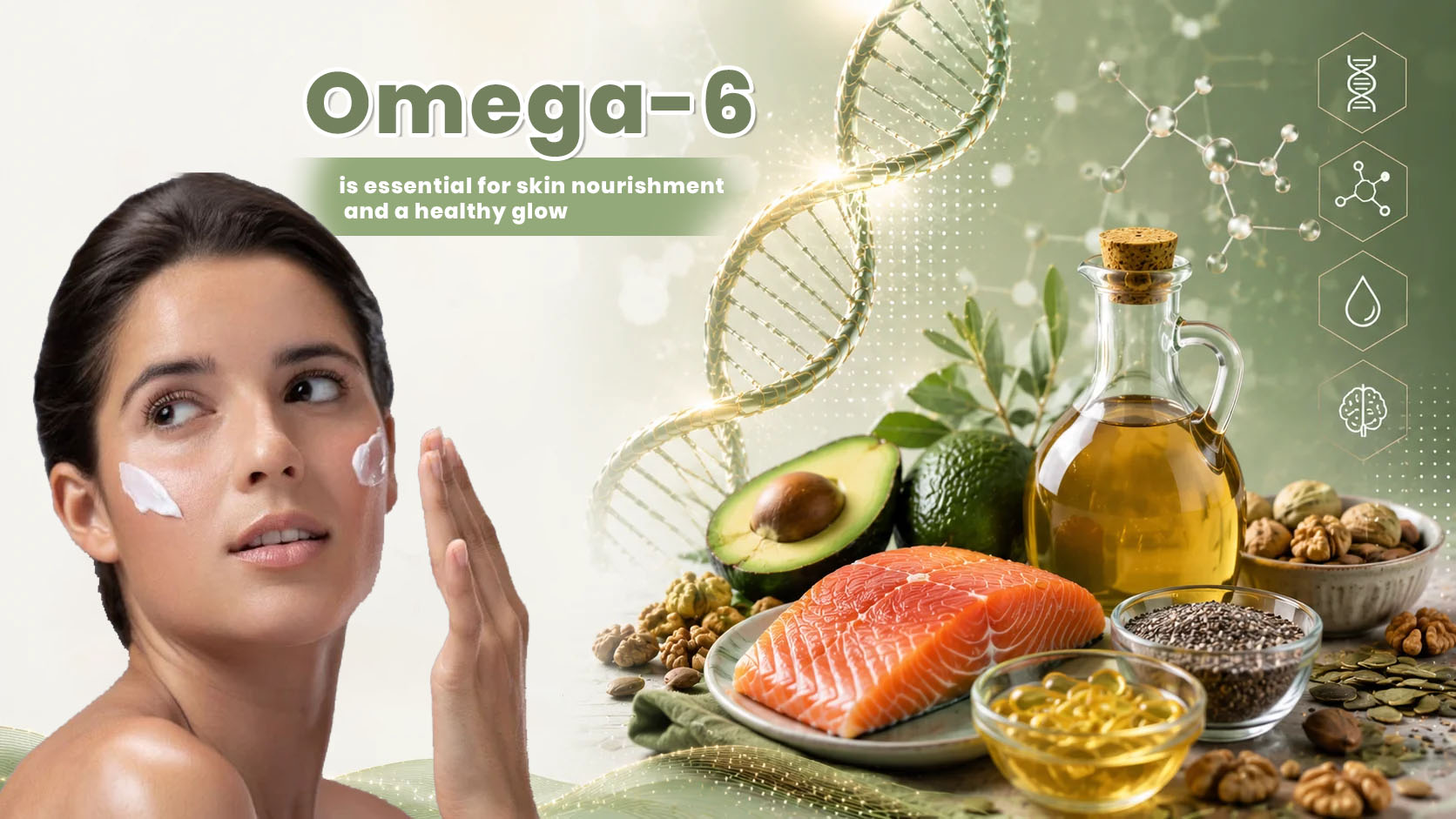
Omega-3 is an essential fatty acid, which our body cannot produce in sufficient quantities on its own. Therefore it has to be obtained through food or supplements when required. This article presents the scientific information about Omega-3 in simple language. It explains what Omega-3 is, how it got its name, where it is found in the body and what role it plays in the normal functioning of cells, brain, eyes, skin and hair.
It is also explained that Omega-3 is not a medicine or instant beauty formula, but an important part of balanced nutrition. The article also explains its relationship with digestion, absorption, cell membranes, skin barriers and general inflammatory response processes of the body in a simple scientific approach. This article is useful for readers who want fact-based information about Omega-3.
In our previous article, we had learned only about Omega, but today we have brought for you the next part of this series which is about Omega-3, and today through this article we will know what Omega-3 is and how important it is for skin, hair and our overall health. Not only this, we will also know how they work for us. So let’s know about this…
What is Omega-3?
In today’s time, the name of Omega-3 is heard in discussions related to health, fitness, skin and nutrition. Now the thing to think about is that some say it is good for the heart, some say it is good for the brain and some say it is good for hair and skin. But have you ever wondered what exactly Omega-3 is, how it works in the body and why it is so important.
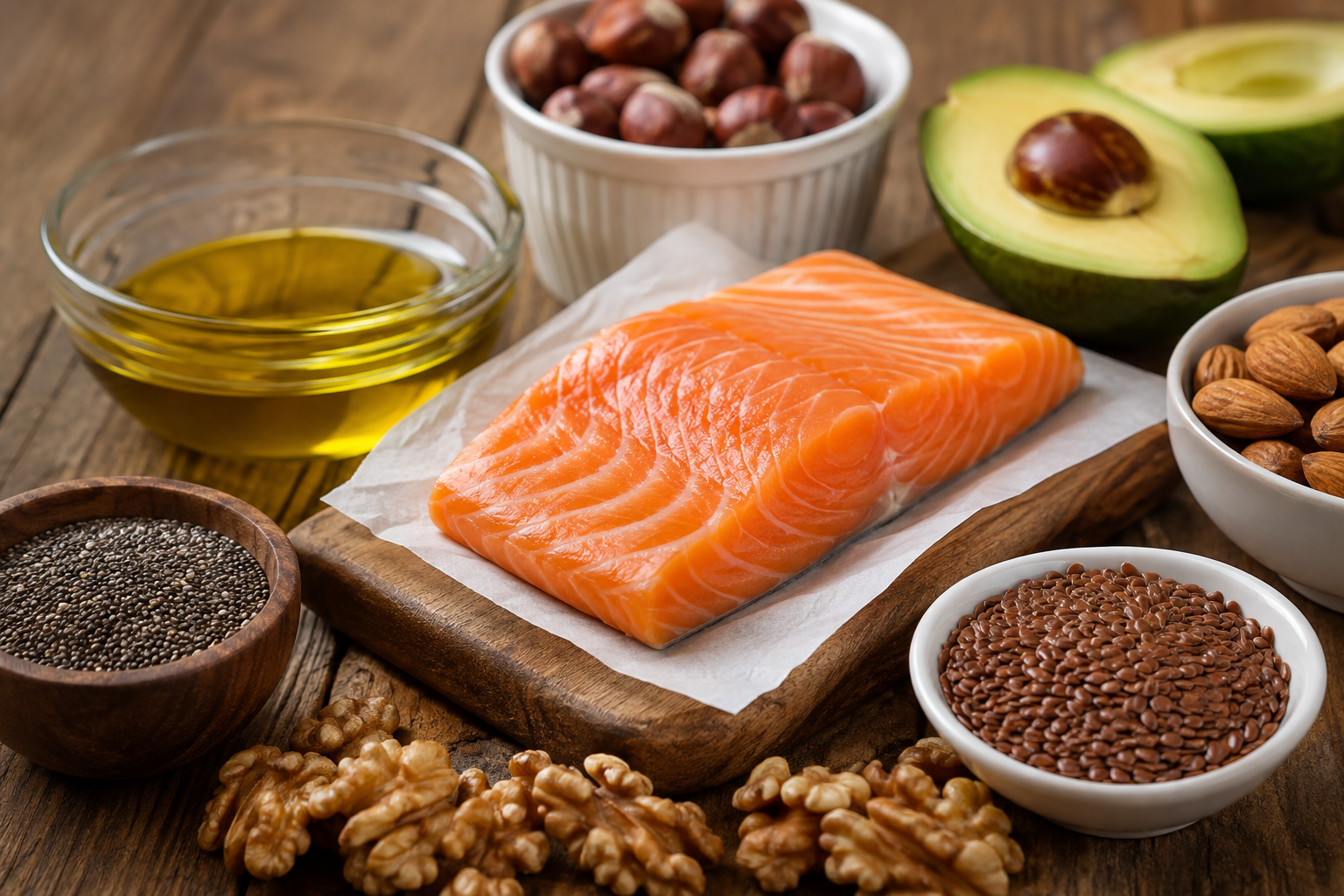
Because Omega-3 is not a vitamin or mineral, rather it is a type of fatty acid which is always considered essential for our body, since the human body cannot produce it in sufficient quantity on its own, hence it has to be taken through food or supplements.
Omega-3 plays a special role in every part of the body, directly and indirectly. Along with the structure of cells, it works to fulfill the functions of brain, eyes, skin, hair and many other biological functions of the body. This is the reason why it is given a special place in a balanced diet.
Omega-3 is a fat, but not every fat:
We always hear one word fat and after hearing it it seems that it has an image of weight gain or unhealthy food, but it is not necessary that all fats are the same, there are differences in some fats in many ways.
Similarly, the human body needs some types of fats for energy, structure of cells, hormone production and many other body functions, and Omega-3 is said to be one of these essential fats.
Along with this, it is sometimes called health fat because it plays a special role in maintaining the body’s ability to work at times. But like any nutrient, its benefits are best seen only in balanced quantities and in the context of a balanced diet.
What is Essential Fatty Acid?:
A term that refers to certain essential nutrients that our body cannot produce on its own. But there are many fats which the body produces on its own, but there are some special fatty acids which need to be obtained from food.
These are called Essential Fatty Acids, and Omega-3 is a special part of this category. If it is not available in sufficient quantities in the diet for a long time, some normal biological processes of the body may get affected.
Why can’t the body make Omega-3?
This is a question that comes to everyone’s mind. The correct answer is that the human body produces many types of nutrients on its own, but this is not at all the case with Omega-3.
The reason for this is that the human body does not have all the enzymes which are sufficient to make Omega-3. For this reason, our body remains dependent on food, and nutritionists recommend including Omega-3 rich foods in a balanced diet.
Where is Omega-3 found in the body?
Even today many people may think that Omega-3 is found only in blood.
Whereas its reality is more interesting and surprising.
Omega-3 is found in many important tissues and cells of the body, such as:
- Brain
- retina of eyes
- skin cells
- Cells around hair follicles
- Nerves
- heart
- Immune System (Immune Cells)
Especially since it is considered a special part of the outer layer of cells, and its function is not limited to just one nutrient but it is associated with many physiological processes.
What does Omega-3 do in the body? :
As we have talked about in this article till now, Omega-3 is not a medicine, rather it is a special element that helps in the normal functions of the body.
Its major roles in the body include—
- Contributes to maintaining the normal structure of cells
- Role in normal brain development and function
- Contributes to normal eye function
- Helps maintain normal skin structure and moisture
- Support the normal function of cells that deliver nutrition to the hair roots
- Participation in the body’s normal inflammatory response processes
We will understand the detailed scientific information about these roles in the next sections.
Is Omega-3 available only from fish?
This is a question that comes in the mind of every second person in the world today, but the answer is as simple and the correct answer is that (no) it is completely false. Omega-3 is found in many types of foods, some of which are from marine sources while many are also obtained from plants.
Now if a person is cooperative then it is good that he will get Omega-3 naturally, but the types of Omega-3 found in different sources can also be completely different, which we are going to understand only in the section on types of Omega-3.
Does everyone need Omega-3?
There is no doubt that Omega-3 is an essential nutrient, hence it is very important for people of all ages. However, its requirement may vary according to the person’s age, health status, diet and lifestyle.
For example-
- For normal development in growing children
- For balanced nutrition in adults
- In terms of nutritional requirements during pregnancy and breastfeeding
- As part of a balanced diet in old age
If a person has any health condition or needs supplements, he should consult a doctor or registered dietitian once.
Will the body become healthy just by taking Omega-3?
No, it is not at all so, we need to understand that no single nutrient ever guarantees good health of the entire body. Omega 3 is a part of a balanced diet, regular physical activity, adequate sleep and a healthy lifestyle. Its benefits are also seen in combination with all these factors.
Key Takeaways
- Omega-3 is an essential fatty acid.
- The body cannot make enough of it on its own.
- It is obtained from food or supplements when needed.
- It contributes to the normal function of many organs, including cells, brain, eyes, skin and hair.
- Omega-3 is not a medicine, but an important part of a balanced nutrition.
- Different types of Omega-3 are found in different food sources.
Whenever we eat food rich in Omega-3, it does not go directly to our brain, skin or hair, but it has a long and complex process, in fact it all depends on the digestion of food, breakdown of fat, absorption by the small intestine and then its spread throughout the body through blood.
But if any problem occurs in any of these stages, then even after eating enough Omega-3, it is not considered useful for the body.
Omega-3s enter the body through food:
Most omega-3s enter the body through food, found in many natural foods, for example, seafood, seeds, nuts, and some plant-based sources.
Whenever we consume food rich in Omega-3, it starts the digestive system like other elements.
The main stages of this journey are-
- Mouth
- Esophagus
- Stomach
- Small Intestine
- Absorption into Blood
Till now we have talked about the function and importance of Omega-3 in our article, but now we will know further how Omega-3 works for skin and hair and why it is important.
Beautiful skin and strong hair are not achieved only because of expensive skin and hair care products, but their foundation starts from within the body itself. Every cell of skin and hair needs energy, proteins, vitamins, minerals and essential fats to function properly, and one of these essential fats is Omega-3.
In the last several years, Omega-3 has been discussed in many ways and many types of research have also been done on this topic. Many people associate it with skin glow, hair growth and anti-aging. However, if seen scientifically, Omega-3 is not a beauty booster but it is a special part of the normal biological process of the body.
Its job is not to make the skin shiny overnight or to make the hair long and thick in a few days, apart from this it promotes normal functioning of those cells and is also responsible for improving the health of the skin and hair.
Now it is very important for all of us to know that the effect of Omega-3 is not on the skin layer like a cream but on the cellular level only. Therefore, first of all it is important to know how it reaches the skin and hair cells after reaching the body.
Skin and hair are actually made of living cells:
One thing is clear that people always associate skin and hair only with external beauty, but if we look at it scientifically, it is one of the most active tissues of the body.
Skin is the largest organ of the human body, it not only works to cover the body but it also fulfills many important functions like –
- Protecting the body from bacteria and viruses.
- Controlling body temperature.
- Preventing excessive water shortage.
- Providing partial protection from the sun’s UV rays.
- Feeling sensations such as touch, heat, and cold.
And in the same way, hair is not just a bunch of dead keratin, but the root of every hair is alive, and here new cells are always being formed and hair growth is seen.
How does omega-3 reach the skin from food?
We have already talked about this that after being absorbed, Omega 3 goes into the blood through a special type of lipoprotein, Bluff works to send it throughout the body and due to this the cells take it up.
What happens after it reaches inside the skin cell?
This is the stage where Omega-3 starts doing its special work, from where a thin but very important layer is formed outside every cell, which we know in common language as cell membrane.
The function of cell membrane is not only to cover the cell. It decides—
Which nutrient will go inside the cell?
Which substance will come out?
How will cells communicate with other cells?
How will the cell recognize external signals?
Omega-3 can become a very important part of this cell membrane; it is not very difficult to understand this. If the cell is in the form of a house then the cell membrane works as its wall and door, and if the door is strong, flexible and organized then only it will keep the house properly from inside.
Role of Omega-3 in Cell Membrane:
The cell membrane is made up mainly of fats and proteins. Omega-3, being a part of these lipids, contributes to maintaining the fluidity (flexibility) of the membrane.
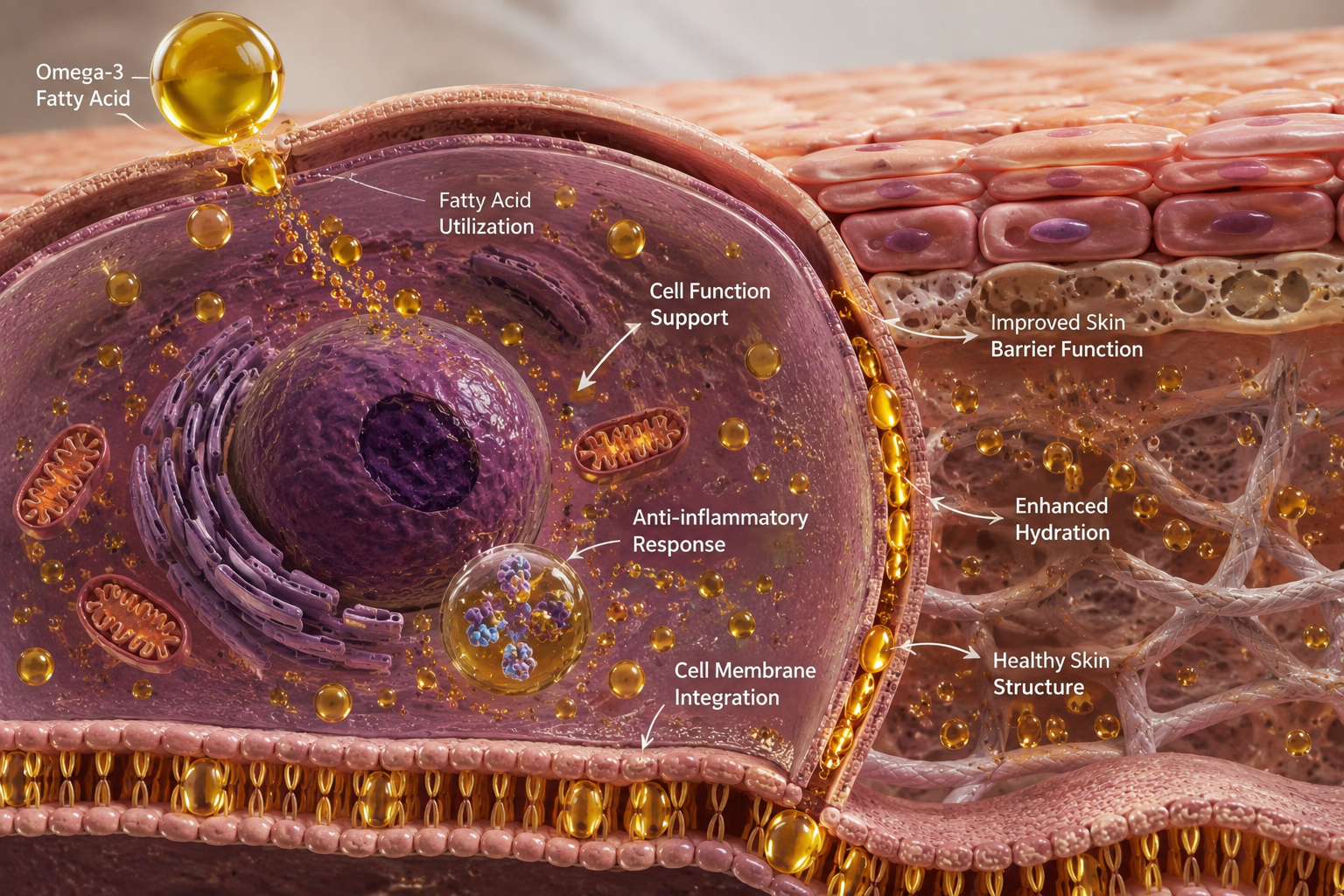
Fluidity means that the cell membrane should neither be too stiff nor too loose.
This balance is necessary because—
- Nutrients can easily reach the cells.
- Cells can exchange signals among themselves.
- Normal cellular functions can run smoothly.
This is why scientists consider Omega-3 not just a nutrient but an important part of cell biology.
What is Skin Barrier?
It is very important for us to understand what is skin barrier, then the correct answer is that the outermost part of the skin is called skin barrier in common language. You can also call it the body’s ‘natural safe shield’.
The function of skin barrier is-
- Maintaining moisture inside the skin.
- Providing protection from dust, pollution and allergy causing elements.
- Limiting the entry of harmful microorganisms.
- Preventing excessive water loss from the skin.
If the skin barrier gets damaged, the skin appears dry, sensitive and easily affected.
How does Omega-3 support the skin barrier?
There are also natural lipids between the cells of our skin barrier, but Omega-3 helps in the normal functioning of these cells and plays a special role in the structure of the cell membrane. For this reason, as part of adequate nutrition, it is said to be helpful in maintaining the normal health of the skin barrier.
It is very important for all of us to understand that Omega-3 is not a barrier repairing cream but helps in carrying out the normal functioning of skin cells from within the body.
Role in maintaining skin hydration: There is no doubt that water balance is very important in healthy skin. If the skin barrier does not function properly then the amount of water in the skin starts decreasing rapidly. Where we call this process transepidermal water loss.
But when this matter was researched more deeply, it was found that consumption of Omega-3 is considered good for maintaining normal moisture of the skin. However, its effect depends on the individual’s dietary status, age, skin type and overall health.
Does Omega-3 give instant skin glow?
In today’s time, a person who is active on social media would know that many types of claims have already been made on it. Omega-3 does not give instant glow like any cosmetic product.
If there is a lack of essential fats in a person’s diet and he gets balanced nutrition, then with time one can see improvement in the general health of the skin and this is called “Instant Glow Formula”. It would not be right to call it.
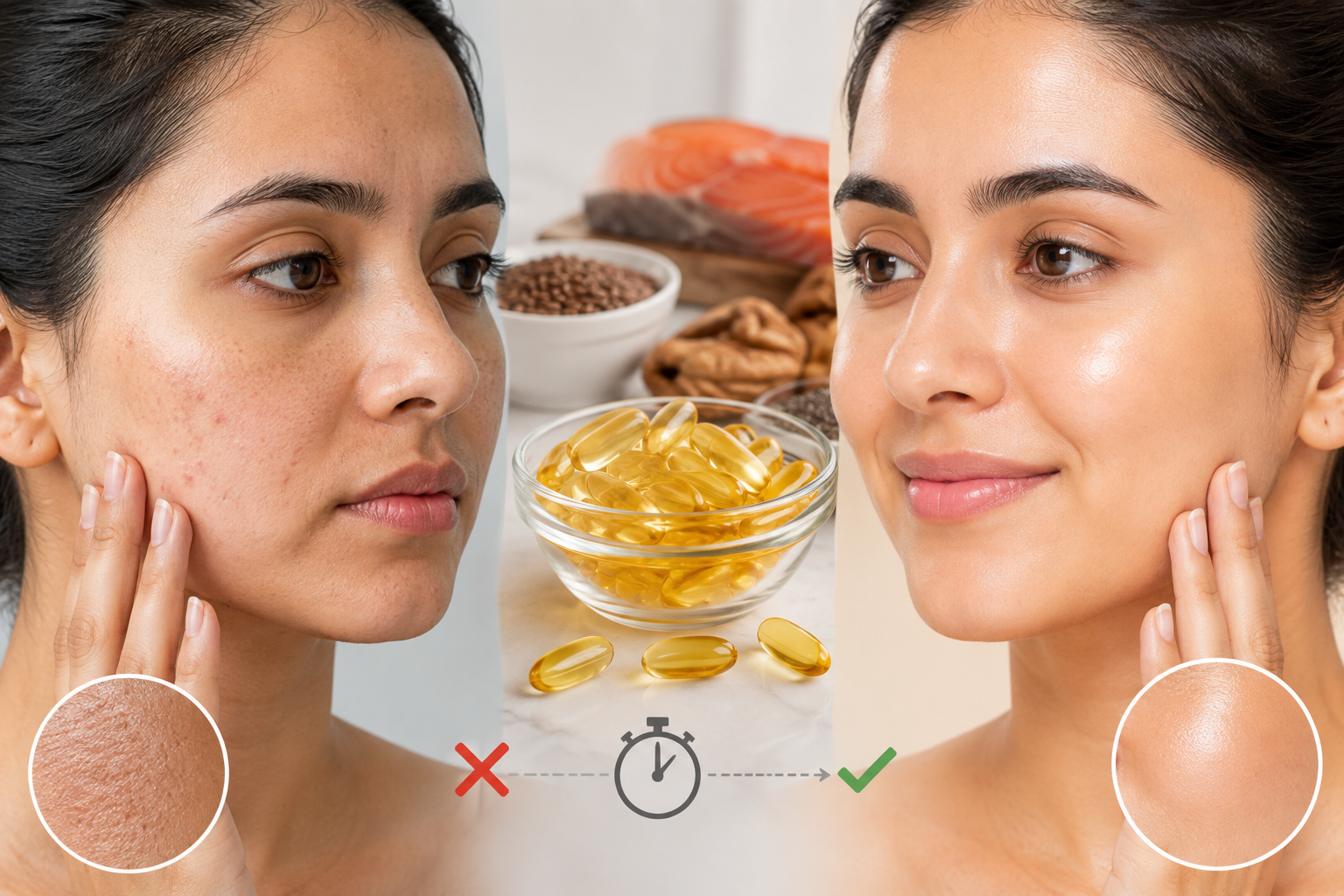
Now the thing to think about is that skin is only an external part of our body, rather it is an organ which remains in contact with the external environment all the time, dust, pollution, UV rays of the sun, bacteria, allergy causing elements and changes in weather – the skin is the first to be affected by all these.
For this reason, a controlling inflammatory response (inflammation-regulatory process) goes on inside the skin all the time. This process is said to be a part of the body’s natural defense system. When it is balanced, the skin functions normally. But when it becomes excessively active, it can worsen the condition of Dry Skin, Redness, Irritation and some skin diseases.
Omega-3 is said to be an important nutrient related to this biological process. It does not immediately eliminate inflammation like a drug, but rather can further affect the normal inflammatory response by interfering with certain lipid mediators and cell signaling pathways produced by the body.
First of all understand – what is Inflammation?
Before moving ahead in this article about skin, it is important to understand what is Inflammation, so let’s talk. Whenever we hear the word inflammation, it feels like a disease. When the skin gets injured or any other type of microorganism enters the body, the immune system becomes active. This entire process is known as Inflammatory Response.
Its purpose is-
- Protecting the body.
- To repair damaged tissues.
- Protect from infection.
Problems occur when this response persists longer than necessary or becomes uncontrolled.
How does Omega-3 participate in this process?
Now the question is how Omega-3 participates in this entire process, then let us tell you that when Omega-3 reaches inside the body, a part of it gets attached to the membrane of the cells whenever the body needs Inflammatory Response for some reason. Then this cell membrane works to provide raw material for making many types of biological messengers (Bioactive Lipid Mediators).
Conclusion
Omega-3 is not just a nutrient, but an important part of normal biological processes in the body. It contributes to the structure of cells, normal function of the brain, eyes, skin and hair.
However, it should not be seen as a miracle cure or a solution that gives instant results. Proper intake of Omega-3 rich foods along with a balanced diet, regular exercise, adequate sleep and a healthy lifestyle are more important for good health.
If a person feels the need to take omega-3 supplements, he or she should consult a doctor or registered dietitian.
Disclaimer:
This article has been written for the purpose of providing general educational and health related information only. The information given herein is not a substitute for any type of medical advice, diagnosis or treatment. Consult with a qualified physician or registered dietitian regarding any health problem, illness or disease before using supplements. If you have any allergies, chronic disease, pregnancy, breastfeeding, or other medical condition, do not start any supplements or treatments without expert advice.
FAQs (Frequently Asked Questions)
1. What is Omega-3?
Omega-3 is an essential fatty acid, which the body cannot make in sufficient quantities on its own and must get from food or supplements.
2. Is Omega-3 found only in fish?
No. In addition to fish, omega-3s are also found in flaxseed, chia seeds, walnuts and some other plant-based sources.
3. Is Omega-3 beneficial for the skin?
Omega-3 contributes to normal skin structure, moisture retention, and normal function of the skin barrier. This is not a cosmetic product that gives instant glow.
4. Does Omega-3 increase hair growth?
Omega-3 supports normal cellular activity in the hair roots, but it is not a solution to growing longer or thicker hair in a matter of days.
5. Does everyone need Omega-3?
Yes, it is an essential nutrient. However, its requirement may vary according to age, diet, health condition and lifestyle.
6. Will the body become completely healthy just by taking Omega-3?
No. Good health also depends on a balanced diet, regular exercise, adequate sleep and a healthy lifestyle.
7. When should Omega-3 supplements be taken?
If Omega-3 is not available in sufficient quantity from food or if the doctor advises it, then taking supplements is considered appropriate.
8. Does Omega-3 reduce inflammation?
Scientific studies suggest that omega-3 participates in the body’s normal inflammation-regulatory processes, but should not be considered a substitute for the treatment of any disease.
9. Are there any side effects of Omega-3?
Omega-3 obtained from food in normal amounts is considered safe. It is best to consult a doctor before taking supplements, especially if you are taking any medications.
10. How can Omega-3 deficiency be compensated?
This can be accomplished by including Omega-3 rich foods in a balanced diet and taking supplements as per medical advice if necessary.
Also Read:
White Discharge: Is It Normal or a Major Risk? Find Out Now!

Emanual Massey is a healthcare, lifestyle, and beauty content writer with over 7 years of professional experience. He specializes in writing SEO-optimized, research-based articles on health, wellness, nutrition, skincare, beauty, and Ayurveda. His mission is to simplify complex topics into practical, reader-friendly content that empowers people to make healthier lifestyle choices. Passionate about continuous learning and evidence-based writing, Emanual creates informative and engaging blogs that combine accuracy, readability, and search engine optimization.