
Abstract
Have you ever heard that the darker your mehndi stains, the more your partner will love you? This age-old belief gradually became a fun tradition, but in the process, the desire to get the darkest mehndi color turned into an obsession.
These days, people want a deep color without waiting 8-9 hours for traditional mehndi to dry. Amid busy routines, weddings, and festivals, instant mehndi has become a convenient option. It promises quick application and a deep color.
But here is something to think about: how does instant mehndi give such a deep color so quickly? While natural mehndi slowly leaves a reddish-brown stain, some chemical-based products may contain synthetic colours that can cause reactions such as skin irritation and allergies.
So, before choosing instant mehndi for that perfect mehndi color, let’s understand how it works, what its possible side effects are, and why a darker color is not always the better option.
Introduction: Why is everyone obsessed with dark mehendi?
Do you remember that famous saying that the darker your mehndi stains, the more your partner will love you? This has been said for generations, especially during weddings and festivals. And honestly, who doesn’t secretly want to look at the color on their palms and know how deeply the mehndi has stained?
Mehndi is deeply connected to Indian traditions. From Karva Chauth and Teej to weddings and family gatherings, applying mehndi brings excitement and memories with it. But today, this passion is not limited to beautiful designs alone. Everyone wants a mehndi color that is deep, looks stunning in photos, and lasts a long time.
What is the problem? Natural mehndi requires patience. Depending on the application method and the desired result, its paste may need to be left on the hands for several hours. And honestly, not everyone has the time to sit for 8-9 hours and let it dry.
Between college, work, wedding preparations, and other responsibilities, people are quickly starting to prefer such instant mehndi, which promises to give a deep color in a short time.
It sounds like some kind of beauty hack, doesn’t it?
But here’s the twist: the secret behind some very dark and fast-coloring products may not even be natural mehndi. Some products use synthetic colorants to get color quickly, and some may contain chemicals that can cause skin allergies. So is it right to put your skin at risk just to save a few hours? Let’s understand.
Why is instant mehendi becoming so popular?

Instant mehndi is becoming popular because it meets a growing need of people, which is convenience. There are a few reasons behind its popularity.
Less waiting is needed
Traditional mehndi needs to stay in contact with the skin for several hours to give a good colour. Instant products attract people who want to avoid a long wait, especially before a special occasion.
Obsession with deep mehndi color
Social media has turned deep mehndi color into a beauty trend. Wedding photos, reels, and festival posts often show hands with dark colour, which makes people want to get the same color too.
Convenience of last-minute use
Forgot to apply mehndi before a wedding function? Instant mehndi seems like an easy solution. Its claims of giving colour in less time attract people who like to do their beauty preparations at the last minute.
Easily available
Instant mehndi cones are easily available at local shops, beauty stores, and online platforms. Their availability makes them a convenient option for people who want quick results. However, in the pursuit of convenience, one should never forget to understand what one is applying to one’s skin.
Natural henna vs. chemical mehendi: What’s the difference?

Before choosing your next mehendi cone, it is important to understand how natural henna differs from chemical-based colour products.
Natural Henna: The Traditional Way
Natural henna comes from the leaves of the henna plant, scientifically known as Lawsonia inermis. These leaves are dried, powdered, and mixed with suitable ingredients to create a paste.
Henna contains a natural colouring compound called lawsone, which binds with proteins in the outer layer of the skin to produce an orange, reddish-brown, or deeper brown stain. The colour does not develop instantly. It gradually becomes darker over approximately 24-48 hours.
This is why traditional mehendi requires patience. Its gradual colour development is a natural part of the process.
Chemical Mehendi: The Faster Alternative
Certain instant mehendi products contain synthetic colourants designed to create darker stains quickly. One chemical that deserves particular attention is PPD (para-phenylenediamine), commonly used in some hair dyes.
PPD may be added to products marketed as black henna to produce a much darker stain in less time. However, it can cause allergic contact dermatitis and other serious skin reactions. Not every instant mehendi product contains PPD, but consumers should be cautious about products that promise unusually dark stains without transparent ingredient information.
Why Does Chemical Mehendi Produce Darker Colour So Quickly?
Ever wondered why natural henna takes hours to develop its colour while certain chemical mehendi products appear almost black in a much shorter time? The difference lies in their colouring ingredients.
Natural henna relies on lawsone, which gradually binds with the skin’s outer proteins. This process takes time and produces the familiar reddish-brown colour. Some chemical-based products use additional synthetic dyes to create a more intense appearance. PPD, for example, can produce dark staining much faster than natural henna.
This explains why certain black henna products are marketed as quick-staining alternatives. But remember: a darker stain does not automatically mean better quality, purity, or safety.
What Are the Side Effects of Instant Mehendi on Your Skin?

Now comes the part that deserves your attention. While natural henna is generally well tolerated by most people, chemical-based products containing unsuitable additives can cause different skin reactions.
Here are some possible side effects of mehendi, particularly those associated with PPD-containing products.
Allergic Contact Dermatitis
One of the most concerning side effects associated with PPD is allergic contact dermatitis. It occurs when your immune system reacts to a substance that comes into contact with your skin. Some common symptoms include:
- Redness around the applied area.
- Persistent itching and irritation.
- Swelling of the hands or fingers.
- Rashes following the mehendi design.
These symptoms may appear hours or even days after application.
Burning Sensation and Skin Irritation
Certain chemical ingredients can irritate the skin, particularly when used in unsuitable concentrations or on sensitive skin. You may experience burning, stinging, redness, tenderness, or unusual discomfort around the application area.
If you notice these symptoms, do not ignore them just because your mehendi colour looks beautiful.
Blisters and Skin Damage
This is where things can become more serious.
Exposure to PPD-containing black henna can trigger severe allergic reactions in some individuals. These may include fluid-filled blisters, painful inflammation, swelling, and skin lesions.
In severe cases, the reaction may leave behind pigmentation changes or scars. That temporary mehendi design may disappear, but the skin damage can take much longer to heal.
Long-Term Skin Sensitization
This is one of the lesser-discussed concerns.
Sensitization happens when your immune system develops an allergy to a particular substance. Once sensitized to PPD, future exposure may trigger allergic reactions, even if the earlier exposure did not cause noticeable symptoms.
This is particularly important because PPD is also found in certain hair dyes. Previous exposure through black henna may increase the risk of reacting to PPD-containing hair dyes later.
So, the potential problem may not end when your mehendi fades.
Changes in Skin Pigmentation
After an allergic or inflammatory reaction, the affected skin may develop post-inflammatory hyperpigmentation. This means the area can appear darker than the surrounding skin after the irritation settles.
Severe reactions may also result in scarring or changes in skin colour.
How to Identify Potentially Unsafe Chemical Mehendi
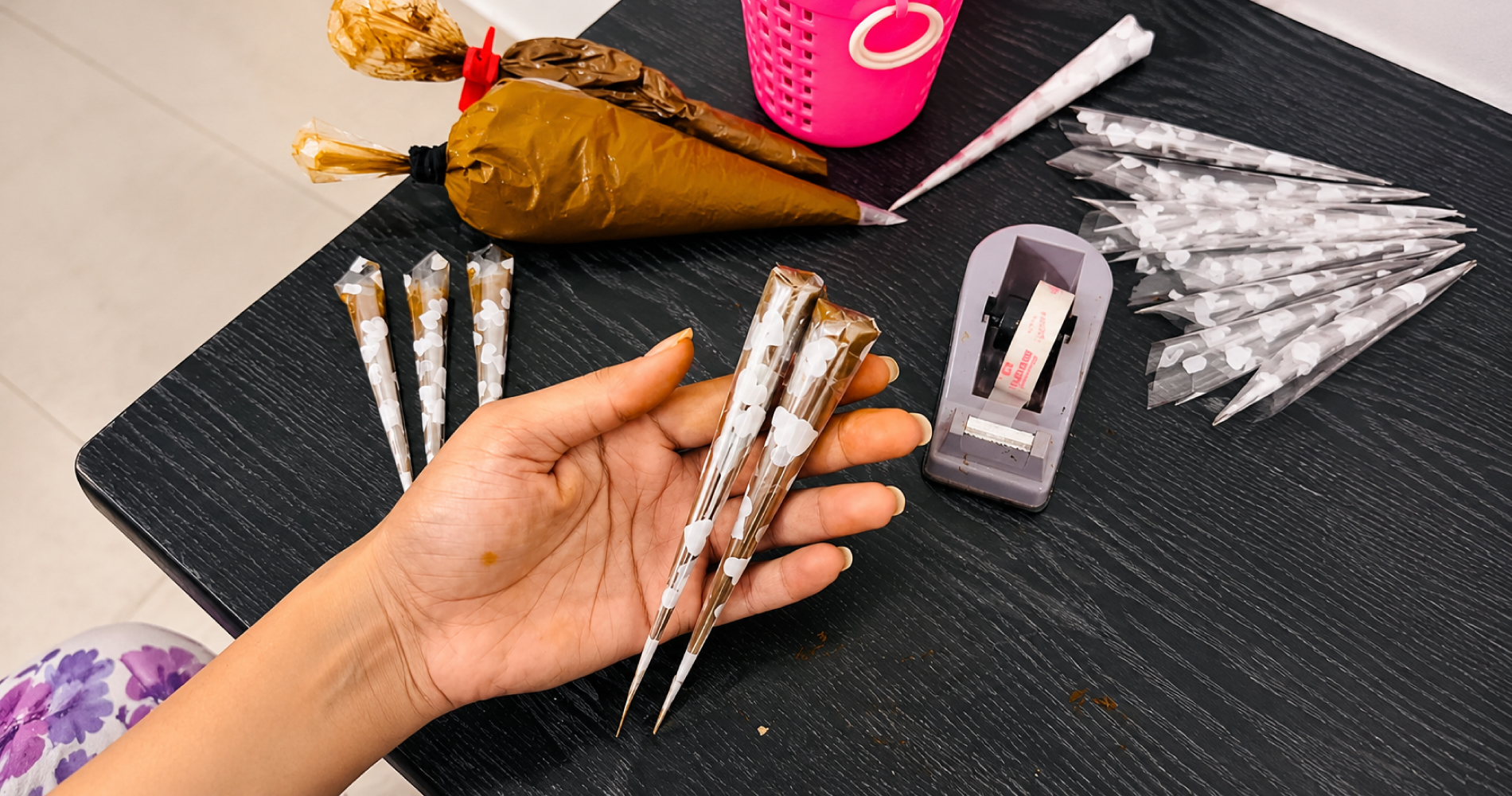
You do not need to become a chemistry expert before purchasing a mehendi cone. However, knowing a few warning signs can help you make better decisions.
Check the Ingredient List
Look for transparent ingredient information. Be cautious about products that do not disclose their ingredients or make vague herbal and natural claims.
Be Careful With Extremely Dark Products
Natural henna generally produces orange-brown to reddish-brown stains. Products promising an almost black colour within minutes deserve extra scrutiny.
Avoid PPD-Containing Products
Never use hair dyes or PPD-containing black henna products for mehendi application on your hands or body.
Do Not Trust Marketing Claims Blindly
Words such as instant, herbal, natural, and skin-friendly do not guarantee that a product is safe. Always examine the ingredients.
Do Not Assume a Patch Test Guarantees Safety
A patch test cannot guarantee that a product will not cause an allergic reaction. It also does not make an unsuitable chemical safe for application on the skin. If you have previously reacted to black henna or hair dye, avoid further exposure and consult a dermatologist.
How to Remove Mehendi Instantly Without Damaging Your Skin?
Now let’s address another common question: how to remove mehendi instantly? Whether you dislike the design, have an unexpectedly dark stain, or simply want the colour gone, completely removing mehendi in minutes is not always possible.
Natural henna stains the outer layer of the skin and gradually fades as skin cells naturally shed. If you are searching for how to remove mehendi from hands instantly, avoid experimenting with harsh DIY tricks. Here are a few gentler approaches:
Wash With Mild Soap and Lukewarm Water
Gently washing your hands can remove leftover mehendi paste and surface residue. However, it will not immediately remove an established stain.
Moisturize Your Hands
Use a gentle moisturizer to keep your skin comfortable. Avoid products that cause irritation, especially if your skin is already sensitive.
Avoid Aggressive Scrubbing
Scrubbing with rough brushes, exfoliating gloves, or harsh homemade mixtures can damage your skin barrier.
Allow the Stain to Fade Naturally
If you are wondering how to remove mehendi stain from your hand, patience is often the safest option. The colour gradually fades as the outer skin cells are replaced.
What Should You Avoid?
Do not use bleach, concentrated lemon juice, nail polish remover, strong detergents, or household cleaning chemicals to remove mehendi. These can irritate or damage your skin.
If the stain is accompanied by itching, swelling, or blisters, do not attempt to scrub it away. Stop using the product and seek medical advice.
Conclusion: Is Darker Mehendi Really Worth the Risk?
The obsession with dark mehendi colour is not going anywhere anytime soon. From wedding rituals and festive celebrations to social media trends, everyone loves beautifully stained hands.
But the growing preference for instant mehendi raises an important question: are we prioritizing convenience and darker stains over skin safety?
Natural henna takes time to develop its colour, while certain chemical-based products may produce darker results much faster. However, ingredients such as PPD can cause allergic reactions, inflammation, blistering, and long-term skin sensitization.
This does not mean every instant mehendi product is harmful. It means consumers need to pay closer attention to ingredients instead of judging a product by how quickly or darkly it stains. So, the next time someone tells you that darker mehendi means more love, remember that your skin deserves a little love too.
Because a beautiful mehendi design should leave behind memories, not skin problems!
Disclaimer
This article is intended for general educational and informational purposes only. It does not replace professional medical advice, diagnosis, or treatment. Skin reactions may vary depending on individual sensitivities and product ingredients. Always check product labels and avoid applying products containing unsuitable synthetic dyes to the skin. If you experience persistent itching, redness, swelling, or blisters after mehendi application, consult a qualified dermatologist.
FAQs
1. Why does instant mehendi produce a darker colour quickly?
Some instant mehendi products contain synthetic colourants that create darker stains faster than traditional natural henna. Certain black henna products may contain PPD, which can cause allergic skin reactions.
2. What are the major side effects of instant mehendi?
Potential side effects include itching, redness, burning, allergic contact dermatitis, swelling, blisters, pigmentation changes, and skin sensitization. The risks depend on the ingredients used.
3. Is natural mehendi safer than chemical mehendi?
Pure natural henna is generally well tolerated by most people. However, products marketed as natural or herbal may contain additional ingredients, so checking the ingredient list is important.
4. How to remove mehendi instantly from hands?
Complete instant removal is generally not possible once henna has stained the skin. Gentle washing with mild soap and lukewarm water can remove leftover paste, while the stain fades naturally over time.
5. Can chemical mehendi cause permanent skin damage?
Severe allergic reactions to PPD-containing products can sometimes cause scarring or lasting pigmentation changes. The severity depends on the individual’s reaction.
Content Writer with 3+ years of experience turning ideas into words people want to read, share, and remember. I create research-backed social media and lifestyle content that blends storytelling, creativity, and audience insights to make every piece feel fresh, relatable, and engaging.