Have you ever wondered whether a tree could be so poisonous that even standing beneath it to escape the rain could become dangerous? Or whether a tree’s fruit could burst with such force when ripe that its seeds fly far away? These things may sound like tales from a mysterious forest, but such trees really do exist in the world.
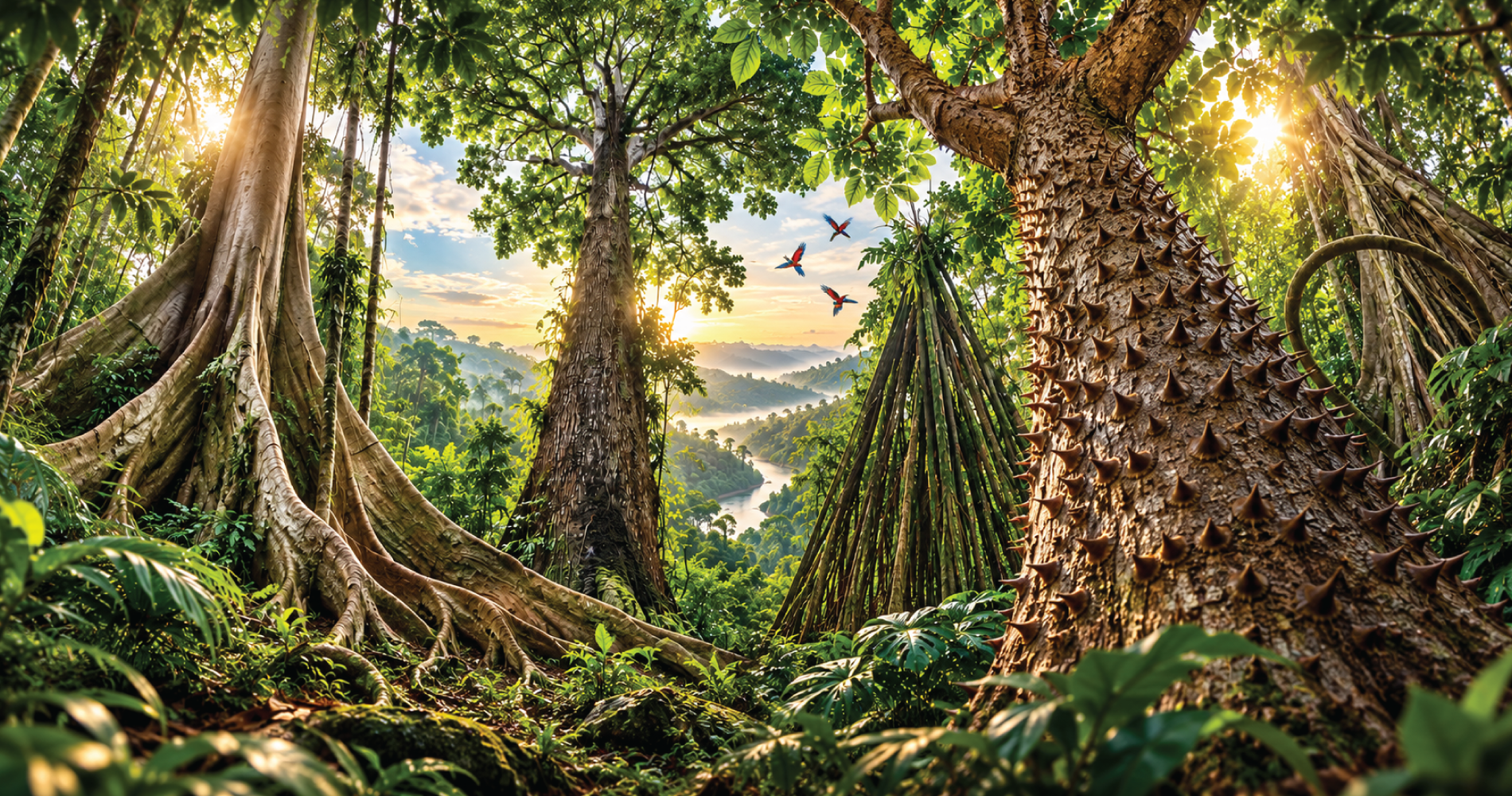
The Amazon Forest, one of the largest tropical rainforests on Earth, is home to thousands of kinds of trees, plants, animals, and microorganisms. Some plants here are known for their beautiful flowers, some have medicinal value, while others contain natural chemicals that can prove dangerous to humans and animals.
Among them is a tree called the Manchineel Tree, commonly known as the Tree of Death. Its small, apple-like fruits look ordinary, but eating them can cause severe poisoning. The milky sap that oozes from this tree can also damage the skin and eyes.
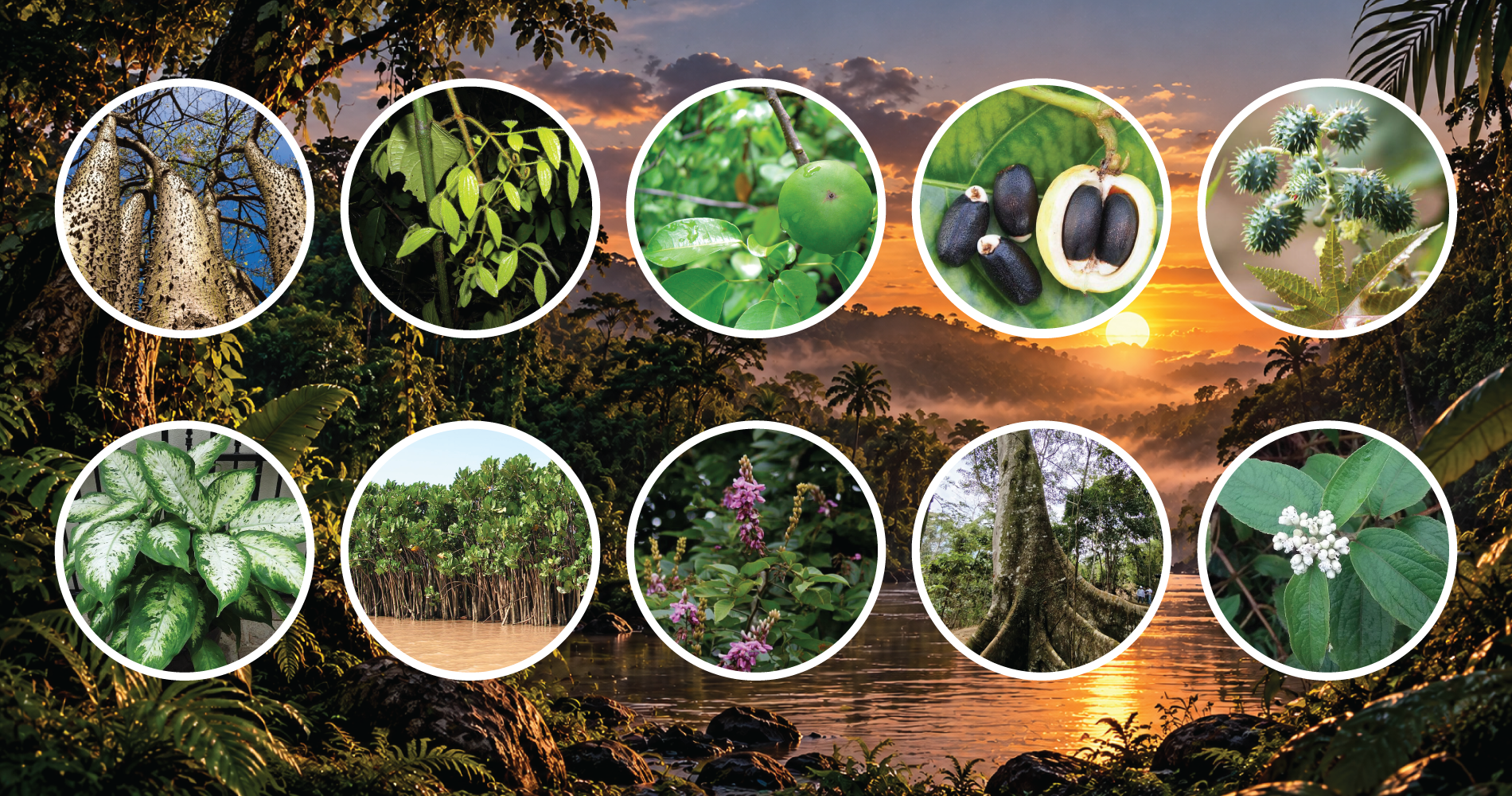
However, it is important to understand an interesting scientific distinction here. Manchineel is found mainly along the coasts and in coastal wetlands of the Caribbean, Central America, and northern South America. It would not be accurate to describe it as a major tree of the Amazon Rainforest. On the other hand, the Sandbox Tree, known as Hura crepitans, is indeed found in parts of the Amazon. Its poisonous sap, thorny trunk, and fruits that burst open to spread their seeds make it distinctive.
So why are these poisonous trees so dangerous? Can a person die from their poison? Which poisonous plants are found in the forests of the Amazon? And is the world’s most dangerous tree also found in India? We will understand all of these questions on the basis of botanical research, toxicology, and the biodiversity of the Amazon.
1. What Is a Poisonous Tree, and Why Do Trees Become Poisonous?
A poisonous tree is a tree that naturally contains toxic compounds in some part of it. These compounds may be found in the tree’s leaves, fruit, seeds, bark, roots, or sap. But not all poisonous trees are alike. A tree’s fruit may be harmful, while its leaves are relatively less dangerous.
The sap of some trees causes skin irritation, while swallowing the seeds of others can cause severe poisoning. It is also not necessarily true that a person will die as soon as they touch a poisonous plant. The harm depends on which substance entered the body, how much of it there was, and how the exposure occurred.
Why do trees produce poison?
In nature, every plant faces many challenges to survive. Insects eat its leaves, animals can damage its bark and fruit, while some microorganisms cause disease. In such conditions, many plants have developed chemical defence systems over millions of years of evolution.
These include different types of chemicals, such as alkaloids, terpenoids, phenolic compounds, and other secondary metabolites. Some chemicals deter organisms that eat leaves, while others help protect against pathogens.
Not all plant chemicals that are harmful to humans have been produced solely for protection. Some may also be related to other biological processes in plants. This is why the reason each poisonous tree is toxic is not the same.
2. The Mystery of Poisonous Trees in the Amazon Forest
The Amazon Forest is one of the world’s most important tropical ecosystems. It stretches across several countries in South America, with the largest part located in Brazil. The warm climate, high humidity, frequent rainfall, and dense vegetation support an extraordinary diversity of plants and trees.
One notable fact is that not every part of the Amazon is the same. In some places, the ground stays wet for most of the year; in others, seasonal flooding occurs along riverbanks; and in still others, forests grow on higher ground where floodwaters generally do not reach. Different kinds of plants have evolved to suit these conditions.
How are poisonous plants in the Amazon different from ordinary trees?
A tree’s poisonous nature cannot always be recognized by its appearance. Sometimes its bark has large thorns. Sometimes its leaves look completely ordinary. Some plants have fruits so attractive that it is difficult to tell they are dangerous just by looking at them.
Some poisonous plants found in the Amazon contain compounds that can affect the skin, digestive system, or nervous system. But this does not mean that every unfamiliar tree in the Amazon is poisonous.
Countless plants in this rainforest play an important role in maintaining ecological balance. So the right way to understand a forest is not just to look at its dangers, but also to learn how its plants and animals are interconnected.
3. Manchineel Tree: The World’s Most Dangerous Tree?
Is it dangerous to stand under a Manchineel tree in the rain?
Yes, doing so can be dangerous under certain circumstances. Manchineel sap can reach the skin when it comes into contact with water. If rainwater becomes contaminated with the tree’s sap and falls on someone’s body, it can cause severe skin irritation and blistering.
Therefore, in areas where Manchineel trees are present, it is considered unsafe to shelter from the rain beneath them. However, it would also be inaccurate to claim that every drop falling from the tree’s leaves is always equally poisonous. The danger depends on contact with the toxic sap.
Is burning its wood also dangerous?
Smoke released by burning Manchineel wood and other parts of the tree can also be harmful, especially to the eyes. It is not safe to burn wood from such a tree as ordinary fuel wood. Its identification and handling should be done only by experts.
4. Is the Manchineel Tree found in the Amazon Forest?
This is the most important question on this topic. Manchineel is often included in lists of the most poisonous trees in the Amazon. But its botanical distribution tells a somewhat different story.
According to the Plants of the World Online database of the Royal Botanic Gardens, Kew, the natural range of Manchineel extends across the Florida Keys, the Caribbean, Mexico, Central America, northern South America, and the Galápagos. It has also been recorded as introduced in Guyana.
It is commonly found along seashores, in coastal thickets, and in some areas affected by salt water. In contrast, the Amazon is primarily a vast inland tropical rainforest system, although the Amazon basin also contains different types of wetlands and other habitats.
Therefore, it would not be scientifically accurate to say that Manchineel is widely found within the Amazon. Even so, there is an interesting connection between Manchineel and the poisonous trees of the Amazon. The Sandbox Tree, which is found in parts of the Amazon, belongs to the same family as Manchineel, Euphorbiaceae.
Both trees contain toxic latex, but there are significant differences in their habitats, physical structures, and biological defense mechanisms. This is where the story turns to an Amazonian tree that is known not only for its poisonous nature but also for spreading its seeds in an explosive manner.
5. Sandbox Tree: An Amazon Poisonous Tree Whose Fruits Explode
Scientific Name: Hura crepitans
Common Names: Sandbox Tree, Dynamite Tree
Family: Euphorbiaceae
Habitat: Tropical America, including some regions of the Amazon
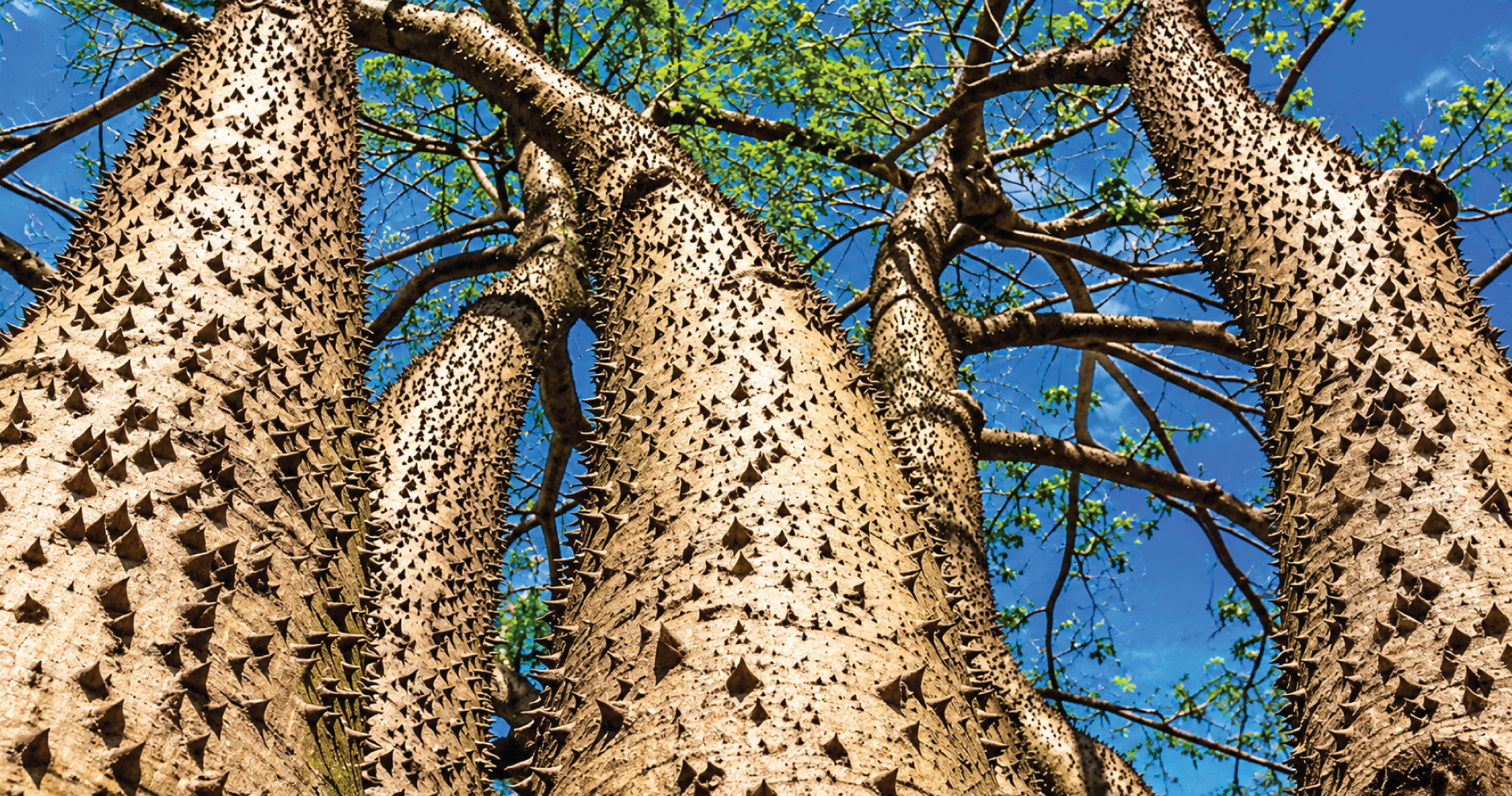
When it comes to poisonous trees in the Amazon, the Sandbox Tree is one of the most interesting examples. Its trunk is covered with large, sharp thorns. From a distance, it looks as if someone has driven hundreds of small nails into the tree’s bark. But its most unusual feature is not the thorns, but its fruits.
Why do Sandbox Tree fruits explode?
The fruits of this tree are round, divided into segments, and look like pumpkins. As a fruit ripens and dries, tension builds in its structure. Eventually, the different sections of the fruit suddenly split open. In this process, the seeds shoot out rapidly and can travel far from the tree.
This natural mechanism is called Explosive Seed Dispersal. This is not an explosion like a chemical bomb. The mechanical tension that develops as the fruit dries propels the seeds outward.
This process has an important benefit. If all the seeds fell directly beneath the tree, the new plants might have to compete with one another for light, water, and nutrients. By spreading seeds over a greater distance, some of them get the opportunity to germinate elsewhere.
Why is the Sandbox Tree poisonous?
The milky sap, or latex, of the Sandbox Tree is harmful. Contact with the skin can cause irritation, while getting it in the eyes can cause serious damage. Its seeds are also unsafe to eat. Singapore National Parks Board has described the sap of this tree as an irritant and its ingestion as toxic. Meanwhile, Kew’s botanical records document its natural presence in the northern parts of Brazil, Colombia, Peru, and other tropical American regions.
There are three different reasons that make this tree dangerous. First, its toxic sap; second, its thorny trunk; and third, the seeds that are rapidly expelled from its fruit. However, despite these dangers, it is a normal part of the forest ecosystem. Its purpose is not to harm humans, but to survive in natural conditions and produce the next generation.
6. Other poisonous plants in the Amazon that can harm humans
The Amazon Forest is home not only to poisonous trees, but also to vines and small plants that produce toxic chemicals. Some of these plants look so ordinary that it can be difficult to say anything about them without identifying them.
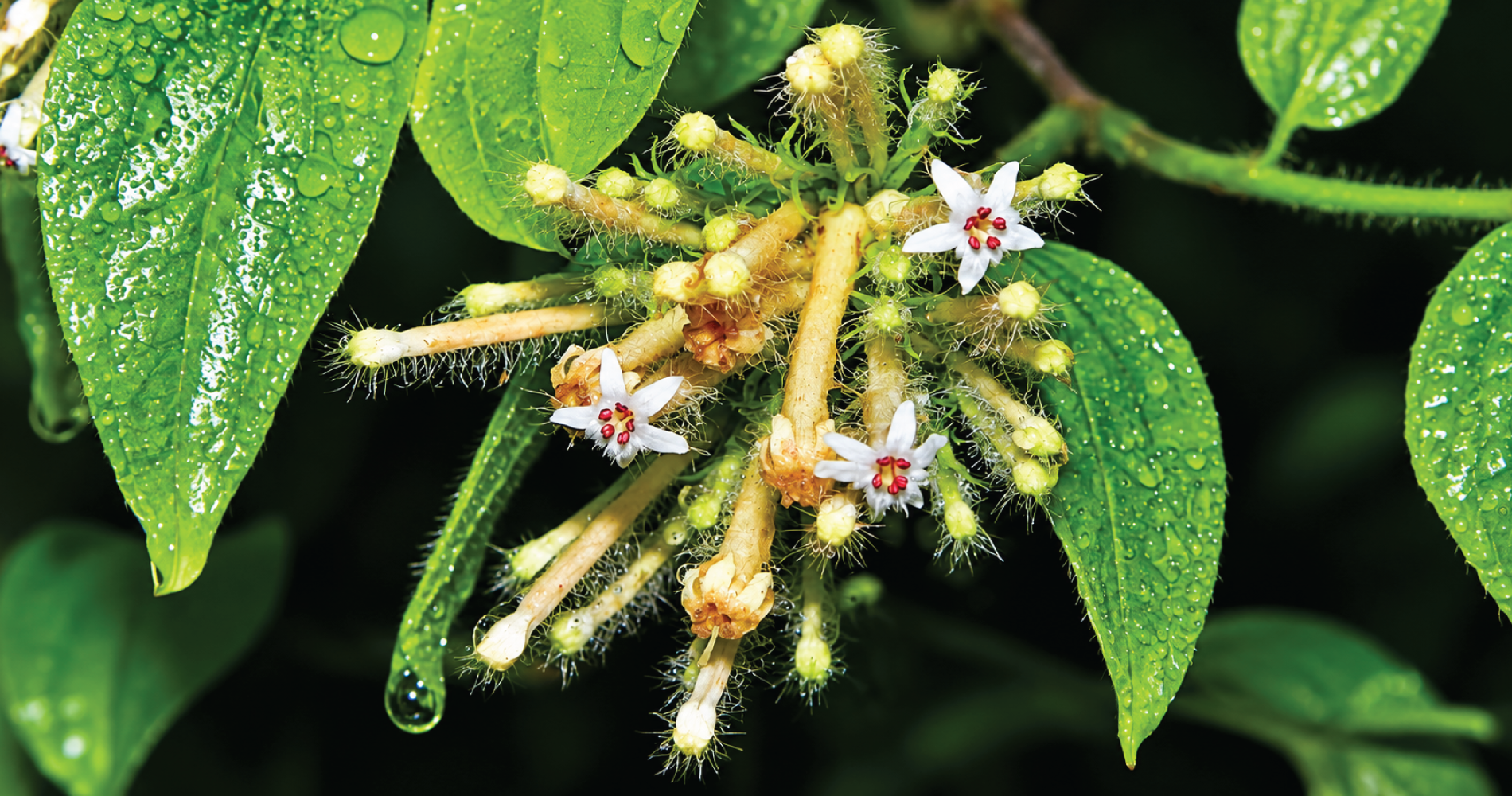
Curare Plant: A vine associated with Muscle Paralysis
A vine called Strychnos toxifera is found in the Amazon and other tropical forests of South America. It is not a tree, but a woody climbing vine. It is associated with the history of traditional poisonous mixtures known as Curare.
Curare is not a single plant or a single chemical. In different regions, this name has been used for mixtures made from various botanical sources. Some Curare-related compounds can disrupt communication between nerves and muscles in the body. This process is called neuromuscular blockade.
When normal muscle activation is affected, the ability of the body’s muscles to function may decline. In cases of severe exposure, the muscles used for breathing may also be affected. The Kew Botanical Database lists Strychnos toxifera as a vine native to tropical America.
This example shows that the danger posed by poisonous plants is not limited to skin irritation. Some plant toxins can also affect the body’s nervous and muscular systems. Dieffenbachia: An Irritating Plant with Beautiful Leaves
Many people recognize Dieffenbachia as a decorative indoor plant.But Dieffenbachia seguine is naturally found in tropical America, and its distribution also includes regions associated with the Amazon.
Its broad green leaves may have light-colored patterns that make it attractive. Calcium oxalate crystals and other irritating substances are found in the plant’s tissues. If the plant is chewed, it can cause intense burning, pain, and swelling in the mouth and throat.
For this reason, it is commonly called Dumb Cane. Swelling of the mouth and tongue can make speaking difficult for a while. In severe cases, throat swelling can also affect breathing. According to the Royal Botanic Gardens, Kew, this plant occurs naturally from the Caribbean to tropical South America.Dieffenbachia is an example of how even a beautiful-looking plant can cause harm if used incorrectly.
Is every attractive plant poisonous?
No. A plant’s toxicity cannot be determined by its beauty, color, or shape. Some brightly colored fruits are entirely edible, while some ordinary-looking fruits can also be harmful. Similarly, having thorns on a plant’s bark does not prove that it contains poison. To identify plants correctly, it is important to check their species, botanical characteristics, and scientific records.
7. What is the relationship between Mangrove Forests and Manchineel Trees?
Mangrove forests are coastal ecosystems where trees are adapted to survive in conditions such as salty or slightly salty water and waterlogged soil. These forests play an important role in protecting shorelines from erosion, providing habitat for aquatic creatures, and maintaining coastal biodiversity.
Manchineel is also found in some coastal wetlands and areas around mangroves. But it is important to clarify one thing here: Manchineel should not be considered the same as every mangrove tree. Mangrove is an ecological category, while Manchineel is a specific botanical species. According to the University of Florida IFAS, Manchineel grows on beaches and in brackish swamps, sometimes among mangroves.
What is its importance in Coastal Forests?
Natural vegetation can provide shelter, plant cover, and other ecological functions in coastal ecosystems. Manchineel is also part of its natural habitat. Its toxicity does not make it ecologically useless. The same applies to the poisonous trees of the Amazon. A plant being harmful to humans and useful to the ecosystem can both be true at the same time.
8. How do poisonous trees affect the human body?
The effects of each poisonous tree can differ. The toxins of one plant may affect the skin, while another may affect the digestive system or nervous system. To understand these effects, it is important to look at the body’s different systems.
Effects on the skin
The latex of some trees contains compounds that can cause irritation or inflammation when they come into contact with the skin. This can cause redness, burning, itching, and blisters. Manchineel is a prominent example. Contact with its sap can cause severe contact dermatitis.
Effects on the eyes
The tissues of the eyes are very sensitive. If harmful plant sap gets into the eye, it can cause problems such as pain, redness, watering, sensitivity to light, and corneal injury. That is why it is important to keep the sap released when breaking a branch from an unknown tree away from the eyes.
Effects on the digestive system
Eating poisonous fruits or seeds can cause a burning sensation in the mouth, stomach pain, vomiting, diarrhea, or severe poisoning. The chemicals in some plants are not limited to the digestive system and can also affect other organs in the body.
Effects on the nervous system
Some plant toxins can interfere with nerve signals or the way muscles work. In such cases, weakness, unusual neurological symptoms, or, in severe cases, difficulty breathing may occur.
But this does not happen with every poisonous plant. The effects of one plant cannot be applied to all poisonous trees.
9. What precautions are necessary to avoid the dangers of poisonous trees?
Plant identification and safe behavior are important for tourists, researchers, and local people visiting the rainforest. Accidents often happen because someone assumes an unknown fruit is edible or cuts a plant without knowing what it is.
Some precautions can help in these situations. Do not eat unknown fruits: A fruit found in the forest does not become safe just because it looks beautiful or smells fragrant. Do not touch the sap of unknown trees: Be especially careful with plants that exude milky latex.
Do not burn a plant for use: Its smoke may be harmful.
Seek help from a trained guide in the forest: Knowledge of local species can help prevent accidents.
Do not cut plants without identifying them: Cutting the bark or a branch may release irritating sap.
Keep fruits and seeds away from children: They may put unfamiliar things in their mouths.
What should you do if you accidentally come into contact with a poisonous plant?
If sap from an unknown plant gets on your skin, wash the affected area thoroughly with water. Carefully remove contaminated clothing. If sap gets into your eye, rinse it immediately with clean running water for about 15–20 minutes and seek medical attention at once.
If someone has eaten part of an unknown or poisonous plant, do not try to induce vomiting. It is important to contact emergency medical care or a poison information service immediately. Applying an unidentified home remedy, oil, or chemical to the affected area may make the situation worse.
10. Manchineel Tree in India: Is this poisonous tree also found in India?
In your keyword research, manchineel tree in india is an important long-tail keyword. But to answer it, it is important to understand the difference between its natural habitat and trees planted elsewhere.
India is not listed as part of Manchineel’s established range in the native and introduced distribution list of the Royal Botanic Gardens, Kew. However, some older botanical and toxic-plant references mention that it has occasionally been planted in tropical countries, including India. Therefore, it would not be accurate to say that Manchineel is commonly found in India’s forests.
Is Manchineel found in India’s Mangrove Forests?
Mangrove ecosystems exist in regions such as the Sundarbans, Bhitarkanika, and Andaman-Nicobar Islands in India. But there is no reliable evidence of Manchineel’s common natural presence in these forests.
Many other species are found in India’s mangrove forests. These may include some plants whose sap or other parts can cause irritation. Therefore, it would be wrong to identify a tree found in any coastal forest as Manchineel based solely on its appearance.
11. What is the relationship between poisonous and medicinal properties in Amazonian plants?
Another interesting question is why some plants containing dangerous compounds become subjects of scientific research. In fact, the effects of a chemical depend on its dose, chemical structure, and how it enters the body.
Studying natural compounds can help researchers understand how the body’s biological processes work. Throughout history, many plant-derived substances have played an important role in the development of pharmacology. But this absolutely does not mean that a poisonous plant can be used directly as medicine.
Traditional Knowledge and Scientific Research
Indigenous communities in the Amazon have generations-old traditional knowledge about local plants. This may include information about identifying plants, their ecological importance, and their various cultural uses.
Plants associated with curare are a historical example. However, traditional use and a clinically proven safe treatment are two different things. A plant’s traditional use cannot be considered sufficient scientific evidence that it is safe or effective. Therefore, researching the medicinal properties of poisonous plants and using them yourself are entirely different things.
12. Are Poisonous Trees Necessary for the Amazon Ecosystem?
Trees in the Amazon are not merely a source of oxygen and shade. They are connected to the forest’s entire food web and ecological processes. A tree can provide shelter for insects, become a nesting site for birds, and affect the cycle of nutrients in the soil.
Chemical defenses present in many trees can reduce the likelihood of some herbivores eating excessive amounts of foliage. This can help the plant survive and reproduce. The Sandbox Tree’s explosive seed dispersal is a good example of this.
The fruit of this tree bursting suddenly may seem frightening to a person, but for the tree, it is a biological mechanism for dispersing seeds. Similarly, the Manchineel’s toxicity makes it dangerous to humans, but that does not define its entire ecological role.
Should poisonous trees be removed from the forest?
It is not appropriate to destroy a native tree simply because some of its parts are poisonous. Both species conservation and human safety are important in natural forests. Where people regularly pass near such trees, warning signs, safe routes, and the assistance of trained local experts can be useful. Providing accurate information about trees is a better solution than harming them without cause.
13. Which is the most dangerous tree in the world?
The answer to “Most dangerous tree in the world” depends on how danger is measured. If we are talking about a tree whose fruit, sap, and other parts can cause severe poisoning, Manchineel is a prominent example.
If we are talking about a tree that has poisonous sap as well as sharp thorns and explosive seed dispersal, Sandbox Tree is particularly noteworthy. But scientifically, it is not appropriate to declare any one tree the deadliest tree in the world under all circumstances.
The severity of the danger is influenced by exposure, the toxin, the amount, the body’s reaction, and timely medical assistance. Therefore, Manchineel’s popular name is Tree of Death, but it would be wrong to consider this a scientific toxicity ranking.
Conclusion: What do Amazon’s Poisonous Trees Teach Us About Nature?
The Amazon Forest is not only a world of beautiful trees, vast rivers, and rare animals. It is also home to plants whose chemical compounds and biological adaptations are important research subjects for scientists.
The Manchineel Tree shows us that even an ordinary-looking tree can be extremely poisonous. On the other hand, the Sandbox Tree found in the Amazon shows that a single tree can have toxic latex, a thorny structure, and an extraordinary seed dispersal mechanism.
Vines associated with Curare and plants such as Dieffenbachia broaden this subject further. The chemicals in some plants affect the skin, while others can interfere with the body’s neuromuscular functions.
The most important point these examples reveal is this: in nature, a plant’s beautiful, ordinary, or dangerous appearance is not a reliable indicator of its actual toxicity. Rather than viewing these Amazonian trees merely as subjects of frightening stories, it is more important to understand their evolution, biodiversity, and ecological importance. Because every Poisonous Tree in the forest is not only a threat, but also a story of millions of years of natural evolution.
Disclaimer:
This article is for botanical and educational information. In case of contact with, ingestion of, or exposure to any unknown or poisonous plant, seek qualified medical assistance immediately.
Emanual Massey is a healthcare, lifestyle, and beauty content writer with over 7 years of professional experience. He specializes in writing SEO-optimized, research-based articles on health, wellness, nutrition, skincare, beauty, and Ayurveda. His mission is to simplify complex topics into practical, reader-friendly content that empowers people to make healthier lifestyle choices. Passionate about continuous learning and evidence-based writing, Emanual creates informative and engaging blogs that combine accuracy, readability, and search engine optimization.





One thought on “Some that walk, others poisonous trees—many secrets are hidden in the Amazon rainforest”