Abstract
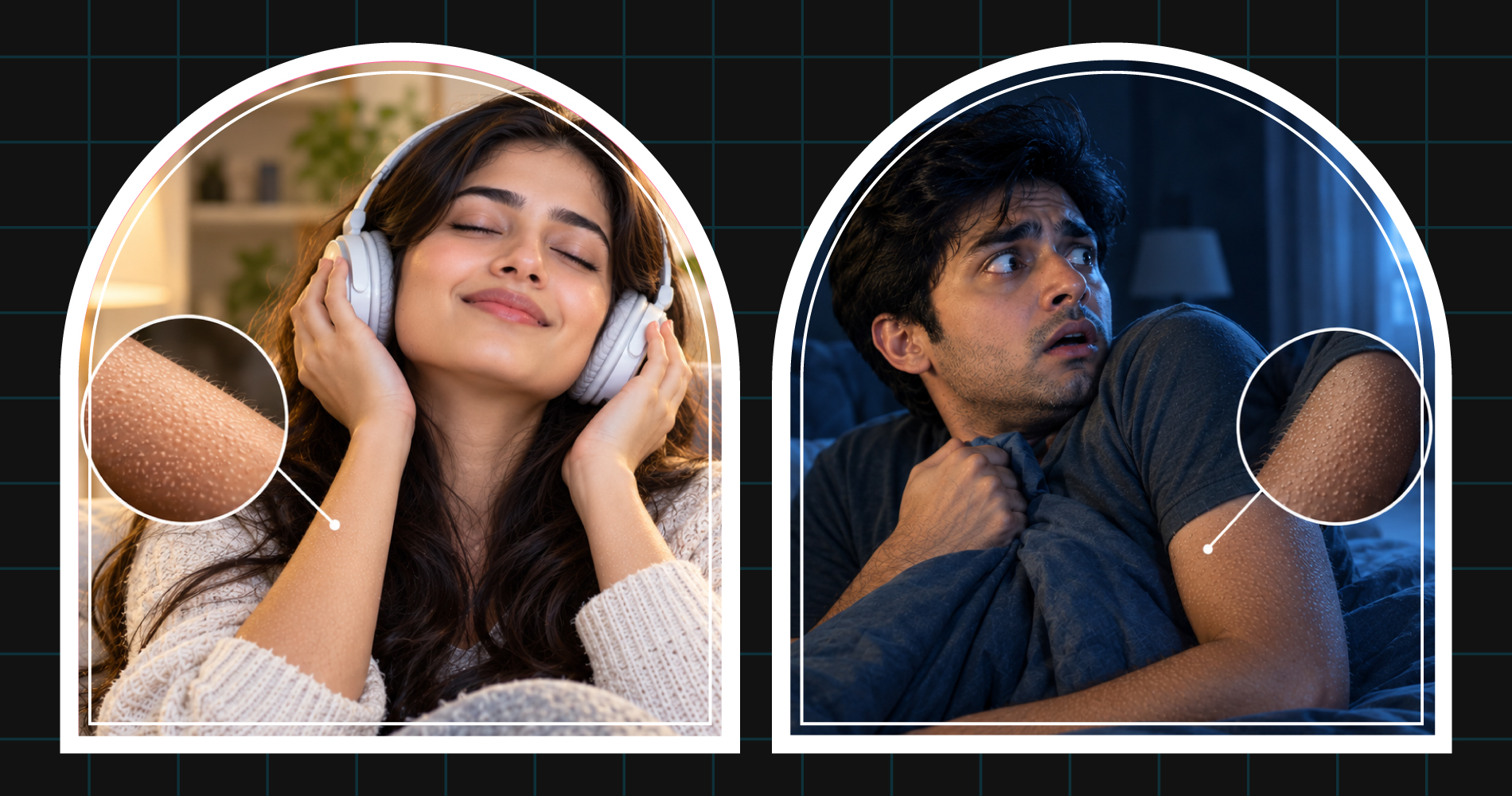
Even a slight sound in the dark often feels so frightening that the heartbeat speeds up. Our attention suddenly goes to some object moving in the room, the creaking of a door, or a sound coming from the window. But why does this happen? It may be related to the brain’s danger-recognition system, low visibility, past experiences, and mental processes associated with fear. When things around us are not clearly visible, the brain tries to make sense of the situation using whatever information is available. During this, even a normal sound can seem like a potential threat. This article explains why fear increases in the dark, how our brain interprets sounds, what effect fear has on the body, and how mental fear can be reduced.
Why does even a small sound in the dark feel scary?
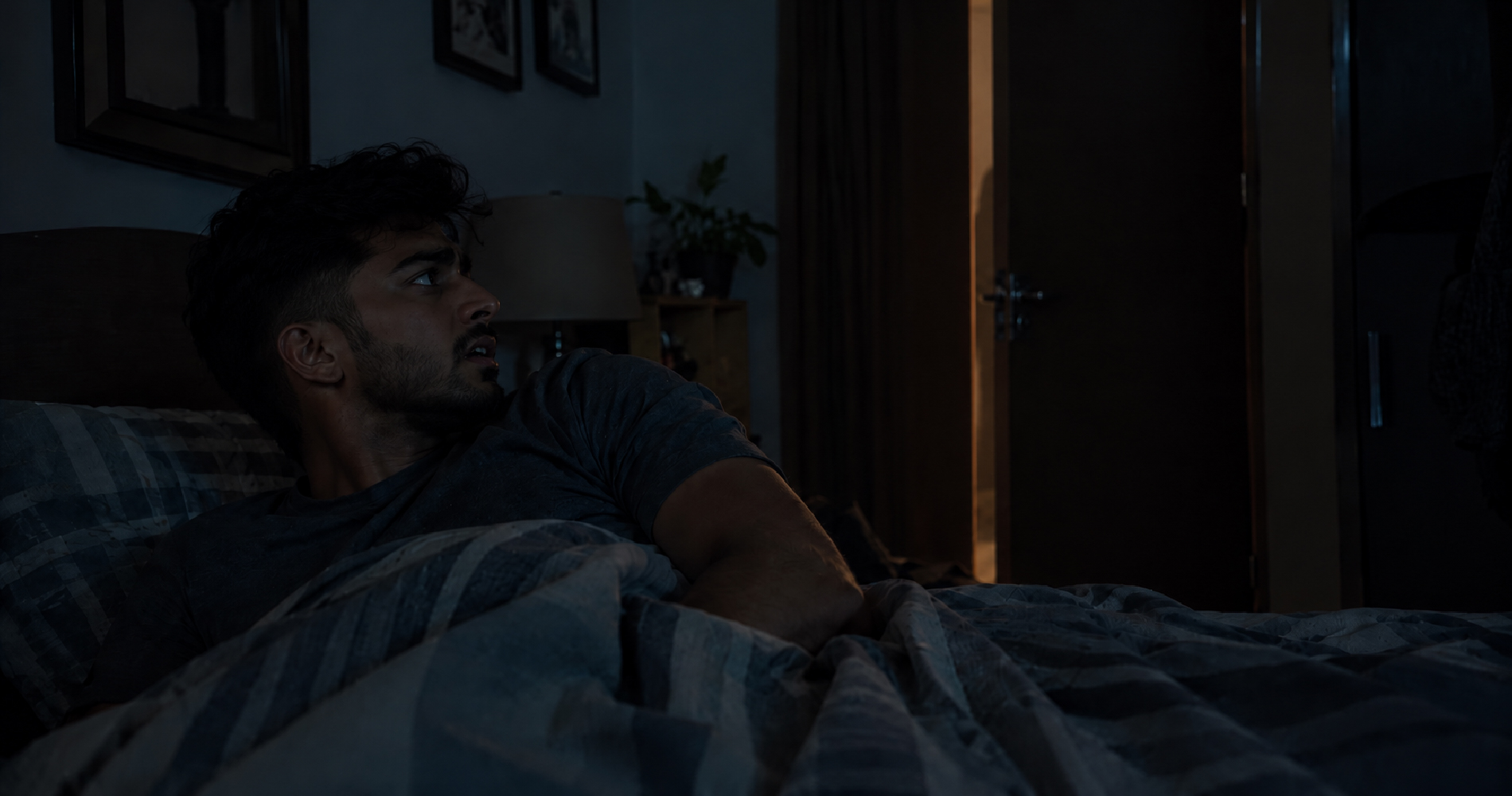
The same house whose every corner we are familiar with during the day sometimes starts to feel unfamiliar at night. The walls remain the same, the windows are in their place, and the items in the room do not change. Yet, as soon as the lights go off, the surroundings begin to feel different. The soft sound of the fan, the creaking of wooden furniture, or the faint movement of an animal outside can suddenly draw our attention.
Many times the first question that comes to mind is, “Why do I feel scared when I know I am safe in my own home?”
The answer to this question lies not only in the darkness, but in the functioning of our brain. The brain continuously gathers information from the surrounding environment. The information received from the eyes helps it understand what is placed where and what is happening around us.
Therefore, a small sound at night seeming scary does not necessarily mean there is any danger in the sound. Sometimes our mental response to the possibility of danger itself increases the fear.
1. What changes occur in the brain when it is dark?
When it gets dark, the brain does not suddenly become some other system. It is doing the same work it does in the daytime, that is, understanding the information around us and identifying potential dangers.
The only difference is that the available information changes due to reduced light. The information received from the eyes decreases. During the day, the eyes can relatively easily recognize the shape, color, distance, and movement of objects. In low light, this task becomes difficult.
In the retina of the eyes, there are light-sensitive cells called rods and cones. Rods play a special role in seeing in low light, while cones are important for recognizing colors and clear details. In darkness, the eyes gradually adapt to the limited available light. Even so, in very low light, it is not possible to identify an object with complete clarity.
If a cloth is lying on a chair in the room, from a distance it can appear like the figure of a person. Going closer or turning on the light removes the illusion. If there is unusually great difficulty in seeing in low light, an eye examination may also be necessary, because this is not merely a problem of fear.
2. When there is a slight sound, why do we suddenly get scared?
You are sitting in a room. There is complete silence around. Suddenly a faint sound comes from behind. Without thinking, your attention goes in that direction. Sometimes the body gives a slight jerk or the heart starts beating faster. This reaction can be linked to the Startle Response, that is, the natural reaction of being startled.
What is the Startle Response?
The Startle Response is the body’s quick, involuntary reaction to sudden loud or unexpected sounds and some other sensory signals. This reaction can help us immediately pay attention to potential danger.
This does not mean that every startle is a sign of real danger. In everyday life we can be startled even when someone suddenly calls out, a door is slammed shut, or something falls. If fear is already present in the dark, then sometimes a faint and unexpected sound can seem more disturbing.
The sound is small, but its meaning becomes big
Suppose a sudden sound comes from a wooden cupboard. In the daytime you might think that due to a change in temperature the wood has slightly expanded or contracted. But at night hearing the same sound you might think that perhaps there is someone else in the room.
The source of the sound may be the same, but the meaning derived by the brain has changed. It is important to understand this difference. Every sound that seems scary is not actually dangerous.
However, if some sound is clearly unusual, such as an attempt to forcibly open a door or someone’s cry for help, then it should not be dismissed as mere mental illusion and ignored.
3. What role does the amygdala play in the brain when fear arises?
When talking about fear, the name amygdala often comes up. The amygdala is a group of structures located within the brain, which plays an important role in understanding emotions, especially information related to fear and danger. However, fear does not arise only because of the amygdala. It involves many parts of the brain and multiple systems of the body.
The amygdala responds to information related to potential danger
When there is a sudden sound, the brain tries to understand that signal. If the signal seems potentially dangerous, the alertness of the body can increase. Here the amygdala and other brain networks connected to it play a role.
Brain structures such as the prefrontal cortex also play a role in assessing the situation and controlling the emotional response. Therefore, the arising of fear and later understanding that the sound was normal are two separate but interconnected processes.
Why does the Fight-or-Flight Response start?
When a potential danger is sensed, the body’s Sympathetic Nervous System can become active. In common language, this is called the Fight-or-Flight Response. During this, the heart may start beating faster, breathing may become rapid, tension in the muscles can increase, and attention may become focused on the potential danger.
This is a response related to the protection of the body. Sometimes, in real danger, it proves helpful. But the same response can also be activated due to anxiety or wrong assumptions.
Why does fear remain even after the sound stops?
The body’s alertness does not always return to normal immediately. Even after the sound has stopped, a person may keep thinking for some time about what actually happened. Recalling the same event again and again can keep the anxiety going. For this reason, sometimes just a two-second noise can trouble the mind for several minutes afterward.
4. Does sound actually seem louder in the dark, or does it only feel that way?
It is often said that our ability to hear increases in the dark. But this needs to be understood carefully. Simply turning off the light does not suddenly increase the ears’ hearing capacity by any general rule.
Then why can faint sounds at night seem so clear?
The surrounding noise decreases, During the day, road traffic, conversations, household work and other noises are constantly heard. Amid these, we do not pay attention to faint sounds.
At night, when the surrounding noise decreases, those same faint sounds can feel more distinct. This may be the effect of other sounds around the main sound becoming fewer, rather than the actual intensity of the sound increasing.
Attention gets focused on the sound
If a person is already alert, they start paying more attention to the sounds around them. This can be understood through Selective Attention. When attention is focused on one thing, our awareness of it can increase. This does not mean that in the dark the ears start working with some special power. Rather, the role of attention and situation in how we perceive sound changes.
Fear can influence the interpretation of sound
Sometimes a normal sound can also seem frightening because the person is already anticipating that something bad might happen. This is why every sound heard in the dark does not feel the same. For one person that same sound is normal, while for another it can create restlessness.
5. Why can fear feel stronger at night? What does scientific research say?
Nighttime and darkness are not always the same thing. We can sit in a dark room even during the day. On the other hand, we can stay in bright light even at night. Scientists have researched this difference.
In a study published in 2015 titled Night or darkness, which intensifies the feeling of fear?,
Researchers tried to understand whether fear responses are more influenced by nighttime or by darkness. In the study, 128 participants were given visual and auditory cues. During this, responses to day and night, light and darkness, and fear-inducing and neutral cues were observed.
The researchers collected information such as heart rate, skin electrical conductivity, and the participants’ reported experiences. The results showed stronger responses to fear-inducing cues at night. For neutral cues, the difference between day and night was not significant. Simply having darkness did not produce the same effect.
This research indicates that to understand fear at night, it is not enough to hold only the lack of light responsible. The body’s internal biological clock and the process of interpreting information related to danger may also play a role.
But this study does not mean that every person is more afraid at night or that everyone considers every small sound a threat. Our personal experiences, mental state, and surrounding environment are also important.
6. What is the difference between fear of the dark and Nyctophobia?
Some people feel slight uneasiness in the dark, while for some it becomes extremely difficult to stay in a dark room. Both experiences are not the same. Normal fear is a feeling that comes and goes according to circumstances. For example, feeling a bit panicked for a short while when the electricity suddenly goes out can be normal. But when the fear of the dark becomes too intense, appears repeatedly, and starts affecting daily life, then the possibility of a condition like Nyctophobia can be considered.
What is Nyctophobia?
Nyctophobia is the term for an excessive and persistent fear of the dark. It is placed in the category of Specific Phobia. According to the Cleveland Clinic, Nyctophobia can occur in both children and adults. A person affected by this may avoid staying in a dark room, going out alone at night, or sleeping with the lights off.
Comparison Between Normal Fear of Darkness and Nyctophobia
| Feature | Normal Fear of Darkness | Nyctophobia (Extreme Fear of Darkness) |
|---|---|---|
| Intensity of Fear | Mild to moderate fear | Fear can be intense or overwhelming |
| Triggers | Sudden darkness or unexpected sounds | Being in the dark or even thinking about darkness |
| Duration | Usually lasts for a short period | May occur repeatedly or persist over time |
| Physical Symptoms | Startling easily or increased heart rate | Intense anxiety, sweating, rapid heartbeat, and fast breathing |
| Impact on Sleep | May occasionally disturb sleep | Can frequently disrupt sleep patterns |
| Impact on Daily Life | Usually does not significantly affect daily activities | May interfere with daily routines, work, and other activities |
This is only a general comparison for understanding, not a method of diagnosis.
When should you understand that fear is going beyond the normal limit?
If a person continually avoids going into the dark, feels intense panic when the light is turned off, or is unable to get enough sleep for several days due to fear, then it may be helpful to talk to a mental health professional. Feeling afraid only at night is not proof of a mental illness. The problem is evaluated based on how intense the fear is and what impact it is having on life.
7. Why do horror movies and old memories increase the fear of darkness?
Many times, fear of the dark is not linked to any real event, but to things heard or seen before. Ghost stories heard in childhood, sudden frightening scenes, the experience of an accident, or memories associated with loneliness can come back to mind at night.
The brain can connect old memories with the present
Memory does not only store events. The emotions associated with them can later influence our experience. If a person has had a frightening experience in the dark before, then in the future, when a similar situation arises, they may recall that same incident.
Sometimes just going to that place or hearing a similar sound can create restlessness. This does not mean that there has to be a major psychological trauma behind every fear. Sometimes ordinary experiences, imagination, and repeated worrying can also influence fear-related reactions.
Why does even a small sound catch our attention after watching a horror movie?
Horror movies often use sudden sounds, dark scenes, and uncertainty. Even after the movie ends, its scenes can remain in memory for some time. In such a situation, when there is even a slight noise, scenes from the movie can start appearing in the mind.
For example, the sound of a door that earlier seemed normal can, after watching a horror movie, create restlessness. Therefore, if you tend to feel scared easily at night, avoiding scary content right before sleeping can be helpful.
Can childhood fear remain even after growing up?
Yes, this can happen in some people. Fear of the dark is common in childhood. As age and experience increase, the fear of many children decreases. But in some people it can persist into adult life.
If a person maintains the habit of avoiding darkness from childhood, they do not get enough opportunities to learn that it is possible to stay in a safe dark environment. That is why, in situations of severe fear, both behavior and thinking are worked on.
8. Do stress, anxiety and loneliness increase fear of the night?
Fear at night is not related only to external sounds. Our emotional state is also important. Worries throughout the day, stress related to family or work, lack of sleep and the experience of living alone can increase nighttime restlessness in some people.
Why does a person feel more alert under stress?
When stressed, a person’s attention can repeatedly turn toward potential problems. Sometimes the brain’s alertness increases so much that the person starts to view even normal events with suspicion. This can be linked to hypervigilance, which means being excessively alert to potential danger. However, not every alert person has hypervigilance. Over a long period of intense stress, or in some mental health conditions, this problem can become more evident.
Why can fear feel stronger when living alone?
When living alone, some people worry about who will help them if needed. This thought depends on real safety conditions and the person’s experiences. If there is already anxiety in the mind, even a small sound can be more disturbing in loneliness.
But not everyone is afraid when living alone. Some people feel more comfortable in a quiet, solitary environment. Therefore, the fear response should not be assumed to be the same for every person.
12. What to do if you feel scared in the dark?
First, understand the safety of your surroundings
Slow down your breathing
Ask yourself fact-based questions
Have I only heard a sound, or have I actually seen any danger?
Could there be some normal reason for this sound?
Have I heard a similar sound before?
Is there any evidence right now that confirms an immediate danger?
Talk to someone you trust if needed
If the fear is very intense, talking to a family member or a trusted person can help.
Sometimes, simply putting your worry into words makes it easier to understand the situation in an organized way.
Talking about fear is not weakness. It is a normal way to understand an emotional experience.
13. How to overcome fear? 8 ways you can use in daily life
Some people are helped by changing their surroundings. Some need to pay attention to stress and sleep, while in cases of severe fear, psychological treatment can be useful.
1. Keep the room safe and organized at night
2. If needed, use a soft night light
3. Stay away from scary stories and videos
Instead, you can choose calm music, light reading, or some relaxing activity.
4. Maintain a regular sleep and wake time
So try to go to bed and wake up at roughly the same time every day.
Getting natural light during the day and reducing bright screen light before bed can also help regulate the body’s sleep-wake cycle.
5. Instead of avoiding fear, gradually understand it
You can start by sitting in soft light. Later, you can reduce the light according to your comfort.
But if darkness causes intense anxiety, panic attacks, or reactions tied to past trauma, then do such practice under the supervision of a mental health professional.
Conclusion: It’s not always the darkness; sometimes uncertainty is frightening
In this very uncertainty, even a faint sound can suddenly capture all our attention. Sometimes fear is linked to a real threat, and sometimes to a suspicion, a past experience, or a disturbing thought.
Not every sound is a warning of danger. Sometimes it is simply part of a normal activity happening in the environment.
Desclaimer

Emanual Massey is a healthcare, lifestyle, and beauty content writer with over 7 years of professional experience. He specializes in writing SEO-optimized, research-based articles on health, wellness, nutrition, skincare, beauty, and Ayurveda. His mission is to simplify complex topics into practical, reader-friendly content that empowers people to make healthier lifestyle choices. Passionate about continuous learning and evidence-based writing, Emanual creates informative and engaging blogs that combine accuracy, readability, and search engine optimization.