
1. Abstract: When death began spreading through breath
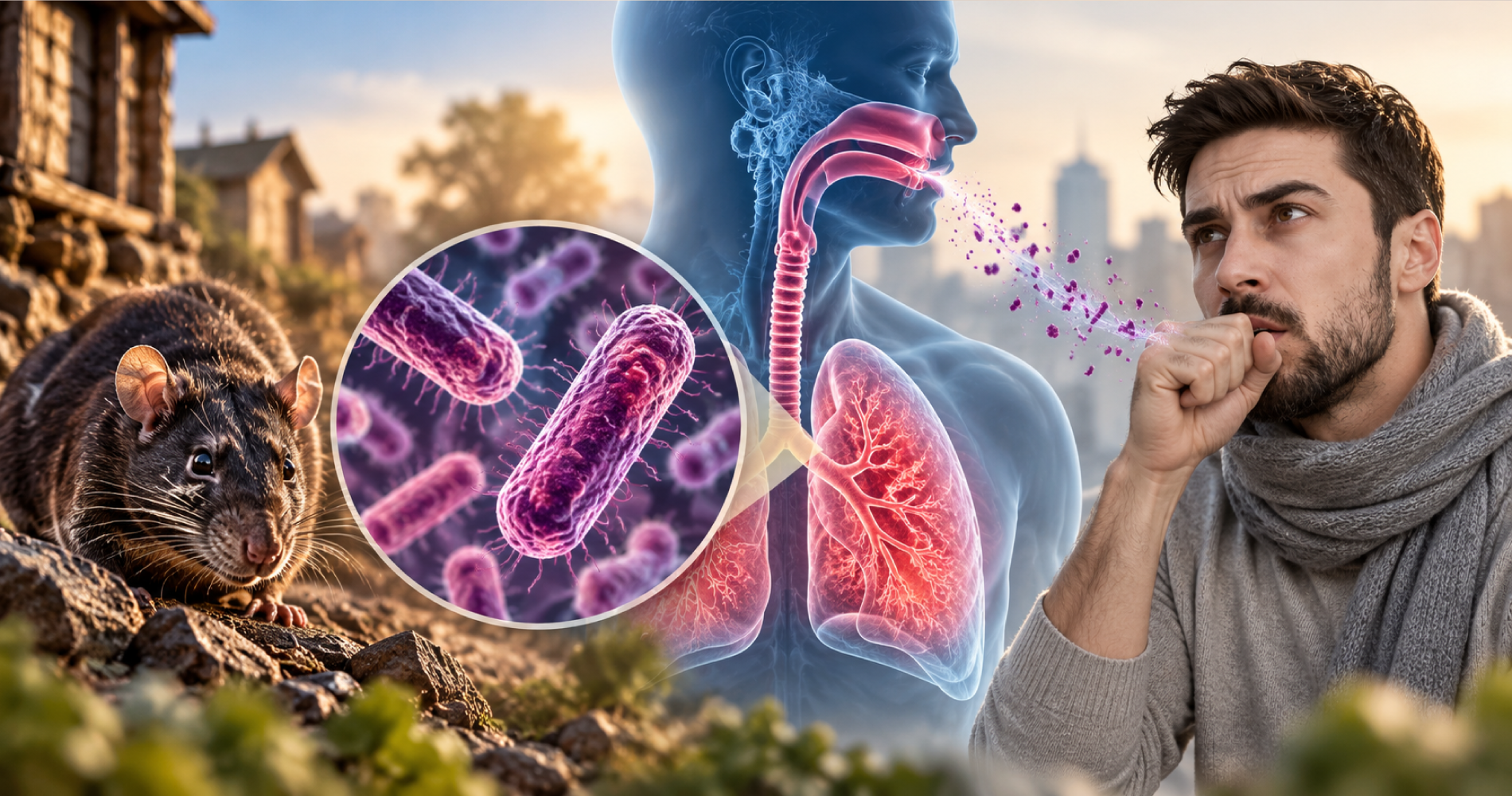
Throughout history, many diseases have claimed the lives of millions. But some infections can become so severe so quickly that a patient’s condition may worsen before they receive treatment. Pneumonic Plague is one such dangerous infectious disease directly linked to the lungs.
This disease is caused by the bacterium called Yersinia pestis. The same bacterium is also responsible for Bubonic Plague and Septicemic Plague. But Pneumonic Plague is different from these because it affects the lungs and can also spread to another person through the respiratory particles of an infected person.
According to the World Health Organization (WHO), in some cases, untreated Pneumonic Plague can be fatal within 18 to 24 hours of the onset of symptoms. This does not mean that every patient will die within such a short time, but this fact is important for understanding the severity of the disease and the need for prompt treatment.
World Health Organization
In 1910–1911, a major outbreak of this disease occurred in the Manchuria region of China. More than 60,000 people died in about six months. Effective Antibiotics were not available at the time. But scientific understanding, isolating infected people, and efforts to prevent infection played an important role in controlling the epidemic.
Today, we have better medical facilities. Still, Pneumonic Plague has not disappeared completely. So how does this disease affect the lungs so quickly? Are ordinary Pneumonia and Pneumonic Plague the same disease? Is it treatable?
2. What is Pneumonic Plague?
Pneumonic Plague is a severe form of plague in which the bacterium called Yersinia pestis causes an infection in the lungs. This bacterium is Gram-negative and is naturally found in some rodents and the fleas associated with them.
A typical plague infection may begin with a bite from an infected flea. But when the bacterium reaches the lungs, it can develop into Pneumonic Plague. This disease can cause severe inflammation in the lungs. The patient may experience a high fever, cough, chest pain, and difficulty breathing.
Some patients may also cough up blood. Its most important feature is that infectious respiratory particles released by an infected person can infect another person when there is sufficiently close contact. For this reason, WHO considers it an extremely severe form of plague that can spread from person to person.
3. What is the difference between pneumonic plague and ordinary pneumonia?
Pneumonia is a broad medical term. It refers to an infection in the lungs, which can develop due to bacteria, viruses, or certain fungi. On the other hand, Pneumonic Plague is a specific and extremely severe bacterial form of pneumonia.
The major pathogens that cause ordinary pneumonia may include Streptococcus pneumoniae, Respiratory Syncytial Virus (RSV), Influenza Virus, and other microorganisms. Whereas Pneumonic Plague is caused specifically by Yersinia pestis.
The initial symptoms of both diseases may appear similar. That is why a patient’s illness cannot be determined solely by looking at a cough or fever.
| Feature | Common Pneumonia | Pneumonic Plague |
|---|---|---|
| Cause | Various types of viruses, bacteria, and fungi | Yersinia pestis |
| Affected Organ | Lungs | Lungs |
| Mode of Transmission | Varies depending on the pathogen | Infectious respiratory droplets; may also develop from other forms of plague |
| Symptoms | Fever, cough, difficulty breathing | Sudden fever, severe cough, chest pain, difficulty breathing |
| Disease Progression | Can range from mild to extremely severe | Often progresses rapidly and becomes severe |
| Treatment | Depends on the cause and severity | Requires immediate treatment with specific antibiotics |
| Infection Control | Depends on the pathogen | Immediate isolation and droplet precautions |
According to the World Health Organization (WHO), common pneumonia can also be life-threatening. Therefore, it is incorrect to assume that only Pneumonic Plague is dangerous.
4. How many types of Pneumonic Plague are there?
In medical science, two main forms of Pneumonic Plague are recognized.
Primary Pneumonic Plague
This develops when a person inhales infectious respiratory particles and the bacteria directly cause an infection in the lungs. This form is particularly important in the context of person-to-person transmission. Its Incubation Period is generally one to three days. After this, the disease may begin suddenly.
Secondary Pneumonic Plague
This may develop when a person first has Bubonic Plague or Septicemic Plague, and the infection spreads from other parts of the body to the lungs through the blood. In this situation, serious lung-related problems may arise after the symptoms of the initial illness. Immediate treatment is necessary in both forms.
5. Symptoms of Pneumonic Plague: What happens in the body?
The early symptoms of this disease may sometimes seem like those of a common infection. But over time, the disease can rapidly become severe.
The main symptoms include:
- Sudden high fever: Body temperature may rise rapidly, and chills may occur.
- Severe cough: The patient may have a persistent or rapidly worsening cough.
- Chest pain: Pain may be felt while breathing or coughing.
- Difficulty breathing: Impaired lung function can lead to a lack of oxygen.
- Bloody mucus: In some severe cases, blood may come up with a cough.
- Extreme weakness: Fatigue, headache, and restlessness may be experienced.
- Rapid breathing: The patient may begin breathing faster than usual.
- Signs of severe infection: Some patients may develop conditions such as confusion, low blood pressure, sepsis, and impaired function of other organs.
It is important to note that these symptoms do not occur only in Pneumonic Plague. Some of them can also occur in other serious respiratory infections. But if a person has a history of living in a Plague-affected area, contact with an infected animal, or close contact with a patient with Pneumonic Plague, this information is especially important during medical evaluation.
6. How can Pneumonic Plague become fatal in just 24 hours?
To understand this, it is first necessary to understand how the lungs function. Our lungs contain millions of tiny air sacs called alveoli. They help deliver oxygen to the blood and remove carbon dioxide.
When Yersinia pestis causes a severe infection in the lungs, inflammation, fluid buildup, and processes that damage tissue can occur. This interferes with the normal exchange of oxygen.
During a severe infection, the body’s immune response can also become intense. Some patients may develop sepsis, shock, and respiratory failure. That is why time is so important in Pneumonic Plague.
The WHO states that, without treatment, the disease can be fatal within 18–24 hours of symptoms starting. However, not all cases of infection progress at the same rate. The stage of the disease, how quickly treatment is received, and the patient’s health affect the outcome. Therefore, the 24-hour figure indicates the disease’s potential severity; it is not a definite time to death for every patient.
7. History of Pneumonic Plague: What happened in China in 1910–1911?
In the winter of 1910, a mysterious disease began spreading in Manchuria, a region in northeastern China. The first patients developed high fevers. Soon afterward, they began coughing, and in many cases, bloody mucus appeared.
The disease became severe so quickly that many infected people died within a few days. Initially, the disease was linked to hunting wild rodents called Tarbagan Marmots and the fur trade. At the time, commercial demand for the skins of these animals was increasing. Large numbers of hunters and workers were working in the affected areas.
Some hunters may have come into contact with infected or sick Marmots. After that, the infection had an opportunity to spread among the human population. Although every link in the initial transmission is not certain, historical studies consider the Marmot Trade, the movement of workers, and crowded living conditions to be important factors.
How did the infection spread in Harbin?
The rail network was developing rapidly in Manchuria. Workers, traders, and other people traveled from one place to another by rail. As people continued to leave infected areas, the disease began appearing in different places as well.
The number of deaths rose rapidly in Harbin and the surrounding areas. At that time, effective Antibiotics were not available, and scientific understanding of how the disease spread was also incomplete. People living together in one place and limited healthcare facilities were making the situation more difficult. From late 1910 to early 1911, the infection affected large parts of Manchuria. According to a historical medical study published in 2022, this outbreak caused the deaths of more than 60,000 people within six months.
8. Dr. Wu Lien-Teh: The scientist who changed the fight against the epidemic
Dr. Wu Lien-Teh’s name holds special significance in the history of the Manchurian Pneumonic Plague. He was a trained physician who made a major contribution to identifying the true nature of the infection and controlling it. At that time, many people believed that the plague was transmitted mainly through fleas and rodents.
However, by studying the affected patients, Wu Lien-Teh identified it as pneumonic plague, which could spread among humans through infected respiratory droplets. This understanding changed the strategy for controlling the epidemic.
He emphasized isolating infected people, protecting healthcare workers, travel-related monitoring, and the use of face masks. He also popularized the use of a special gauze mask. This was an important development in the history of modern respiratory protection, although it was not as effective as today’s tested and certified N95 respirators.
Did masks stop the entire epidemic?
It would not be correct to say that the epidemic ended solely because of masks. Several measures played a role in controlling it:
- Isolating infected patients.
- Monitoring people who had been in close contact.
- Controlling travel and movement in affected areas.
- Providing protective equipment for healthcare workers.
- Safely handling the bodies of infected people.
- Increasing scientific knowledge and administrative cooperation.
An international scientific conference was held in Mukden in 1911, where experts from various countries discussed the causes of the epidemic and how to control it. This outbreak taught modern Public Health an important lesson: accurate identification of infections, transparent information, and scientific measures can help save thousands of lives.
9. What is Chinese Pneumonia? Is it related to Pneumonic Plague?
Chinese Pneumonia is not a standard scientific disease name. This term is sometimes used in the media and on the internet for outbreaks of Pneumonia or respiratory infections occurring in China. But calling an infection Chinese Pneumonia does not reveal its actual cause.
Pneumonia can be caused by many types of pathogens. Therefore, it is not scientifically appropriate to associate it with the name of a country and treat it as a specific disease.
What happened regarding Pneumonia cases in China in 2023?
In November 2023, reports emerged of an increase in respiratory illnesses and Pneumonia cases among children in some parts of northern China. Following this, WHO asked Chinese authorities for additional information.
Chinese health authorities linked the increase in infections to the spread of previously known pathogens such as Influenza, Mycoplasma pneumoniae, RSV, and SARS-CoV-2, as well as changes to COVID-19 restrictions.
The WHO statement dated November 22, 2023, mentioned this information. There was no established scientific basis for linking this event to the historic Manchurian Pneumonic Plague. The timing, pathogens, and epidemiological circumstances of the two events were different.
10. Chinese Pneumonia in India: Did the infection spread in India too?
Concerns also grew in India after reports of Pneumonia cases among children in China in 2023. Some media reports presented Mycoplasma pneumoniae cases found at AIIMS in Delhi as being linked to the respiratory infection in China.
But on December 7, 2023, India’s Ministry of Health and Family Welfare issued a clarification regarding these claims. According to the government, the seven cases found during a study at AIIMS between April and September 2023 were not related to the respiratory illnesses recently reported in China.
The Ministry said that linking those cases to the outbreak in China was misleading. This clarification was in the context of reports at the time. It does not draw any conclusions about the possibility of other respiratory infections in the future or at present. Most importantly, pneumonia caused by Mycoplasma pneumoniae and pneumonic plague caused by Yersinia pestis are two different infections.
11. What is Red Plague? Is it also Pneumonic Plague?
The term Red Plague appears in various historical, literary, and popular contexts. But in modern medical science, Red Plague is not the standard or accepted scientific name for Pneumonic Plague.
Similarly, Black Death is a historical name associated with the medieval Plague pandemic. This does not mean that every serious lung infection is called Black Death.
Sometimes informal names based on a disease’s color, bleeding, or severity appear on the internet. Such names may attract readers’ attention, but they can cause confusion between different diseases.
Therefore, when using the term Red Plague in a scientific article, it should be made clear that it is not an established medical diagnosis for Pneumonic Plague. If a patient coughs up blood, that alone cannot confirm Pneumonic Plague. This can also occur with other serious lung diseases.
12. History of Pneumonic Plague in India
The history of Plague in India is particularly associated with the final years of the nineteenth century. In 1896, the plague outbreak in Bombay, present-day Mumbai, created a serious health crisis.
The infection then continued to spread to many regions of India. However, not all Plague cases recorded in history were Pneumonic Plague. Bubonic Plague was the more common form of the disease, while cases of Pneumonic Plague also occurred from time to time.
The 1994 Surat Plague
In 1994, reports of suspected cases of Pneumonic Plague in the city of Surat, Gujarat, raised concern across the country. Large numbers of people left the city. This affected transportation, trade, and public life.
At the time, there was also scientific debate over the identification and laboratory confirmation of suspected Pneumonic Plague cases. Therefore, it is not accurate to regard all cases reported during that outbreak as laboratory-confirmed Pneumonic Plague with the same degree of certainty. Nevertheless, the incident exposed weaknesses in infectious disease surveillance, hospital preparedness, and health information systems in India.
13. The 2017 Pneumonic Plague in Madagascar
Nearly a century after the 1910 outbreak in China, Pneumonic Plague once again sparked international concern in Madagascar. The outbreak, which began in August 2017, saw patients emerge in several regions of the country.
The infection reached the capital, Antananarivo, and other urban areas. The number of suspected and probable cases of Pneumonic Plague in this outbreak was particularly high. According to a WHO report dated November 27, 2017, by November 22, 2,348 confirmed, probable, and suspected cases of all forms of Plague and 202 deaths had been recorded. Of these, 1,791 cases were classified as Pneumonic Plague.
Later updated figures and research studies reported somewhat different numbers because the reporting period and level of case confirmation continued to change. An important fact emerges here.
Although untreated Pneumonic Plague can be extremely deadly, widespread surveillance, Antibiotic Treatment, and infection control in 2017 meant that the mortality rate seen in old historical outbreaks did not recur.
However, not all suspected cases were confirmed by laboratory testing, so the case fatality rate calculated from the total number of cases should be interpreted with caution.
14. Major Historical Outbreaks of Pneumonic Plague
| Year | Location | Event and Impact |
|---|---|---|
| 1910–1911 | Manchuria, China | More than 60,000 deaths; one of the major Pneumonic Plague epidemics |
| 1994 | Surat, India | A major public health crisis caused by suspected Pneumonic Plague cases |
| 2002 | Himachal Pradesh, India | 16 reported cases and 4 deaths |
| 2017 | Madagascar | 2,348 reported cases of all forms of Plague and 202 deaths as of November 22 |
Note: These figures come from reports covering different periods. The total Plague statistics from 2017 do not represent Pneumonic Plague cases or deaths exclusively.
15. How is Pneumonic Plague diagnosed?
Pneumonic Plague cannot be diagnosed with certainty based only on the patient’s symptoms. Doctors first assess the patient’s health condition and possible Exposure History. It may be important to find out whether the person visited a Plague-affected area, came into contact with an infected animal, or had close contact with a suspected Pneumonic Plague patient.
Necessary tests are then conducted at the hospital. Sputum, blood, or other appropriate samples may be tested in the laboratory. Special Microbiological and Molecular Tests may be used to identify Yersinia pestis.
Rapid Diagnostic Tests are also useful in some circumstances. However, samples should be tested by trained specialists in laboratories with appropriate safety arrangements. Most importantly, if a doctor strongly suspects Pneumonic Plague, treatment should not be delayed while waiting for the final laboratory report.
World Health Organization
When does the risk of death from Pneumonia increase?
- When the infection severely affects the exchange of oxygen in the lungs, the amount of oxygen in the patient’s blood may decrease.
- In some cases, the infection can also lead to Sepsis.
- This can cause blood pressure to drop and affect the body’s vital organs.
- The risk may be higher in children under five, older adults, people with weakened immune systems, and patients already dealing with serious health problems.
- However, even a healthy person can be affected by severe Pneumonia.
18. Can Pneumonia Kill You: Is every pneumonia dangerous?
No. Not every pneumonia is life-threatening. It is also important to understand that the correct meaning of a statement like “Pneumonia is dangerous” depends on the type of illness and its severity. Pneumonia is caused by many different pathogens. Therefore, its effects and treatment can also vary.
| Condition | Possible Effects |
|---|---|
| Mild Pneumonia | Cough, fever, and mild respiratory discomfort |
| Moderate Pneumonia | Higher fever, weakness, and respiratory symptoms |
| Severe Pneumonia | Low oxygen levels and possible need for hospitalization |
| Pneumonic Plague | A specific bacterial infection that can rapidly become severe |
| Untreated Severe Pneumonia | Risk of respiratory failure, sepsis, and death |
Note: This table is for general informational purposes only. The actual severity of pneumonia is determined through medical evaluation and diagnostic tests.
19. How can Pneumonic Plague be prevented?
Scientific infection control, along with general hygiene, is essential to prevent Pneumonic Plague. First, it is important to understand that not all cases of this disease result from infection transmitted by another person. In some cases, it develops when pre-existing Bubonic or Septicemic Plague spreads to the lungs. Therefore, prevention takes into account both risks associated with animals and human-to-human transmission.
Key preventive measures
- Do not touch sick or dead rodents in Plague-affected areas without protective equipment.
- Follow the measures recommended by local health authorities to avoid exposure to fleas.
- Avoid unprotected close contact with a suspected Pneumonic Plague patient.
- The infected person should be isolated according to medical instructions.
- Healthcare workers should use appropriate Personal Protective Equipment.
- Seek medical care immediately if symptoms appear after suspected exposure.
- People who have had close contact with a confirmed patient may be given Preventive Antibiotics on a doctor’s advice.
- According to the CDC, some individuals may need Post-Exposure Prophylaxis for seven days after a high-risk exposure.
- However, this decision should be made only after a health expert has assessed the risk.
20. Could Pneumonic Plague Become a Pandemic Again in the Future?
Pneumonic Plague remains a rare but serious public health risk.One important reason for this is that Yersinia pestis is still naturally present in some wildlife populations and their fleas.
This means that the bacteria have not been completely eliminated.
According to the World Health Organization fact sheet dated September 29, 2026, most human Plague cases reported between 2019 and 2025 were associated with the Democratic Republic of the Congo and Madagascar.
World Health Organization (WHO)
However, current conditions have changed considerably compared with the past. Today, systems such as laboratory testing, Antibiotic Treatment, Contact Tracing, and public health surveillance are available.
Therefore, a local infection does not inevitably turn into a large-scale pandemic. However, delays in treatment, limited access to healthcare services, and late detection of infection can increase the risk. From a scientific perspective, a future pandemic cannot be predicted with certainty. The most effective strategy is to monitor risks and take action at the very start of an outbreak.
21. Conclusion: Is there still a need to fear Pneumonic Plague today?
The history of Pneumonic Plague shows that even a microscopic bacterium can plunge human society into a serious crisis. More than 60,000 people died in Manchuria in 1910–1911. At that time, resources for identifying the disease, providing effective treatment, and controlling infection were limited.
Today, the situation is different. Modern medicine has made it clear what causes Pneumonic Plague, under what circumstances it spreads, and how it can be treated. But despite this progress, the need for timely treatment has not diminished.
The most dangerous aspect of this disease is not only the bacterium, but also the possibility that the infection can become severe rapidly and delays in receiving treatment. History does not teach us that we should fear every respiratory infection. It teaches us that accurate diagnosis, scientific knowledge, and timely medical assistance can save many lives.
Disclaimer:
This article has been prepared solely for educational and informational purposes. The information provided in it is based on WHO, CDC, and published scientific research. It is not a substitute for medical advice, diagnosis, or treatment. If you develop sudden high fever, severe difficulty breathing, coughing up blood, or symptoms after possible exposure to plague, seek immediate medical attention. Do not start antibiotics on your own.

Emanual Massey is a healthcare, lifestyle, and beauty content writer with over 7 years of professional experience. He specializes in writing SEO-optimized, research-based articles on health, wellness, nutrition, skincare, beauty, and Ayurveda. His mission is to simplify complex topics into practical, reader-friendly content that empowers people to make healthier lifestyle choices. Passionate about continuous learning and evidence-based writing, Emanual creates informative and engaging blogs that combine accuracy, readability, and search engine optimization.