
Abstract
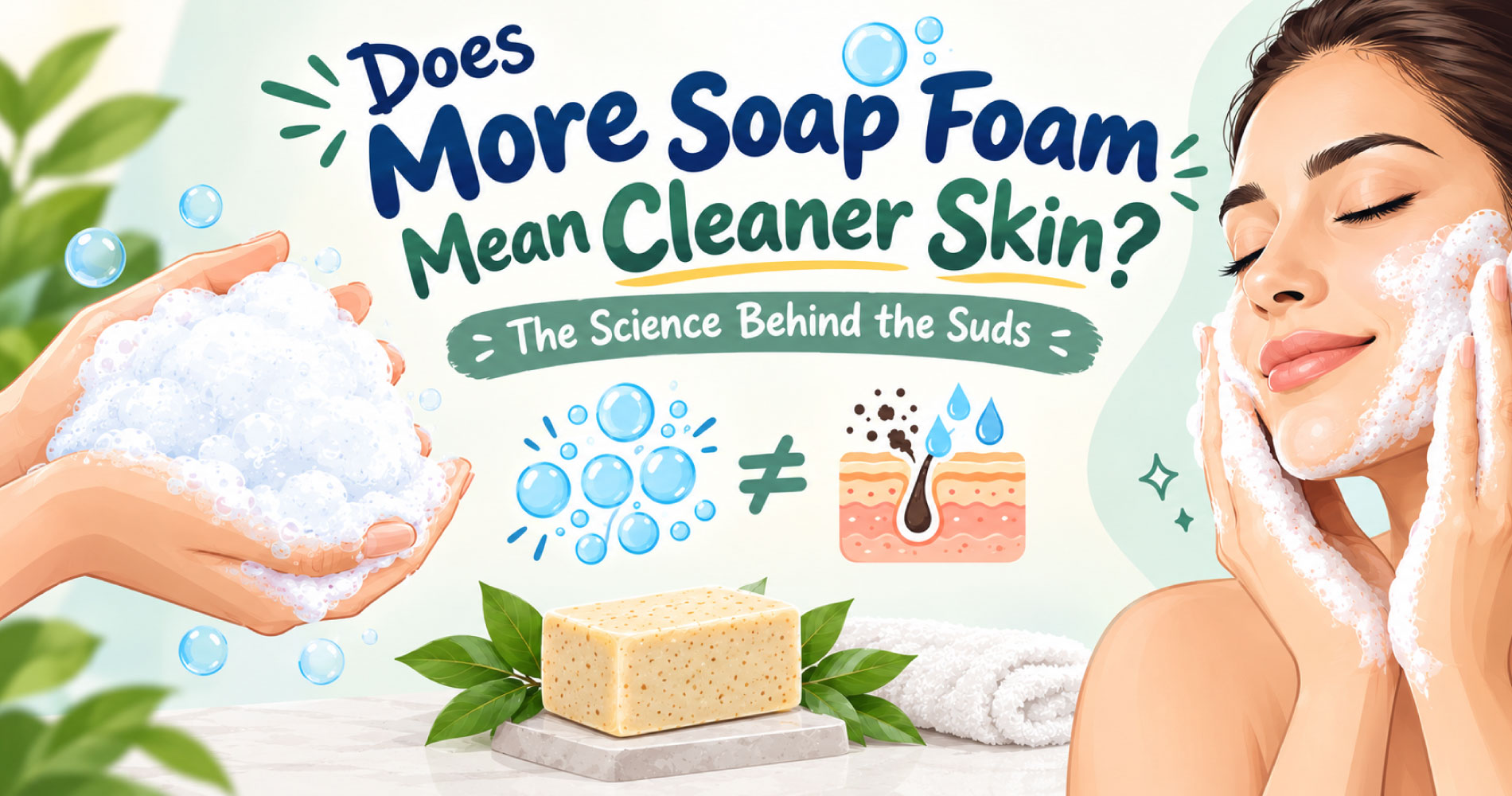
When we use soap, we often feel that the more lather it produces, the better it cleans the skin. While bathing, abundant lather is considered by many people to be a sign of cleanliness. In contrast, soaps that produce less lather are sometimes regarded as less effective or less cleansing. But is this belief scientifically correct? In reality, soap lather and its cleansing ability are two different things. Lather is formed mainly by the surfactants present in soap and their reaction with water. The ability to remove oil, sweat, dirt, and other impurities from the skin does not depend only on the amount of lather. The soap’s formula, the cleansing ingredients used in it, water hardness, skin type, and the method of use also play important roles.
A soap that produces a lot of lather is not harmful in itself, just as a soap that produces little lather does not automatically become gentler. The real difference lies in how effectively the soap cleans the skin and to what extent it preserves the skin’s natural moisture and protective barrier after cleansing. This article explains the science behind soap lather, examines common beliefs associated with lather, and describes what to look for when choosing a cleanser suitable for your skin.
Understanding soap lather and how it works
Before deciding whether more foam means better cleaning, it is important to understand what soap foam actually is. The bubbles formed when soap is rubbed with water are not merely a visible sign that dirt is being removed. They are the result of physical and chemical processes that occur when a cleansing product comes into contact with water and air.
What exactly is soap lather?
Soap foam is a collection of bubbles formed when air becomes trapped in a thin layer of liquid. These bubbles can combine to create the familiar layer of foam seen while washing hands, bathing, or using body wash. However, the process of lather formation does not depend only on the amount of soap used. The ingredients present in a product determine how easily bubbles form, how long they last, and how quickly they disappear. Some formulas produce large and light bubbles, while others create a denser or less visible lather. The quality of the water, the amount of water used, the method of rubbing, and the presence of oil or other residues can also affect the nature of the lather.
For this reason, the same product may produce different amounts of lather in different bathrooms or under different conditions. A change in the amount of lather does not necessarily mean that the product’s effectiveness has decreased.
The role of surfactants in cleansing
Surfactants, also called surface-active agents, are important ingredients present in many cleansing products. They help water come into contact with oily substances that cannot be easily removed with water alone. A surfactant molecule has two parts. One part readily bonds with water, while the other part is inclined toward oil and other substances that do not easily mix with water. This structure helps surfactants loosen oily residues and disperse them in water so that they can be washed away. When a cleanser is applied to the skin, surfactants help remove dirt, excess sebum, sweat-related residues, and other unwanted substances from the skin’s surface.
Their behavior also affects the product’s ability to lather, spread easily on the skin, and rinse off with water. Different surfactants have different characteristics. Some produce a great deal of foam, while others can clean effectively with less visible lather. Manufacturers combine different ingredients according to the purpose of the formulation and the desired characteristics.
Is foam responsible for removing dirt?
Foam is part of the cleansing experience, but bubbles alone are not the main basis for measuring how much dirt has been removed from the skin. The cleansing process depends on the ingredients in the product, how they interact with dirt and residue, the way the product is applied, and finally thorough rinsing with water. For example, a low-foaming product may still contain surfactants that help loosen dirt and oil. Similarly, a cleanser that produces dense foam does not necessarily remove all types of residue more effectively than a low-foaming alternative.
The key difference here is between the visible experience of cleansing and the actual cleansing process. Foam can provide some information about a product’s formula, but its effectiveness cannot be fully assessed by foam alone.
Does more soap foam actually mean better cleansing?
The direct answer is no. More foam does not automatically mean better cleaning. However, this does not mean that products that produce more lather are ineffective or unsuitable. To understand this distinction, we need to look at the real purpose of the cleansing process.
What does effective cleansing mean?
During everyday activities, the skin comes into contact with sweat, particles from the environment, excess oil, and other substances. Depending on which part of the body is being discussed and what activity the person is doing, some of these substances may need to be washed away. An effective cleanser helps loosen and remove unwanted residue without causing unnecessary irritation to the skin. A balance between cleansing ability and skin compatibility is important, because the skin’s outer protective layer also helps retain moisture and protect against external irritants.
Therefore, a product should not be evaluated solely on the basis of how much foam it produces. Its formula, intended use, ease of rinsing with water, and compatibility with a person’s skin—all of these factors are important.
Why high foam does not automatically mean superior cleansing?
A product that produces more foam can create a thick, abundant lather that spreads easily on the skin and can make the washing process feel satisfying. Some people like this experience because they associate it with freshness and cleanliness. However, the amount of foam is also affected by ingredients that are specifically chosen for their foaming ability. These characteristics do not directly indicate how effectively the formula removes every type of residue.
Two products may produce different amounts of foam and yet both still fulfill their intended cleaning purpose. Their effectiveness can vary depending on the type and concentration of surfactants used, the substances being removed, and the conditions under which the product is used. Therefore, the relationship between foam and cleaning is not a simple competition in which the product that makes the most bubbles always wins.
Can a low-foaming cleanser also clean effectively?
Yes, some cleansers are formulated to produce relatively little foam, but the cleansing agents they contain can still help remove dirt and other residue. The fact that they produce less foam does not by itself mean that they are unable to cleanse the skin.
For example, Lebrostone Multani Mitti Face Pack Soap can be used as an example in the context of a low-foaming cleansing experience. It is mentioned here only to explain that foam and cleansing ability are different matters. This is not an endorsement or promotion of any product, nor is it proof of superior effectiveness. Whether any product is suitable for a person depends on its overall formula and the skin’s response.
The same principle also applies to other low-foaming soaps, cream cleansers, and some liquid cleansing products. Their effectiveness cannot be judged solely on the basis of their visible appearance.
Does using more soap improve the results?
Using a larger amount of soap solely to create a thick layer of foam is not necessarily beneficial. When an appropriate amount of cleanser is being used, adding more does not necessarily lead to any significant improvement in results.
Using the product excessively can make it difficult to rinse off completely, or it may expose the skin unnecessarily to a greater amount of its ingredients. The effect depends on the product’s formula, the amount used, and the individual’s skin. A better approach is to follow the instructions on the product, apply it gently to the skin, and rinse thoroughly with water. There is no need to keep applying soap until the bathroom is filled with bubbles.
Why do some soaps produce more foam than others?
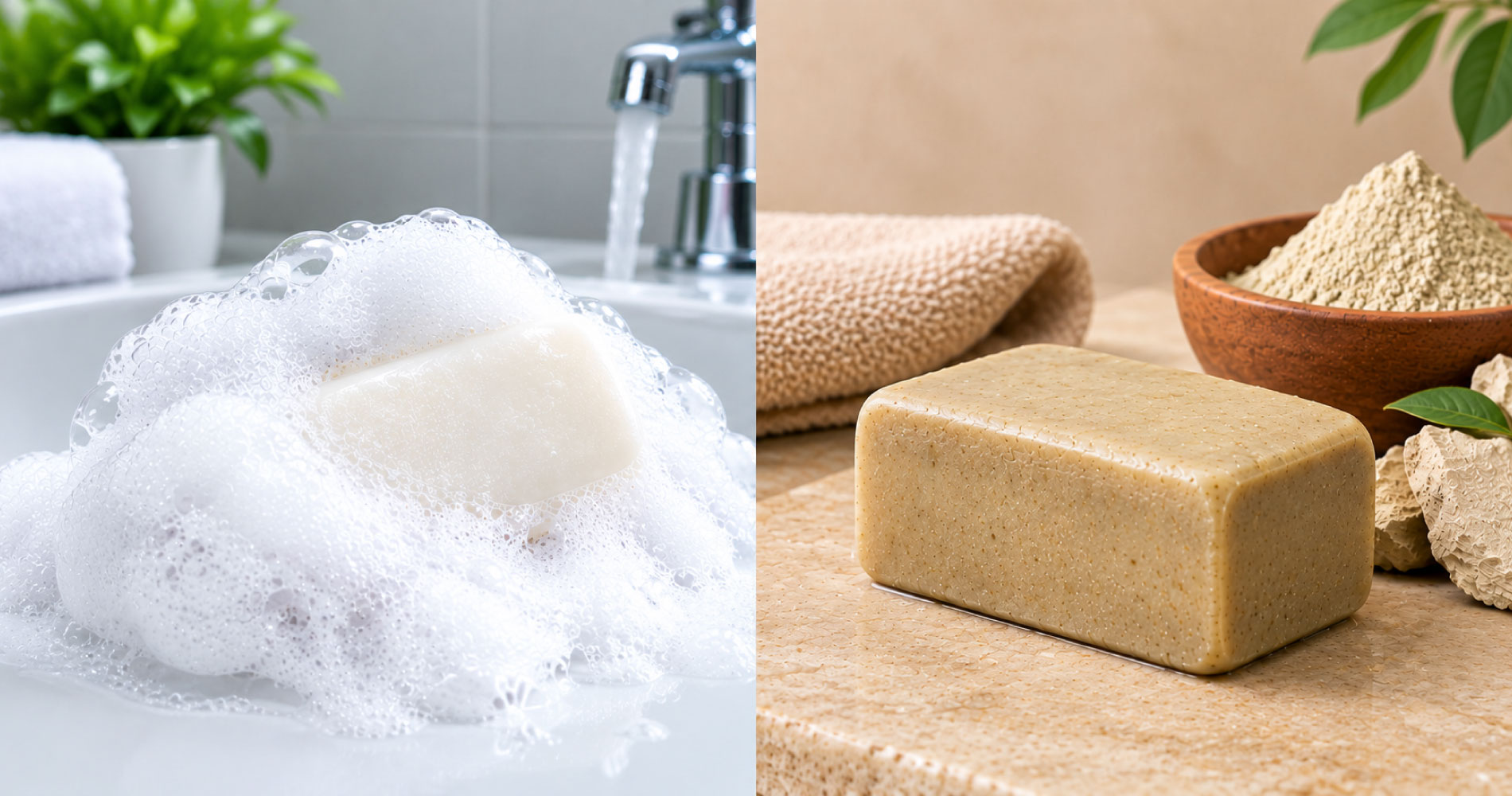
Have you ever noticed that one soap starts producing abundant foam immediately, while another, even after repeated rubbing, produces only a few bubbles? Usually, this difference is related to the product’s formula and the conditions under which it is used.
The type of surfactant matters
Not all surfactants are the same. Different cleansing agents vary in their ability to create and stabilize foam, react with oil, and be rinsed away by water under different conditions. Anionic surfactants are commonly used in cleansing products. Depending on the specific ingredients and formula, they can produce a sufficient amount of foam. Nonionic surfactants may have different foaming characteristics, while amphoteric surfactants can contribute to cleansing. They can be combined with other surfactants to achieve the characteristics of a particular formula.
These categories indicate how these substances behave chemically. On this basis alone, it cannot be determined whether the finished product will be suitable for all skin types. The combination of surfactants is especially important. A product formulator may use several ingredients to strike a balance between cleansing ability, foam, texture, stability, and the feel on the skin after use.
Other ingredients also affect foam
A finished product does not contain only cleansing agents. Other ingredients can also affect the formula’s thickness, the stability of the bubbles, the way the product spreads on the skin, and the feel left on the skin after rinsing with water. For example, some formulas are designed to produce abundant foam, while others prioritize a creamy texture or a low-foam experience.
These differences reflect formulation choices, not any universal ranking of product quality.
It is also not correct to assume that the presence of a particular ingredient always guarantees a fixed result. The concentration of that ingredient, its interaction with other ingredients, and the finished formula, all of these factors affect the product’s performance.
How does water hardness affect foam?
The quality of water can also affect the amount of foam produced during washing. Hard water contains relatively higher amounts of minerals such as calcium and magnesium. Traditional soap can react with these minerals to form substances that do not dissolve easily in water. These are commonly called soap residue or soap scum. This can reduce the amount of foam produced and may leave residue on surfaces or skin.
As a result, a soap that produces abundant foam in one place may produce less foam in another place where the water contains a higher amount of dissolved minerals. This does not mean that the soap has suddenly stopped working. The difference may be due to the chemical composition of the water rather than any change in the product.
Does the water temperature also make a difference?
The temperature of the water and the way the product is applied can affect the cleansing experience. The amount of water, the hand movements used to spread the cleanser, and the way the ingredients react with water all influence the amount of visible lather. However, very hot water is not necessary for effective cleansing. Very hot water can increase dryness of the skin, especially in people whose skin is already sensitive or who are easily irritated.
The American Academy of Dermatology recommends lukewarm water and gentle cleansing for the care of dry skin. Its dermatologist-recommended tips for relieving dry skin emphasize taking shorter baths or showers, cleansing the skin gently, and applying moisturizer after bathing. In other words, our goal should be comfortable and effective cleansing, not maximizing the amount of lather produced by hot water and vigorous scrubbing.
Can soap lather affect your skin barrier?

The skin barrier is an important part of the body’s natural defense system. It helps prevent excessive loss of water from the skin and protects the skin from external irritants. Cleansing the skin is essential for maintaining hygiene, but the choice of product and the way it is used can affect how comfortable the skin feels after cleansing.
Understanding the skin barrier
The outermost layer of the skin contains cells surrounded by lipids. These include ceramides, cholesterol, and fatty acids. Together, these components help maintain the structure of the skin barrier and reduce excessive moisture loss.
When this protective layer functions properly, the skin is better able to retain water and withstand everyday environmental exposure. But when this layer is compromised or becomes irritated, the skin may feel dry, rough, itchy, or uncomfortable. The skin’s protective barrier is influenced by many factors, including genetics, environmental conditions, pre-existing skin concerns, and personal care habits. Cleansing is only one part of this entire process. A product that works well for one person’s skin does not necessarily produce the same experience for another person’s skin.
Why can some cleansing routines cause dryness?
Cleansers are formulated to react with substances on the surface of the skin, including oil. Depending on their formulation and how they are used, some products can remove enough of the skin’s natural lipids to cause discomfort.
Frequent washing of the skin, prolonged exposure to hot water, vigorous rubbing of the skin, and using a product that is not suitable for the skin can all contribute to dryness or irritation.
For example, a person who bathes several times a day and uses a harsh cleanser each time may have drier skin than someone who cleanses less often with an appropriate product. This difference is not necessarily related to how much foam either person sees. The overall cleansing routine is just as important as the product itself.
What does tight or squeaky-clean skin mean?
Some people believe that after washing, the skin should feel very tight or squeaky clean, and that this is proof that the skin has been thoroughly cleansed. However, this sensation is not a reliable way to measure the effectiveness of cleansing.
A persistent feeling of tightness in the skin may indicate that the skin has become dry or that the cleansing routine needs to be adjusted. Other possible signs of irritation include flaking, redness, itching, and discomfort.
These symptoms do not provide a definite diagnosis of any specific problem, and their cause may be something other than cleansing. Even so, it is important to pay attention to them, especially when they appear repeatedly after using a particular product. The goal is to keep the skin comfortable while removing unwanted residue, not to strip away every trace of the skin’s natural oils.
Is foam itself responsible for dryness?
It cannot be determined solely by looking at the foam whether a product will dry out your skin or not. A product that produces more foam is not inherently harsh, and a product that produces less foam is not inherently gentle.
The product’s ingredients, its formula, the frequency of use, and individual skin sensitivity all affect the outcome. One person may use a high-foaming cleanser without any problem, while another product may cause irritation. Similarly, a low-foaming cleanser can also cause discomfort if its ingredients are not suitable for that person’s skin.
Research comparing soap-based cleansers and synthetic detergent cleansers, known as syndets, also highlights the importance of formulation and compatibility with the skin. A review published in the journal Dermatology Research and Practice discusses how different types of cleansers can affect the skin’s protective barrier and its function. This research can be read on PubMed Central. Therefore, instead of evaluating a cleanser based on its lather, focus on how your skin feels during and after use.
High-foaming vs low-foaming cleansers: What is the difference?
Both high-foaming and low-foaming cleansers can have their place in personal care. The main difference between them is not that one category is always good and the other bad, but that their formulas and cleansing experiences can be different.
High-foaming cleansers
High-foaming cleansers create a large amount of bubbles when mixed with water and applied to the skin. This can make the product easier to spread over the skin and provide a familiar experience that many people associate with bathing. Depending on the ingredients and formula, such products may be suitable for daily cleansing. However, abundant foam does not mean that the product will be comfortable for everyone.
People with dry or sensitive skin may need to pay closer attention to how a particular cleanser affects their skin. If discomfort is felt after repeated use, it may be worth considering a product with a different formula. However, it would be incorrect to assume that all products that produce a lot of foam are harmful to the skin. Their suitability depends on the specific formula and the person using it.
Low-foaming and non-foaming cleansers
Low-foaming products produce less visible lather, while foam-free products are formulated to create very little or no foam during normal use. These products may still contain ingredients that help remove dirt and other residues. The absence of many bubbles does not mean that the cleansing process has failed.
Some people prefer low-foaming cleansers because they like the texture or feel that a particular formula suits their skincare routine. Others may prefer a richer lathering experience. Neither preference by itself proves which product performs better.
It is also important to understand the difference between low-foaming and foam-free products. A low-foaming product is not necessarily completely foam-free. The amount of foam can vary depending on water conditions and the way the product is applied.
Which type should you use?
First, consider your skin’s needs and the product’s purpose. Pay attention to whether you are cleaning your face, hands, or body, whether your skin is dry, and whether you have any sensitivities to specific ingredients. Read the ingredient information provided on the product and follow the instructions for use. Be aware of any signs of discomfort after use, and avoid scrubbing your skin vigorously if the cleanser is not producing enough foam.
If you have been diagnosed with eczema or experience frequent skin irritation, consulting a dermatologist can help you choose the right products. Ultimately, there is no single “best” cleanser for everyone, as the ideal choice depends on individual needs. The most effective option is one that effectively cleanses your skin without causing unnecessary irritation.
How to choose a cleanser for your skin type?
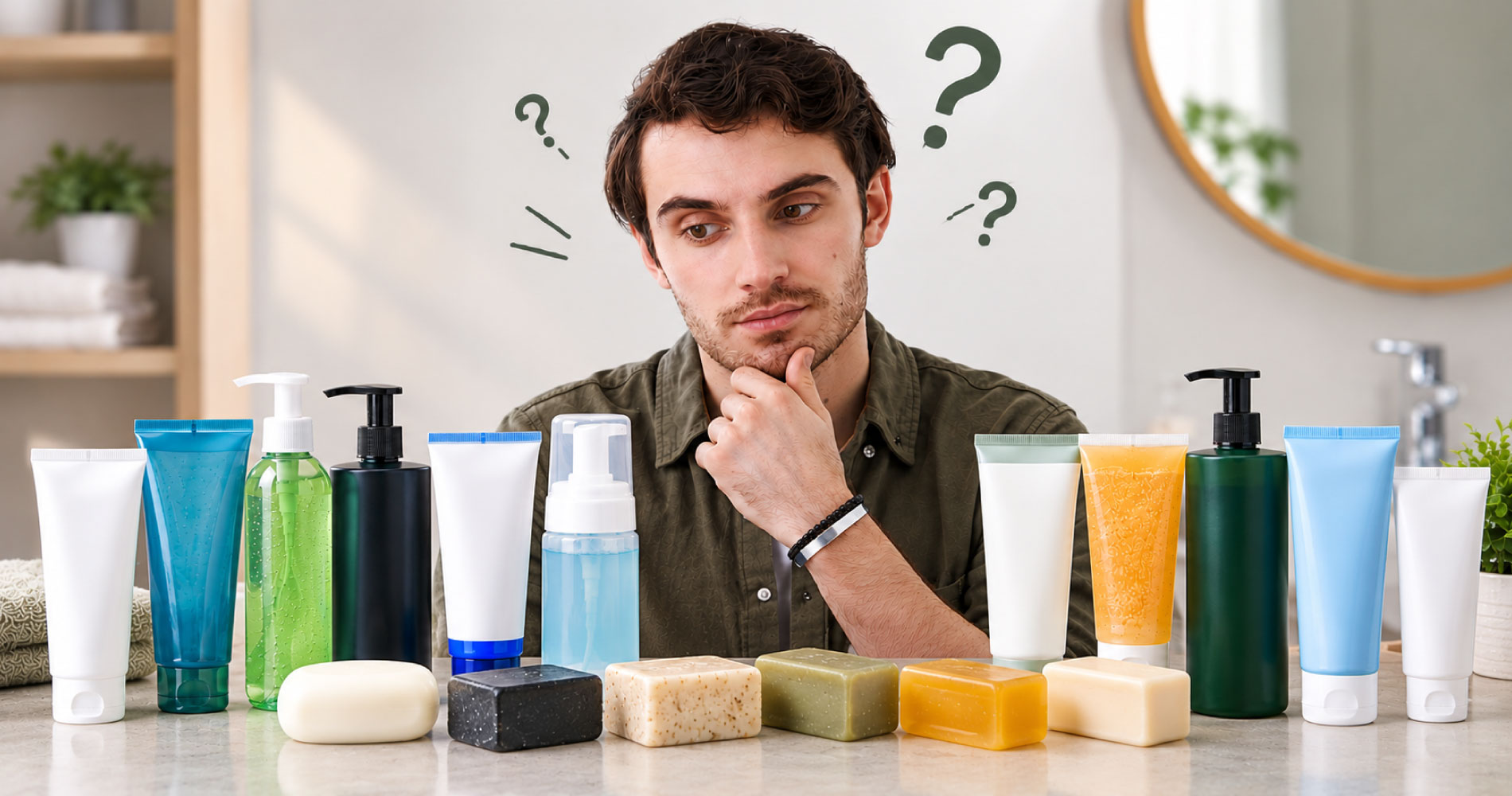
Skin types can influence which products people find comfortable, but there is no single cleanser that works best for everyone. Skin needs can also change with weather, age, medications, and underlying conditions.
For dry skin
If your skin often feels tight or flaky, consider a cleanser that helps remove dirt without making the skin excessively uncomfortable. Avoid using very hot water, taking long baths, and rubbing the skin vigorously. After bathing, gently pat the skin dry with a towel and apply moisturizer while the skin is still slightly damp. For skin that remains persistently dry, creams or ointments may be helpful, although the right choice depends on your individual needs. If dryness persists despite changes to your skincare routine, a dermatologist can help determine whether there may be another skin-related issue behind it.
For oily skin
Oily skin produces more sebum, but that does not mean it needs to be washed frequently or vigorously. A cleanser can be a sensible choice if it removes excess oil without causing ongoing irritation. Washing repeatedly to remove all the skin’s oil can cause discomfort and increase irritation. The goal is to remove excess oil and other residue, while also allowing the skin to maintain its normal protective function. People with oily or acne-prone skin should also remember that cleansing alone does not treat all the causes of acne.
For sensitive skin
Sensitive skin can react to certain ingredients, fragrances, or cleansing methods. If you often experience redness, itching, or stinging after using a product, consider whether that product or another part of your routine may be the cause. Fragrance-free products may be helpful for people who are sensitive to fragrances. However, the fact that a product is labeled fragrance-free does not guarantee that it will be suitable for everyone’s skin.
Introduce new products into your routine carefully and follow the instructions related to patch testing. If irritation persists or becomes severe, consult a specialist rather than repeatedly trying different cleansers.
For normal or combination skin
People with normal or combination skin may have different needs in different areas of the skin. For example, some areas may feel oily, while others may be dry. When you choose a cleanser, pay attention to how comfortable it is to use, which part of the body or face it will be used on, and what residues need to be removed. Do not assume that a skin-type label alone can determine the choice of every product. If your skincare routine changes with the seasons, pay attention to whether your skin is becoming drier or more sensitive. Adjust your cleansing habits accordingly.
For people who sweat frequently
Exercise, working outdoors, and hot weather can increase sweating. Bathing or cleansing the skin after heavy sweating can help remove sweat and accumulated residue. However, it is not necessary to cleanse the skin with a strong cleanser every time simply because you have been physically active.
Use an appropriate cleanser as needed, rinse the skin thoroughly with water, and change out of sweat-soaked clothing where possible. If you bathe more than once a day, consider whether it is necessary to apply cleanser to the entire body each time, or whether cleansing only certain areas may be sufficient in your circumstances. The principle remains the same that it is not necessary to scrub or over-cleanse the skin in order to maintain good hygiene.
Common myths about soap foam and cleansing
Skincare advice often turns simple observations into strict rules. Soap foam is a good example of how a familiar experience can be mistaken for scientific evidence. Let’s look at some common misconceptions.
Myth 1: The more foam, the cleaner the skin
Truth: The amount of foam is not a direct measure of cleansing effectiveness. The product’s formulation, the surfactants it contains, the way it is applied, and the rinsing process with water, all of these affect how effective the product is.
Myth 2: Low-foam cleansers do not clean the skin properly
Truth: A cleanser can remove unwanted residue without producing much foam. Low foam does not automatically mean lower cleansing ability.
Myth 3: Soap that produces more foam always damages the skin’s protective barrier
Truth: The effect of a cleanser depends on its overall formula, how often it is used, and an individual’s skin sensitivity. Foam alone cannot determine whether a product is harsh on the skin or not.
Myth 4: The best result is when the skin feels completely tight and squeaky clean
Truth: Feeling persistent tightness or discomfort after washing the skin may be a sign of dryness or irritation. It is not necessary to completely strip the skin of its natural moisture and protective barrier in order to cleanse it.
Myth 5: Hot water cleans better with soap
Truth: Very hot water can increase skin dryness. Lukewarm water is generally a better choice for cleansing the skin every day, especially for people with dry or sensitive skin.
Myth 6: Using more soap and scrubbing harder gives better results
Truth: Using a larger amount of product or scrubbing the skin vigorously does not guarantee better cleansing. Excessive scrubbing can irritate the skin, while using too much product may make it difficult to rinse off completely.
Myth 7: A cleanser with natural ingredients is automatically gentle on the skin
Truth: The fact that an ingredient comes from a natural source does not guarantee that it will be suitable for every skin type. The formulation of the finished product, the concentration of the ingredients, and an individual’s skin response, all of these matter.
Myth 8: If a cleanser is producing less foam than usual, it has stopped working
Truth: Water hardness, the amount of water used, and residue on the skin can all affect the amount of foam produced. A difference in lather does not necessarily mean that the product is no longer effective.
What actually matters in an everyday cleansing routine?
Once you understand the difference between foam and cleansing, it becomes easier to build your skincare routine around practical habits rather than misleading expectations.
- Use lukewarm water as very hot water can increase skin dryness, especially if your skin is already sensitive.
- Choose a cleanser suitable for your skin. Consider your skin’s needs, the area being cleansed, and any sensitivity to specific ingredients. Do not judge a product solely by the amount of foam it produces.
- Apply it gently using the amount of product recommended by the manufacturer and spread the cleanser without rubbing the skin harshly. There is no need to scrub the skin more just to create more bubbles.
- Rinse the skin thoroughly by removing the cleanser completely with water, as directed on the product. Leaving residue on the skin may cause discomfort in some situations.
- Pat the skin dry using a clean, soft towel. Avoid rubbing the skin vigorously, especially when it is already dry or irritated.
- Apply a moisturizer if needed. If your skin feels dry, applying a suitable moisturizer after bathing can help reduce moisture loss and keep the skin comfortable.
- Pay attention to recurring irritation. If using a product repeatedly causes itching, redness, or a persistent tight feeling, consider whether it is suitable for your skin. Stop using any product suspected of causing irritation. If symptoms persist or worsen, seek professional advice.
These methods are simple, but they can play an important role in making your daily skincare routine more comfortable. The goal is not to remove every natural oil from the skin or to create the most lather possible. The real purpose is to maintain good hygiene while taking care of the skin’s natural protective barrier.
Conclusion: Stop counting bubbles and start understanding your skin
Soap lather can make the experience of washing the skin feel satisfying, but it is not a reliable measure of how well your skin has been cleaned. The cleansing process depends on many factors, such as surfactants, the product’s overall formulation, the residue being removed, the water used, and the way the product is applied and rinsed off.
A cleanser that produces more foam is not automatically better, and a cleanser that produces less foam is not automatically gentler. Both can be part of your skincare routine. The right choice depends on the product’s formulation and the skin needs of the person using it.
It is equally important to understand that how comfortable your skin feels matters. Persistent tightness, itching, flaking, or redness after bathing may be a sign that you should reconsider your routine. It does not mean that your skin has been cleaned better than before. Instead of using extra products to get more lather, choose a cleanser that suits your needs. Clean your skin gently, rinse thoroughly with water, and apply a moisturizer if needed. If you experience persistent irritation or have been diagnosed with a skin-related condition, expert advice can help you choose the right product.
The next time you pick up soap, remember that bubbles are only one part of the cleansing experience. Your cleansing routine should be evaluated based on its effectiveness, its suitability for your skin, and its impact on your skin, not simply on how much lather it creates in your hands.
Disclaimer
This article is intended for general informational and educational purposes only. It should not be considered a substitute for professional medical advice, diagnosis, or treatment. The information provided explains general principles of cleansing science and skin care like individual responses to soaps and other cleansing products can vary according to skin type, product formulation, environmental conditions, and existing skin concerns. The amount of foam produced by a product does not, by itself, establish its cleansing effectiveness, gentleness, or suitability for a particular person. Product examples are included for illustration and should not be interpreted as endorsements or guarantees of performance.
Always follow the manufacturer’s directions and discontinue use of a product that appears to cause irritation. If you experience persistent dryness, itching, redness, a rash, or other ongoing skin concerns, consult a qualified dermatologist or healthcare professional. People with diagnosed skin conditions may require individualized advice about suitable cleansing products and bathing practices.
FAQs
1. Does more soap foam mean better cleansing?
No. Foam volume alone does not determine how effectively a product cleans the skin. Cleansing performance depends on the surfactants and the overall formulation, the type of residue being removed, the application method, and rinsing. A low-foaming product can still clean effectively.
2. Why does some soap produce very little foam?
The amount of foam depends on the cleansing agents and other ingredients in the formulation, as well as water hardness, water quantity, and how the product is applied. Traditional soap may produce less lather in hard water because of its interaction with dissolved minerals. Less foam does not automatically mean the product has stopped working.
3. Can low-foaming soap be suitable for dry skin?
It may be suitable, but low foam alone does not guarantee gentleness. People with dry skin should consider the complete formulation, avoid very hot water and aggressive scrubbing, and moisturize after bathing when needed. If dryness persists, a dermatologist can help identify an appropriate cleansing routine.
4. Does high-foaming soap always cause skin dryness?
No. Some high-foaming products may be suitable for everyday use, while others may not suit certain skin types. Dryness depends on factors such as the formulation, frequency of use, bathing habits, and individual sensitivity. Foam volume alone cannot predict whether a cleanser will cause irritation.
5. How can I tell whether my cleanser suits my skin?
Consider whether it cleans effectively and rinses away without leaving your skin persistently uncomfortable. Repeated tightness, itching, redness, or flaking may indicate that your routine needs adjustment, although these symptoms can have other causes. If they continue or become severe, consult a qualified dermatologist rather than relying on foam level to judge the product.

Content Writer with 3+ years of experience turning ideas into words people want to read, share, and remember. I create research-backed social media and lifestyle content that blends storytelling, creativity, and audience insights to make every piece feel fresh, relatable, and engaging.

One thought on “Does more soap foam mean cleaner skin? The science behind the suds”