
Abstract
Why does your skin seem to have a personality change every time the weather does? From winter dryness and summer oiliness to monsoon-time congestion and sensitivity, seasonal changes can affect the way our skin looks, feels, and functions. This article explores the science behind these shifts, examining how temperature, humidity, UV exposure, wind, and indoor environments influence the skin barrier, hydration, sebum production, and sensitivity. Drawing on research, it goes beyond the simple idea that “cold dries skin” or “heat makes it oily” to uncover why different skin types respond differently to the same conditions. It also explores how to recognize these environmental changes and adapt skincare accordingly without turning every new season into a reason to overhaul your entire routine.
Introduction: Your skin has its own weather forecast
The weather app tells you what the atmosphere is doing. Your skin tells you what it’s doing to you. Your moisturizer worked perfectly last month, but suddenly your skin feels tight and rough. Or perhaps winter left your skin comfortable, only for rising temperatures to bring shine, sweat, or congestion. Your skincare hasn’t changed, but it’s your environment that has.
Temperature, humidity, UV exposure, and even indoor air can influence how the skin behaves. Research suggests that seasonal changes can affect hydration, barrier function, and sebum production, although the response varies between individuals and climates. So, rather than thinking of skin as simply “dry in winter” or “oily in summer,” it helps to ask a better question about what is the changing environment actually doing to your skin?
The skin barrier: Your first line of defense
At the center of this relationship is the skin barrier which is the outer layer that helps keep moisture in and irritants out. When environmental conditions change, this barrier has to adapt, and one important measure researchers use to understand that process is trans-epidermal water loss (TEWL). Understanding the barrier is the first step to understanding why your skin can feel completely different from one season to the next.
The invisible climate your skin lives in
Your skin doesn’t experience a season. It experiences a microclimate. Temperature, humidity, UV radiation, wind, and even indoor heating or air conditioning create an environment that constantly interacts with your skin. These factors can influence how well your skin retains moisture, produces oil, and protects itself from external irritants.
Temperature and humidity: The changing environment
Temperature and humidity play an important role in maintaining the skin’s water balance. Cold conditions and low humidity can contribute to dryness, while heat can increase sweating and influence sebum production. However, these responses are not the same for everyone. The combination of environmental conditions and individual skin characteristics determines how the skin reacts.
Wind, pollution and indoor air
The environment affecting your skin isn’t limited to what you experience outdoors. Wind can increase moisture evaporation, particularly in dry conditions, while indoor heating and air conditioning can alter the humidity surrounding your skin. Air pollution may also affect skin-barrier function, with research suggesting links between certain pollutants and increased trans-epidermal water loss (TEWL).
What happens to your skin barrier?
To understand these changes, researchers examine TEWL, which measures the amount of water passing through the skin and evaporating into the surrounding air. Alongside measurements of hydration, it helps researchers understand how environmental conditions influence the skin barrier.
A 2022 systematic review found that environmental factors can influence TEWL, although results vary across studies and populations. This suggests that seasonal skin changes are not simply a matter of cold weather causing dryness or heat causing oiliness. Instead, they reflect the interaction between the surrounding environment and the skin’s ability to maintain its balance.
Ultimately, the same weather can produce different responses in different people. Understanding these environmental influences helps explain why your skin may change with the seasons, even when your skincare routine stays exactly the same.
Winter isn’t dry skin season. It’s barrier stress season
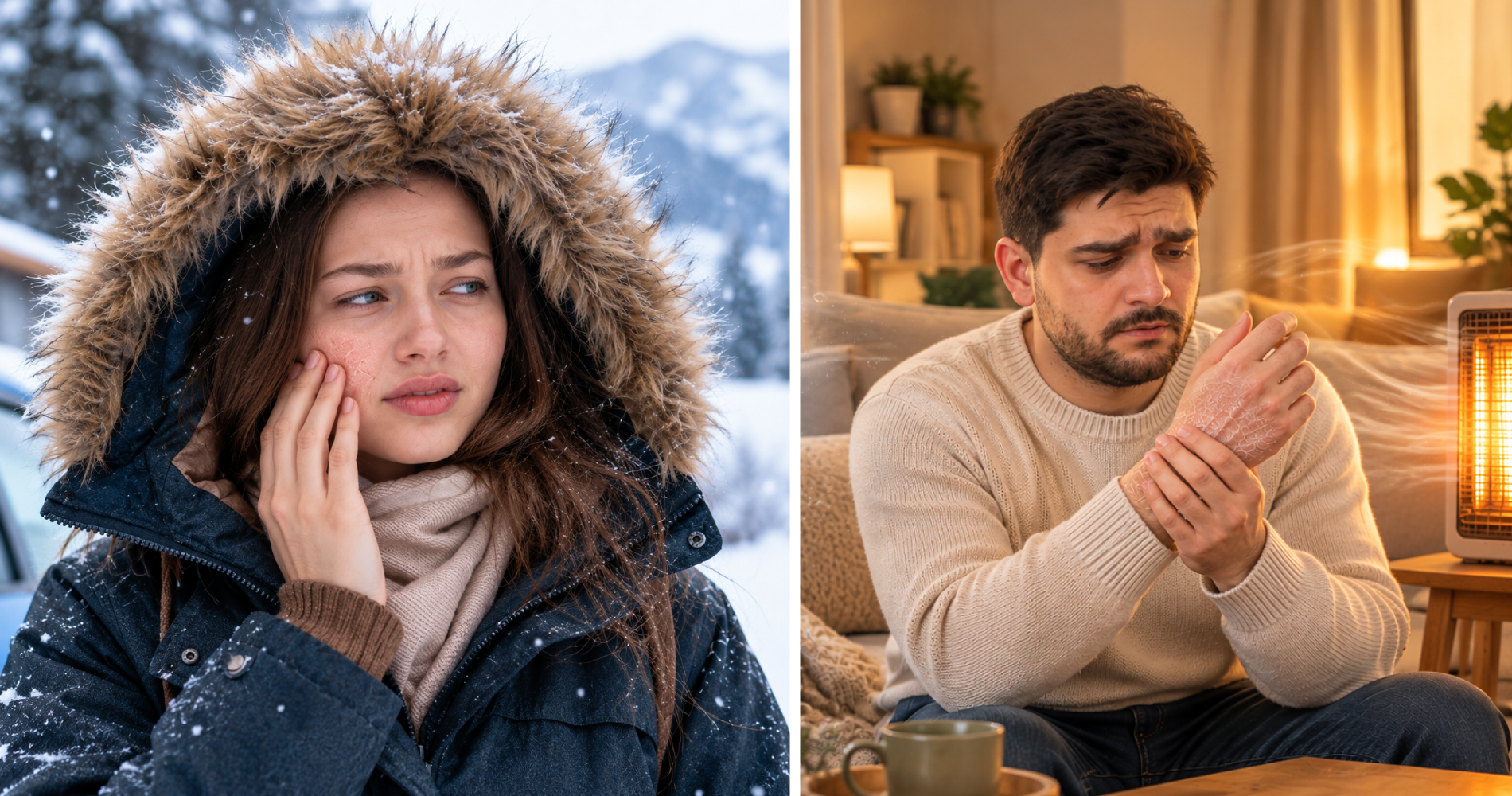
Winter doesn’t steal moisture from your skin in one dramatic event. Instead, it creates a series of small challenges that can affect the skin barrier over time. As temperatures drop, humidity often decreases too, allowing moisture to evaporate more readily from the skin’s surface. This can leave the skin feeling tight, rough, and less comfortable than usual.
How cold weather affects the skin barrier
The combination of cold temperatures and low humidity can disrupt the skin’s water balance. When the outermost layer struggles to retain moisture, dryness and irritation may become more noticeable. Research suggests that cold, dry conditions can influence trans-epidermal water loss (TEWL), a measure of water evaporating through the skin, although the extent of these changes varies across studies.
The overlooked role of indoor heating
The challenge doesn’t end when you step indoors. Moving between cold outdoor air and heated indoor spaces exposes your skin to different environmental conditions throughout the day. Indoor heating can lower relative humidity, creating another environment in which the skin may lose moisture. These repeated transitions can contribute to discomfort, particularly for people with sensitive skin or an already compromised skin barrier.
Does winter always increase water loss?
Not necessarily in the same way for everyone. Studies examining seasonal changes in TEWL and skin-barrier function have reported mixed findings, influenced by factors such as climate, humidity, age, and measurement methods. Cold weather alone does not explain every change in the skin.
Winter-related dryness is better understood as the result of several environmental factors working together. Rather than assuming that every skin type needs a completely different routine, it is more useful to recognize signs of barrier stress and respond to what the skin actually needs.
Summer: When heat changes the skin’s behavior
Summer doesn’t simply make skin more oily. It changes the entire environment in which your skin operates. Rising temperatures can increase sweating, influence blood flow to the skin, and affect its surface conditions. For some people, this means a shinier complexion, while others may notice increased sensitivity or discomfort.
Heat, sweat and sebum: What’s happening to your skin?
As temperatures rise, the body produces more sweat to regulate its temperature. At the same time, research suggests that sebum production can vary with seasonal conditions, with some studies reporting higher levels during warmer months. However, these changes are not identical for everyone.
Humidity adds another layer to this process. In warm, humid conditions, sweat may evaporate less readily, leaving the skin feeling sticky or greasy. The combination of sweat, surface oil, and skincare products can also influence how comfortable the skin feels throughout the day.
How can your skin be oily and dehydrated at the same time?
A shiny face doesn’t necessarily mean your skin has enough moisture. Sebum, the natural oil produced by the sebaceous glands, and water are two different things. Sebum helps lubricate the skin’s surface, while hydration refers to the water content of the skin.
This means skin can produce excess oil while still experiencing dehydration or a compromised skin barrier. Heat, sun exposure, cleansing habits, and skincare products can all influence how the skin feels and functions.
Summer skin, therefore, is not simply a story of increased oil production. It is the result of changing temperature, humidity, sweating, and individual skin responses. Understanding these differences helps explain why warmer weather can leave one person feeling greasy and another experiencing both shine and tightness.
Humidity: The plot twist
Humidity is often associated with hydrated, healthy-looking skin. However, higher moisture levels in the air do not automatically mean healthier skin. In warm, humid conditions, sweat may evaporate more slowly, surface oil can become more noticeable, and prolonged moisture or friction may contribute to irritation. So, why can skin feel greasy, sticky, or uncomfortable even when the air contains more moisture? The answer lies in how humidity interacts with temperature, sweat, and the skin barrier.
How does humidity affect the skin barrier?
The stratum corneum, the outermost layer of the skin, helps retain water and protect against external irritants. Humidity influences water movement between the skin and its surroundings. While higher humidity can help the outer skin layer retain moisture, it does not necessarily mean the skin barrier is functioning properly. Barrier health also depends on its lipid structure, existing skin conditions, and individual characteristics.
Why does humid weather make skin feel greasy?
Warm, humid weather often increases sweating while slowing evaporation. When sweat combines with sebum, the skin’s natural oil, it can leave the face feeling sticky and looking shiny. However, oiliness and hydration are not the same thing. Skin can appear greasy while still experiencing dehydration or barrier-related discomfort.
Sweat, friction and skin congestion
Prolonged sweat, tight clothing and certain skincare products can contribute to moisture accumulation and friction. In susceptible individuals, these conditions may aggravate irritation or contribute to problems such as heat rash. Although humid weather may worsen discomfort or existing skin concerns, it should not be considered a direct cause of every breakout.
Does more moisture mean a healthier skin barrier?
Not necessarily. Skin hydration refers to its water content, while barrier function describes how effectively the skin retains water and protects against external irritants. These processes are connected but distinct. Research suggests that humidity affects skin differently depending on environmental conditions and individual characteristics.
Ultimately, humidity is neither universally beneficial nor harmful. Its effects depend on how it interacts with temperature, sweat, friction and the skin’s existing condition. More moisture in the air does not automatically mean a healthier skin barrier. Understanding this distinction helps explain why the same humid weather can leave one person comfortable while another experiences greasiness, irritation or congestion.
Monsoon: When your skin meets a completely different environment
Monsoon changes the air before it changes your skincare routine. In India, the rainy season often brings a combination of high humidity, warm temperatures, increased sweating and frequent transitions between outdoor rain and indoor environments. Together, these conditions can change how the skin feels and behaves. Someone who usually experiences dry skin may suddenly notice more surface oil, stickiness or congestion, while others may find their skin more prone to irritation. These changes are not caused by rainfall alone but reflect how the skin responds to its changing environment.
Why can skin feel greasy during the monsoon?
High humidity can slow sweat evaporation, leaving the skin feeling damp and uncomfortable. When sweat combines with sebum and skincare products, the face may appear shinier than usual. This can make even familiar products feel heavier on the skin.
However, increased surface oil does not necessarily mean the skin is adequately hydrated. As discussed in the previous section, oiliness and hydration are different properties, and the skin’s response also depends on its existing barrier function and individual characteristics.
Can monsoon weather contribute to breakouts?
For people prone to acne, the combination of heat, sweat, friction, and occlusive products may contribute to breakouts. A study involving 171 acne patients in Delhi found that seasonal changes in acne varied between individuals, with some reporting getting worse during warmer months. However, this does not establish humidity as the sole cause of acne. Monsoon weather should therefore be understood as a potential contributing factor rather than a universal trigger. Existing acne tendencies, skincare habits, and individual skin characteristics all influence how the skin responds.
Monsoon skin is not simply summer skin with rain. It is skin responding to a combination of warmth, humidity, persistent sweat, and changing environments. Paying attention to these factors helps explain why the skin may feel different during the rainy season without assuming that every change requires a completely new skincare routine.
The sun doesn’t care what season your skincare routine is in

Temperature tells you how summer feels. UV tells you what summer can do. A cool or cloudy day does not necessarily mean low UV exposure. Ultraviolet (UV) radiation can affect your skin throughout the year, making sun protection important beyond summer.
UVA and UVB: How sunlight affects your skin
- UVA rays penetrate deeper into the skin, contributing to photoaging, wrinkles and uneven pigmentation.
- UVB rays are a major cause of sunburn (erythema) and also contribute to skin cancer.
Both types can damage the skin, even when the weather feels pleasant.
Why sunscreen is a year-round essential
UV exposure can stimulate pigmentation, worsen dark spots and gradually contribute to visible signs of aging. Clouds may reduce UV radiation, but they do not block it completely. Use a broad-spectrum sunscreen with SPF 30 or higher, particularly when spending time outdoors. Reapply approximately every two hours during prolonged outdoor exposure and after swimming or heavy sweating.
Skincare should adapt to temperature and humidity, but sun protection shouldn’t be seasonal. Your skin responds to UV exposure, not just the weather.
The wind is quietly doing something too

You notice heat or rain, but you rarely notice wind until your skin does. Wind can increase moisture loss from the skin’s surface, especially when combined with low humidity. As water evaporates more readily, the skin may feel dry, tight or uncomfortable.
Why cold, wind and low humidity feel worse together
Cold weather can reduce skin hydration, while low humidity makes it harder for the skin to retain moisture. Wind adds airflow that can increase evaporation, intensifying dryness and potentially aggravating an already weakened skin barrier. That is why cold, wind, and low humidity together can leave your skin feeling much drier than cold weather alone. Supporting the skin barrier with a suitable moisturizer can help reduce moisture loss and improve comfort.
Wind may be invisible, but its effects on your skin can be noticeable. When cold air, low humidity, and strong airflow combine, your skin may need extra protection against dryness and irritation.
Then there’s the weather inside your house
Your skin may spend 20 minutes outside in winter and eight hours in air-conditioned weather. Which climate is actually affecting it more?
Seasonal skin changes are not always caused by the weather outside. Indoor environments can influence the skin too, particularly when you spend long hours in air-conditioned rooms or heated spaces with low humidity.
How indoor climate affects your skin
- Air conditioning and heating: Depending on how they alter indoor humidity, these systems can contribute to moisture loss and dryness.
- Fans and airflow: Continuous airflow may increase evaporation from the skin’s surface, especially in dry environments.
- Long hours indoors: Spending most of your day in a controlled indoor environment means your skin may experience a different climate from the one reported outside.
- Frequent transitions: Moving between hot, humid outdoor air and cool, air-conditioned rooms can change how your skin feels, sometimes making dryness or discomfort more noticeable.
These effects vary with indoor humidity, temperature, exposure time and the condition of your skin barrier.
The weather outside isn’t necessarily the environment your skin spends the most time in. Understanding your indoor climate can help explain why your skin feels dry even during humid weather or becomes uncomfortable despite having a consistent skincare routine. Sometimes, the missing piece in your seasonal skincare routine isn’t the season at all; it’s the environment you spend your day in.
Why your friend’s skin doesn’t behave like yours

Same weather. Same city. Completely different skin reactions.
Ever noticed how your skin feels dry in winter while your friend experiences no noticeable change? Or how humid weather leaves your skin greasy but theirs remains comfortable? Environmental conditions affect everyone differently because the skin’s response depends on more than the weather alone.
What makes your skin’s response different?
Several factors influence how your skin responds to seasonal changes:
- Baseline skin characteristics and genetics: Natural differences in oil production, skin barrier function and water retention can influence how skin responds to its surroundings.
- Age: Skin structure and its ability to retain moisture change over time.
- Existing skin conditions: Conditions such as eczema, rosacea and acne can influence sensitivity to environmental triggers.
- Skincare and cleansing habits: Harsh cleansers, frequent washing or unsuitable products may affect the skin barrier.
- UV exposure and geography: Sunlight intensity, altitude and local climate can change the environmental stress your skin experiences.
- Indoor environment: Air conditioning, heating and indoor humidity also influence daily exposure.
Why there is no universal seasonal skin response
Research on temperature, humidity, sebum production, skin hydration and trans-epidermal water loss (TEWL) shows that seasonal changes do not affect everyone in the same way. Findings can also vary depending on the population studied, environmental conditions and measurement methods. This means there is no single response that defines winter skin or summer skin. One person may experience tightness and dryness, while another notices increased oiliness or irritation under similar conditions.
Your skin’s seasonal response is personal. Weather matters, but so do your skin’s baseline characteristics, daily habits and existing conditions. Rather than copying someone else’s seasonal routine, pay attention to how your own skin changes and adjust your skincare accordingly.
The skincare mistake: treating the calendar instead of the skin
January doesn’t require a new moisturizer but it’s your skin that might. Changing seasons can influence your skin, but that doesn’t mean you need a completely different skincare routine every few months. Instead of following a rigid winter, summer or monsoon routine, start by identifying what has actually changed.
Four questions to ask before changing your routine
- Has your environment changed?
Consider shifts in temperature, humidity, UV exposure or indoor air conditioning. These conditions can influence how your skin feels and behaves.
- What has changed in your skin?
Look for signs such as dryness, tightness, excess shine, irritation or congestion. Your skin’s current needs matter more than the month on the calendar.
- Could your routine be contributing?
Frequent cleansing, harsh products, excessive use of active ingredients or heavy formulations may contribute to discomfort or congestion in some people.
- Do you need an adjustment or a complete reset?
Often, small changes are enough. You might need a richer moisturizer when your skin feels dry, a lighter formulation when heavy products feel uncomfortable, or a gentler cleansing routine if irritation develops. Avoid changing several products at once, so you can better identify what works.
Treat your skin’s signals, not the calendar. Seasonal skincare is not about replacing everything whenever the weather changes. It’s about understanding your skin, identifying what it needs, and making thoughtful adjustments while keeping the basics like gentle cleansing, appropriate moisturization, and sun protection consistent.
The “seasonal skin audit”
Before changing your skincare routine, take a moment to understand what your skin is telling you. If it feels tight or dry, consider changes in humidity, cleansing habits and skin barrier support. If it suddenly feels greasy, look at heat, sweat, humidity and whether your products feel too heavy for the current conditions. New or increased irritation may be linked to environmental changes, a weakened skin barrier or overuse of active ingredients. If pigmentation becomes more noticeable, review your UV exposure and sun protection, as sunlight can darken existing spots. And if breakouts appear, consider sweat, friction, occlusive products and your existing acne tendency rather than blaming humidity alone.
These changes can offer useful clues, but they don’t always have a single cause. Pay attention to when the symptoms started, any recent changes in your environment and the products you’re using. If symptoms persist or worsen, consider seeking advice from a dermatologist. The goal is to identify the change, understand its possible triggers and make thoughtful adjustments. Your skincare routine should respond to your skin’s current condition and not simply follow the season.
The myth-busting section
Seasonal skincare comes with several misconceptions. Cold weather doesn’t dry everyone’s skin in exactly the same way; humidity, wind and indoor conditions also play a role. Similarly, oily skin doesn’t necessarily mean hydrated skin, because surface oil and water content are different properties. Humid weather may influence skin hydration, but it doesn’t automatically improve the skin barrier. You also don’t need a completely different skincare routine every season because small adjustments based on your skin’s needs are often enough. And finally, cloudy weather doesn’t guarantee low UV exposure, as clouds don’t block all ultraviolet radiation. The key is to understand how your environment affects your skin rather than follow universal seasonal skincare rules.
Conclusion: Your skin doesn’t read the calendar

Your skin doesn’t know that summer officially starts in June, but it does respond to changes around it like rising temperatures, shifting humidity, UV exposure, and the rate at which moisture escapes from its outer layer. It also responds to how well its protective barrier is functioning. That’s why good skincare isn’t about maintaining four separate routines for four seasons. It’s about understanding how your environment affects your skin, recognizing changes in its condition, and adjusting your routine when needed. The smartest seasonal skincare routine isn’t the one that follows the calendar. It’s the one that follows the skin.
Disclaimer
This article is intended for general informational and educational purposes only and does not constitute medical advice, diagnosis, or treatment. The information provided explains how environmental factors such as temperature, humidity, wind, UV exposure, and indoor climate may influence skin hydration, barrier function, oil production, and sensitivity. However, individual responses can vary depending on skin type, age, existing skin conditions, lifestyle, and skincare practices.
The information shared in this article is not intended to replace personalized advice from a qualified dermatologist or healthcare professional. Skincare products and routines that work for one individual may not be suitable for another. Always consider your skin’s specific needs and follow product instructions when making changes to your routine. If you experience persistent dryness, irritation, unusual pigmentation, recurring breakouts, or other concerning skin changes, seek professional dermatological advice.
While every effort has been made to ensure the accuracy and reliability of the information presented, this article should not be used as the sole basis for making decisions about your skin health.
FAQs
- How does weather affect your skin?
Weather can influence skin hydration, oil production, barrier function, and sensitivity. Changes in temperature, humidity, wind, and UV exposure may cause dryness, excess shine, irritation, or pigmentation, depending on individual skin characteristics.
- Why does my skin become dry in winter and oily in summer?
Cold temperatures and low humidity can contribute to skin dryness, while warmer conditions may increase sweating and influence sebum production. However, these changes vary depending on your skin type, skincare habits, and environment.
- Can humid weather cause oily skin and breakouts?
Humid weather can make sweat evaporate more slowly, leaving skin feeling sticky and greasy. For acne-prone individuals, sweat, friction, and occlusive skincare products may contribute to breakouts, but humidity alone is not necessarily the cause.
- Should I change my skincare routine with every season?
Not necessarily. Small adjustments, such as changing your moisturizer’s texture or using gentler cleansing products, may be sufficient. Focus on your skin’s current condition rather than automatically replacing your entire routine.
- Do I need sunscreen on cloudy days or during winter?
Yes, sun protection can remain important throughout the year. Clouds do not block all UV radiation, and UV exposure can contribute to sunburn, pigmentation, and premature skin aging. A broad-spectrum sunscreen with SPF 30 or higher is generally recommended, particularly when spending time outdoors.

Content Writer with 3+ years of experience turning ideas into words people want to read, share, and remember. I create research-backed social media and lifestyle content that blends storytelling, creativity, and audience insights to make every piece feel fresh, relatable, and engaging.