
Abstract
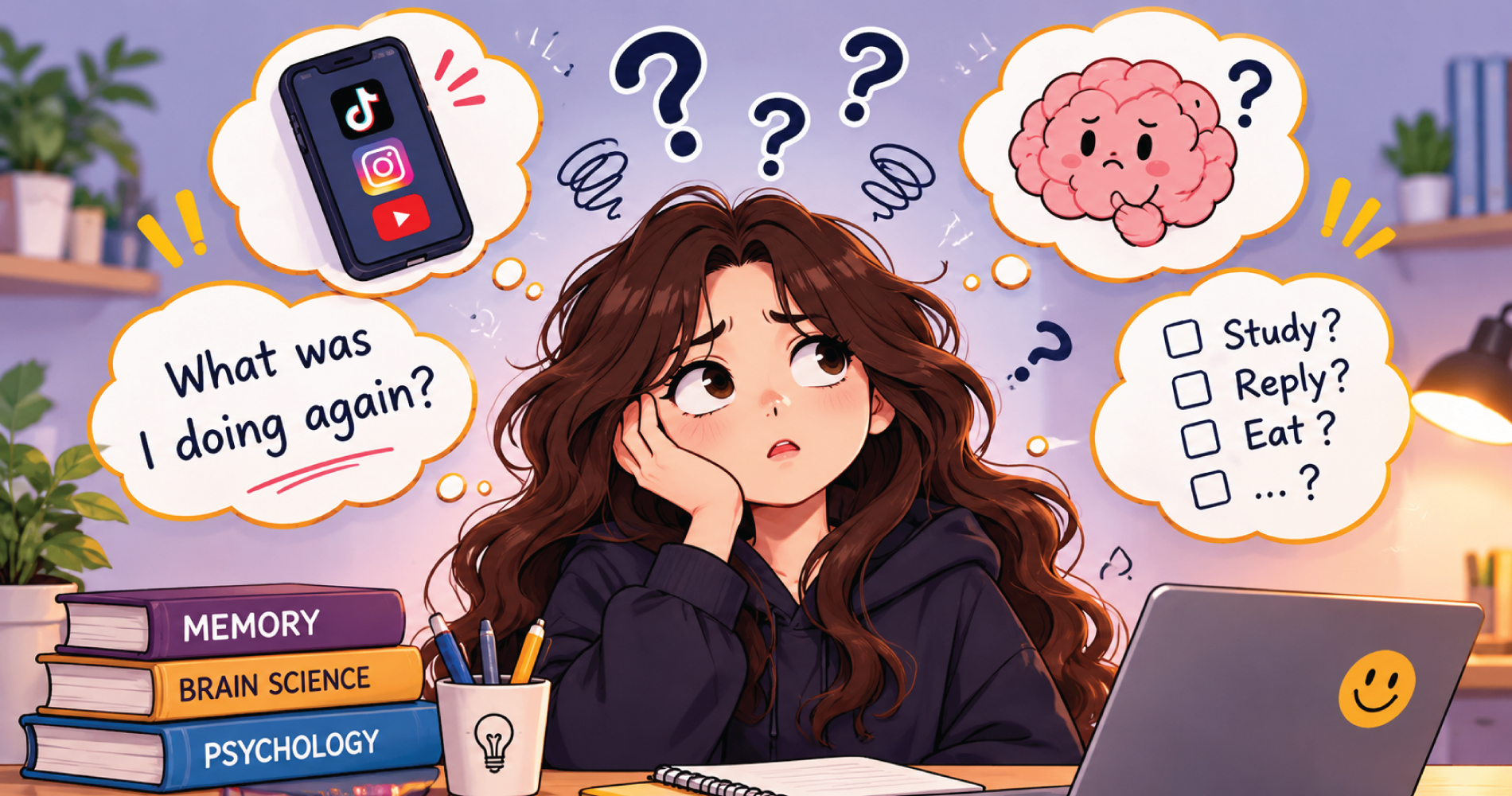
Smartphones, social media, and constant notifications have changed the way we work, think, and relax. Amid this shift, Digital Detox has become increasingly popular, with people taking breaks from digital devices. They hope this will improve their mental health, help them sleep better, reduce stress, and improve focus. But does staying away from your phone for a few days actually make your brain work better than before? Several studies in neuroscience and behavioural psychology have found positive results from reducing digital consumption, while some research points to limited effects. In this article, we’ll explore the scientific basis of Digital Detox, the dopamine reward system, smartphone addiction, mental health, and ways to maintain Digital Wellbeing over the long term.
Introduction
In the morning, I picked up my phone to turn off the alarm, checked my WhatsApp messages, then opened Instagram, and before I knew it, half an hour had passed. Throughout the day, I kept checking notifications between work tasks, and at night, I even lost sleep by watching Reels before bed. This is part of the daily routine for many people today.
Technology has made our lives easier, but it has also brought a new kind of mental busyness. Now, even when we have free time, instead of giving our minds a rest, we keep ourselves occupied with one screen or another.
Digital Detox has gained attention as a way to address this problem. Some people give up social media for a week, some reduce their screen time, and others nearly stop using their phones during holidays.
But the question here is not simply about distancing ourselves from our phones. The real question is how much our digital habits affect the way our brains work, and how long the benefits of stepping away from them last.
What Is Digital Detox?
To understand the meaning of Digital Detox in simple terms, it means reducing the use of digital devices or stepping away from selected digital activities for a while. These include smartphones, laptops, tablets, television, gaming, and social media platforms.
However, the word Detox here has no connection to physical detoxification. Staying away from your phone does not release any special toxins from the body. It is primarily a behavioural practice aimed at improving your relationship with technology.
Different Types of Digital Detox
There is no single fixed way to do a Digital Detox. Some people stay away from their phones for the entire weekend, while others simply cut back on the applications that take up most of their time.
In a social media detox, a person takes a break from Instagram, Facebook, or other social platforms for a while. In a partial digital detox, essential calls, messages, and office work continue, but time spent on unnecessary scrolling and entertainment is limited.
The aim is not to remove technology from life completely, but to regain control over how you use it.

Why Is It So Difficult to Stay Away from Digital Devices?
Have you ever noticed that sometimes there is no particular reason for picking up your phone? You are not waiting for anyone’s message, nor do you have any urgent task to do. Despite this, your hand reaches for the phone on its own. Along with our habits, the brain’s Reward System also plays a role in this behavior.
Dopamine and the Brain’s Reward System
Dopamine is a neurotransmitter that plays an important role in behaviors related to motivation, learning, and reward. When the brain expects a reward from an activity, dopamine signaling influences our desire to repeat that activity.
The likes, comments, messages, and new content we encounter on social media are linked to this reward learning. We do not know in advance how interesting the next Reel will be or how many likes a post will get. This uncertainty about receiving a reward strengthens the habit of repeatedly checking the phone.
In a 2021 study published in Nature Communications, scientists analyzed more than one million social media posts from over 4,000 people. The researchers found that people’s behavior on social media largely followed the principles of reward learning.
However, this does not mean that using a smartphone always causes dopamine levels in the brain to remain higher than necessary. This study did not directly measure dopamine levels.
Does Digital Detox Reset Dopamine?
Digital Detox is often promoted on the Internet as Dopamine Detox. The claim behind it is that staying away from entertainment for a few days resets the brain’s dopamine system.
But dopamine is not something that needs to be removed from the brain. It also plays a role in eating, learning new things, exercising, and doing your favorite activities.
The real benefit of Digital Detox comes from changing the habit of constantly seeking rewards. By stopping scrolling for a while, people get the chance to rediscover interest in activities that don’t provide instant entertainment.
Smartphone Addiction and Technology Addiction
Using a smartphone for several hours a day and having Smartphone addiction are not the same thing. One person uses technology for eight hours for work, while another feels as though they are losing control over it despite using it for only two hours.
A person’s behavior and its impact on their daily life matter more than the amount of time spent.
When Does Smartphone Use Become a Problem?
When the desire to use the phone starts causing persistent problems with sleep, studies, work, and relationships, it is important to pay attention to the habit.
Repeatedly failing to reduce screen time, feeling restless when the phone is not nearby, and continuing to scroll instead of doing essential tasks are signs of problematic smartphone use.In a review published in the Journal of Behavioral Addictions in 2018, researchers Tayana Panova and Xavier Carbonell questioned whether Smartphone addiction should be considered a clinical addiction. They argue that clearer scientific evidence and better diagnostic criteria are needed to understand this behavior.
Technology addiction is a broad term. It is not accurate to consider every kind of excessive digital use a clinical disorder.
Fear of Missing Out (FoMO)
Many people check their phones not for entertainment, but because they fear they might miss important information, a conversation, or a new trend. In psychology, this is called Fear of Missing Out.
For this very reason, the early days of a Digital Detox can feel unsettling. A person may have free time, but they repeatedly feel that something is happening in the online world that they don’t know about.

Benefits of Digital Detox
The benefits of Digital Detox are not limited to reduced screen time. Research has found several positive outcomes related to attention, sleep quality, stress, and emotional wellbeing. However, the extent of these benefits depends on a person’s digital habits and the approach to detox.
Improvement in Focus and Concentration
Imagine you are working on an important report. Just then, a notification arrives on your phone. You haven’t even opened your phone, but your attention has shifted to that message for a while.
A 2015 study by Cary Stothart and colleagues found that simply receiving a smartphone notification affected performance on an attention-demanding task, even if the person did not use their phone.
A key reason behind this is divided attention. When attention repeatedly shifts between different tasks, the brain has to make a mental effort to return to the previous task.
In a 2025 experimental study published in PNAS Nexus, researchers disabled internet access on participants’ smartphones for two weeks. Afterward, participants showed improvement on an objective test of sustained attention.
This suggests that reducing constant digital interruptions can help improve focus and concentration.
Better Sleep Quality
Using a phone at night affects sleep in two different ways. First, the light emitted by the screen, and second, the mental stimulation from the content on it.
Our bodies have a biological timing system called the Circadian Rhythm, which regulates when we sleep and wake. As darkness increases, melatonin levels in the body rise, providing a biological signal that it is nighttime.
In 2015, Anne-Marie Chang and her colleagues conducted a comparative study of using printed books and light-emitting eReaders. Participants who used electronic screens for long periods at night experienced effects such as melatonin suppression, later sleep onset, and reduced alertness the following morning.
However, these effects vary depending on screen brightness, duration of use, and timing.
In addition, watching emotional videos, news, or Reels continuously late at night can also cause people to keep pushing back their bedtime. A Bedtime Digital Detox provides an opportunity to reduce both of these problems.
Reduction in Stress and Anxiety
Through digital devices, we are exposed to various kinds of information throughout the day. Office emails, breaking news, social media arguments, and updates about other people’s lives increase our mental load.
Especially when a person continues to check office messages even after finishing work, it becomes difficult for them to mentally disengage from work.
In research published in 2019, Nicholas Fitz and his colleagues found that delivering notifications all at once three times a day, instead of sending different notifications throughout the day, reduced stress and improved wellbeing. Interestingly, there were signs of increased anxiety and FoMO among people who turned off all notifications completely.
This shows that striking a balance in how we use technology is also important, rather than distancing ourselves from it completely.
Better Social Interactions
Sometimes, even while sitting with family, we are mentally somewhere else. Checking our phones during conversations reduces our engagement with the person in front of us.
In a randomized experiment published in the American Economic Review in 2020, participants who deactivated Facebook for four weeks spent more time with family and friends. Their subjective well-being also improved. However, their knowledge of current events declined.
This is an interesting aspect of Digital Detox. Taking a break from technology offers some social benefits, but online connectivity also has its uses.
Does Digital Detox Actually Work? What Research Says
Several experiments have been conducted on digital detox, but their results are not all the same. One reason is that some researchers ask participants to stop using only social media, while others ask them to reduce their smartphone screen time. It is natural for the two interventions to have different effects.
The One-Week Social Media Detox Experiment
In 2022, researchers at the University of Bath conducted a randomized controlled trial with 154 participants. One group stopped using Facebook, Instagram, Twitter, and TikTok for seven days, while the other group continued their usual digital routine.
After one week, the group that abstained from social media showed improved well-being. Their depression and anxiety symptom scores also improved.
However, this research lasted only seven days. Therefore, it does not confirm the long-term mental health benefits.
The Three-Week Screen Time Experiment
In a randomized controlled trial published in BMC Medicine in February 2025, 111 healthy students took part. One group tried to limit their smartphone use to a maximum of two hours per day for three weeks.
The study found small to moderate improvements in depressive symptoms, stress, sleep quality, and wellbeing.
But after the experiment ended, participants’ screen time began to rise rapidly and had returned close to its previous level by the follow-up. This result highlights the biggest challenge of Digital Detox. Changing a habit for a while and maintaining that change over the long term are two different things.
The Two-Week Mobile Internet Experiment
In 2025, Noah Castelo and his colleagues launched a randomized controlled trial involving 467 participants. It included an intervention that blocked internet access on smartphones for two weeks. Essential calls and SMS remained available.
Researchers assessed mental health, subjective well-being, and sustained attention. All three improved after the intervention. The analysis showed that around 91 percent of participants improved in at least one area.
People also spent more time exercising, having face-to-face conversations, and being in nature. However, not all participants were able to adhere to the entire intervention.
What Does the Combined Scientific Evidence Say?
A systematic review and meta-analysis published in Scientific Reports in 2025 analyzed results involving 4,674 participants across ten studies. Completely quitting social media did not lead to any statistically significant improvement in positive emotions, negative emotions, or life satisfaction.
Meanwhile, another meta-analysis from October 2025 analyzed ten randomized studies involving 1,491 participants. It found a small average improvement in depressive symptoms when people reduced or stopped using social media.
These findings are not necessarily contradictory. A reduction in depressive symptoms and feeling satisfied with one’s life overall are different psychological outcomes.
Why Does Digital Detox Not Work for Everyone?
Not everyone who starts a Digital Detox benefits in the same way. Our mental health depends on many factors. These include personal circumstances, financial difficulties, relationships, physical health, and work pressure.
If someone uses social media all day because of loneliness, simply deleting their applications will not eliminate that loneliness. On the contrary, if online conversations are their main source of social contact, the problem may worsen.
A study published in May 2026 examined the effects of social media reduction over two weeks in 64 women with depressive symptoms. Immediately after the intervention, no significant reductions in depression, social anxiety, or loneliness were found. However, some other psychological outcomes improved.
Digital Detox is not a substitute for understanding the underlying causes of a mental health problem.
The Problem of Rebound Behaviour
Many people return to using their phones as they did before after staying away from social media for a week. This can be understood as a return to old behavioural patterns.
If a person does not change the triggers behind habits such as notifications, boredom, stress, and late-night scrolling, there is a risk that their old routine will return after the detox ends.

How to Practice Digital Detox Effectively?
It is not necessary to turn off your smartphone or delete all your applications for a digital detox. A more practical approach is to make small changes to your digital routine that are easy to maintain over the long term.
Understand Your Screen Time
First, check your smartphone’s Digital Wellbeing or Screen Time settings. Find out which applications take up most of your time and how many of them are actually necessary.
Instead of looking only at your total screen time, also pay attention to how often and in what situations you pick up your phone.
Create Screen-Free Periods
Try to avoid unnecessary screen use for the first 30 minutes after waking up and for 30 to 60 minutes before going to bed.
Keep your phone out of sight while eating, sitting with family, or working on an important task. Keep essential calls available and limit unnecessary notifications.
Replace Scrolling with Meaningful Activities
If you save an hour by scrolling less but have nothing to do during that time, it will be easy to return to your old habit.
Make room in your routine for activities such as reading, walking, exercising, gardening, listening to music, or talking to a friend. The success of a Digital Detox also depends on how you use the time you’ve saved.
Digital Detox vs Digital Wellbeing
Digital Detox is a temporary break, while Digital Wellbeing is the process of maintaining a healthy and balanced relationship with technology over the long term.
In a scientific review titled Digital Detox and Well-Being, published in 2024, researchers found that in many studies, limiting technology use was more beneficial than giving it up completely. However, the available evidence still has several limitations.
So, the better goal is not to stay away from your phone forever, but to use it as needed. Technology is part of our work, entertainment, and social interactions. Problems begin when its use starts being driven by our uncontrolled habits rather than our choices.
Conclusion
So, does Digital Detox really work? According to the available research, yes, but it has its limitations. Evidence shows that reducing unnecessary use of smartphones and social media can improve attention, sleep quality, and mental health. However, a break of a few days does not completely reset the brain, nor does it eliminate all psychological problems.
The most important benefit of a digital detox is the opportunity to understand our habits. Real change comes when we continue to use technology thoughtfully even after the detox ends.
Ultimately, the goal is not to leave the digital world, but to make enough time for our real lives while living in it.
Disclaimer
This article is based on available scientific research and information related to behavioural psychology. Digital Detox is not a proven standalone treatment for any mental illness, clinical addiction, depression, anxiety, or sleep disorder. Research findings vary depending on a person’s age, health, lifestyle, and digital habits. If you experience ongoing mental distress or lose control over your use of digital devices, consult a qualified mental health professional.

A passionate health and lifestyle content writer dedicated to making complex medical and psychological topics easy to understand. With a focus on mental health, lifestyle, and overall well-being, I curate informative, research-based articles that help readers better understand their health and make informed decisions. The goal is to spread awareness, simplify health information, and encourage healthier living.