Abstract
Every October, fear takes on a new style. Horror movie marathons, Ghostface cosplay, scary TikTok videos, haunted house visits, and Halloween parties turn things we usually fear into experiences we deliberately want to enjoy. But why do people watch scary movies at 2 a.m., dress up as fictional killers, and keep scrolling through paranormal videos right before going to sleep?
The answer lies in the psychology of fear, our response to potential danger, and the influence of social experiences that can determine what we find thrilling. This article explains why Gen Z embraces spooky season, how our brains respond during scary entertainment, why fear feels different when experienced with friends, and what science says about myths surrounding fear. Because sometimes avoiding fear is not our goal. The real fun is in it.
Introduction: Spooky season is your brain’s favorite plot twist
It’s 2 a.m. You’ve just watched Scream with friends, your heart is still racing, and suddenly every shadow looks suspicious. Yet, when someone suggests another horror movie, everyone is ready for round two. Why do we enjoy being scared when fear is supposed to make us avoid danger?
From horror marathons to Ghostface cosplay and creepy TikTok videos, Gen Z has turned fear into an experience worth sharing. The psychology behind this fascination is more than just a love for all things spooky. Horror can trigger suspense and emotional arousal, while watching it with friends can turn frightening moments into laughter and shared memories.
A research review published in Frontiers in Psychology suggests that suspense, emotional arousal, and personal preferences can influence why people enjoy horror films. However, not everyone responds to fear in the same way. So, what makes a scary experience entertaining rather than overwhelming? This Halloween, let’s explore the psychology behind our love of fear.
The science of getting scared: What fear can feel like a thrill?
Imagine that you are walking through the dark corridor of a haunted house. You hear a sound behind you. Your heart begins to beat faster, your muscles tense, and suddenly every shadow starts to seem suspicious. Your mind does not wait to check the five-star review list of that place before responding. It is reacting to a potential threat.
The fight-or-flight response
When the brain perceives a threat, it activates bodily systems that prepare us to respond. This can include changes such as increased heart rate, breathing rate, alertness, and muscle tension. These are part of the body’s broader stress response. This can happen even when a frightening scene appears on a screen, even if the viewer knows the danger is fictional. That is why a sudden jump scare can force you to launch your popcorn into another dimension.
Is adrenaline the reason for liking horror?
The body’s response to fear can feel quite intense. Some people enjoy this intensity in controlled situations, while for others the experience can be very uncomfortable. Psychological research has examined the relationship between sensation-seeking tendencies and enjoyment of horror, although this relationship is not consistent enough to explain everyone’s preferences.
For some viewers, suspense is the main attraction. Others enjoy the mystery, the sudden plot twist, or the satisfaction that comes from the danger ending in the end.
A Sense of Safety: Scary, but Not Actually Dangerous
An important aspect of fear as entertainment is the difference between potential danger and real circumstances. When you see a fictional killer chasing a character, you may feel afraid, but you also know that it is all happening on screen. For some people, this awareness can make the experience enjoyable. However, knowing that a film is fictional does not guarantee that every person will be able to watch it comfortably.
Spooky takeaway: Your body may react to a scary scene before you have a chance to remind yourself that Ghostface is not actually standing behind your sofa.
Horror movie nights: Why do we scream, laugh, and press play again?
Among Halloween traditions, a horror movie marathon perhaps best captures Gen Z energy. There are snacks, blankets, a few questionable decisions, and that one friend who claims before the film starts that they are not scared of horror at all, only to jump at the opening credits.
But horror movie nights are not just about scary scenes.
The thrill of suspense
Horror films are designed to create uncertainty. The creak of a door, a character walking into a dark room, or an unfamiliar sound can make viewers anticipate the frightening event even before it happens.
Research on the enjoyment of horror films has discussed suspense and the release of tension as possible reasons for this appeal. Sometimes, waiting for a frightening event can be even more unsettling than the event itself. That is why a scene in which nothing happens can feel just as terrifying as the moment when the monster finally appears.
The group-scream effect
Watching horror with friends changes the social experience. Some people hide behind a cushion, some reveal the ending of the film in advance, and some start laughing because the whole group screamed at once.
Shared reactions can make movie night memorable. Discussing the film after it ends gives everyone a chance to experience the suspense and fear again with some emotional distance. However, watching horror does not automatically strengthen friendships. The experience depends on the kind of entertainment the people present enjoy.
Your Halloween watchlist, decoded
- Scream: Slasher suspense, Ghostface, and the fear of not knowing who is behind the mask.
- The Conjuring: Supernatural horror that plays with darkness, unknown sounds, and the anticipation that something is about to happen.
- The Shining: Psychological horror and the unsettling feeling that something is very wrong.
- It: A terrifying fictional character built around fear, childhood vulnerability, and an unusually unsettling figure.
- Halloween: A classic slasher horror film that uses suspense, atmosphere, and the threat of an almost unstoppable character.
The point is not that every Gen Z viewer loves these movies. It is that different horror subgenres offer different ways to experience suspense, surprise, disgust, and fear. And naturally, after the credits roll, someone will say, “That wasn’t even scary. Let’s watch another.”
Ghostface, Wednesday, and the psychology of dressing up as something scary
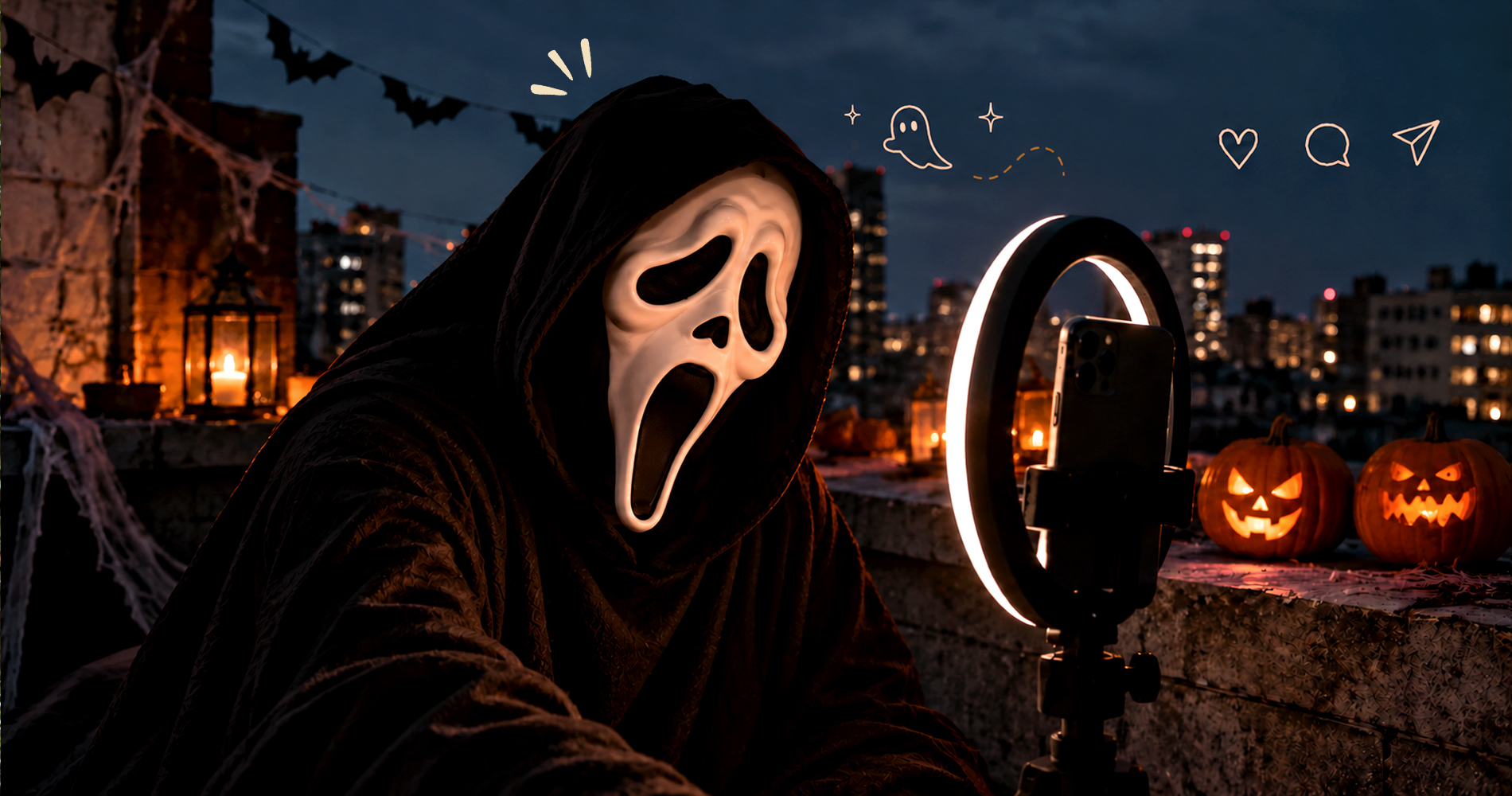
Halloween is the one day of the year when, if you show up dressed like a fictional killer, people may compliment you instead of being alarmed. From Ghostface’s famous mask to Wednesday Addams’s gothic outfit, horror characters have become part of the visual culture of spooky season. For many people, Halloween is as much about putting together a look as it is about experiencing fear. This is where psychology and pop culture meet.
Why do we enjoy pretending to be someone else?
Costumes give people a chance to experiment with their appearance and express their preferences, sense of humor, or interest in a favorite character. Adopting the identity of a familiar fictional character can also create a shared reference point: friends immediately recognize the look, understand the joke, and join in.
YPulse’s 2026 Halloween trend report noted that costumes inspired by pop culture, film characters, and memes were among the season’s expected trends. The report also stated that many young people wanted costumes that felt distinctive and personal. These points help explain Halloween as a form of self-expression, although they do not prove why every individual chooses a particular costume.
Meet the icons of spooky season
- Ghostface: The black gown, white mask, and the distinctive identity of Scream make it an easily recognizable slasher-inspired costume.
- Wednesday Addams: Gothic fashion, deadpan humor, and a personality that unapologetically embraces her own identity create a different kind of eerie look.
- Michael Myers: The plain mask and limited expressions show how even a familiar figure can be unsettling.
- Chucky: A terrifying doll that turns a familiar childhood object into a source of horror.
- Pennywise: This is an example of how exaggerated facial features and unusual expressions can make a fictional character frightening.
The psychological point is not that wearing a scary costume changes someone’s personality. Rather, costumes provide a temporary way to perform a character and participate in a shared cultural event.
The “fit check” is part of the fun
Halloween costume culture has now expanded to include outfit transitions, makeup tutorials, group photos, and showing off looks on social media. According to the National Retail Federation’s 2026 costume report, uniqueness is more important to more Gen Z consumers than to the general public.
In other words, the goal may be to look scary, recreate a favorite character, or put together a costume that only three people will understand. And if the Ghostface mask looks perfect in the photo dump, then the mission is accomplished.
TikTok Made It Spooky: Why We Keep Watching Creepy Content
You watch a paranormal video before going to sleep. Then another video appears, showing a shadow moving in an empty corridor. The next creator claims that their camera recorded something that cannot be explained. Suddenly, your For You Page begins to look as if it has been taken over by a haunted mansion. Social media has created new ways to experience scary stories. These include short-form horror, makeup transformations, frightening filters, and videos of allegedly real ghosts.
The psychology of creepy scrolling
Short videos can create suspense very quickly. An unfamiliar sound, a sudden cut, or a figure appearing in the background can make viewers wonder what will happen next.
A story told from a first-person perspective can also make a situation feel more real. A video that begins with “POV: You heard someone whisper your name in an empty room” encourages viewers to imagine themselves in that situation.
This does not mean that every viewer will feel scared or that every video is made to influence emotions. Editing, sound, storytelling, and a person’s own expectations all contribute to this experience.
Scary Social Media Formats Worth Knowing
In its 2026 Halloween trend report, marketing agency New Engen identified several formats that appear repeatedly on TikTok and Instagram Reels. These include ghost photoshoots, pumpkin-head illusions, costume transformations, makeup tutorials, and horror-inspired audio. These are examples of seasonal content trends, not scientific evidence about Gen Z psychology. Popular formats worth exploring include:
- Ghostface reveal: Start with a simple outfit and then use a transition to show a full Ghostface-inspired costume.
- Halloween GRWM: Record the entire process of creating a vampire, Wednesday Addams, or scary clown look.
- Ghost photoshoot: Create spooky or intentionally funny photos through costumes and creative poses.
- Pumpkin-head illusion: Use the camera angle to make it look as though a pumpkin is in place of a person’s head.
- Scary POV videos: Create a fictional suspense scene using lighting, sound, and a sudden reveal.
- Spooky photo dump: Share costume details, pumpkin decorations, party photos, and memories from a horror movie night.
These formats combine creativity, storytelling, and social participation. They also demonstrate that Halloween content does not always need to be genuinely frightening; humor and visual style are part of the appeal.
But does a viral ghost video prove anything paranormal?
No. A scary clip may be entertaining, but that does not make it credible evidence of a supernatural event in itself. Before calling a shadow a ghost, consider ordinary possibilities such as reflections, camera glitches in low light, editing, or the movement of something outside the camera’s field of view. It is possible that the video simply does not contain enough information to determine what actually happened.
This distinction is important: people may go through a disturbing experience, but that does not mean the cause was supernatural. An impressive story and verified evidence are not the same thing.
Haunted houses and horror challenges: Why pay to be scared?
A haunted attraction is essentially a place where you pay to walk into a dark corridor, hear suspicious noises, and wonder why you agreed to this plan. Yet haunted houses, horror-themed escape rooms, and Halloween challenges remain familiar forms of spooky entertainment.
Anticipation can be scarier than the scare
A door slowly opening can be more unsettling than a monster suddenly appearing in front of someone. When people know that something frightening is about to happen but do not know when it will happen, uncertainty can heighten suspense. People who create horror content use this principle through silence, darkness, unusual sounds, and delayed visual reveals. The audience keeps waiting for a threat to arrive and often imagines many possibilities in their minds even before the scene responds.
The appeal of controlled fear
For some people, knowing that a haunted attraction is a planned experience makes it easier to enjoy. They can take part in the suspense while also understanding that the frightening atmosphere is designed for entertainment. However, a controlled environment does not eliminate fear for everyone. Some people enjoy intense scary experiences, while others prefer mild suspense or avoid haunted attractions altogether.
Why friends make it a whole event
The experience continues even after the attraction ends. Friends compare their reactions, laugh about who screamed first, and relive the moment when someone almost decided to run out of the group. Shared excitement and humor can contribute to making the memories of the experience special, although its effect depends on the individual and the social setting. The same applies to Halloween escape rooms, scary games, and horror-themed parties.
Their appeal may lie in suspense, competition, curiosity, or spending a memorable night with friends. The plot twist: You might not want to experience real danger. You might just enjoy the dramatic version, complete with an exit door and a friend who walks ahead first.
Myth vs. Fact: Is your brain the real horror villain?
Halloween is full of supernatural stories, but psychology offers useful ways to understand some of the experiences that make them frightening.
Myth 1: Enjoying horror means that something is wrong with you.
Fact: Enjoying fictional fear is not, by itself, evidence of a psychological problem. People’s preferences for horror vary. According to research, a tendency to seek thrills and new sensations may be linked to some people’s enjoyment of horror, although this relationship has not been found consistently across different studies.
Myth 2: Seeing a shadow at night means your house is haunted.
Fact: In low light, it becomes difficult to identify objects, and ambiguous visual information can be misinterpreted. A shadow is not proof of a supernatural presence.
Myth 3: Only fearless people like horror films
Fact: People can enjoy horror even while feeling fear. Some people like suspense, others enjoy mystery or dark humor, while some prefer watching films with friends. Liking horror does not mean that a person is never afraid.
Myth 4: Every scary video shows a paranormal event
Fact: A video may be misleading, may have been edited, or may be difficult to interpret correctly. A video merely appearing scary does not prove a supernatural explanation.
Myth 5: Everyone benefits from facing their fears through horror.
Fact: Not everyone enjoys scary entertainment, and watching horror is not a universal way to overcome fear. People should choose entertainment that makes them feel comfortable.
Research reviews of psychological responses to horror films highlight the importance of individual differences and caution against assuming why people enjoy scary entertainment.
Why can being scared together become a core memory?
Think about that horror movie night that everyone is still talking about months later. Maybe what made it memorable was not the film itself. Perhaps it was the friend who screamed before anything even happened, the person who insisted on checking every room afterward, or the Ghostface cosplayer who kept appearing in every photo.
Shared experiences give people stories they can retell, jokes they can repeat again and again, and moments that become part of their friendship.
The social side of spooky season
Halloween offers several opportunities for this kind of shared experience:
- Horror sleepover: watching scary movies, telling ghost stories, and challenging one another to turn off the lights.
- Group cosplay: keeping Ghostface costumes identical or recreating characters from a favorite horror franchise.
- Haunted house visit: waiting for the scare together and then comparing each other’s reactions afterward.
- Social media challenge: creating costume transitions, spooky skits, and Halloween photo dumps.
- Post-film discussion: debating who the real villain was, ranking the jump scares, and explaining why no one should ever go into the basement alone.
These activities can make Halloween a collective experience rather than just a festival. Still, the role of science should not be overstated: being scared together does not automatically deepen friendship. Its enjoyment often depends on whether each person feels comfortable and included.
Conclusion: When Fear Becomes Fun
Halloween offers a chance to view fear from a different perspective. The fear we usually try to avoid becomes, during this time, an experience we choose ourselves, whether it is horror films, haunted houses, fictional characters, or scary social media trends.
For Gen Z, spooky season is also an opportunity to express themselves and spend fun moments with friends. A Ghostface costume becomes an excuse for photos, a horror movie marathon becomes a sleepover tradition, and scary videos become a topic of discussion among friends the next day.
Psychology helps explain this attraction. Suspense increases curiosity, frightening scenes can activate the body’s threat response, and knowing that the danger is fictional can make fear easier to manage for some people. However, everyone’s reaction is different. Enjoying horror films does not mean someone is braver or psychologically different from those who prefer comedy. Sometimes, it simply means enjoying a good story.
The Real Plot Twist: Knowing You’re Safe
Whether you are dressing up as Ghostface, planning a horror movie marathon, or watching scary videos with all the lights in the room turned on, Halloween gives you a chance to feel fear in an atmosphere where the danger is often only imaginary.
Perhaps that is Halloween’s real twist: we do not always want to avoid fear. Sometimes we want to feel it, laugh about it with friends, and press play again.
Disclaimer
This article is intended for general educational and informational purposes. It explores psychological research on fear and horror entertainment and should not be considered a substitute for professional mental health advice or diagnosis. Individual responses to frightening content vary. If horror-related content causes persistent distress, sleep disruption, or anxiety, consider limiting exposure and seeking advice from a qualified healthcare professional when appropriate.
FAQs
1. Why do Gen Z people like horror films and Halloween trends?
There is no single reason behind this. Some people enjoy suspense, intense emotional experiences, fictional mysteries, or the social experience of watching horror with friends. Halloween also offers opportunities for creativity, self-expression through costumes, and participation in shared cultural trends.
2. Why does fear sometimes feel exciting?
Fear activates the body’s systems for responding to danger, which can cause changes such as increased heart rate, alertness, and muscle tension. When the situation feels safe, some people find these sensations exciting rather than unpleasant. For others, the same experience can feel uncomfortable.
3. Why do people dress up as Ghostface or other horror characters?
Costumes give people a chance to express their preferences, recreate recognizable characters, experiment with their look, and take part in Halloween traditions. Social identity and the opportunity to make photos or videos may also contribute to their appeal.
4. Can watching horror films affect sleep?
Some people’s sleep may be affected, especially when frightening content leaves them anxious or mentally alert until bedtime. Reactions vary. Therefore, people who feel their sleep is being affected may consider avoiding intense horror content right before going to sleep.
5. Does liking scary films mean that a person is fond of thrills?
Not necessarily. Some studies have found a connection between the enjoyment of horror and the tendency to seek thrills and new sensations, but the findings are not consistent enough to explain every individual’s preference in this way. People like horror for different reasons, including suspense, story, dark humor, and the social experience.
Content Writer with 3+ years of experience turning ideas into words people want to read, share, and remember. I create research-backed social media and lifestyle content that blends storytelling, creativity, and audience insights to make every piece feel fresh, relatable, and engaging.