Abstract
Your skincare routine has 10 steps, your serum shelf is giving the main character energy, but your skin is still acting like it didn’t get the memo. Does that ring a bell in your head? Welcome to the skincare rabbit hole, where every scroll introduces a new ingredient promising hydrated skin, fewer breakouts, faded dark spots and that coveted glass-skin glow. Two ingredients that frequently dominate these conversations are Hyaluronic Acid and Niacinamide. One is known for helping your skin hold on to moisture, while the other is celebrated for supporting the skin barrier, managing excess oil and improving the appearance of uneven skin tone.
But here’s the plot twist that they aren’t actually competitors who are doing the same job. Understanding the difference between Hyaluronic Acid and Niacinamide can help you make better skincare choices without spending money on products you may not need. So, let’s get into the science, separate evidence from internet hype, and figure out which ingredient deserves a place in your routine.
Introduction: Understanding the skincare duo
Hyaluronic Acid and Niacinamide are quite popular ingredients in the world of skincare, found in serums, moisturizers, and other skincare products. Both can help the skin look healthy, but they work in different ways. Hyaluronic Acid is primarily a humectant, meaning it is an ingredient that helps attract water and retain moisture in the skin. It increases hydration in the outer layers of the skin, which can make the skin feel softer and appear more plump. On the other hand, Niacinamide is a form of Vitamin B3. It supports the skin’s normal barrier function and may help reduce uneven pigmentation, excess oil, and some visible signs of skin aging.
It is important to understand the difference between these two, because skin-related problems that may look similar can have different causes. For example, dull-looking skin may be due to dehydration, uneven pigmentation, or irritation. Therefore, instead of following a viral skincare recommendation, it is more beneficial to choose an ingredient according to your skin’s actual needs. The real question is not which of these two ingredients is better for everyone. Rather, it is important to understand what both can actually do, what scientific evidence says about their benefits, and which one your skin needs.
What is hyaluronic acid?
Despite the word “acid” in its name, Hyaluronic Acid is not an exfoliating acid like Glycolic Acid or Salicylic Acid. It is not used to remove dead skin cells or to exfoliate the skin.
Hyaluronic Acid is a substance that occurs naturally in our body. It is also present in the skin, where it helps retain moisture and support hydration in the tissues. In skincare, it is known for its ability to attract water and increase moisture in the outer layers of the skin. For this reason, it is often included in serums and moisturizers. When the skin lacks moisture, it can feel tight, look dull, and fine lines may appear more noticeable. Environmental conditions, cleansing the skin too harshly, and other factors can also affect the skin’s moisture and comfort.
What does hyaluronic acid actually do?
1. Helps maintain moisture in the skin
Hyaluronic Acid attracts water and helps increase moisture in the outer layers of the skin. It may be useful in situations when your face feels tight or the skin appears dehydrated.
2. Makes the skin appear fuller and softer
When the skin has sufficient moisture, fine lines that appear due to dehydration may become less noticeable. However, this is primarily a change in the skin’s appearance. It should not be understood as permanently eliminating wrinkles.
3. Helps make the skin softer
Better hydration can make the skin feel smoother, softer, and more supple. It may also improve the rough skin texture that appears due to dryness.
4. May Be Useful for Different Skin Types
Based on the product formulation, Hyaluronic Acid may be useful for dry, oily, combination, and dehydrated skin. Even oily skin can lack water, so hydration is not only a need for people with dry skin.
5. Helps Make the Skincare Routine More Comfortable
Including Hyaluronic Acid in an appropriate moisturizing routine may help address a lack of moisture in the skin without necessarily making the skin feel heavy or sticky.
However, it is also important to understand one key point here: attracting water and preventing water loss from the skin are two different things. A Hyaluronic Acid serum alone may not provide all the benefits needed to moisturize your skin. Depending on your skin’s needs and the surrounding environment, applying a suitable moisturizer afterward may help retain moisture in the skin and reduce water loss.
What is niacinamide?
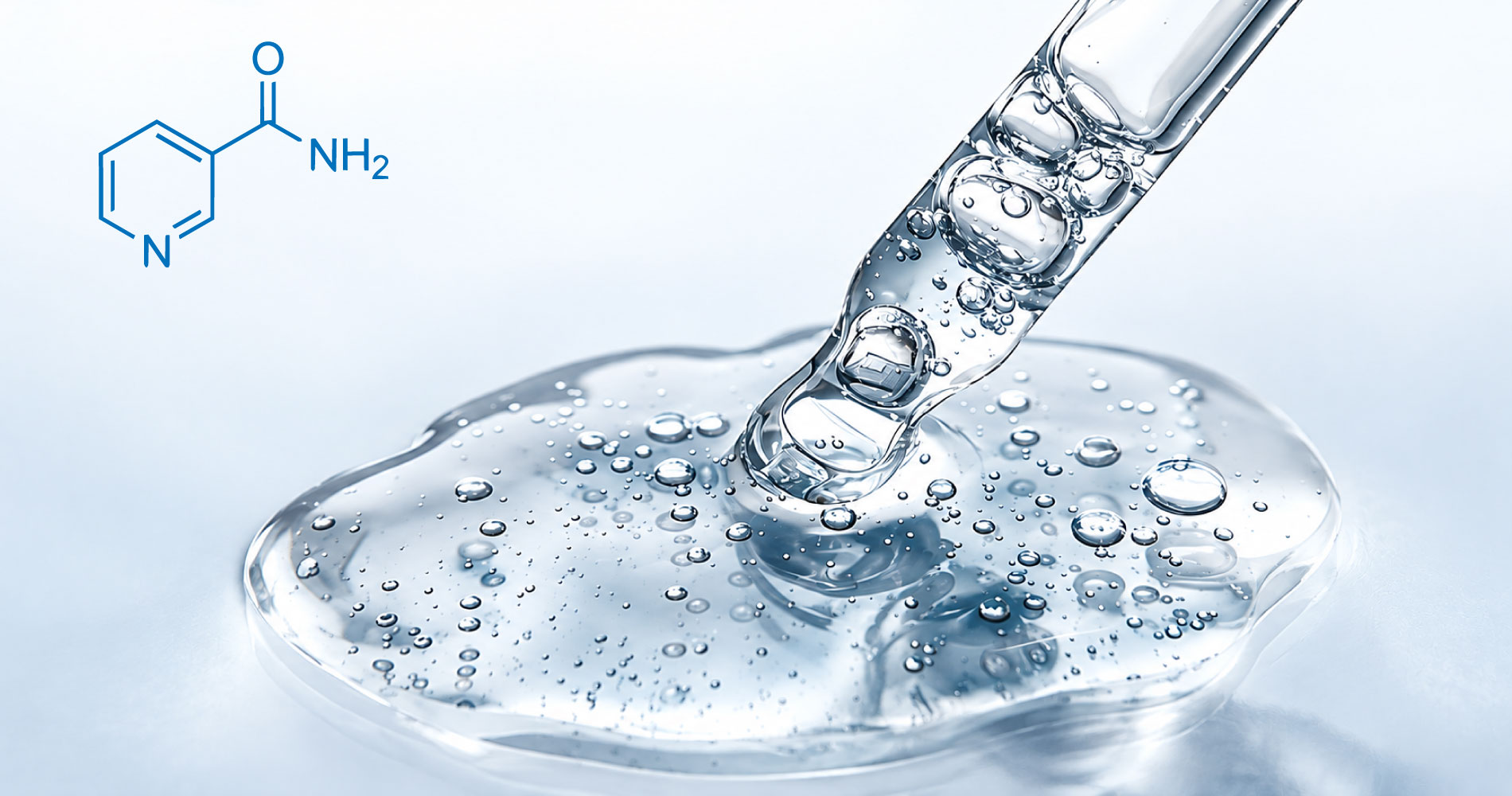
Niacinamide, also known as Nicotinamide, is a water-soluble form of Vitamin B3. Vitamin B3 is essential for the body’s normal functions. Our body obtains it through food and the metabolic processes associated with it. In skincare, Niacinamide has gained popularity because it influences several processes related to maintaining the skin’s protective layer, or skin barrier, and improving the skin’s overall appearance. While Hyaluronic Acid primarily works to increase moisture in the skin, the potential benefits of Niacinamide are much broader. It is commonly found in serums, moisturizers, and other topical skin products. These products are often formulated with concerns such as excess oil, uneven skin tone, and a weakened skin barrier in mind.
What does niacinamide actually do?
1. Supports the skin barrier
The skin barrier helps retain moisture in the skin and protect the body from external irritants. Niacinamide may support the production of ceramides and other lipids, which play an important role in maintaining the structure of this protective barrier.
2. Helps retain moisture in the skin
A healthy skin barrier helps better limit water loss from the skin. This process is called trans-epidermal water loss (TEWL), in which water evaporates out of the skin. Therefore, Niacinamide may indirectly support hydration by helping maintain the skin’s barrier function.
3. Helps improve the appearance of uneven skin tone
Niacinamide may help reduce the transfer of melanosomes. Melanosomes are structures that deliver melanin, the pigment that gives skin its color, to skin cells. Regular use may improve the appearance of certain types of pigmentation.
4. May help control excess oil
Some research suggests that, in certain situations, niacinamide applied to the skin may help reduce the production of sebum, that is, the skin’s natural oil. Because of this, it may be useful for people troubled by oily skin. However, the results may vary from person to person.
5. Helps make the skin look smoother and more even
By helping maintain the skin barrier and improve certain aspects of skin texture and tone, niacinamide may contribute to the skin looking smoother and more even.
6. Supports antioxidant protection
Niacinamide is involved in the body’s cellular processes related to energy production and antioxidant protection. Its role in skincare is not limited only to making the skin look brighter.
However, despite being popular as an active ingredient in many products, Niacinamide is not a guaranteed cure for acne. It does not permanently reduce the size of pores, nor can it completely eliminate all types of pigmentation. Its results depend on the product formulation, the concentration of the ingredient, the skin concern, and an individual’s skin response.
Hyaluronic acid vs Niacinamide: Which is better for your skin concern?
Now that we understand how both ingredients work, let us compare them based on some common skin concerns.
1. For lack of moisture and dryness in the skin
If your skin feels tight after washing your face, looks dull, or feels less soft and plump than before, Hyaluronic Acid may be a useful ingredient for you. Its humectant properties help attract water to the outer layers of the skin. This can improve the skin’s feeling of hydration and may make fine lines caused by dehydration appear less noticeable. Niacinamide can also contribute to maintaining skin hydration by supporting the skin barrier and helping reduce moisture loss. However, it does not primarily work as a humectant in the same way as Hyaluronic Acid.
Conclusion: Hyaluronic Acid is the more direct option for increasing moisture in the skin, while Niacinamide can work alongside it by supporting the skin’s ability to retain moisture. If your skin is very dry, keep in mind that none of these ingredients necessarily can replace a moisturizer containing emollients and occlusives. These ingredients help soften the skin and reduce moisture loss.
2. For Oily and Acne-Prone Skin
Let us dispel a skincare misconception that should now be left behind: oily skin does not need hydration. Your skin produces sebum, or natural oil, but the amount of oil in the skin and the level of moisture are two different things. Even if your skin is oily, it can still feel tight or dehydrated. Hyaluronic Acid can help increase moisture in the skin and, with the right formulation, does not necessarily make the skin feel greasy or sticky.
If your main concerns are excess oil, more visible pores, and uneven skin texture, Niacinamide may be more useful. It can also help support the skin barrier, which is especially important when products used to treat acne cause dryness or irritation. However, none of these ingredients should be considered a complete treatment for acne. Niacinamide may be helpful in an acne-care routine, but persistent or severe acne may require evidence-based treatment and expert advice.
Conclusion: Hyaluronic Acid can help address a lack of moisture in the skin, while Niacinamide may be useful in controlling the appearance of excess oil. Some people with oily and acne-prone skin may benefit from both ingredients.
3. To Support the Skin Barrier
Your skin barrier is the outermost protective layer of the skin, which helps retain moisture and keep external irritants away. When this layer becomes weakened, the skin may feel tight, become flaky, dry, red, or more sensitive. Niacinamide has a particular benefit in this regard. It may support the production of ceramides and other lipids, which help maintain the structure of the skin barrier. Hyaluronic Acid increases hydration in the skin, which can make the skin feel more comfortable. However, increasing moisture in the upper layers of the skin and supporting its lipid barrier are not the same processes.
Conclusion: If your main goal is to support the skin barrier, Niacinamide may be especially useful. Hyaluronic Acid can help with this goal by providing additional hydration.
However, if your skin is already irritated, including more active ingredients is not always the right solution. A simple routine with a gentle cleanser, an appropriate moisturizer, and sun protection may be a better starting point.
4. For dark spots and uneven skin tone
Dark spots can occur for many reasons, including marks left behind after acne, sun exposure, and hormonal changes. The right skincare approach depends on what is causing the pigmentation. Niacinamide can help improve the appearance of certain types of uneven pigmentation by affecting the transfer of melanosomes. Therefore, it may be more directly useful for concerns associated with uneven skin tone. Hyaluronic Acid does not directly target the production of melanin or its transfer. It may help the skin appear more hydrated and smoother, but it should not be considered a targeted treatment for pigmentation.
Conclusion: Niacinamide may be useful for improving the appearance of certain types of dark spots, while Hyaluronic Acid primarily helps retain moisture in the skin. When caring for pigmentation and preventing existing marks from becoming darker, daily sun protection is extremely important.
5. For fine lines and skin texture
Fine lines visible on the skin can be influenced by several factors, including lack of moisture, natural aging, sun exposure, and changes in skin structure. Hyaluronic Acid can temporarily reduce the appearance of fine lines caused by dehydration by increasing moisture in the outer layers of the skin. This can make the skin appear softer and plumper.
Niacinamide can help support the skin barrier and improve the appearance of skin texture. Some research also suggests that with regular use, it may help improve fine lines and other visible signs of aging. However, no ingredient should be expected to erase deep wrinkles or reverse all signs of aging.
Conclusion: Hyaluronic Acid provides a more direct benefit by increasing moisture, while Niacinamide can offer additional help in improving the skin barrier and the overall appearance of the skin.
Can you use hyaluronic acid and niacinamide together?
Yes. In general, Hyaluronic Acid and Niacinamide can be used together, because they work in different ways and are not naturally incompatible with each other. Hyaluronic Acid helps attract moisture to the skin, while Niacinamide supports the skin barrier and may help improve the appearance of excess oil and uneven skin tone. If your skin has a lack of moisture along with concerns such as oiliness or uneven texture, using these two ingredients together can be beneficial.
For example, in combination skin, the skin around the forehead and nose may feel oily, while the cheeks may feel dry. Such a hydrating product can help reduce discomfort caused by lack of moisture in the skin, while Niacinamide can help support the skin barrier and improve the appearance of excess oil. However, it is not necessary to use both together. If your current skincare routine is already meeting your skin’s needs, then adding more products simply because they are trending will not give you any additional benefits.
The complete formulation of a product also matters. Even if a product contains beneficial ingredients, its other components or a formulation unsuitable for your skin can cause irritation. Therefore, when choosing any product, you should pay attention not only to its key ingredients, but also to its overall formulation and your skin’s reaction to it.
Skincare hype vs science: What gets exaggerated online?

Social media has made it easier to share skincare-related information with people. But along with that, it has also made it easier to oversimplify scientific facts and, at times, present them in an exaggerated way. Let us clear up some common misconceptions related to skincare.
Myth 1: Hyaluronic Acid is only for dry skin
Truth: Hyaluronic Acid can be beneficial for different skin types, because even skin that produces excess oil can still lack moisture. Therefore, instead of assuming that this ingredient is only for dry skin, it is more important to choose the right formulation according to your skin.
Myth 2: Niacinamide permanently shrinks pores
Truth: Niacinamide can help control excess oil and improve the appearance of skin texture, which may make pores look smaller. But it does not permanently reduce the actual size of pores.
Myth 3: A higher concentration always gives better results
Truth: The percentage listed on a bottle does not tell the whole story. The product’s formulation, skin tolerance, and the specific concern being addressed all matter. Products containing niacinamide are often sold in concentrations such as 5% or 10%. Some people’s skin can tolerate a higher concentration well, while others may experience redness, stinging, warmth, or dryness. There is no single concentration that is best for everyone. A product that suits your skin and can be used regularly may be more useful than a stronger formula that causes irritation. The same applies to hyaluronic acid. The form used, its molecular weight, the overall formulation, and other supporting ingredients can all affect a product’s performance. A claim of a higher percentage alone does not guarantee that the product will provide better hydration to the skin.
Myth 4: Hyaluronic Acid can erase wrinkles forever
Truth: Hyaluronic Acid can temporarily make fine lines caused by dehydration less visible by increasing moisture in the skin. However, this is not the same as permanently removing wrinkles or reversing the skin’s aging process.
Myth 5: Everyone needs both ingredients
Truth: It is not necessary for every person to use both ingredients. If your current skincare routine keeps your skin comfortable and meets your needs, you may not need any additional serum at all.
Myth 6: Niacinamide completely cures acne
Truth: Niacinamide can help support the skin barrier and control some issues associated with oily and acne-prone skin. However, it should not be considered a guaranteed or complete treatment for acne on its own.
How to use them in a simple skincare routine?

Your skincare routine does not need to become a chemistry experiment. The goal is to choose products that suit your skin, incorporate them into your routine correctly, and avoid unnecessary skin irritation.
Morning skincare routine
- Cleanse your face gently. Use a cleanser that suits your skin. If washing your face with water alone is sufficient for your skin and routine, you may do that as well.
- Apply your preferred serum. You can use Hyaluronic Acid, Niacinamide, or both, depending on your skin’s needs. Follow the instructions provided on the product.
- Apply moisturizer. Choose a moisturizer that helps retain moisture in the skin and keeps it feeling comfortable.
- Apply sunscreen. Use a broad-spectrum sunscreen during the day. This is especially important if you are concerned about uneven pigmentation or visible signs of aging.
Evening skincare routine
- Cleanse your face to remove the sunscreen, makeup, and dirt that have accumulated on your skin throughout the day.
- Apply the skincare product or products you have chosen according to their instructions.
- Finish by applying a moisturizer suitable for your skin.
A few things to remember
- Introduce new products gradually into your routine so that you can understand how your skin responds to them.
- If your skin is sensitive or reacts easily, consider doing a patch test before using a product.
- Do not start using multiple new active ingredients at the same time.
- If a product causes persistent redness, irritation, or dryness, stop using it and reconsider your skincare routine.
- Do not skip moisturizer just because your skin is oily.
- Remember that using a separate serum is not mandatory. Hyaluronic Acid and Niacinamide can also be found in different types of skincare products. Therefore, before buying a new product, check the ingredients already included in your current routine.
If you are using skincare products prescribed by a doctor, or if you have a persistent skin condition, it is advisable to consult with a qualified healthcare professional before making any significant changes to your routine.
How long does it take to see results?
Skincare results depend on the ingredient, the product formulation, the skin concern, and regular use. There is no single fixed timeframe that applies equally to everyone. Hyaluronic Acid can help relatively quickly with the feeling of moisture in the skin and make it appear softer and plumper. However, its effect depends on the product and should not be confused with permanent changes in wrinkles or skin structure. With the use of Niacinamide, it may take several weeks for changes in the appearance of skin oiliness, texture, or uneven pigmentation to become noticeable. Regular use is necessary for this. The time it takes to see results can vary, and it is not necessary that everyone will get the same results.
It is also important to understand the difference between temporary cosmetic effects and changes that take longer to develop. Soon after applying a product, hydrated skin may appear smoother, whereas improvements in pigmentation-related concerns often require consistent care over a longer period. Avoid comparing your skin results with before-and-after photos seen on social media. Lighting, camera settings, makeup, and other skincare products can also affect the appearance of the skin.
If a product is causing persistent irritation rather than gradual improvement, continuing to use it simply in the hope that giving it more time will help may not be the right choice.
What does research say?
Scientific studies have been conducted on the use of both Hyaluronic Acid and Niacinamide in skincare, as well as their potential benefits. However, how strong the scientific evidence is in support of their benefits depends on the specific benefit being discussed.
Hyaluronic Acid
It is well known for its role in helping the skin retain moisture. Formulations applied to the skin that contain it may help improve skin hydration and reduce the appearance of dryness. However, the results obtained from one formulation cannot be applied to every product containing this ingredient.
Niacinamide
It has been studied for several potential benefits, including supporting the skin barrier and improving the appearance of certain types of uneven pigmentation. Research also suggests that it may help with issues related to skin oiliness and some visible signs of aging. However, results may vary across different studies and formulations.
Here, it is important to understand a crucial distinction: scientific evidence in favor of the benefits of an ingredient does not mean that every product containing it will produce the same results. The design of a study, the concentration of the ingredient, the product formulation, the duration of use, and the characteristics of the people included in the study all play an important role in interpreting research findings.
Social media often ignores these complexities and oversimplifies the matter so much that claims end up sounding like this: “This ingredient will fix every skin problem you have.” Yet scientific evidence rarely supports such absolute and unconditional promises.
Therefore, a more useful approach is to ask a few important questions: What has research actually found about a particular ingredient? How strong is the scientific evidence in support of its benefits? What kind of formulation was studied? And does the potential benefit it offers match your skin concern? Ultimately, in skincare, more important than the popularity of any ingredient is the scientific evidence behind it and your skin’s actual needs.
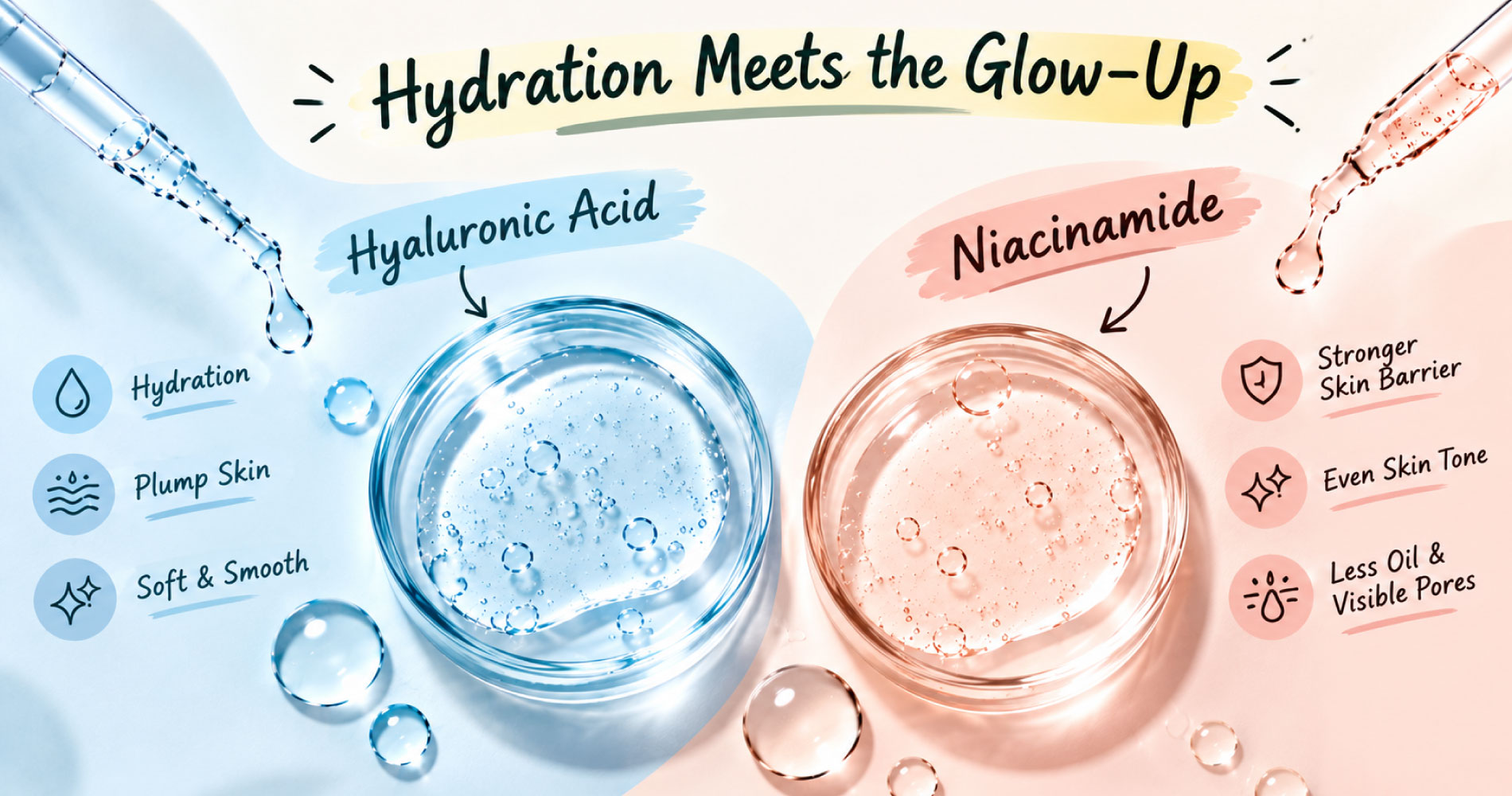
Conclusion: Hydration meets the glow up
Hyaluronic Acid and Niacinamide have both earned a special place in modern skincare, but their benefits are different from one another. Hyaluronic Acid is primarily known for attracting moisture and helping the skin feel hydrated, soft, and supple. Niacinamide, on the other hand, supports the skin barrier and may help improve the appearance of excess oil, uneven skin tone, and certain types of pigmentation.
Neither of these ingredients is a miracle solution, nor is it necessary for everyone to use them. The right choice depends on your skin’s needs, the product formulation, and how well your skin tolerates it. It is also important to look beyond the percentage written on a bottle or the promises made in viral skincare videos. A higher concentration does not guarantee better results, and using more products does not necessarily make the skin look healthier.
If your main concern is lack of moisture in the skin, Hyaluronic Acid may be a useful option. If you want to support your skin barrier or improve the appearance of uneven skin tone and excess oil, you may consider adding Niacinamide to your routine. And if your skin needs hydration as well as barrier support, these two ingredients can generally be used in the same skincare routine.
Ultimately, choosing the right skincare is not about declaring one ingredient the winner. The real point is to understand what each ingredient can actually do, choose products that suit your skin, and follow a routine that can be maintained consistently. Because a true glow-up is not about having the most skincare products on your shelf, but about understanding what your skin actually needs.
Disclaimer
This article is intended for general informational and educational purposes only. It does not constitute medical advice, diagnosis or treatment and should not replace consultation with a qualified dermatologist or healthcare professional.
The benefits of Hyaluronic Acid and Niacinamide may vary depending on skin type, product formulation, concentration and individual response. Although these ingredients are generally well tolerated, irritation or sensitivity may occur. Introduce new products gradually, follow the manufacturer’s instructions and consider patch testing, especially if you have sensitive skin.
If you experience persistent redness, burning, itching, swelling or significant dryness, discontinue use and seek appropriate medical advice. Consult a qualified healthcare professional for persistent acne, significant pigmentation, eczema or other ongoing skin concerns.
FAQs
1. Which is better for the skin: Hyaluronic Acid or Niacinamide?
Both ingredients have different benefits. Hyaluronic Acid helps retain moisture in the skin and makes it appear softer, while Niacinamide may help support the skin barrier and improve the appearance of excess oil and uneven skin tone. The right choice depends on your skin’s needs.
2. Can Hyaluronic Acid and Niacinamide be used together?
Yes, these two ingredients can generally be used in the same skincare routine. Hyaluronic Acid helps hydrate the skin, while Niacinamide supports the skin barrier. However, it is important to follow the product instructions and pay attention to how your skin responds.
3. Does Niacinamide help reduce dark spots and acne marks?
Niacinamide may help improve the appearance of certain types of pigmentation and post-acne marks. However, results depend on the individual’s skin and the product formulation. Regular use of sunscreen is also important in managing pigmentation.
4. Is Hyaluronic Acid good for oily skin?
Yes, Hyaluronic Acid can also be useful for oily skin. Excess oil and lack of moisture are two different concerns. Hyaluronic Acid helps increase hydration in the skin, so it can be used in a formulation suited to your skin.
5. How long does it take to see results from Hyaluronic Acid and Niacinamide?
Hyaluronic Acid can improve the skin’s moisture and softness relatively quickly. Meanwhile, it may take several weeks to notice changes in skin oiliness, texture, or the appearance of uneven pigmentation from Niacinamide. Results can vary from person to person, and regular use, along with the product formulation, also matters.

Content Writer with 3+ years of experience turning ideas into words people want to read, share, and remember. I create research-backed social media and lifestyle content that blends storytelling, creativity, and audience insights to make every piece feel fresh, relatable, and engaging.