Abstract
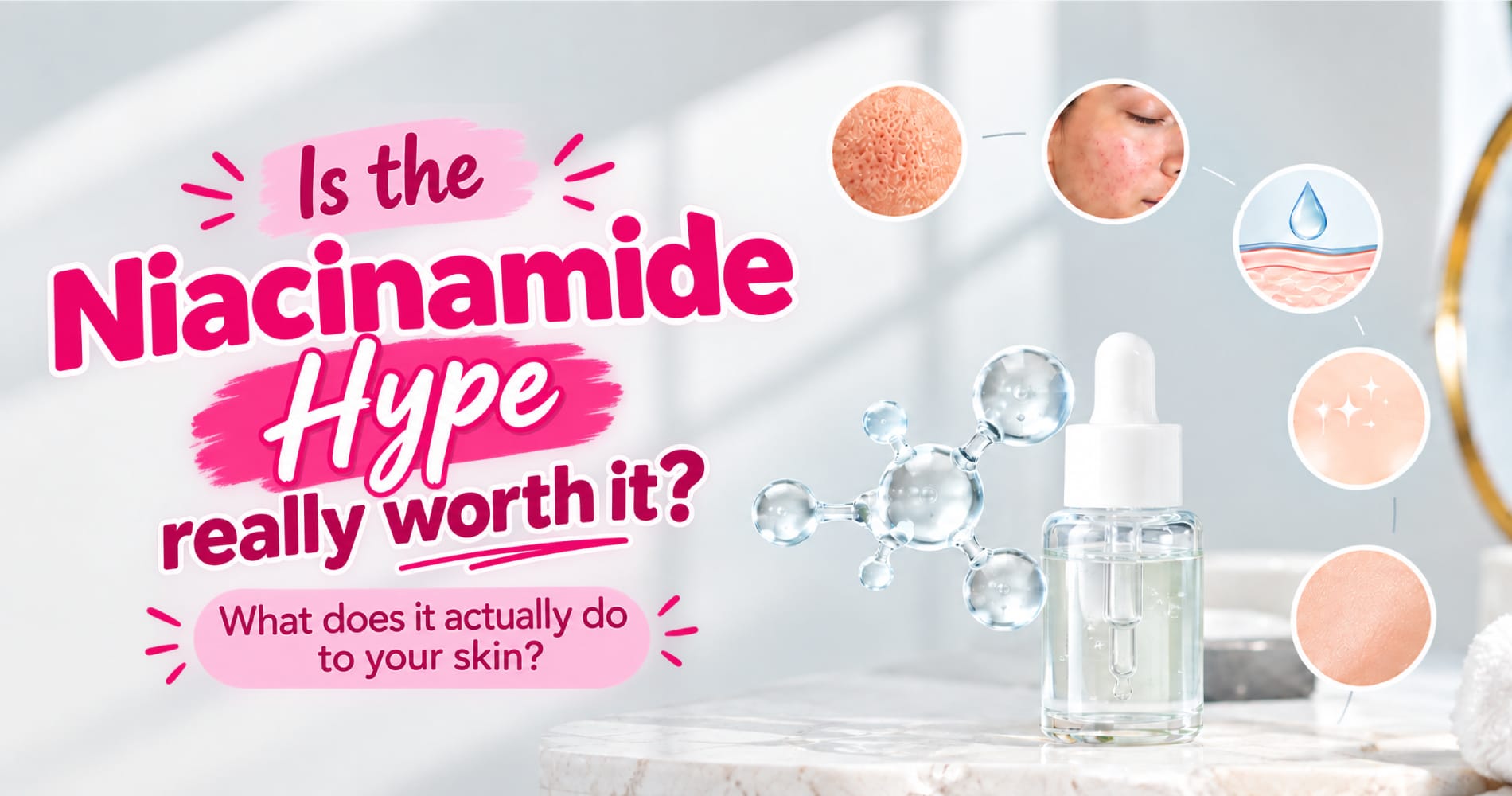
From the “glass skin” trends to learning skincare routines online, niacinamide has suddenly become one of the most talked about skincare ingredients, especially among the Gen Zs. The hype around niacinamide is basically that it feels like a multitasking solution for problems like acne, excess oil, enlarged pores, pigmentation, and a damaged skin barrier. But how much of its popularity is backed by science, and how much is simply social media hype? Here we are going to explore why niacinamide has resonated so strongly with consumers, especially the Gen Zs, and what research has to say about its effects on the skin and whether higher concentrations and viral claims live up to the promise. Ultimately, we need to look beyond the trend to understand where niacinamide really fits into the modern skincare routine.
Introduction: What is Niacinamide?
Niacinamide is a water-soluble form of vitamin B3 (niacin), which is naturally found in plant and animal products and is widely used in skincare for its varied benefits, like supporting the skin barrier and controlling excess oil to improve the appearance of dark spots and uneven texture. Our body needs small amounts of it to function and stay healthy, but our body doesn’t produce enough niacinamide on its own, so we get most of it from a good diet and skincare.
In skincare it is commonly found in serums, moisturizers, cleansers, and sunscreens because it may help with multiple skin concerns that are very common among consumers. As a form of vitamin B3, it works through multiple pathways within the skin and helps in supporting the skin barrier while influencing processes linked to pigmentation, inflammation, and sebum production.
Unlike exfoliating acids, which work by loosening and removing dead skin cells from the surface, niacinamide takes a gentler and more supportive approach to skincare. This versatility is what makes niacinamide particularly appealing; it doesn’t simply target one concern but can support the skin’s overall appearance and resilience while fitting into a wide range of skincare routines.
How did Niacinamide become “the” skincare ingredient?
Scroll through any Gen Z skincare conversation and you’re likely to come across the same familiar buzzwords: “niacinamide serum,” “glass skin,” “skin barrier,” “minimize pores,” and “fade acne marks.” Niacinamide has gone from being a relatively low-key skincare ingredient to a staple of online beauty culture, with countless serums and products promising smoother, clearer, brighter-looking skin.
But how did a form of vitamin B3 become such a skincare phenomenon? Its popularity isn’t difficult to understand: niacinamide is often described as a multitasker, with potential benefits that range from supporting the skin barrier and regulating excess oil to improving the appearance of uneven tone and pigmentation.
At the same time, social media has amplified these benefits, sometimes turning a useful skincare ingredient into something that sounds almost too good to be true.
So, is niacinamide genuinely the multitasking ingredient it is made out to be, or has social media transformed a well-established skincare ingredient into the latest miracle product? To separate the hype from the evidence, it helps to look beyond the viral claims and at what niacinamide actually does to the skin.
Why Does Gen Z Love Niacinamide So Much?
Niacinamide’s popularity among Gen Z goes beyond its skincare benefits. Its rise is mainly tied to the way younger consumers discover, discuss, and shop for beauty products today. From social media routines to ingredient-focused product reviews, skincare has become less about simply buying a moisturizer or serum and more about understanding what each ingredient is supposed to do. Niacinamide fits perfectly into this new skincare culture.
The Multitasking Effect
One of the biggest reasons behind niacinamide’s appeal is its multitasking reputation. A single ingredient is associated with a range of skin concerns, like
- Supporting the skin barrier
- Helps in controlling excess oil
- Improving uneven skin tone
- Calms redness and inflammation
- Refines the appearance of pores
- Boosts hydration
- Helps improve skin texture
- Provides antioxidant support
- Works well with other ingredients
So nowadays when skincare marketing revolves around “hero ingredients” designed to target specific concerns, an ingredient that appears to do multiple tasks at once is naturally appealing. Instead of building a routine around a long list of different actives, consumers may see niacinamide as a simpler way to address multiple concerns with one product.
The Social Media Effect
Social media has transformed skincare ingredients into part of everyday beauty vocabulary. Gen Z is no longer simply shopping for “an acne serum” or “a moisturizer”; they’re searching for niacinamide, retinol, salicylic acid, hyaluronic acid, and vitamin C.
TikTok, Instagram, and YouTube have made ingredient-focused skincare more accessible, with creators explaining routines, reviewing products, and sharing before-and-after results. This has made younger consumers more interested in the science behind their skincare, but it has also created an environment where viral claims can spread quickly.
Now this raises an interesting question: Is Gen Z becoming more literate in skincare or simply more influenced by social media trends? In niacinamide’s case, the answer might be a little bit of both.
Welcome to the “Skin Barrier” Era.
Gen Z’s approach to skincare has gradually shifted from aggressively treating every imperfection to protecting and maintaining the skin barrier. With skincare trends often encouraging the use of multiple exfoliants, acids, and active ingredients, many young consumers are becoming more aware of the irritation, dryness, and sensitivity that can come from overdoing their routines.
This has brought the idea of a healthy skin barrier into the spotlight. Niacinamide fits naturally into this conversation because of its role in supporting the skin barrier and helping maintain moisture. Its versatility also makes it appealing to people who want effective skincare without constantly layering strong or potentially irritating actives. In an increasingly crowded skincare market, niacinamide offers a way to focus on skin health as well as appearance, making it particularly relevant to the growing “barrier-first” approach to skincare.
The Percentage Obsession: Is 10% really better than 5%?
If we walk through any skincare aisle or scroll through an online beauty store, we’ll notice how prominently percentages are advertised. A 5%, 10%, or even a higher concentration level can make a product seem more powerful simply because the number is higher.
But when it comes to skincare, more isn’t always better.
Higher concentrations of niacinamide, such as 10% or 12% and above, may be more likely to cause irritation for some people, especially those with sensitive or compromised skin barriers. This can show up as temporary stinging, redness, warmth, or dryness. Using high-strength niacinamide alongside strong acids or harsh exfoliants may further increase the risk of irritation, making a simpler routine a better approach for sensitive skin.
A higher concentration may not necessarily always deliver better results for everyone because skin tolerance matters. Instead of asking, “What’s the highest percentage I can use?” the better question is, “What concentration is right for my skin and its specific needs?”
More than just a trend?
The fact that niacinamide is not a new discovery but has been studied and used in dermatology for years. It’s social media that has transformed a technical dermatological ingredient into something people recognize by its name.
Niacinamide’s popularity isn’t simply the result of social media hype. Its well-established skincare benefits help explain why it has remained relevant beyond the usual beauty trend cycle. At the same time, social media has undeniably amplified its appeal, transforming a familiar skincare ingredient into a Gen Z staple.
So… what does niacinamide actually do?
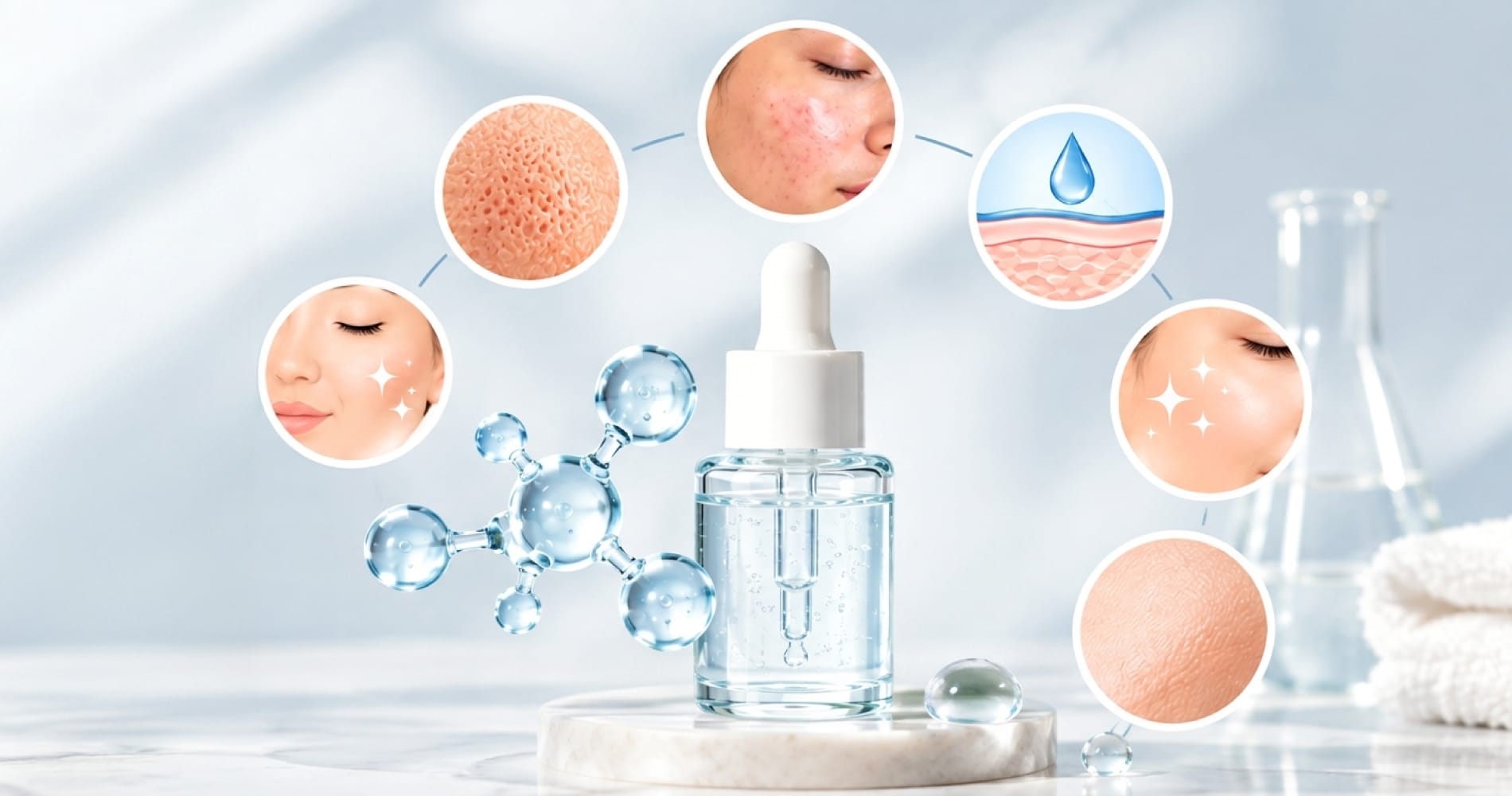
This is where the skincare hype meets the science. Rather than promising a miracle, niacinamide can support the skin in multiple ways:
- Helps in strengthening the skin barrier and reducing moisture loss. This keeps the skin hydrated and resilient.
- It can also reduce the appearance of hyperpigmentation and uneven skin tone if you are being consistent with it in your skincare routine.
- It helps in regulating sebum production, which makes it useful for oily and acne-prone skin.
- It has anti-inflammatory properties that help in reducing redness and irritation, especially for acne-prone skin.
Does niacinamide actually shrink pores?
No. Niacinamide doesn’t magically shrink pores, but it helps in controlling excess oil and improving skin texture, which can make the pores appear smaller and less noticeable.
What does the hype get wrong?
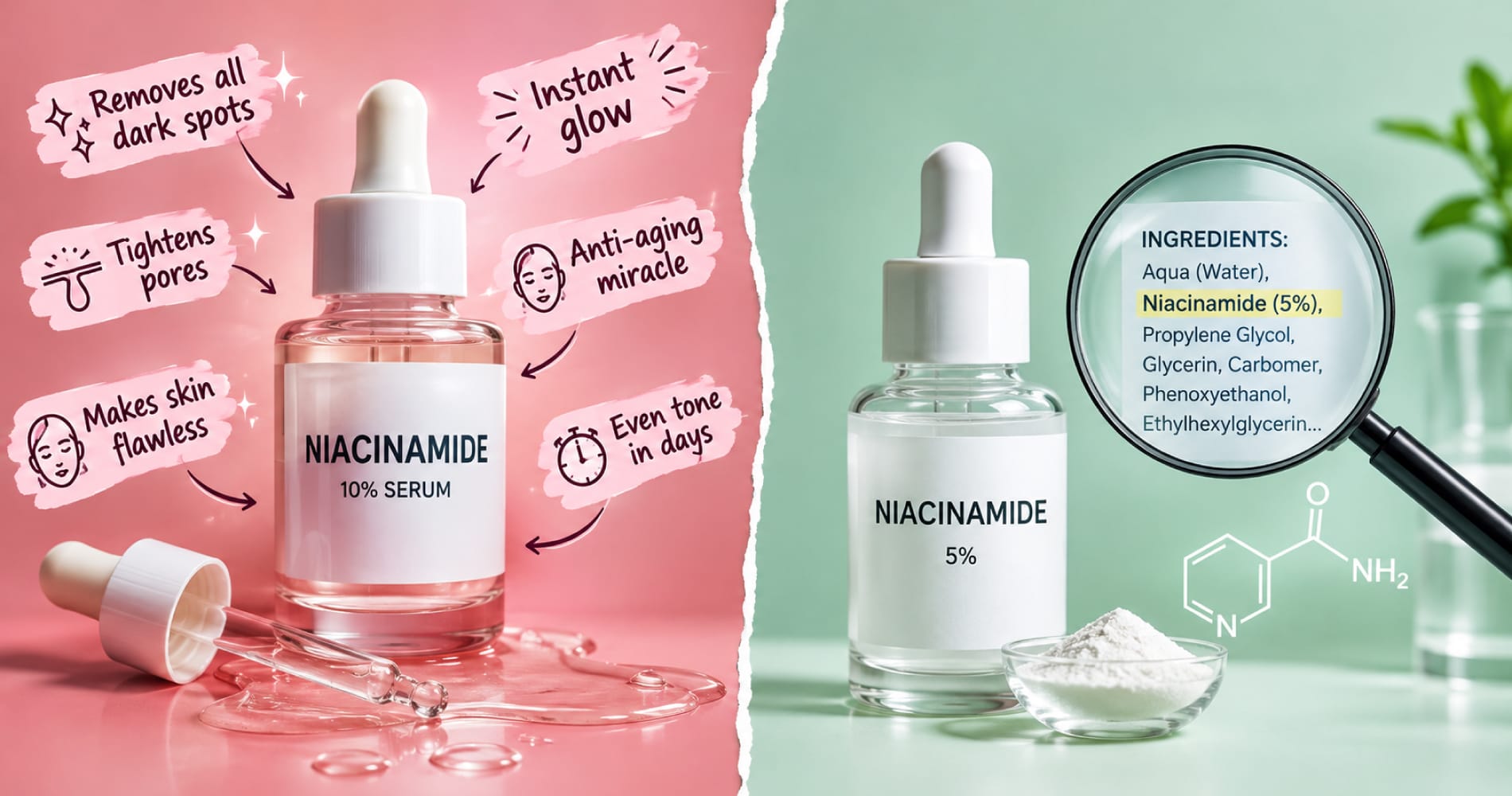
With niacinamide being all over social media, it is easy for viral claims to blur the lines between what the ingredient can actually do and what the skincare advertisements promise. Let’s give you a quick reality check:
Social media claims
- “It shrinks your pores.”
- “10% is better than 5%.”
- “It cures acne.”
- “Everyone needs niacinamide.”
- “It gives you glass skin.”
What the evidence suggests
- It may make pores appear less noticeable, but it doesn’t permanently shrink them.
- A higher concentration doesn’t automatically mean better results.
- It may benefit acne-prone skin, but it isn’t a replacement for proven acne treatments.
- Skin needs vary, and niacinamide isn’t an essential ingredient for everyone.
- It can support smoother, more even-looking skin, but “glass skin” is an aesthetic rather than a specific skin condition.
Can you overdo niacinamide?
More isn’t always better when it comes to niacinamide. While it is generally considered a well-tolerated ingredient, using a higher concentration than what your skin actually needs may increase the chance of irritation, particularly for sensitive skin.
Some people may experience redness, stinging, itching, or dryness, especially when a high-strength niacinamide product is combined with several other active ingredients. A higher percentage of niacinamide doesn’t automatically mean better results.
What matters is finding a concentration your skin can tolerate.
- 2–5%: A gentler range that can support the skin barrier, hydration, and uneven tone.
- 5–10%: Often marketed for oiliness, pores, and acne-prone skin, but stronger isn’t necessarily more effective.
- 10%+: May increase the risk of irritation for some people, especially those with sensitive or already irritated skin.
- Using multiple high-strength actives together can further irritate the skin.
This feeds into a bigger Gen Z skincare habit: the idea that layering more products and choosing higher percentages will automatically produce better results.
The real goal isn’t to use the strongest formula; it’s to find a concentration your skin can comfortably tolerate and that suits your specific concerns. In skincare, more actives don’t necessarily mean better skin.
Who should actually consider using it?
Niacinamide can be a useful addition to a skincare routine, but it isn’t a must-have for everyone. It may be worth considering if you:
- Have oily or acne-prone skin and want help managing excess oil.
- Have uneven skin tone or post-acne marks and want to improve their appearance.
- Want to support your skin barrier and maintain hydration.
- Prefer a versatile active that can address multiple skin concerns.
“Which, to some extent, is the kind of skin type Indians have.”
On the other hand, if your current routine is working well for you, you don’t need to add a niacinamide serum simply because it’s trending on social media. Good skincare is about what your skin needs, not how many products you use.
How to use it without turning your routine into a chemistry experiment?
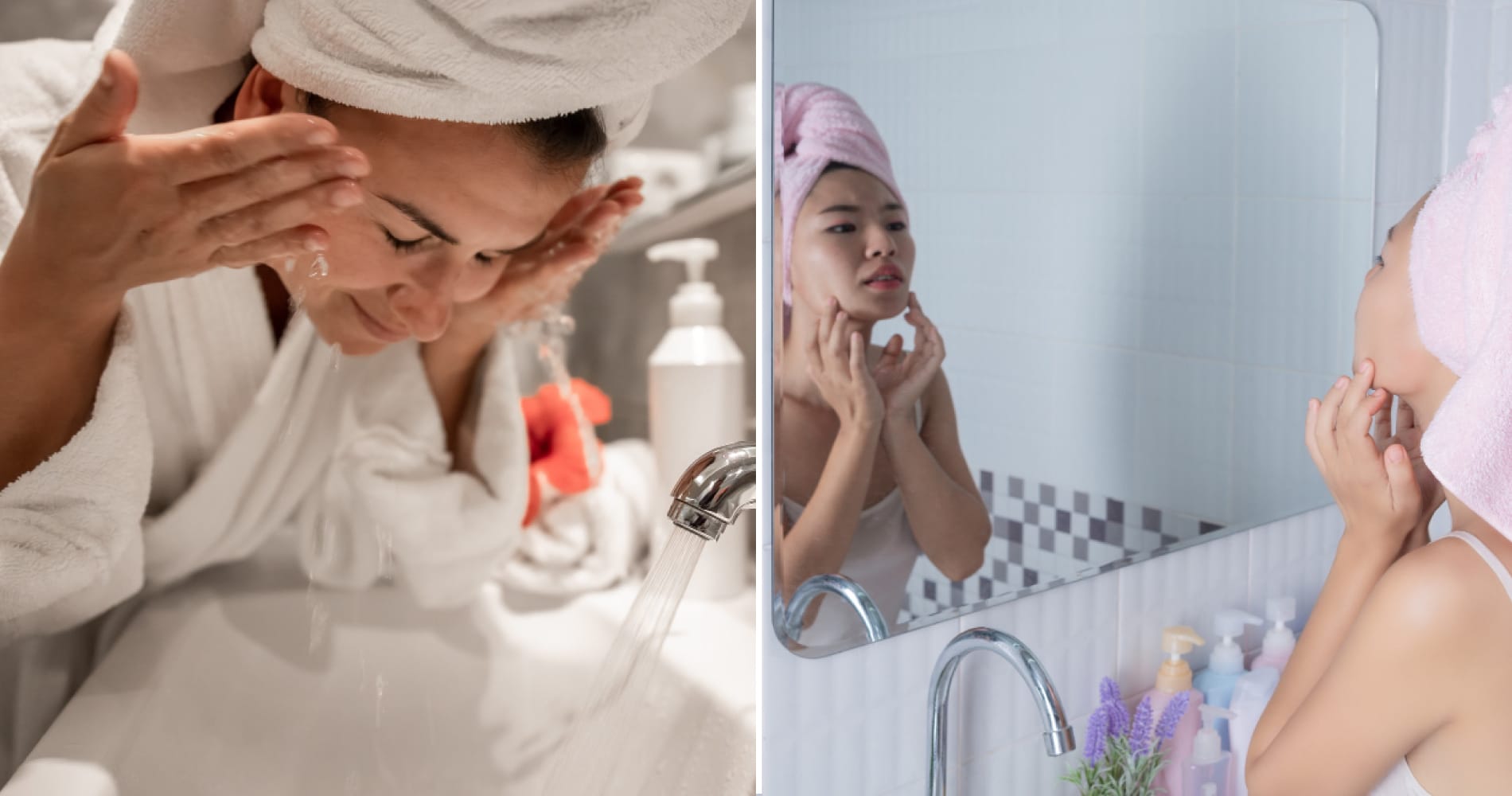
Adding niacinamide to your routine doesn’t have to mean piling on multiple serums. A simple routine can be enough: cleanser – serum – moisturizer – sunscreen.
- Starting with a lower concentration if you’re new to the ingredient or have sensitive skin, and in this way you can pick the right concentration level for your skin.
- Introduce it slowly to your skincare routine rather than using it multiple times a day from the beginning.
- Using one product at a time makes it easier to see how your skin reacts and avoid unnecessary irritation.
- Run a quick patch test first, especially if you have sensitive or reactive skin.
- Using several strong actives together can increase irritation, even if each ingredient is individually well tolerated because it might overwhelm your skin.
- Niacinamide is already found in moisturizers, cleansers, and other skincare products, so a separate serum isn’t always necessary.
Good skincare is not always about using more products or ones with higher percentages. It is about finding a routine that works for your skin and is easy to maintain and be consistent with.
Get a dermatologist’s verdict.
With niacinamide becoming a Gen Z skincare staple, a dermatologist’s perspective can help separate what’s backed by science from what’s simply trending online. An expert can also add context to claims that often get oversimplified on social media.
Some key questions to explore include
- Why has niacinamide become so popular among younger consumers?
- Which benefits have the strongest scientific evidence?
- Is 10% actually better than lower concentrations?
- Can it really help with acne, pigmentation, and visible pores?
- Who should use it cautiously?
- Are young consumers using too many skincare actives at once?
- Is a separate niacinamide serum necessary if it’s already in your moisturizer?
- What’s the biggest misconception about niacinamide you’ve seen online?
A dermatologist’s take can give the article expert credibility while helping readers understand where the hype ends and the evidence begins.
Is it worth the hype?
After all the social media-influenced skincare routines, glowing reviews, and 10% serums, the answer isn’t as simple as “yes” or “no.” Niacinamide isn’t a miracle ingredient that can fix every skin concern overnight, but its popularity isn’t based on social media alone either. There is legitimate evidence supporting several of its skincare benefits, including its role in supporting the skin barrier, improving the appearance of uneven tone, and helping manage excess oil.
The real takeaway is to look beyond the hype. Niacinamide can be a useful and versatile ingredient, but it isn’t something everyone needs or needs in the highest concentration. Instead of chasing viral ingredients and impressive percentages, understanding what your skin actually needs can make your routine more effective, simpler, and less overwhelming.
In the end, the question isn’t whether Gen Z should use niacinamide. It’s whether the product, concentration, and claims make sense for your individual skin.
Absolutely—based on the full article, here is an approximately 800-word, publication-ready Conclusion, Disclaimer, and FAQ section that keeps the tone balanced, evidence-aware, and consistent with the article.
Conclusion, Disclaimer, and FAQs: Is Niacinamide Really Worth the Hype?
Conclusion
Similarly, combining several high-strength active ingredients can overwhelm the skin rather than improve it. A simple routine of cleansing, appropriate treatment, moisturizing, and daily sun protection may be more practical and sustainable.
Ultimately, niacinamide can be a useful and versatile ingredient, but it is not a miracle solution. Looking beyond social media claims, choosing products suited to individual skin needs, and introducing new ingredients gradually can lead to a more balanced and sustainable approach to skincare.
Disclaimer
This article is intended for general informational and educational purposes only. It does not constitute medical advice, diagnosis, or treatment and should not be used as a substitute for consultation with a qualified dermatologist or other healthcare professional.
Individual responses to skincare ingredients can vary. Although niacinamide is generally considered well tolerated, some people may experience irritation, particularly when using higher concentrations or combining multiple potentially irritating active ingredients. A product that works well for one person may not produce the same results for another.
The skincare benefits discussed in this article should not be interpreted as guarantees of specific results. Claims relating to acne, pigmentation, pores, oil production, skin texture, or the skin barrier can depend on factors such as product formulation, concentration, frequency of use, and individual skin characteristics.
If you experience persistent redness, burning, itching, swelling, severe dryness, or another significant reaction after using a skincare product, discontinue use and seek appropriate professional medical advice. If you have a diagnosed skin condition or are using prescription skincare or medication, consult your dermatologist before making significant changes to your routine.
Frequently Asked Questions
1. What does niacinamide actually do to the skin?
Niacinamide may support the skin barrier, help maintain hydration, regulate excess sebum, and improve the appearance of uneven skin tone and pigmentation. It may also have soothing and antioxidant properties, making it a versatile ingredient for different skincare concerns.
2. Is niacinamide really worth the hype?
Niacinamide has legitimate skincare benefits, so its popularity is not based entirely on social media. However, some online claims can exaggerate what they can achieve. It should be viewed as a useful skincare ingredient rather than a miracle solution for every skin concern.
3. Does niacinamide shrink pores?
No skincare ingredient can permanently shrink the physical size of pores. Niacinamide may help control excess oil and improve the overall appearance and texture of the skin, which can make pores appear less noticeable.
4. Is 10% niacinamide better than 5%?
Not necessarily. A higher concentration does not automatically provide better results. Some people may tolerate higher concentrations well, while others may experience irritation. Choosing a concentration based on your skin’s needs and tolerance is more important than simply selecting the highest percentage.
5. Can niacinamide help with acne?
Niacinamide may be useful for acne-prone skin because of its potential effects on excess oil, inflammation, and the skin barrier. However, it should not be considered a replacement for established acne treatments when those treatments are medically appropriate.
6. Can niacinamide help fade acne marks and pigmentation?
Niacinamide may help improve the appearance of uneven skin tone and certain forms of pigmentation with consistent use. Results can vary, and daily sun protection remains an important part of managing pigmentation and preventing it from becoming more noticeable.
7. Can niacinamide irritate sensitive skin?
Yes. Although many people tolerate niacinamide well, higher-strength products may cause irritation in some individuals, particularly those with sensitive or compromised skin barriers. Possible symptoms include redness, stinging, warmth, or dryness.
8. Can I use niacinamide with other active ingredients?
Niacinamide can be incorporated into many skincare routines, but using several strong active ingredients simultaneously may increase the risk of irritation. If your skin is sensitive or already irritated, keeping your routine simple may be a better approach.
9. Does everyone need a separate niacinamide serum?
No. Niacinamide is already included in many moisturizers, cleansers, and other skincare products. If your existing products already contain it and your routine is working well, adding another dedicated serum may not be necessary.
10. How should beginners introduce niacinamide?
Beginners can consider starting with a lower concentration and introducing it gradually rather than immediately using a high-strength product multiple times a day. Patch testing can also be useful, particularly for people with sensitive or reactive skin. Introducing one new product at a time makes it easier to identify potential reactions.
11. Can you use too much niacinamide?
Using a higher concentration than your skin needs may increase the possibility of irritation. This is especially relevant when several high-strength products are layered together. More active ingredients do not necessarily mean better results.
12. Who should be cautious with niacinamide?
People with sensitive, reactive, or compromised skin may need to be more cautious, particularly with higher-strength formulations. Anyone experiencing persistent or significant irritation should stop using the product and consider consulting a dermatologist.
13. Does niacinamide give you “glass skin”?
“Glass skin” is primarily a beauty and aesthetic term rather than a medical skin condition. Niacinamide may contribute to smoother, more hydrated, and more even-looking skin, but it cannot guarantee the highly reflective appearance portrayed in social media content.
14. What is the biggest takeaway about niacinamide?
The biggest takeaway is that more is not always better. Niacinamide can be a useful, versatile ingredient, but the ideal product depends on individual skin needs and tolerance. Instead of chasing viral claims or the highest percentage, focus on a simple, consistent routine that works for your skin.
If you want, I can also turn this into a more magazine-style Gen Z skincare article ending, with punchier FAQs, stronger SEO keywords, and a dermatologist-friendly tone.
Author: Ritika Saha
Read More
Turcy 10% Vitamin C 5% Niacinamide Face Serum (Infused with 1% Sea Buckthorn):

Riya Asati is an assistant professor and JRF-qualified researcher with 3+ years of experience in research-based content writing. Her expertise includes healthcare, medical, wellness, and educational content. She focuses on presenting health information in a clear, accurate, evidence-informed, and easy-to-understand manner. Through her writing, she aims to help readers understand important health topics and make informed decisions about their well-being.