
Abstract
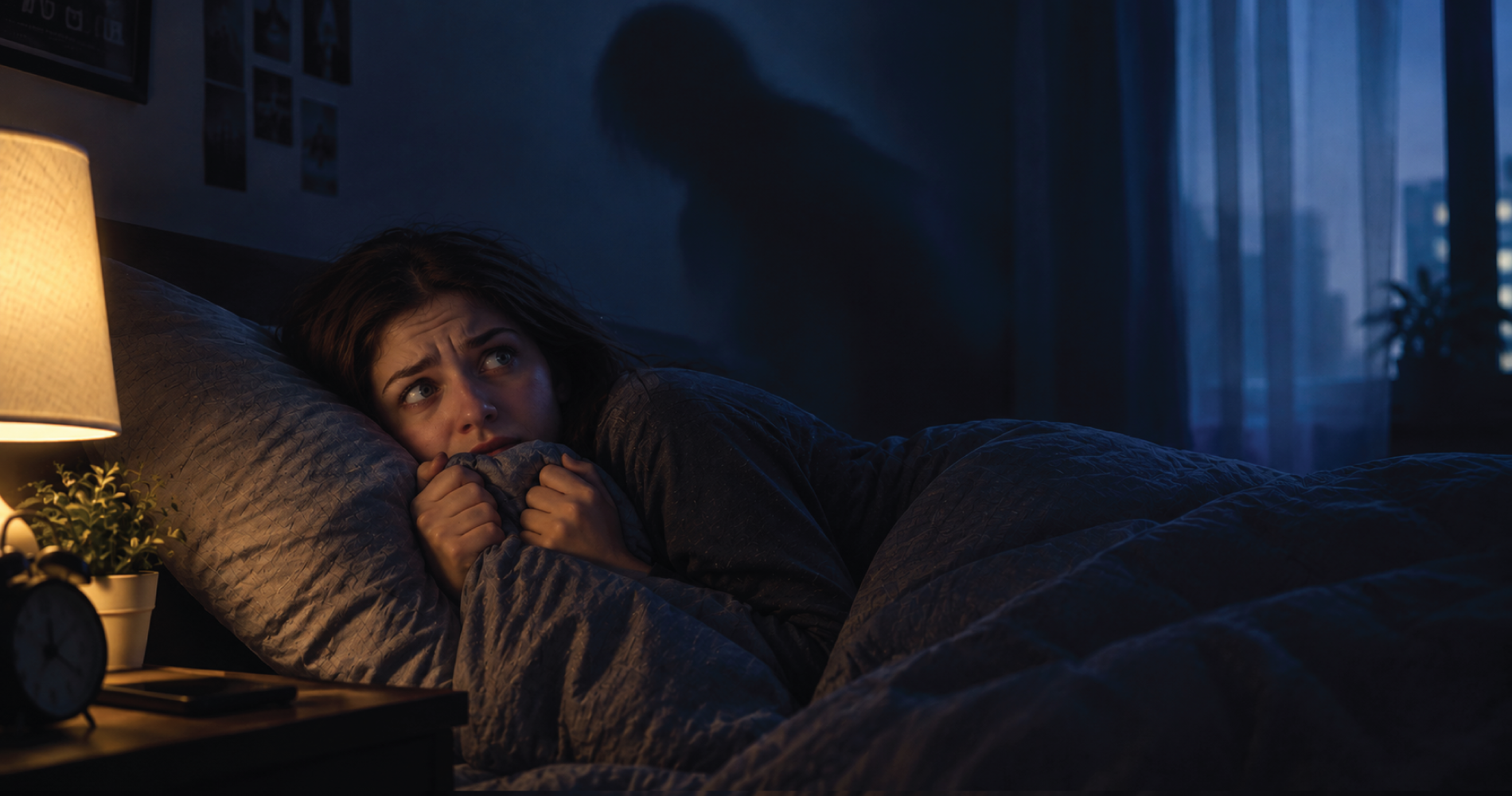
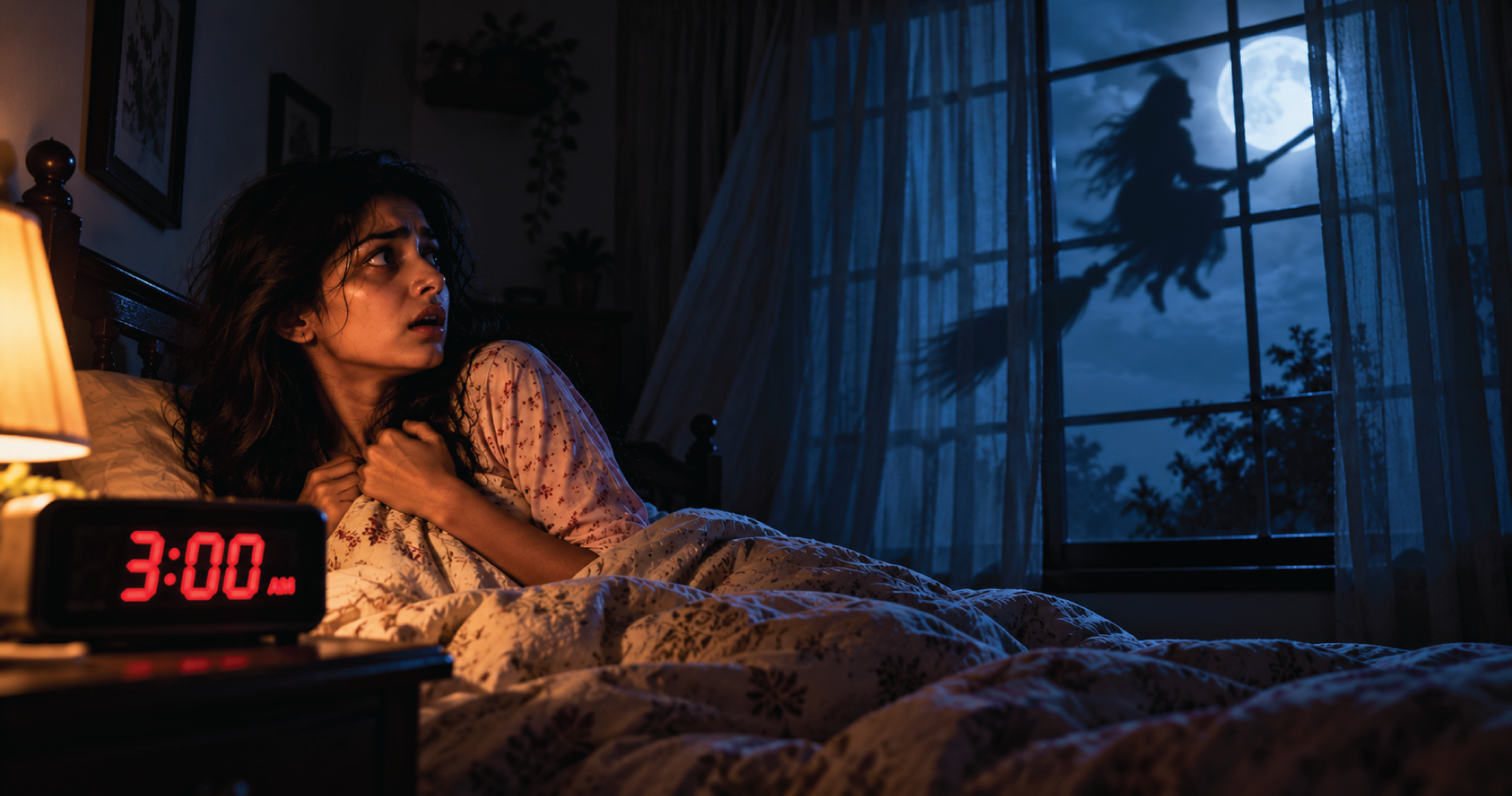
The clock reads 3:07 a.m. when you sense something watching you.
Your bedroom is swallowed by darkness, broken only by a thin strip of streetlight beneath the curtains. At the foot of your bed stands a tall, unfamiliar figure. You cannot make out its face, but you know it is looking directly at you.
Panic takes over. You try to move, but your body will not respond. You attempt to call for help, yet your voice seems trapped somewhere inside your throat. The figure remains perfectly still.
Then, just as suddenly as it appeared, it vanishes.
You sit up, gasping. The room looks exactly as it should. Nothing is out of place. There is no one beside your bed.
So what did you just see?
For centuries, people across cultures have reported shadow figures, mysterious whispers, and invisible presences lurking in the darkness. Some interpret these encounters as evidence of the supernatural. Science, however, points towards a more unsettling possibility: sometimes, the brain itself can create experiences so vivid that they feel impossible to distinguish from reality.
Sleep paralysis, sleep-related hallucinations, and the mind’s tendency to interpret unclear sensory information as a threat can transform a familiar bedroom into the setting of a terrifying encounter.
Yet knowing the explanation does not always make the experience less frightening.
When your senses insist that something impossible has happened, the boundary between a ghost story and reality can begin to blur. And perhaps the most disturbing truth is that you do not need to believe in ghosts to experience something that feels otherworldly.
Introduction: When the night begins to feel haunted
Have you ever woken up from a frightening dream and felt as though the danger was still around you? Your eyes are open, and you are in your bedroom, yet the wardrobe that is standing in the dark looks like a person, and even the slightest sound in the hallway makes your heart race. Now imagine if you felt someone’s presence in the room, saw a dark figure near the door, and were so frightened that you could not even move. What would happen then?
Such experiences are not limited to horror films or ghost stories. Many people describe seeing such figures, hearing whispers, or feeling the presence of an unseen force around them while they are between sleep and wakefulness. Some people consider these to be supernatural events, while science tries to understand the sleep-related processes and the role of the brain behind them. Sleep paralysis and sleep-related hallucinations can produce experiences that feel completely real in that moment.
But the question is, when there is no one in front of us, why do we see someone? How can the brain create frightening figures, and why does the feeling of fear persist for so long even after waking up? To understand these mysteries, we must descend into that hazy boundary between sleep and wakefulness, where imagination, perception, and fear can combine to turn even an ordinary night into a ghostly experience.
Sleep paralysis: When your mind wakes up before your body
Imagine that you wake up in the middle of the night and realize that you cannot move a single muscle.
You try to lift your hand, and nothing happens. You try to turn your head, and your body remains completely still. You want to call for help, but your throat does not cooperate. Meanwhile, the room looks entirely real. You can see the outline of the bed, the curtains, and the darkness beyond the door.
Then your eyes fall on that figure.
This frightening scene resembles a phenomenon called sleep paralysis.
What happens during sleep paralysis?
Sleep paralysis occurs when a person regains awareness, but the temporary muscle inactivity associated with rapid eye movement, or REM sleep, still remains. REM sleep is the stage in which many vivid dreams occur. During this time, the nervous system normally suppresses the activity of most of the body’s voluntary muscles, preventing the person from physically acting out their dreams in the real world.
Usually, the process of waking from sleep is completed without any unusual experience. But during sleep paralysis, a person’s awareness returns while the body has not yet fully emerged from this sleep-related state.
The result can be extremely distressing: the person feels awake but is unable to move or speak for a period of time. Such episodes often occur while falling asleep or upon waking. They usually last only a short time, although fear and the altered sense of time can make them seem much longer.
Why does it feel as though something is in the room?
Sleep paralysis can also involve vivid sensory experiences. Some people report seeing shadowy figures, hearing unfamiliar voices, feeling pressure on their bodies, or sensing the presence of another being nearby.
The bedroom may appear exactly as it does when one is awake. This is why these experiences can feel especially real. Rather than feeling like an ordinary dream, it may seem as though the event is actually taking place in the room around you. This combination of awareness and dream-like sensations helps explain why some people interpret these events as supernatural encounters.
Imagine seeing a dark shadow near your wardrobe while being unable to turn your head or switch on the light. Your body cannot respond normally, and the perceived threat does not go away. It is not difficult to understand how terrifying such an experience can be.
However, having a frightening sensation is not proof that there is any supernatural presence there. Sleep paralysis provides a valid scientific explanation for the temporary inability to move and can help explain many of the hallucination-like sensations associated with it.
Not every episode involves hallucinations, and not every figure seen at night is caused by sleep paralysis. The important point is that during the transition between sleep and wakefulness, the brain can produce extremely vivid experiences. And sometimes, these experiences are so frightening that even an empty room can feel as though it is filled with someone’s presence.
The shadow in the corner: Why people see figures that disappear
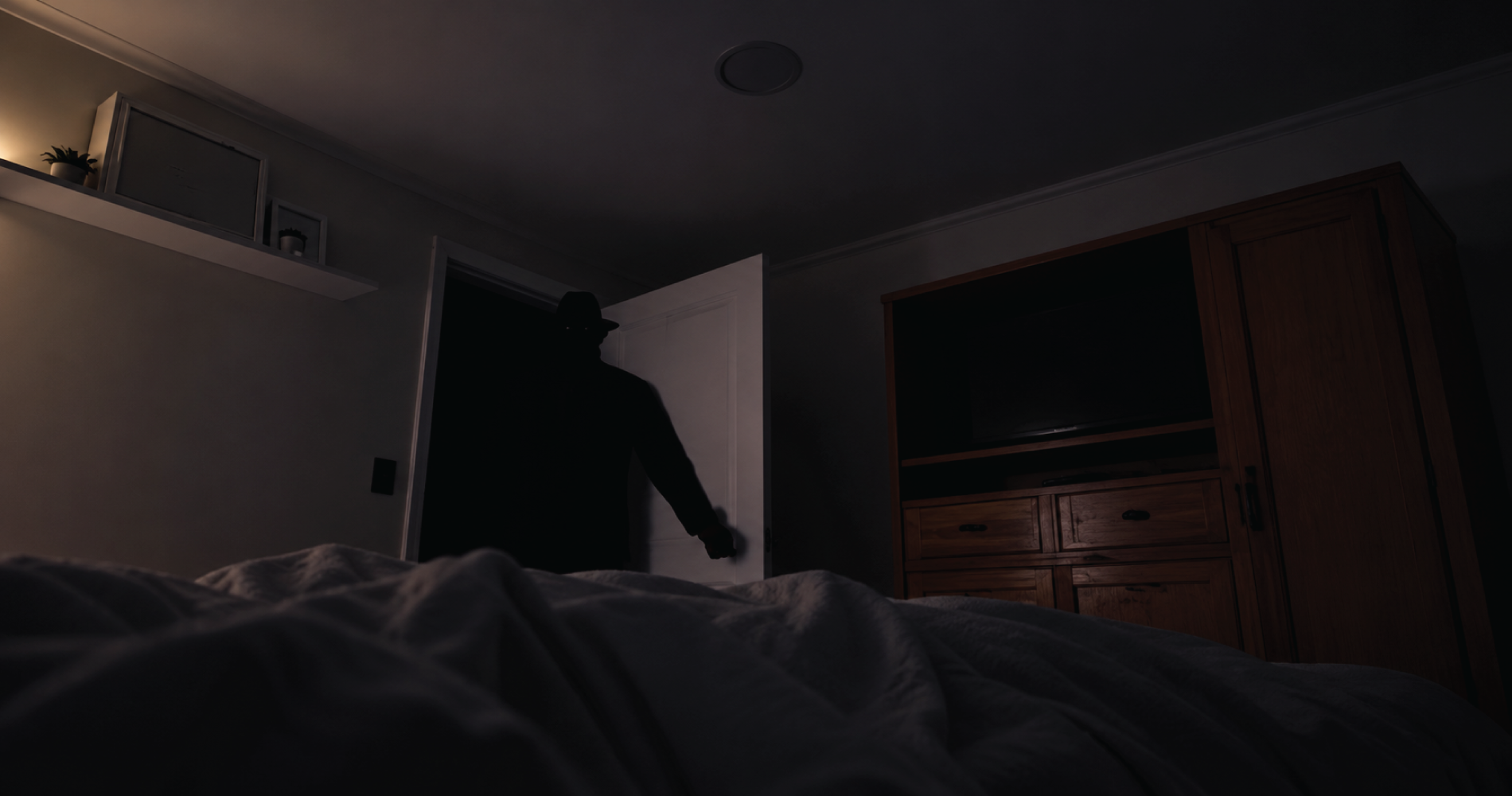
There is something especially terrifying about that figure, which appears only when you are least able to properly examine it. You wake up. Your eyes adjust to the darkness. By the bed stands a tall figure, almost human-like, but somehow unnatural. Its face is not clearly visible, yet you feel that it is looking directly at you.
You blink and it is still there. Then suddenly, as mysteriously as it appeared, it vanishes just as abruptly. Shadowy figures are often mentioned in stories associated with sleep paralysis and other frightening nighttime experiences. Their descriptions may vary, but many accounts include black human-like shadows, terrifying intruders, or figures standing by the bed or at the doorway. Why, after all, do these experiences so often involve human-like figures?
The brain is highly sensitive to faces and human shapes
Recognizing people is an important part of everyday experience. Human beings constantly interpret faces, body structure, movements, and expressions in order to understand the world around them. But the information received by the visual system is not always complete. In a dimly lit room, it can be difficult to distinguish an object from a shadow or to make out the fine details of something placed at a distance.
When the brain receives ambiguous information, perception can be influenced by context and expectations. A coat hanging on a door may look like a standing person. Several shadows together may appear face-like. During sleep-related hallucinations, a dreamlike image may even seem as though it is present in the real room. The experience that results from this can feel astonishingly real.
The strange-face illusion
Research has documented unusual visual experiences during prolonged mirror-gazing in low light. In a study published in the journal Perception in 2010, psychologist Giovanni B. Caputo reported that some participants who looked at their own reflection in dim light said that facial features appeared distorted or that unfamiliar faces seemed to emerge.
A systematic review published in 2023 in Consciousness and Cognition analyzed research on the illusions associated with these strange faces. The review found that low light, prolonged fixation, and face-related visual cues were significantly associated with these experiences. However, the authors also pointed to limitations in the quality of existing studies and noted the need for further research.
These findings do not directly explain every experience involving shadowy figures, nor do mirror-related illusions prove that people see ghosts. They indicate something more specific that under certain conditions, the perception of a familiar face can become distorted or unfamiliar.
Why does the figure seem so real?
During a frightening nighttime experience, it is not easy for a person to immediately determine whether what is being seen is actually present outside or is being generated within the brain. A shadow may appear like an intruder. A dream image may seem to be present in the bedroom. An indistinct sensation may be associated with a frightening figure.
When the person finally begins to move, turns their head, switches on the light, or wakes up fully, the experience may change or disappear. After that, an unsettling question remains, if the figure seemed so real, how did it disappear?
The answer is that the vividness of an experience is not reliable proof of an external cause. Dreams, hallucinations, and perception-related illusions can seem extremely convincing while they are happening. Even after the figure has disappeared, you may remember it for a long time. But the memory of seeing something is not, by itself, proof that some external entity was present there.
The nightmare that follows you into reality
Some frightening dreams end as soon as we wake up. Others seem as though they have left their marks on the room. Perhaps you dreamed that a stranger was standing outside your bedroom door. Suddenly, you open your eyes, and for a few seconds you are convinced that the door is still moving.
Perhaps you heard a voice calling your name, and during the process of waking up you hear a similar voice again. It feels as though a dream has crossed a boundary it should never have crossed.
Why do nightmares feel so real?
Nightmares are disturbing dreams that may involve situations such as fear, helplessness, being chased, getting hurt, or losing someone close. They can wake a person from sleep and leave them feeling anxious.
Dreams may include memories, emotions, and recent experiences, but not every dream has a definite meaning. Even after waking, fear may persist for some time. A dark curtain may resemble a shape from the dream, or an outside sound may seem frightening. This may happen because the brain is still recovering from the emotional impact of the dream.
However, not every such experience is a hallucination. Often, it is the result of fear that continues after waking and the emotional impression left by the dream.
When dreams and waking perceptions overlap
Sleep-related hallucinations can occur while falling asleep or waking up. Experiences that occur while falling asleep are called hypnagogic hallucinations, and those that occur while waking up are called hypnopompic hallucinations.
These may include seeing shapes, hearing voices, or feeling a presence or touch. These experiences can occur with or without sleep paralysis. Nightmares, sleep-related hallucinations, and sleep paralysis are different experiences. A nightmare is a disturbing dream, a hallucination is a sensory perception that occurs without any external stimulus, while in sleep paralysis a person is unable to move for a brief period while falling asleep or waking up.
Their symptoms may overlap, but each condition represents a different aspect of the sleep experience.
Can a dream predict something frightening?
Sometimes people report that they dreamed about an event and later experienced something that seemed, remarkably, just like that dream. They may regard it as a warning, a premonition, or proof of some supernatural connection.
Dreams can certainly reflect anxieties, expectations, and experiences that later seem relevant. But the mere fact that a dream appears to resemble a future event is not, by itself, sufficient evidence of precognition.
Memory undergoes reconstruction. After an event occurs, a person may remember their dream in light of that event, give greater importance to similarities than to differences, or forget the many dreams that did not match later events. This does not mean that the experience is unimportant to the person. It only means that the personal significance of an experience and its scientific evidence are two different things.
Sometimes the strangest part of a frightening dream is not what happened while sleeping. Rather, it is the way the memory of the dream, after waking, changes the way you see the world.
Ghosts, demons, and night visitors: The paranormal side of sleep paralysis
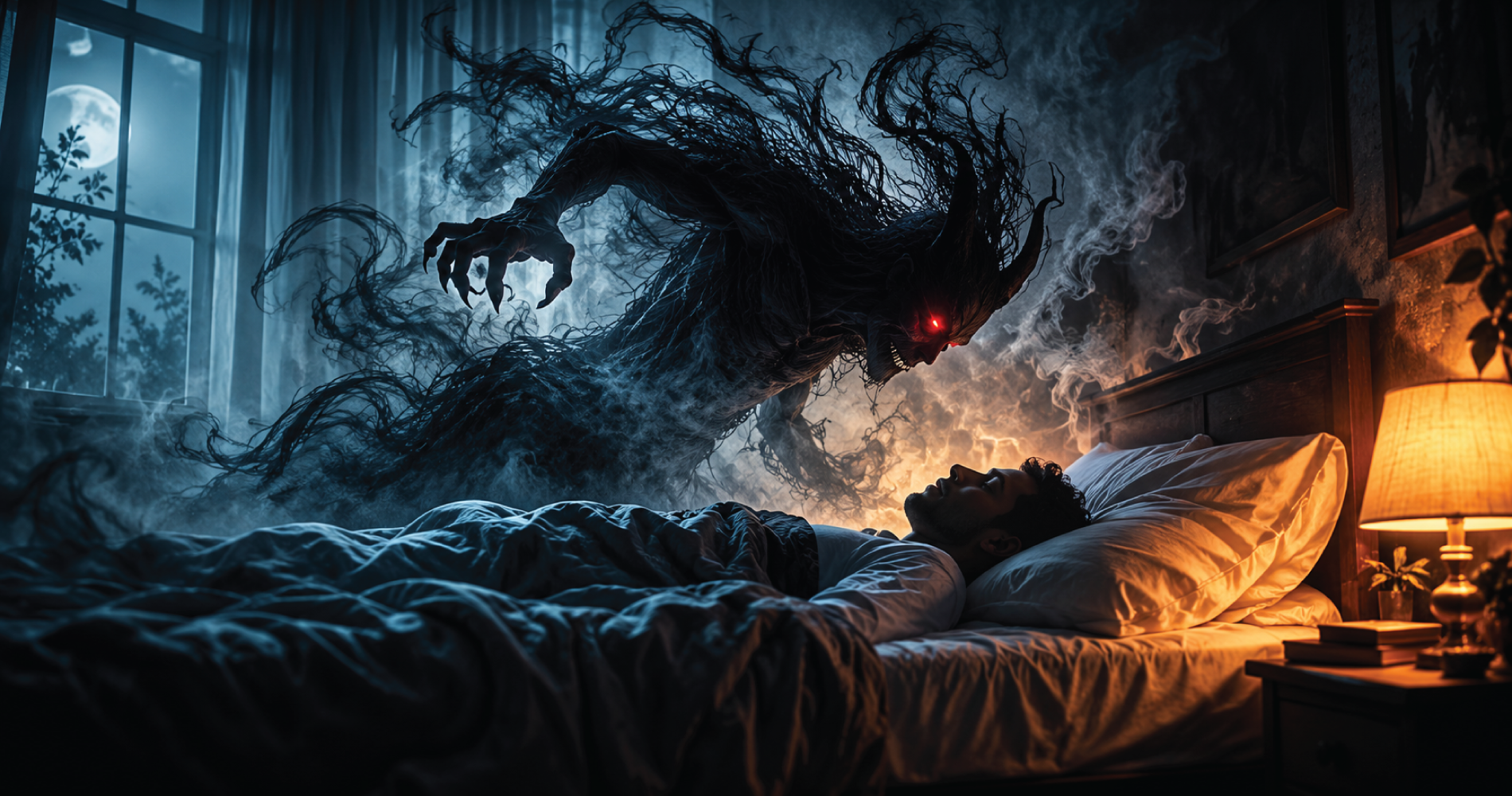
For centuries, people have explained their frightening nighttime experiences through the supernatural beliefs and stories available in their cultures. One person wakes up, cannot move, and feels a heavy pressure on their chest. Another describes seeing a dark figure near their bed. Someone else hears whispers coming from a deserted corner.
According to tradition, this experience may be understood as the presence of a spirit, demon, ghost, or some other supernatural visitor. These stories are not identical, but they share a frightening idea: the sleeping person feels that someone has entered their personal space while they themselves are unable to respond.
The Old Hag and the night visitor
In the folklore of Newfoundland, experiences like sleep paralysis are associated with the Old Hag. She is considered a frightening presence, said to press down on the body of a sleeping person.
Other cultural traditions also have their own explanations for frightening experiences around sleep. For example, the Japanese term “kanashibari” is commonly associated with sleep paralysis. The descriptions in these traditions vary. Some emphasize a suffocating presence, while others describe a supernatural visitor or a terrifying event in which the sleeper is left helpless.
These stories are important because they show how people have tried to make sense of experiences that can be difficult to describe in words. Folklore provides stories, names, and explanations for unfamiliar sensations. When a person has such a frightening experience, cultural stories already heard can influence how they interpret the event.
Why do so many stories describe a presence?
One possible explanation lies in the nature of sleep paralysis. Temporary inability to move, intense fear, and the sensation of an unseen presence can together create an experience in which a person feels that some other being is responsible for it. If the person also has a vivid hallucination, the explanation may seem even more convincing.
Cultural expectations can then influence the identity of that figure. A person familiar with stories of monsters may interpret the experience within that framework, while another person may describe it as a ghost or an intruder. This does not mean that every person who reports a supernatural experience has gone through sleep paralysis. Nor does it mean that all such events can be explained solely by cultural beliefs. It means that sleep-related experiences and cultural interpretations can influence one another.
Does science prove that ghosts do not exist?
Science does not reject every possible supernatural claim, but an experience of a shadow, a voice, or a presence is not sufficient evidence that a ghost was the cause.
From a scientific perspective, it is important to examine whether the person was asleep or awake, whether they were unable to move, what the lighting in the room was like, and whether sleep disturbance, frightening dreams, or some ordinary environmental cause may have given rise to the experience. The purpose of these questions is not to deny anyone’s fear but to understand the difference between the experience and its possible cause.
Stories of ghosts can be interesting as folklore and personal experiences. However, before reaching a supernatural conclusion, it is important to consider explanations related to sleep science and psychology.
Perhaps that is what makes these experiences so mysterious, the event may last only a few seconds, but the question it raises can remain in the mind for years.
Why your brain can turn an empty room into a haunted one
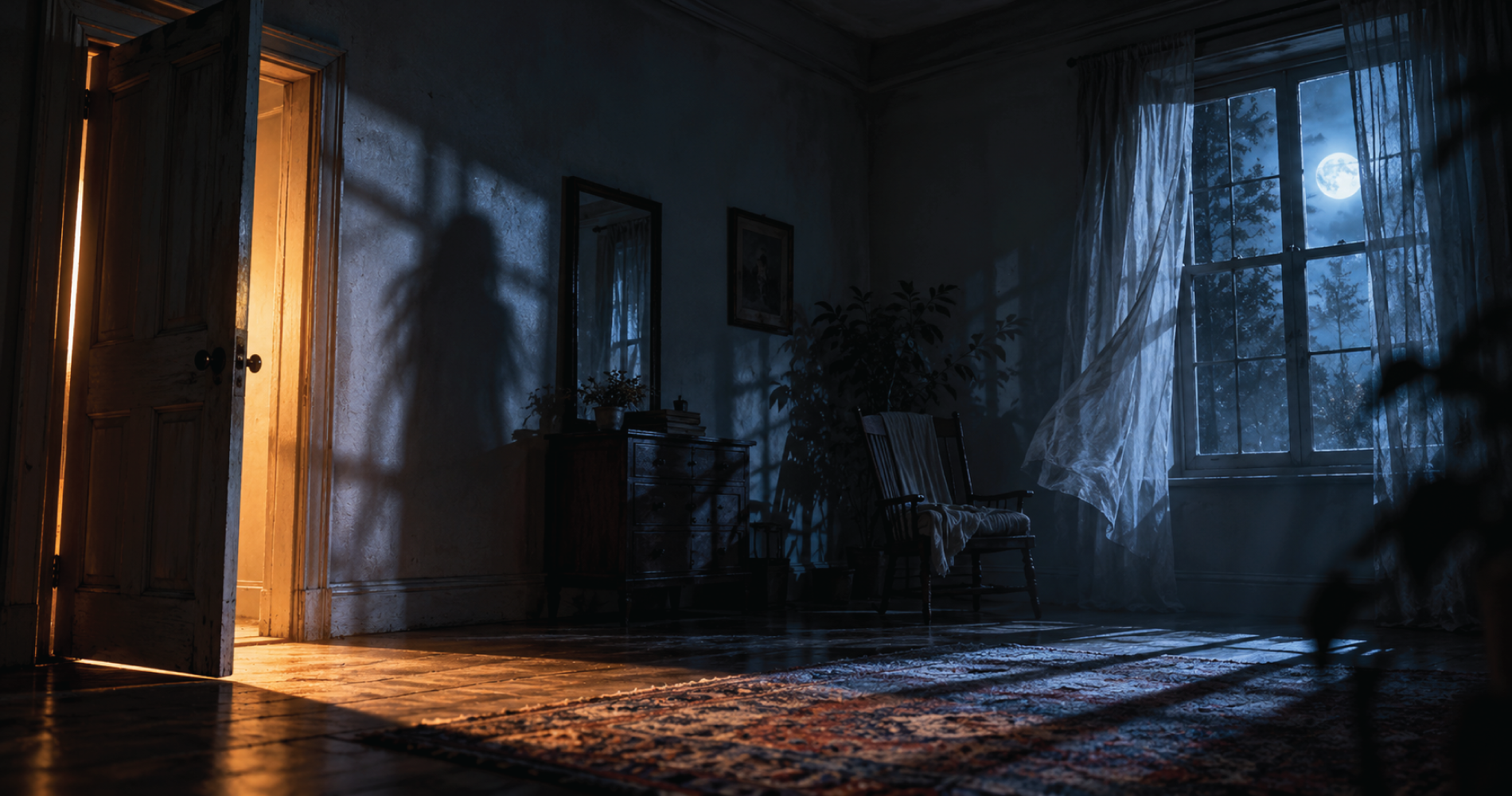
Imagine that you are walking through your house at night. You leave the living room and see a black shape near the sofa. For a moment, it looks exactly like a person sitting perfectly still.
Your heart starts beating faster.
You look again.
It is a pile of clothes.
The room has not changed. Only your interpretation of the scene has changed.
The role of pareidolia
Pareidolia is the tendency to recognize meaningful shapes in vague or random information. For example, seeing faces in clouds, identifying a human figure in the trunk of a tree, or interpreting car headlights as a face.
It is linked to the brain’s ability to recognize patterns. However, in low light, shadows and partially visible objects can lead to misinterpretation. A chair may appear human-like, or a curtain may seem like a moving figure. If a person is already frightened, they may interpret such vague shapes as a threat.
Pareidolia does not explain every hallucination or supernatural experience, but it helps us understand why ordinary visual information can sometimes seem mysterious or frightening.
Darkness removes certainty
In good light, it is easier to identify the shape, color, and position of objects. But in low light, details become unclear, and it can be difficult to recognize an object correctly. Now add the effect of a scary story to this. You have recently watched a video of a haunted corridor. At night, you hear a sound and see a faint figure near the door. In such a situation, your attention may turn toward that frightening story instead of ordinary explanations.
Our expectations often affect how we interpret something unclear.
The brain’s predictions and the perception of threat
Perception is not merely the process of understanding information received through the eyes. The brain interprets sensory information by combining it with context, expectations, and past experiences.
One theory that explains this is predictive processing, or expectation-based processing. According to it, our expectations can play a role in understanding ambiguous information, although it does not fully explain every unusual experience. In a frightening environment, we may become more alert to possible threats. A sound may seem like footsteps, and a shadow may seem like an intruder.
The sense of danger can be real, even if its interpretation is not correct. Therefore, if something strange appears in the dark, it is sensible to check the surroundings, but it is not necessary to assume that the first interpretation is always correct. Sometimes, there is only the shadow of uncertainty in the room.
Why fear makes the unexplained feel supernatural
You hear a sound behind you, and before you even understand where the sound came from, your body begins to react. Your breathing changes. Your muscles tense, and you turn toward the sound and try to identify its source.
For a few moments, everything begins to seem potentially dangerous. This is part of the body’s response to a possible threat. Fear affects attention, physical arousal, and the way information is interpreted. When there is a possibility that something is wrong, it prepares us to respond.
Why uncertainty can intensify fear
Imagine two situations.
First, in daylight, you see a plastic skeleton in the garden. You immediately recognize that it poses no danger. Second, at night, behind the curtain, you see a vague human-like figure. You do not know what it is or whether it will move.
There is greater uncertainty in the second situation, so your attention remains fixed on it. Horror stories use this psychological response. A character approaching a dark doorway, a voice coming from an empty room, or a person staring into a mirror for too long creates a sense of apprehension in the audience.
When the threat is not clear, the imagination can give it many forms. That is why, at times, waiting for a monster to appear can be more frightening than actually seeing it.
Why the feeling of being watched is so disturbing
Humans pay special attention to signs that can make them feel someone’s presence. This ability is useful, but sometimes vague sounds or shadows are taken as proof that someone is nearby.
During sleep paralysis, this experience can become even more frightening, because the person cannot move to check the situation. The inability to move, fear, and the sensation of a figure can together create the feeling that an intruder is present in the room. The experience may feel real, but separate evidence is required to prove that its cause was a ghost or a demon.
Can fear create a hallucination?
Fear can affect our ability to pay attention and interpret things, but fear is not the only cause of every hallucination. Sleep-related hallucinations often occur between falling asleep and waking up, while other sensory experiences may have medical, neurological, environmental, or psychological causes.
Therefore, instead of attributing every frightening experience to a single cause, it is important to understand the circumstances surrounding it. Feeling fear does not mean that a person is imagining everything, but their fearful interpretation is not always correct either. Fear can create a sense of danger, but it does not by itself prove the actual cause.
Whispers in empty rooms: Hearing things that others cannot hear
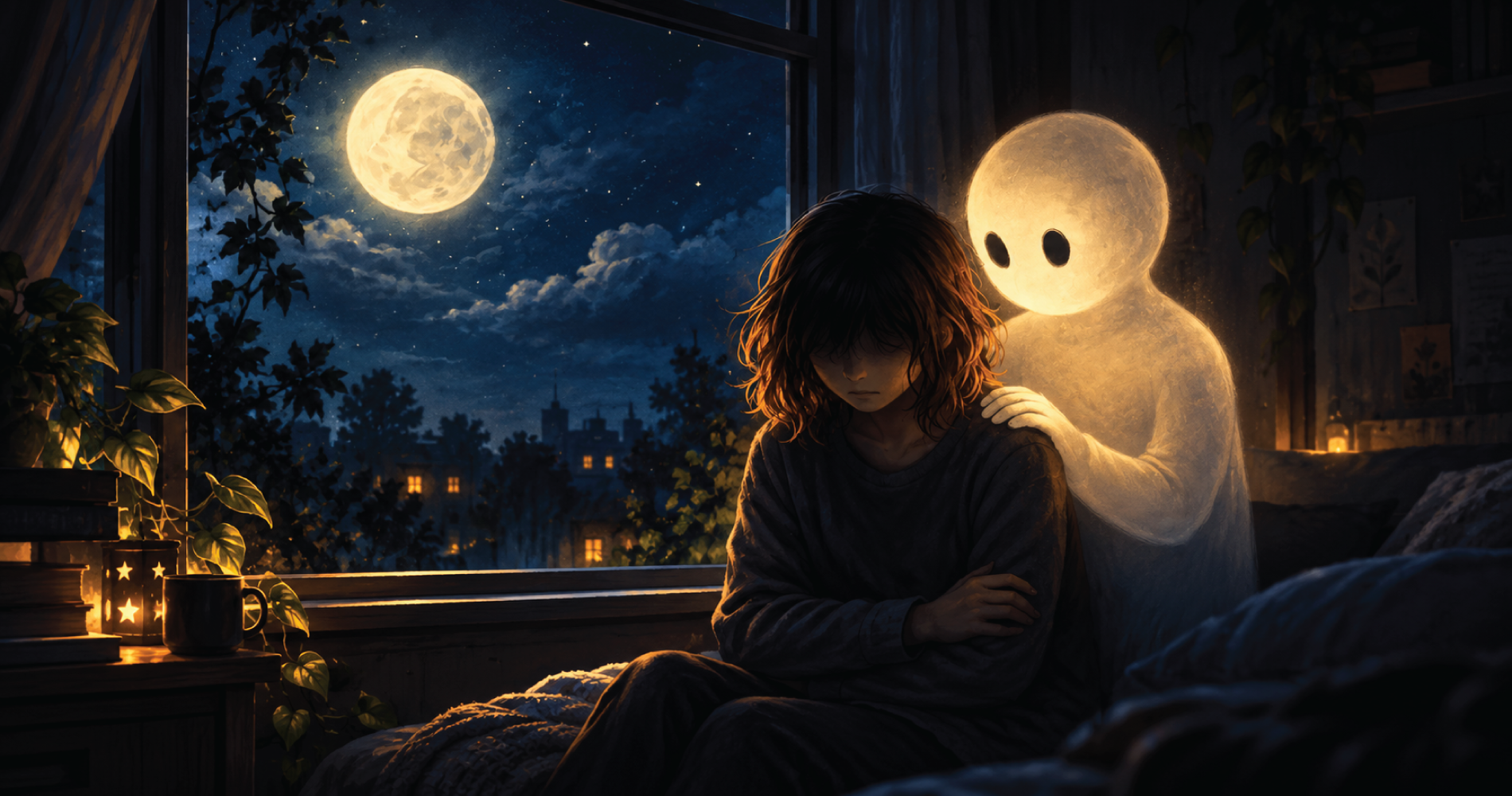
Sometimes the most frightening experiences at night are not about seeing but hearing. You are lying in bed and suddenly hear a whisper of your name from near the door. You turn to look, but there is no one there.
Perhaps you hear footsteps in the hallway or a knock on the wall, while no one is visible nearby. In such experiences, the sound can seem so real, as if it were truly present in your room itself.
Auditory experiences around sleep
Sleep-related hallucinations can include sounds as well as visual images. While falling asleep or waking up, some people hear whispers, buzzing, or footsteps, with no clear external source. These experiences may occur with or without sleep paralysis. Their occurrence by itself is not evidence of a mental health disorder, and a single episode is not enough to determine the cause.
Timing is important: voices heard while falling asleep or waking up may be interpreted differently from voices heard persistently while fully awake.
Why familiar voices can feel especially unsettling
Voice is a powerful social cue. Hearing someone’s name or recognizing a familiar voice can instantly capture our attention.
In a quiet environment or during a state of alert, the brain may interpret an indistinct sound as a distinct auditory experience. However, not every experience is interpreted through this process; it is also important to consider experiences related to environmental sounds and sleep.
Not every mysterious sound is supernatural. However, if you are repeatedly hearing unsettling sounds, it’s best to have them properly evaluated.
When should you seek help?
If unusual sensory experiences happen repeatedly while you are fully awake, cause substantial distress, interfere with sleep, or affect daily life, consider consulting a qualified healthcare professional. Seek prompt medical attention if the experiences begin suddenly alongside severe confusion, new neurological symptoms, or another urgent health concern.
The goal is neither to label every unexplained sound as paranormal nor to assume that every experience is harmless. It is to investigate what is happening with care and appropriate evidence.
Social media ghosts: When viral videos make the night feel different
It’s 1:46 AM. You’re watching a video on your phone when a video of an empty hallway appears. A faint shadow seems to be moving near the door. The person filming claims that no one else was in the house at that time. You are re-watching the video. You will also see a similar shadow near the door of your bedroom. For a moment, your room doesn’t seem like it used to be normal.
How scary content shapes expectations
The films employ techniques similar to those found in horror movies, such as low lighting, eerie sounds, sudden cuts, and incomplete information. Dark rooms, vague shapes, or added whispers can create a sound effect that encourages viewers to look for hidden dangers.
After watching several videos, you may become more aware of the shadows and sounds around you. Even a common reflection can remind you of the disturbing content you have seen. This is not evidence of a supernatural event, but rather an example of how our expectations can influence the interpretation of attention and vague information.
When the story follows you to bed
If frightening content leaves you anxious, you do not have to keep watching to prove that you are brave. Take a break, switch to something calming, or give yourself time to settle before sleeping.
The mind can continue thinking about a story after the screen goes dark. That does not mean the story has become reality. Sometimes, the most effective horror trick is simply to make you carry the image of a shadow into an otherwise ordinary bedroom.
Myth vs. Fact: What do we really know about nighttime hallucinations?
Paranormal stories often begin with an unexplained experience. But an unexplained experience is not the same as evidence for a supernatural cause.
Here are some common beliefs worth examining.
Myth 1: Seeing a dark figure beside your bed means a ghost is present.
Fact: Shadow figures can be reported during sleep paralysis and other perceptual experiences. A dark shape may also be an ordinary object that is difficult to identify in low light. The sighting alone does not establish its cause.
Myth 2: Sleep paralysis means a demon is holding you down.
Fact: Sleep paralysis is associated with the temporary persistence of REM-related muscle inhibition as awareness returns. Some people experience a sense of pressure or a threatening presence, but these sensations do not prove that a supernatural being is responsible.
Myth 3: Nightmares can predict future disasters.
Fact: Dreams can reflect emotions, concerns, memories, and expectations. A later event may feel similar to a dream, but resemblance and personal conviction are not sufficient evidence that the dream predicted the future.
Myth 4: Hearing a whisper at night means someone is trying to contact you from beyond.
Fact: Sounds experienced around sleep can sometimes be hallucinations, while other sounds may have ordinary environmental sources. The timing, frequency, and context are important when considering possible explanations.
Myth 5: Everyone who stares into a mirror in dim light will see a ghostly face.
Fact: Research has documented strange-face illusions under certain conditions, but individual experiences vary. These studies do not show that every person will experience the illusion or that a supernatural being is present.
Myth 6: If an experience feels completely real, it must have happened exactly as perceived.
Fact: The vividness of an experience does not independently establish its external cause. Dreams, illusions, and hallucinations can feel convincing while occurring. Further evidence is needed to determine what caused a particular experience.
Myth 7: Every paranormal account is a lie.
Fact: A person may sincerely describe something frightening or difficult to explain. Sincerity, however, does not establish the interpretation of the event. It is possible to respect someone’s experience while examining alternative explanations carefully.
The distinction between experience and explanation is essential. Science does not need to deny that a person felt frightened, saw a figure, or heard a sound. It asks what evidence supports the conclusion about what caused it.
What to do after a terrifying nighttime experience
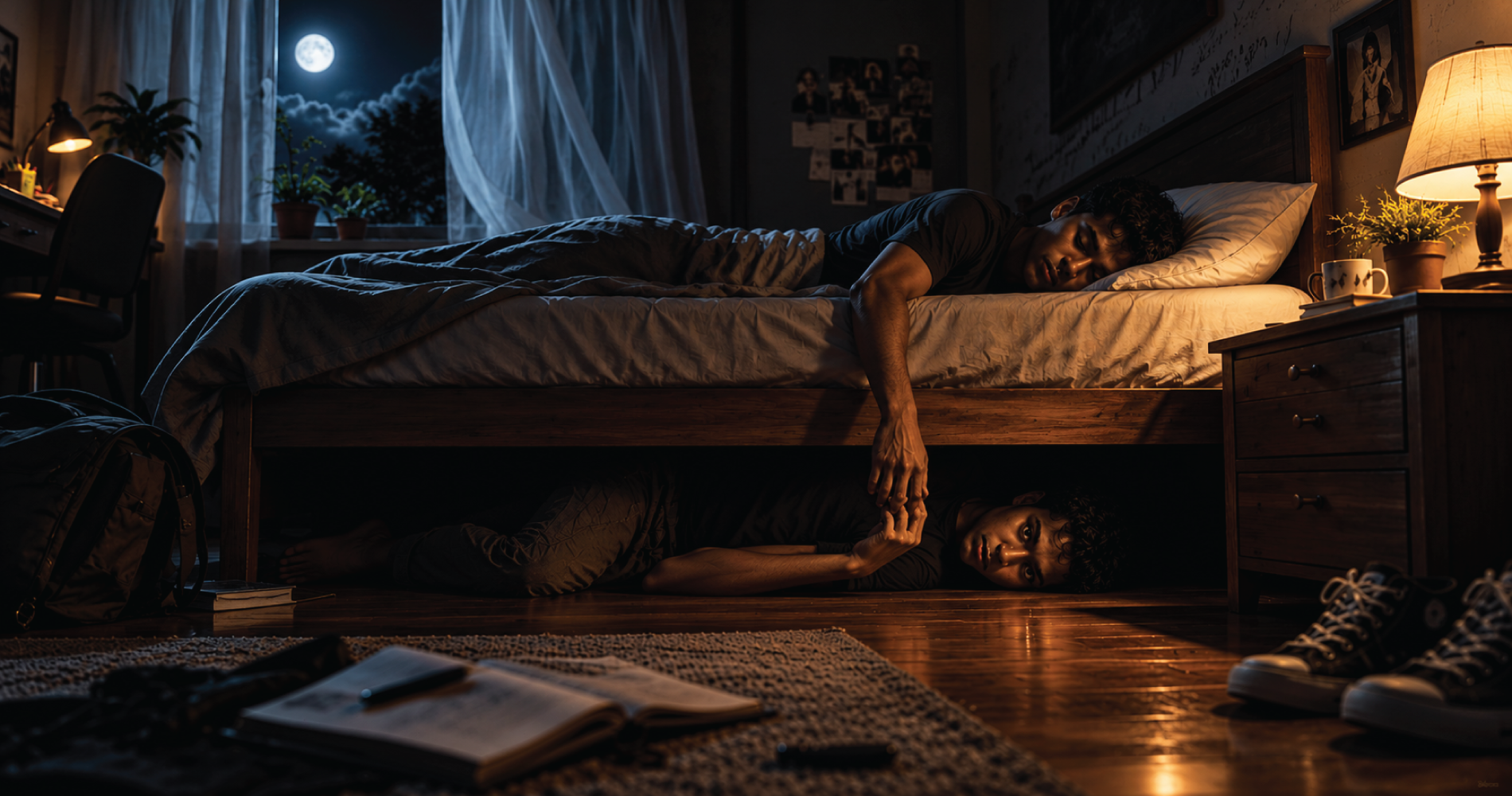
If you wake up unable to move, see a shadow, or feel that someone is standing beside your bed, the experience can leave you shaken even after it ends.
The following steps may help you respond calmly.
If you experience sleep paralysis:
- Remind yourself that sleep paralysis is generally temporary.
- Focus on gentle, steady breathing.
- If comfortable, try moving a small part of your body, such as a finger or toe.
- Once the episode ends, give yourself time to settle before trying to sleep again.
- Maintain a regular sleep schedule and aim for sufficient rest.
If you think you saw or heard something unusual:
- Turn on a light if you feel safe doing so.
- Check ordinary explanations, such as reflections, curtains, furniture, or sounds from outside.
- Avoid repeatedly staring into a mirror or searching the room if doing so makes you more distressed.
- Take a break from frightening content if it is affecting your sleep.
- If you feel unsafe because there may be a real intruder or another environmental danger, prioritize practical safety rather than assuming the experience is a hallucination.
Seek professional advice if sleep paralysis or nightmares recur, cause significant distress, lead you to avoid sleep, or occur alongside pronounced daytime sleepiness. Repeated unusual sensory experiences while fully awake also deserve appropriate assessment, especially if they interfere with everyday life.
An isolated frightening episode does not automatically indicate a medical or psychiatric disorder. At the same time, persistent symptoms should not be dismissed as ghosts or explained away without proper evaluation.
Understanding possible causes is not about making the experience seem unimportant. It is about helping you respond in a way that protects both your well-being and your sense of reality.
Conclusion: What if the ghost was never in the room?
Return to that bedroom at 3:07 a.m.
The figure has vanished. You can move again. The doorway is empty, and the familiar objects around you slowly look ordinary once more.
Yet the memory remains.
You remember the figure’s outline, the feeling of being watched, and the certainty that something stood beside your bed. Was it a dream, a hallucination, or something you cannot explain?
Sleep science offers possible clues. Sleep paralysis can temporarily prevent movement as awareness returns, while sleep-related hallucinations can create vivid images and sensations. Nightmares can leave lingering fear, and darkness and expectations can influence what we perceive.
Research on strange-face illusions suggests that even familiar faces can appear unfamiliar under certain conditions. Across cultures, folklore has explained frightening nighttime experiences through stories of spirits, demons, and unseen visitors.
These explanations do not prove that every unusual experience has the same cause. Nor does a vivid personal account establish that a supernatural entity was present.
Perhaps the most unsettling part is that fear arrives before understanding. In the darkness, uncertainty can feel like a threat.
So, if you wake suddenly and sense something watching you, pause before deciding what it means. Turn on the light, let your eyes adjust, and take a moment to recognize your surroundings.
If the room is empty, consider what made it feel occupied.
Sometimes, the most haunting part of a nighttime encounter is not the figure you thought you saw, but how completely your mind convinced you it was there.
If an experience feels like a ghost without proving one was present, how much of the terror comes from what we see, and how much from what we believe we are seeing?
Disclaimer
This article is intended for general educational and informational purposes only. It explores sleep paralysis, nightmares, hallucinations, visual perception, folklore, and psychological explanations for frightening nighttime experiences. It does not establish the existence or nonexistence of every supernatural claim and should not be used as a substitute for professional medical or mental health advice, diagnosis, or treatment. Research on mirror-gazing illusions describes experiences reported under particular experimental conditions; it does not demonstrate that supernatural entities are present. Individual experiences may have different causes. Consult a qualified healthcare professional if unusual sensory experiences, recurrent nightmares, or sleep disturbances cause persistent distress or interfere with daily life.
FAQs
1. Can sleep paralysis make you feel like a ghost is in your room?
Yes. Some people experiencing sleep paralysis report a sensed presence, shadow figures, or other vivid hallucinations. The combination of temporary immobility and fear can make the experience feel like a paranormal encounter, but the sensation alone does not prove that a ghost is present.
2. Why do I see shadow figures when I wake up at night?
Shadow figures may be associated with sleep-related hallucinations, particularly during transitions between sleep and wakefulness. In other situations, low light and ambiguous shapes can lead to visual misinterpretations. The cause depends on the circumstances of the experience.
3. Can nightmares feel like real paranormal encounters?
Yes. Nightmares can produce vivid imagery and intense emotions that linger after waking. Sleep-related hallucinations may also occur during the transition to wakefulness, sometimes making a figure, voice, or sensation seem to be part of the surrounding environment.
4. Why do people hear whispers or feel a presence while falling asleep?
Some people experience hypnagogic hallucinations while falling asleep or hypnopompic hallucinations while waking. These may involve sounds, images, touches, or a sensed presence. Similar experiences can have other causes, so persistent or distressing symptoms should be discussed with a healthcare professional.
5. Are nighttime hallucinations proof of paranormal activity?
No. A vivid or frightening experience does not independently establish a supernatural cause. Sleep-related phenomena, visual illusions, environmental sounds, and other factors can explain some experiences. The appropriate explanation depends on the evidence and the circumstances surrounding the event.

Content Writer with 3+ years of experience turning ideas into words people want to read, share, and remember. I create research-backed social media and lifestyle content that blends storytelling, creativity, and audience insights to make every piece feel fresh, relatable, and engaging.

One thought on “Was it a ghost or just a dream? The terrifying science of nighttime hallucinations”