
Abstract
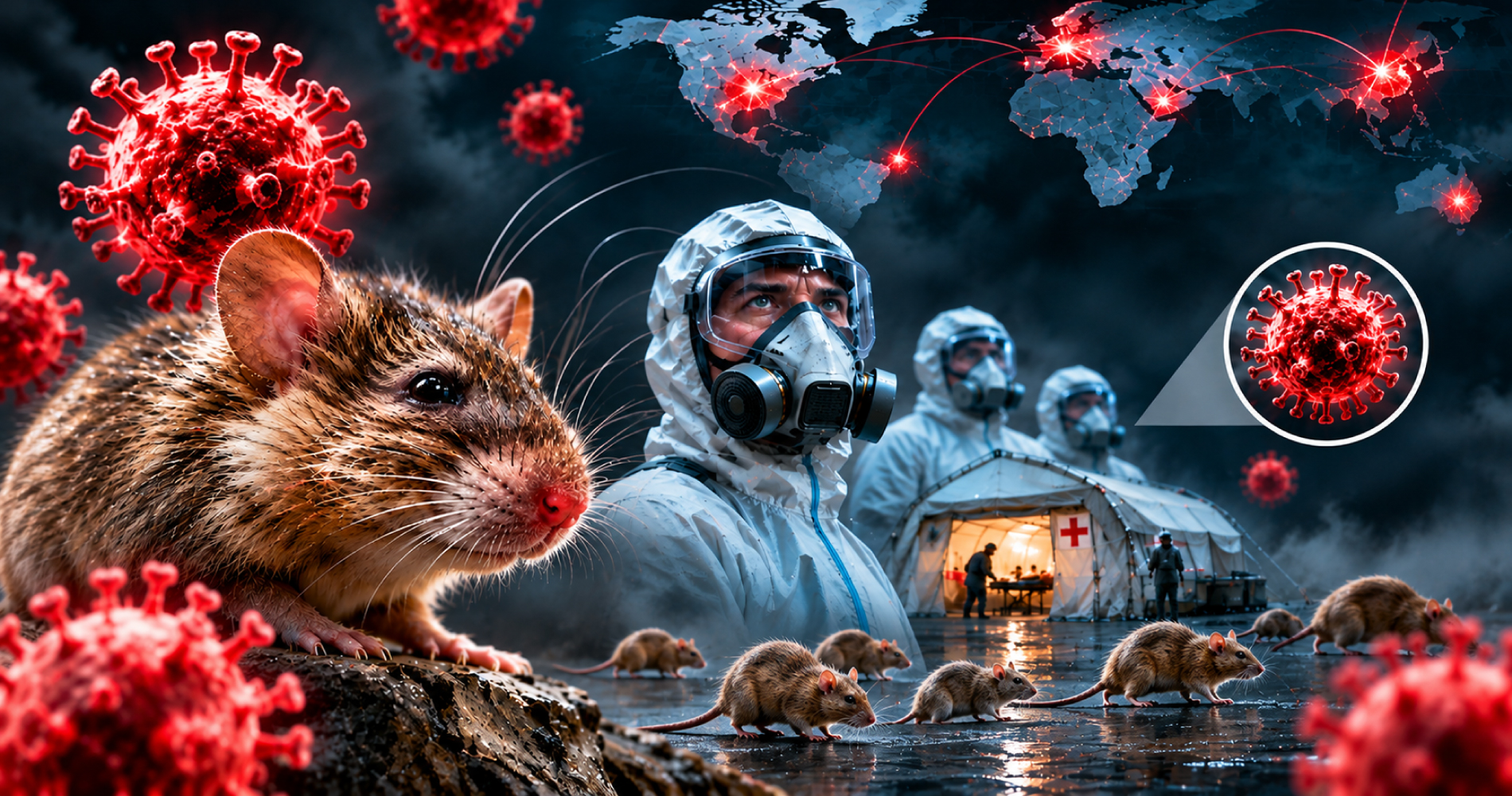
Hantavirus infections are something that sounds like a plot of an apocalyptic Netflix series. The cruise ship MV Hondius was infected while travelling in April and May 2026. This forced public health agencies from several countries to work together to put an end to this chaos before it turns into another plague.
The main culprit behind this was the Andes virus, which, apart from reaching humans from infected rats, also spreads between humans but with limitations. This entire incident highlighted the risks of international travel and the severity of the disease. Before anything major could happen, the virus was taken down in July with the support of joint medical teams.
To understand this virus deeply, it’s better to understand the symptoms, transmission, and how it affects the body.
Introduction
Let’s imagine there’s a traveller in the middle of the sea, and he gets a fever; many will think it’s a normal fever or seasickness. But if the same symptoms start causing difficulty in breathing and it spreads to others, then the concern increases. Along with medical experts, doctors had to take Patient Zero to hospital to trace how it got to him and how many of the other travellers were infected.
The investigation into the virus in the Hondius incident didn’t stay on the ship; it extended from sea travel to multiple countries. Multiple nationalities were present on the ship at the time, and many of them left before this case came to light. In a situation like this, it was really important to actually find them and their close contacts before it could’ve infected more people. The main villain of this story wasn’t the Hantavirus, but the limited time medical experts had to identify infected people and stop the spread.

What happened on MV Hondius?
The ship departed from Ushuaia, Argentina on 1 April 2026. The reports tell us that there were 147 people, including staff and travelers, on the ship at the time of the report of 4th may from the WHO. These included citizens of twenty-three nationalities. The concerning part was this list wasn’t the entire one but of the day this report was taken.
From Fever to Breathing Trouble
One passenger, the one they recorded properly, began with fever, headache, and mild diarrhea in the first week. By April 11, he had severe breathing problems and died the same day. The illness of other patients prompted the investigation to actually proceed. On May 2, a patient in serious condition was admitted to South Africa and tested positive for hantavirus infection. Later, the identity of the Andes virus came to light. This was just another pothole that made the entire investigation lengthy and complicated.
What the investigation revealed
The cruise ship outbreak, which was reported on July 2, had a total of 13 cases. 12 of the 13 cases were laboratory-confirmed, and 1 was patient zero. Three of these thirteen patients died.
According to the investigation led by WHO, the beginning of infection likely occurred on the ground before patient zero boarded the ship. After this, the infection spread among the victims. But the exact answer as to where and how the first contact occurred was not confirmed. So blaming rats, food, or any specific place isn’t the right approach.
The reports from international medical agencies also tell us that there were no rats on the ship. But it was important to look at the main transmitters and past connections for better understanding.
How the Response Crossed Borders
Laboratory testing, isolation care, and other important factors went hand in hand. The World Health Organization arranged for 2,500 test kits to be shipped from Argentina to laboratories in five countries that were prone to the next outbreak. This significantly helped the investigation to get further. Nobody wanted to have another coronavirus outbreak that was deadlier than that.

What exactly is Hantavirus
Many of you don’t know, but the name Hantavirus is not the name of one specific virus but a group of viruses. Some of these can cause serious illness in humans. Each one of them is associated with different breeds of rats. Animals like rats can keep the virus alive in them for a long time without appearing sick. That’s why it’s impossible to find an infected rat with the naked eye.
Some variants of hantaviruses on the continents of America primarily affect the lungs and heart. Some types can be found in Europe and Asia and damage the kidneys and blood vessels of the host. That’s why, considering that the symptoms or ways of infecting is same of every virus.
How Do Rodents Become Infected?
Just like humans, rats can get this virus from other infected rats. This virus runs in cycles in many wild species of rats. Biting in a fight over territory or breeding season is a way to spread
the virus to other rats. The virus present in their saliva plays a role in continuing this cycle, just like rabies.
Rats have good immunity and can survive the virus for a longer time before passing away. This does not mean that every rat you see is infected. Rather, what matters is the difference between specific species that we need to know about, their habitat, and exposure to infection. Also, thinking that a healthy-looking rat is safe can be unsafe.
How Does the Infection Reach Humans?
If we look at past cases, the most common way a person gets infected is by urine, salaiva and feces of infected rats. Contaminated dust can be blown in during cleaning in a closed room, warehouse, or house that has been vacant for a long time. There is a risk of infection when its particles reach the body through the breath. Rat bites are not necessary. Touching the nose or mouth after touching a contaminated object is also a possible route.
Can It Spread Between People?
When we talk about this, we need to make sure which virus we are talking about. Most hantaviruses have no recorded transmission from human to human; Andes virus is different in that. In this main case, the transmission was because of long-term contact with patient zero, staying close in a closed space, or through contact with bodily fluids.
This also doesn’t tell us that all the passengers were infected. There were multiple factors to consider. This is why monitoring people close to the patients was important. Even in the plane incident, health agencies took action on the basis of this difference. Cause the virus could have turned into a global pandemic.
Symptoms and the Need for Early Care
The concerning part is that the early symptoms of the virus look like a normal illness. Fever, fatigue, muscle pain, headache, vomiting, or upset stomach may occur. Major symptoms like low immunity and lung infection begin after a few days, but by then it’s too late. It’s very difficult for normal doctors to identify Hantavirus with just some basic medical practices in its beginning stage.
If we talk just about the Andes virus, the symptoms start to appear. This tells us that a person can complete a journey and can feel ill later, after a week. Telling the doctor about your environment and whether it’s infested with rats can help a lot in knowing if it’s Hantavirus.
Why Can Breathing Deteriorate Quickly?
In times of serious illness, fluid starts leaking out from the lining of the blood vessels. When fluid accumulates in the lungs, it becomes difficult for the body to get enough oxygen. Along with this, falling blood pressure can be another cherry on top, making the situation more fatal. To understand the condition of a victim, doctors look at signals like breathing, oxygen, and blood pressure.
World Health Organization has warned us that the mortality of this virus is 30 to 40%. Sounds low, but it’s very high for a disease. The ratio of deaths among recorded patients. It would be medically wrong to consider this as a possibility of death for every person who comes into contact with a rat. Multiple factors such as availability of treatment, the patient’s health, and other factors also play a role.
What Can Hospitals Do?
There is currently no specific approved antiviral treatment or available vaccine for Andes virus. Still, hospital treatment plays an important role. The patient may need oxygen, breathing support, heart monitoring, and carefully controlled fluids.
If you have trouble breathing along with a fever, seek help immediately from the nearest hospital’s emergency and trauma service or emergency department. Especially after possible exposure to infection, it is not advisable to wait at home with such symptoms. Doctors use blood tests and exposure history to move toward confirming the illness.
Why Did the Outbreak Raise Global Concern?
The number of patients in the ship incident was less complicated than the spread of their contacts. Some people left the ship, some took flights, and some received care in another country. Health officials identified and monitored more than 650 contacts across 33 countries and territories. These 650 people were not infected. They were people whose contacts and health needed to be checked.
The World Health Organization had described the risk to the general population worldwide as low even during the initial response. Severe disease and a disease that spreads easily are not the same thing. The fact that an infection is life-threatening for patients does not in itself prove that it will spread worldwide like COVID.
When asking “is hantavirus spreading,” both the date and the place should be considered. The World Health Organization declared this particular ship outbreak over on 2 July 2026. Monitoring of the final contacts had been completed, and no new cases had been reported after 25 May. This is the outcome of that incident, not a claim that all types of hantavirus have disappeared from the world.
A report from the U.S. Centers for Disease Control and Prevention dated 5 November 2026 clarified the subsequent picture. Officials had monitored 88 U.S. residents who may have been exposed and found no secondary Andes infections among them. Here, a secondary infection means an infection passed from an infected person to someone else. This finding applied to that monitored group.

Is Hantavirus Present in India?
For Indian readers, whether hantavirus is present in India is an important question. Evidence of hantavirus infection in India has been found in earlier research. A study published in 2009 by researchers in Vellore found antibodies associated with the infection in patients with fever and genetic evidence in some samples. The genetic sequences found were related to the Hantavirus.
But this research does not confirm that the ship-associated Andes virus has spread to India. It is an old study involving a limited number of patients, not an estimate of the number of infections across the country today. Combining data from different places, different viruses, and different times to draw an alarming conclusion would mislead readers. To understand current risks, up-to-date information from local health departments, the patient’s exposure history, and appropriate testing are essential.
Prevention Starts with Safer Cleaning
Seal off entry points that mice could use to get into your home, store food in covered containers, and keep garbage secure as initial steps. When cleaning, do not sweep or vacuum dry droppings. This can stir contaminated particles into the air. Before cleaning an enclosed space, open doors and windows to let in fresh air.
Wear gloves and thoroughly wet any area with mouse droppings or urine using an appropriate disinfectant. Let it sit for the time specified in the product instructions, then clean it up with paper towels and put the waste in a covered container. Wash your hands after removing your gloves. If there are many mice or a lot of contamination, seek help from trained professionals. These precautions are intended to reduce contact with contaminated dust during cleaning.
Conclusion
The story of the MV Hondius shows that even a limited outbreak can become an international challenge when people’s journeys connect multiple countries. That is why it is essential to identify the disease early, get treatment to patients, and monitor contacts—all at the same time.
To understand hantavirus, it is more useful to know its type and route of exposure than to panic at the name. The outbreak on the ship was brought under control, but this does not diminish the need for safe cleaning and recognizing serious signs of illness. When reading a news story, check its source and date. When needed, accurate information can help you seek assistance in time.
Disclaimer
This article is for general information and health awareness. With the data widely available on the internet, it is not a substitute for personal examination, a doctor’s advice, or treatment. If you suddenly develop a fever or other symptoms after possible exposure, contact a doctor. This article is not made to create panic. If you have difficulty breathing, seek emergency help immediately. Do not diagnose yourself based on a news story or a list of symptoms. Doctors can be expensive, but not as expensive as your life.

A passionate health and lifestyle content writer dedicated to making complex medical and psychological topics easy to understand. With a focus on mental health, lifestyle, and overall well-being, I curate informative, research-based articles that help readers better understand their health and make informed decisions. The goal is to spread awareness, simplify health information, and encourage healthier living.