
Abstract
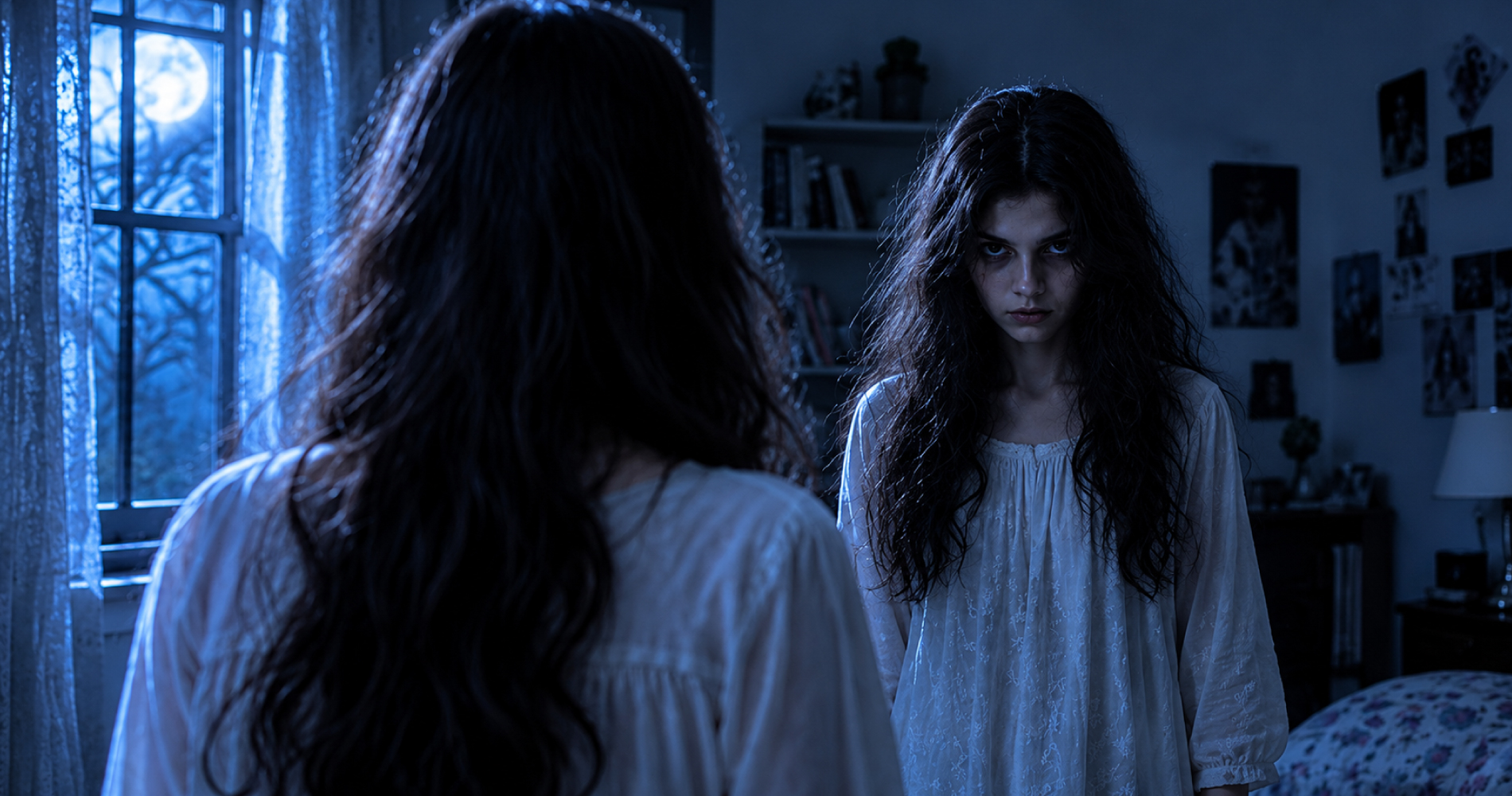
What if you woke up at 3 AM, looked towards your bedroom door, and saw someone standing there who looked exactly like you? Same face, same clothes, same eyes. You blink, rub your eyes, and look again, but the stranger hasn’t disappeared. The terrifying part? You’re the person standing right there, too.
Sounds like a paranormal nightmare, doesn’t it?
Known as the doppelgänger phenomenon, seeing your own double has fascinated people for centuries. While folklore describes it as a supernatural warning or the appearance of an evil twin, neuroscience connects certain experiences of seeing one’s own body to unusual brain activity, visual hallucinations, and disturbances in self-perception.
One particularly fascinating phenomenon is an autoscopic hallucination, in which someone experiences seeing a duplicate of their own body.
But how can your brain make you see another version of yourself? Could it be connected to neurological disorders, an out of body experience, or something paranormal?
Let’s explore the creepy science behind the doppelgänger effect and discover what happens when your own brain makes you question your identity.
Introduction: What If You Saw Your Own Ghost?
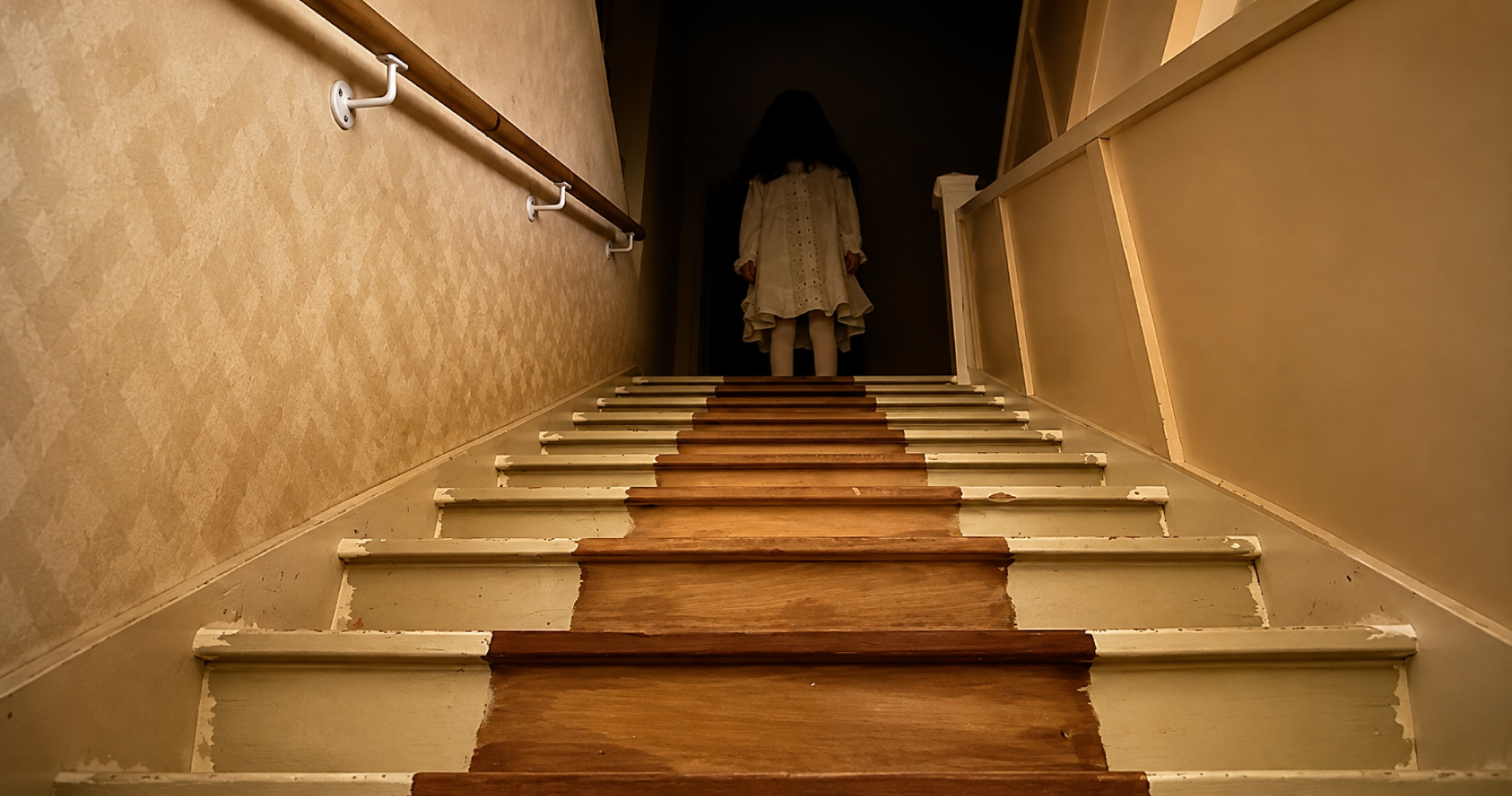
Imagine walking through an empty hallway when you suddenly notice someone approaching you. You recognize their face immediately. It’s your face. You stop walking. The other person stops, too.
You raise your hand, but the figure doesn’t move like a normal reflection. It simply stares at you. Now imagine discovering that nobody else can see it.
For centuries, stories about people encountering their own doubles have appeared in folklore, literature, and paranormal accounts. These mysterious figures are commonly called doppelgängers.
Traditionally, seeing your own doppelgänger was considered a bad omen, sometimes associated with illness, misfortune, or death. However, modern neuroscience has discovered that the human brain can produce unusual experiences involving the perception of one’s own body.
These experiences raise fascinating questions about visual hallucinations, identity, consciousness, and how the brain understands the difference between ourselves and other people.
And here’s the real mystery: what if the scariest ghost you encounter isn’t a dead person but a distorted version of yourself?
What Is a Doppelgänger? The Paranormal Belief Behind Seeing Your Own Double
The word “Doppelgänger” originates from German, combining “doppel,” meaning “double,” and “gänger,” meaning “walker.” It traditionally describes an identical-looking duplicate of a living person.
Unlike an ordinary lookalike, a paranormal doppelgänger is believed to be a mysterious double that appears independently of the original individual. Different folklore traditions have associated these figures with several unsettling beliefs:
- An Omen of Death: Some European legends considered seeing your own double a warning of approaching death or misfortune.
- The Evil Twin: Certain stories describe a doppelgänger as a darker or more sinister version of the original person.
- The Spirit Double: Some supernatural interpretations suggest that a person’s spirit can appear separately from their physical body.
- The Shadow Self: Other interpretations connect the double with hidden aspects of an individual’s personality or identity.
These beliefs have helped make doppelgängers a popular subject in horror stories and paranormal investigations.
But are ghosts real? And could a mysterious duplicate actually be a spirit?
There is currently no reliable scientific evidence establishing that doppelgängers are supernatural entities. However, documented neurological experiences provide another explanation worth exploring.
The Brain Behind the Double: Can Your Mind Create Another You?

Your brain performs something incredible every second: it creates your sense of being yourself. You recognize your face, understand where your body is positioned, feel your hands moving, and distinguish your physical presence from everything around you.
This process involves several sensory systems working together. Some important contributors include:
- Vision: Helps you understand your body’s appearance and its position in the surrounding environment.
- Proprioception: Allows you to sense the position and movement of your body without constantly looking at it.
- Touch: Helps your brain process physical contact and bodily sensations.
- Vestibular System: Contributes to balance, spatial orientation, and awareness of movement.
Your brain combines these signals to create a consistent experience of having one physical body.
But what happens when these signals become disrupted? In certain neurological conditions, the brain may process information about the body and its location differently. This can contribute to unusual experiences involving self-perception.
In some cases, people report seeing another version of their own body. Basically, your brain’s understanding of who you are and where you are isn’t as straightforward as it seems.
Autoscopic Hallucination: What Happens When You See Yourself Outside Your Body?
Here’s where the doppelgänger mystery gets genuinely creepy. An autoscopic hallucination is a rare perceptual experience in which someone sees a visual duplicate of their own body in the surrounding environment.
Imagine sitting on your bed and suddenly seeing another version of yourself standing near the window.
You recognize the figure as yourself, but it appears to exist separately from your physical body. That’s the basic idea behind autoscopy. Some commonly reported characteristics include:
- Seeing a duplicate of your own body in external space.
- Recognizing the figure as yourself.
- Experiencing the duplicate as a separate visual presence.
- Remaining aware of your original physical location.
These experiences are different from seeing your reflection in a mirror or mistaking another person for you.
Autoscopic hallucinations belong to a broader group of unusual perceptual experiences involving body awareness and self-recognition. They have been reported in association with certain neurological conditions, including epilepsy and other disturbances affecting brain function.
However, not every person experiencing visual hallucinations has the same underlying condition. And seeing your own double doesn’t automatically mean you’re experiencing a psychiatric disorder.
Heautoscopy: When You Cannot Tell Which Version Is Actually You
What could possibly be worse than seeing your own double? Not knowing which version of yourself is actually you.
Heautoscopy is another rare phenomenon related to autoscopic hallucinations. It involves seeing a duplicate of oneself while experiencing disturbances in the feeling of self-location or identity.
Unlike ordinary autoscopy, the experience may involve uncertainty about whether the original person or the duplicate is the one occupying the physical body. Some reported characteristics include:
- Seeing an identical version of yourself.
- Feeling connected to the duplicate.
- Experiencing confusion about your physical location.
- Feeling as though your identity is shifting between two bodies.
Researchers associate these experiences with disturbances in bodily self-awareness and the brain’s ability to integrate sensory information.
Imagine looking across the room and recognizing another person as yourself while simultaneously feeling that your own identity belongs to both places. It’s not simply a frightening visual experience. It challenges the very feeling of being one individual in one body.
The Neuroscience of Seeing Your Own Ghost

So, which part of the brain could be responsible for such an unusual experience? One important region researchers investigate is the temporoparietal junction (TPJ).
Located where the temporal and parietal regions meet, this brain area contributes to integrating different types of sensory information. It plays a role in processes involving:
- Body Awareness: Understanding the relationship between your physical body and your surroundings.
- Spatial Orientation: Recognizing where your body is positioned in space.
- Sensory Integration: Combining visual, touch, and other bodily information.
- Self-Perception: Contributing to the feeling that your body belongs to you.
Research involving unusual self-perception and out of body experience has highlighted the importance of networks involving the temporoparietal junction.
Disruptions in these networks may contribute to experiences in which someone feels detached from their body or perceives their physical self from another location.
However, the TPJ isn’t a single switch responsible for every hallucination. Self-perception involves several interacting brain regions.
The fascinating part is that your sense of identity is continuously constructed through complex neurological processes. When these processes become disrupted, your experience of yourself can become surprisingly unfamiliar.
Out of Body Experience: Can You Actually See Yourself From Outside?
Ever wondered what it would feel like to float above your own body and watch yourself sleeping?
That’s the basic idea behind an out of body experience (OBE). During an out of body experience, someone feels as though their point of awareness has moved outside their physical body.
Some people describe seeing themselves from above, while others report floating sensations or feeling separated from their physical form. These experiences have been reported in different circumstances, including:
- Sleep-related experiences.
- Extreme physiological stress.
- Certain neurological conditions.
- Experiences associated with altered states of consciousness.
Although out of body experiences can feel incredibly realistic, they do not establish that consciousness has physically left the body. Researchers investigate how changes in sensory integration, spatial awareness, and body perception may contribute to these sensations.
Interestingly, autoscopic hallucinations and out of body experiences are related but different. In autoscopy, someone sees a duplicate of their body while generally remaining in their original location. During an out of body experience, the person feels located outside their physical body.
Both raise one fascinating question: how does your brain decide where you actually are?
Neurological Disorders and the Mystery of Visual Hallucinations
Visual hallucinations are experiences in which someone sees objects, people, figures, or other visual images that are not actually present in the surrounding environment.
They can range from simple flashes of light and shapes to detailed images of human figures.
Several medical conditions may be associated with visual hallucinations, including:
- Epilepsy: Certain seizures can involve unusual visual experiences.
- Migraine: Some people experience visual disturbances, including patterns, flashes, or other visual phenomena.
- Parkinson’s Disease: Visual hallucinations can occur in some individuals, particularly as the disease progresses.
- Lewy Body Dementia: Recurrent, sometimes detailed visual hallucinations are a recognised feature.
- Certain Brain Injuries: Changes affecting visual processing and other neurological functions can produce unusual perceptions.
Another condition worth understanding is functional neurological symptom disorder (FND).
FND involves genuine neurological symptoms caused by changes in how the brain functions rather than a structural neurological disease that explains the symptoms. It can involve movement difficulties, sensory changes, seizures, and other symptoms.
However, it is important not to assume that autoscopic hallucinations or seeing a doppelgänger automatically indicate FND. Different experiences have different possible causes and require appropriate medical assessment.
The takeaway? The human brain can produce incredibly complex perceptual experiences, and not all of them have a supernatural explanation.
Dissociation and Depersonalization: When You No Longer Feel Like Yourself
Have you ever looked at your hands and briefly felt disconnected from them, almost as if you were watching someone else’s body? This sounds like something straight out of a horror movie, but experiences of detachment from oneself are associated with a psychological phenomenon called depersonalization.
Depersonalization involves feeling disconnected from your own body, thoughts, emotions, or identity. People may describe experiences such as:
- Feeling like an outside observer of their own life.
- Feeling emotionally disconnected from their surroundings.
- Experiencing their body as unfamiliar.
- Feeling as though they are watching themselves in a movie.
Derealization is another related experience in which the surrounding world feels unreal, distant, or dreamlike.
These experiences can occur in depersonalization-derealization disorder and other circumstances involving psychological distress. However, feeling detached from yourself is not the same as visually seeing another version of your body.
Both experiences demonstrate how complex the relationship between the brain, psychological processes, and personal identity can be.
Sleep Paralysis: Why Do People See Mysterious Figures at Night?
It’s 3 AM. Your eyes are open, but your body refuses to move. You try calling for help, but no sound comes out. Then you notice a dark figure standing near your bedroom door.
This is one of the most frightening experiences associated with sleep paralysis. Sleep paralysis occurs when someone becomes conscious while the temporary muscle paralysis associated with REM sleep is still present. During these episodes, people may experience:
- Temporary inability to move or speak.
- A feeling that someone is watching them.
- Visual or auditory hallucinations.
- Intense fear and pressure-like sensations.
Some individuals report seeing shadow people, human-like figures, or threatening entities. These experiences are connected to the unusual overlap between dreaming and wakefulness.
Although sleep paralysis can produce vivid supernatural-looking experiences, it does not prove that a ghost or paranormal entity is present. Your brain can create some seriously convincing nightmares even when your eyes are open.
Why Is Seeing Your Own Double So Terrifying?
Here’s an interesting psychology fact: humans are naturally sensitive to familiar faces and patterns. Your brain recognizes your appearance through repeated exposure. You know what your face looks like, how you move, and how your expressions change.
Now imagine encountering an identical version of yourself in a situation where that should be impossible. Your brain recognizes the figure, but the situation contradicts everything you understand about your identity.
This connects with the concept of the uncanny valley, which describes the discomfort people may experience when something looks almost human or familiar but feels strangely wrong.
Although the concept is often discussed in relation to realistic robots, dolls, and artificial human faces, it also offers an interesting way to understand the discomfort associated with an almost-perfect duplicate.
Some fascinating psychology facts about human behavior revolve around how the brain responds to familiarity, unexpected patterns, and perceived threats. Your own face is supposed to belong to you.
Seeing it somewhere else challenges that expectation. And sometimes, the most frightening thing isn’t what you don’t recognize. It’s what you recognize a little too well.
Can Science Explain Every Doppelgänger Encounter?
Not every experience involving a mysterious double has a confirmed explanation. Neuroscience has identified several processes associated with autoscopic hallucinations, altered body perception, and out of body experience.
However, these experiences are rare and complex, and researchers are still investigating how different brain networks contribute to them. A mysterious figure could be a misinterpreted shadow, a reflection, a sleep-related hallucination, or an experience associated with a neurological condition.
Paranormal interpretations remain part of cultural beliefs and personal accounts, but they have not been scientifically established. The important thing is to distinguish between an experience that feels real and an explanation that has been proven.
If someone repeatedly experiences visual hallucinations or disturbing changes in perception, seeking medical evaluation is important. Science may not have answered every question about consciousness, but it gives us a fascinating starting point for understanding the human mind.
Conclusion: What If the Scariest Stranger You Meet Is Yourself?
The doppelgänger phenomenon sits at a fascinating intersection of paranormal folklore, psychology, and neuroscience.
For centuries, people have feared encountering their own doubles. Some considered these mysterious figures supernatural warnings, while others believed they represented a second version of the soul.
Modern neuroscience offers another perspective through autoscopic hallucinations, unusual sensory processing, and disturbances in self-perception.
But here’s the real mystery: how does the brain create our sense of being ourselves, and what happens when that system stops working as expected?
Perhaps the most unsettling part of the doppelgänger effect isn’t the possibility of meeting a ghost.
It’s discovering just how strange your own mind can be.
Disclaimer
This article is intended for general educational and informational purposes only. It does not replace professional medical advice, diagnosis, or treatment. Visual hallucinations and unusual perceptual experiences can have different neurological, psychological, or sleep-related causes. Anyone experiencing recurring or distressing hallucinations should consult a qualified healthcare professional.
FAQs
1. What is the doppelgänger effect?
The doppelgänger effect refers to the experience or belief of encountering an identical version of oneself. Paranormal folklore associates it with supernatural doubles, while neuroscience examines related experiences through autoscopic phenomena.
2. What is an autoscopic hallucination?
An autoscopic hallucination is a rare visual experience in which someone sees a duplicate of their own body in external space while generally retaining their original sense of physical location.
3. Can neurological disorders cause someone to see their own double?
Certain neurological conditions, including epilepsy and disturbances involving brain function, have been associated with autoscopic experiences and other visual hallucinations. The underlying cause varies between individuals.
4. Are ghosts real, or can the brain create paranormal experiences?
There is no reliable scientific evidence establishing that ghosts exist. However, sleep-related hallucinations, neurological disturbances, and altered sensory processing can create experiences that may feel supernatural.
5. Is seeing your own double a sign of functional neurological symptom disorder?
Not necessarily. Functional neurological symptom disorder can involve various genuine neurological symptoms, but seeing a duplicate of oneself is not enough to diagnose FND. A healthcare professional must evaluate the symptoms and their possible causes.

Content Writer with 3+ years of experience turning ideas into words people want to read, share, and remember. I create research-backed social media and lifestyle content that blends storytelling, creativity, and audience insights to make every piece feel fresh, relatable, and engaging.