
Abstract
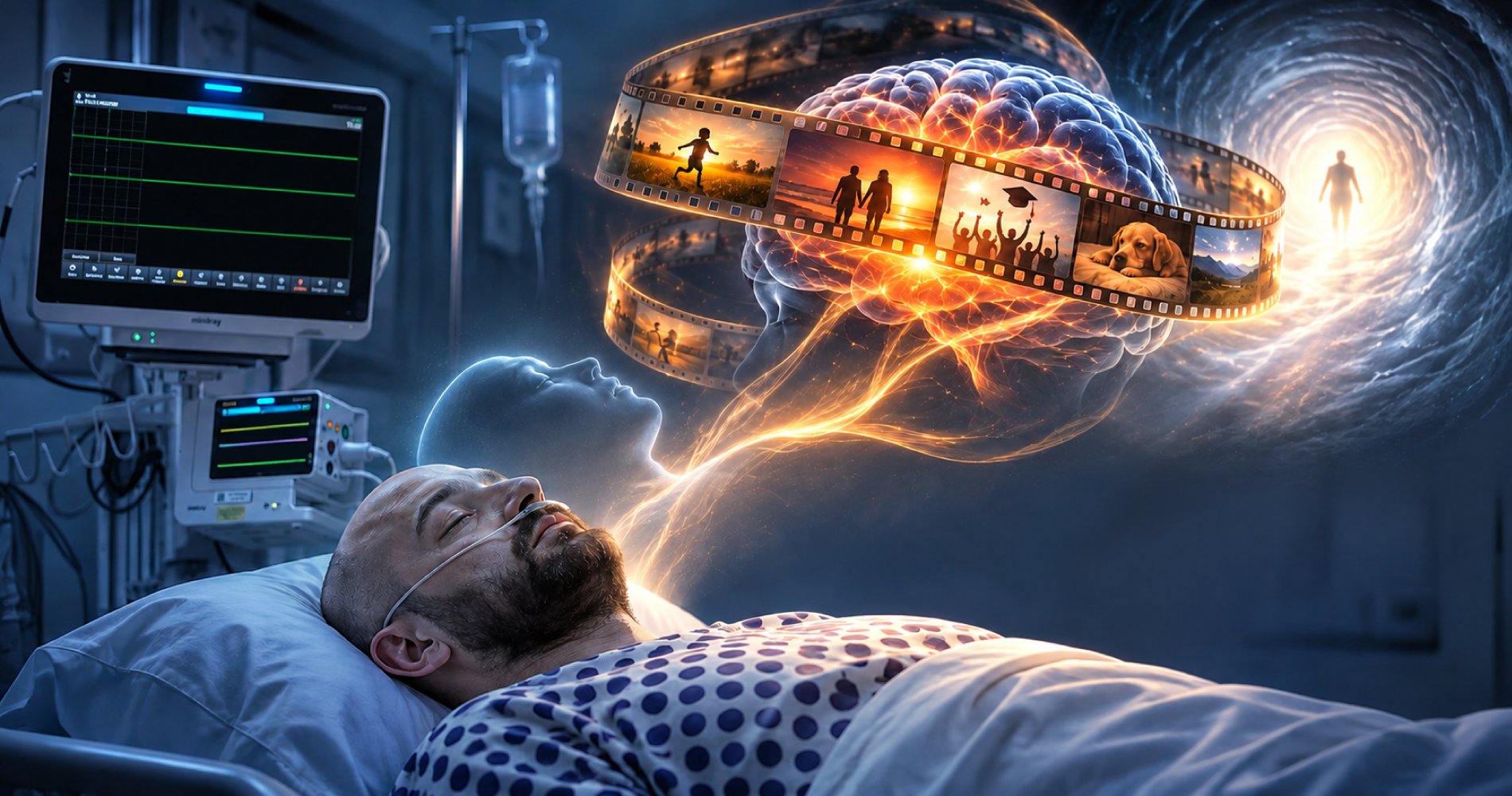
We often see reels in social media claiming that when you die, your brain replays your entire life during the last 7 minutes. Childhood memories, forgotten experiences, your close ones, and emotional moments, all of it starts to appear before your eyes like one last film. But is there really any scientific basis behind this viral theory?
Research shows that during the process of death, the human brain may show sudden bursts of electrical activity for some time, even as the heart is stopping. Some of these patterns resemble brain activity seen during processes related to memory and consciousness. Scientists are trying to understand whether these signals can help explain events like near-death experiences and memories of life suddenly coming to mind.
But does that mean that after death, your brain actually replays your entire life for seven minutes? Let’s understand the science behind the Last 7 Minute Theory, find out what happens inside the dying brain, and separate scientific facts from the claims spreading on the internet.
Introduction: What happens inside your brain during the last 7 minutes of life?
We have all seen reels related to the last 7 minutes theory, in which it is claimed that as soon as a person dies, their brain starts playing a film of their entire life. Childhood memories, first friendships, the happiest moments, embarrassing experiences, and the people closest to them, all of it supposedly starts appearing before their eyes one last time.
It sounds a little emotional and scary, doesn’t it?
But this is where the science becomes interesting. Scientists have found that immediately after the heartbeat stops, the brain’s electrical activity does not necessarily become completely quiet right away. In some situations, researchers have observed sudden, organized signs of electrical activity during the process of death.
Some of these signs resemble patterns linked to memory, processing information, and consciousness-related processes. This raises an interesting question: can the brain do something in its final moments that we cannot even imagine?
A report published by Health & Me discusses the possibility that organized electrical signals in the dying brain could help explain events such as near-death experiences and the sudden emergence of life memories. However, scientists have not yet proven that every person sees a replay of their life memories for seven minutes. So is the Last 7 Minute Theory scientifically possible, or has social media turned neuroscience into a dramatic story? Let’s understand what the research actually says.
What exactly is the last 7 minutes theory?
The Last 7 Minutes Theory is a popular belief according to which, after death, the human brain continues to work for about seven minutes and replays the important memories of a person’s life. According to this theory, the brain recalls important experiences from life again, including childhood moments, relationships, achievements, and emotional memories. It is often described as being like watching a film of your entire life, after which consciousness ends.
This idea became especially popular because some near-death survivors have said that they experienced extremely vivid memories or a life review during life-threatening situations. However, it is important to understand one important difference here.
Telling that a person has felt an experience and proving the scientific reason behind that experience are two different things. Researchers have observed electrical activity in some dying brains, but there is no solid scientific evidence to confirm that this activity is a replay of memories from an entire lifetime or that it lasts exactly seven minutes.
To understand why scientists are interested in this theory, we need to look at what happens inside the brain when the heart stops beating.
What happens to your brain when your heart stops beating?
Your brain is one of the most energy-demanding organs in the body. To maintain normal neuronal activity, it constantly needs oxygen and glucose. When the heart stops pumping blood effectively, blood circulation to the brain is disrupted. This reduces the supply of oxygen and nutrients needed for the brain to function normally. As a result, two important conditions can occur:
- Cerebral Ischemia: This means that an adequate amount of blood does not reach the brain. Without sufficient blood circulation, brain cells do not get the resources they need to function normally.
- Cerebral Hypoxia: This condition occurs when the brain tissue does not get enough oxygen. A lack of oxygen can disrupt electrical communication between neurons and affect important cellular processes.
Does the brain immediately switch off?
It is not necessary that it be exactly as we imagine. When blood circulation stops, the brain’s functioning begins to be affected rapidly. It becomes difficult for neurons to maintain their electrical balance, and normal communication between different parts of the brain starts to be disrupted. However, not every cell and electrical process stops at the same time.
A systematic review published in 2016 examined 39 studies on brain function during circulatory arrest. It found that in most of the studies included after sudden blood circulation stopped, measurable EEG activity disappeared within about 30 seconds.
But that does not mean that every cell in the brain dies immediately. It is important to understand that electrical activity, consciousness, and the survival of individual brain cells are three different things. And this is where the most interesting scientific discovery related to the dying brain emerges.
The surprising discovery: Can the brain become more active before death?
Usually, we think that as the body gets closer to death, brain activity keeps decreasing continuously. But research has shown that in some dying brains, sudden strong signs of electrical activity can appear.
A specific study related to this was published in 2023 in the journal Proceedings of the National Academy of Sciences (PNAS). Researchers at the University of Michigan studied EEG recordings of four patients in a coma who were dying after life-support ventilation was removed.
The researchers observed some unexpected things. In two of these four patients, a significant increase in gamma brainwave activity was seen. The scientists also recorded an increase in communication between certain parts of the brain. But why is this so important?
Gamma activity is associated with information processing, memory-related processes, and some activities related to consciousness. Researchers also observed increased connectivity in the back part of the brain, which is sometimes called the posterior cortical hot zone. This area is considered important in the study of processes related to consciousness. These findings suggested that even a dying brain during severe oxygen deprivation can show organized electrical activity.
However, there is a major limitation: this study included only four patients, and increased Gamma activity was seen in only two of them. The researchers could not prove that these patients were consciously experiencing something or replaying their memories.
In other words, a dying brain can show surprising activity, but that does not mean it is playing the final film of someone’s life.
Gamma waves: What are they doing inside your dying brain?
Let’s understand one of the most interesting parts of research. Gamma waves are patterns of high-frequency electrical activity in the brain. Usually, their frequency is considered to be about 30–100 Hz, although their definition can vary in research. They are involved in many neurological processes in the brain, such as
- Attention and processing information.
- Memory-related activities.
- Communication between different parts of the brain.
- Integration of sensory information.
- Some processes related to consciousness.
When our brain works normally, its different parts communicate with each other through organized electrical patterns. Scientists study these patterns to try to understand how the brain processes information.
In the 2023 study on dying brains, increased communication between gamma activity and brain regions was observed in two patients. One possible explanation for this is that severe oxygen deprivation can change the balance of the brain’s electrical activity, which can create abnormal patterns of communication between neurons.
Researchers have suggested that these patterns may appear similar to some neural processes associated with consciousness. But here is an important point: Gamma waves are not a way to directly measure a person’s thoughts. EEG can record electrical activity, but it cannot tell scientists whether a person is seeing childhood memories, thinking about their loved ones, or experiencing a final review of their life.
Can your brain replay memories during its final moments?
Now let’s come to the question that makes the Last 7 Minute Theory so interesting. To understand whether memories can come up during the process of death, we first need to understand how the brain processes them.
Memories are not stored like video files in one specific brain region. Instead, different parts of the brain work together to form, organize, and help recall experiences. Some important brain regions are:
- Hippocampus: It plays an important role in forming new memories and storing them for a long time, especially memories connected to personal experiences.
- Amygdala: It helps process emotional information. Because of this, it is important in understanding why some emotional experiences remain memorable for a long time.
- Cerebral Cortex: Its different parts contribute to preserving and recalling different aspects of memories, including visual, sound, and other sensory experiences.
- Prefrontal Cortex: It helps with working memory, decision-making, and organizing information while recalling memories.
When you remember your childhood home or a conversation with an important person, several networks in the brain work together to reconstruct that experience. Researchers have suggested the possibility that the abnormal electrical activity that occurs during the process of death may be related to memory-related processes.
However, this is still only a possible scientific explanation, and it remains to be confirmed. At present, there is no direct evidence showing that the brain systematically recalls every important memory in the last seven minutes of life.
Near-death experiences: Why do some people see their lives flash before their eyes?
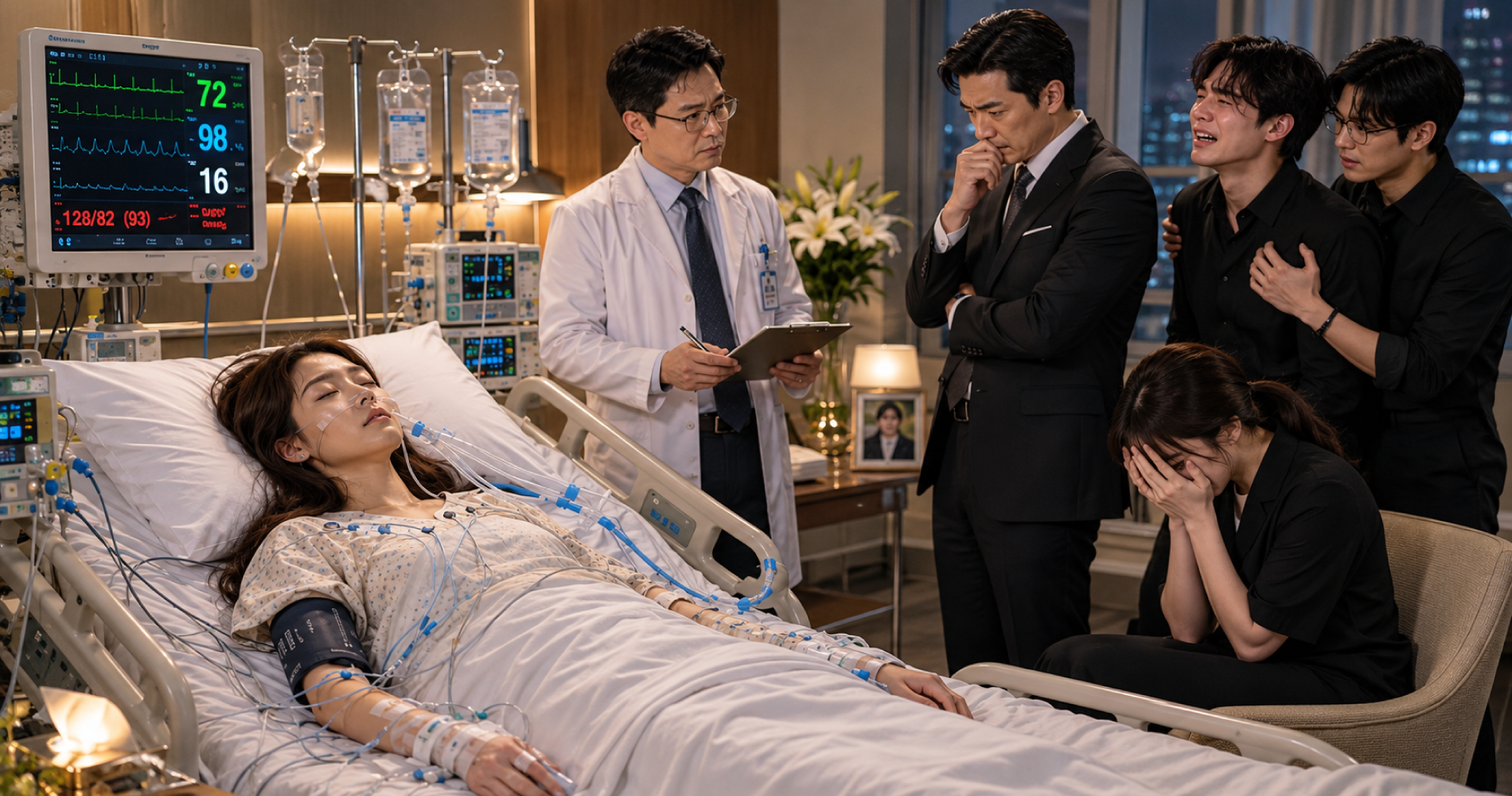
Have you ever heard someone say that during a life-threatening situation they saw a bright light, felt separated from their body, or suddenly had many memories of their life come before them? These experiences are usually called Near-Death Experiences (NDEs).
These are personal experiences that some people describe after surviving situations involving serious physical danger. Some common features of these experiences are:
- Life Reviews: Some people say that memories of different stages of their life suddenly started appearing before them. These may include emotional moments and important relationships.
- Out-of-Body Experiences: Some people feel as if they are seeing their body from outside.
- Bright Lights and Tunnels: Some individuals describe seeing a bright light or experiencing movement through a tunnel-like place.
- Altered Time Perception: Some people feel that time slowed down or that many experiences happened in a very short time.
These experiences have prompted scientists to investigate the relationships between brain activity, memory, and consciousness in extreme physical conditions. However, Near-Death Experiences do not prove what happens after irreversible death. The people who describe these experiences survive and are later able to remember them.
What does science actually say about the seven minutes?
Now is the time to understand the difference between viral claims and scientific discoveries.
Claim 1: After death, the brain remains active for exactly seven minutes.
Fact-check: Not scientifically proven.
Researchers have observed unusual electrical activity during the process of death, but no definite and universal seven-minute time limit for brain activity has been proven.
Claim 2: Every person experiences a replay of all the memories of their entire life.
Fact-check: There is no evidence for this.
Some near-death survivors have said they experienced a life review, but this experience does not happen to everyone. Scientists have not proven that every person sees a replay of their memories.
Claim 3: Gamma waves prove that a film of memories is playing in the brain.
Fact-check: This is misleading.
Gamma activity is related to processing information and to some processes associated with consciousness. But by itself, it is not proof of memories reappearing or of conscious experience.
Claim 4: As soon as the heart stops, the brain dies immediately.
Fact-check: It is not that simple.
When blood circulation stops, brain function can decline rapidly, but different cells and neurological processes respond differently to a lack of oxygen.
Claim 5: Near-Death Experiences prove that consciousness continues even after death.
Fact-check: Not scientifically proven.
Near-death experiences are an important research topic for neuroscience, but they do not prove that consciousness continues after irreversible brain death.
Conclusion: Is the last 7 minute theory real or just another internet mystery?
So does your brain really replay memories of your entire life in the last seven minutes before death? It is hard to answer that with just yes or no.
Research suggests that a dying brain may show unexpected signs of electrical activity, including gamma oscillations. These are associated with memory-related processes and some activities related to consciousness. Some near-death survivors also report having a clear experience of memories from their lives.
These findings raise several interesting possibilities about what may happen inside the brain in the final moments before death. However, scientists have not yet proved that these electrical signals are actually a replay of memories, that every person experiences a life review, or that this process lasts exactly seven minutes.
The most interesting thing is that there is still a lot to learn about human consciousness and the dying brain. It may be that the viral theory does not accurately describe the actual processes that happen after death. But the science behind the dying brain is extremely interesting even without any seven-minute countdown.
Disclaimer
This article is written only for general educational and informational purposes. It does not provide medical advice, nor does it explain what every person experiences during the process of dying. Research related to brain activity, consciousness, and near-death experiences is still ongoing. The Last 7 Minutes Theory is not an established scientific fact. For medical issues related to cardiac arrest, brain injury, or brain death, consult qualified health professionals.
FAQs
1. What is the Last 7 Minute Theory?
The Last 7 Minutes Theory is a popular belief according to which, before death, the brain replays the important memories of a person’s life. However, there is no scientific evidence that memories are replayed for exactly seven minutes.
2. Does your brain replay the memories of your whole life before death?
Some near-death survivors have said that they experienced clear memories or a life review. However, scientists have not yet been able to prove that these experiences are actually a replay of memories or that this happens to every person.
3. What happens to brain activity when the heart stops?
When the heart stops pumping blood effectively, blood circulation in the brain and the supply of oxygen are disrupted. The brain’s functioning can decline rapidly, although some studies have observed unusual signs of electrical activity during the process of death.
4. What are gamma waves in a dying brain?
Gamma waves are patterns of high-frequency electrical activity in the brain, which are associated with processing information, memory-related processes, and some aspects of consciousness. An increase in gamma activity has been observed in some dying human brains.
5. Are Near-Death Experiences scientifically proven?
Near-death experiences are personal experiences that some people report after surviving life-threatening situations. Scientists are studying their neurological and psychological causes, but they do not prove that consciousness continues after irreversible death.

Content Writer with 3+ years of experience turning ideas into words people want to read, share, and remember. I create research-backed social media and lifestyle content that blends storytelling, creativity, and audience insights to make every piece feel fresh, relatable, and engaging.