Abstract
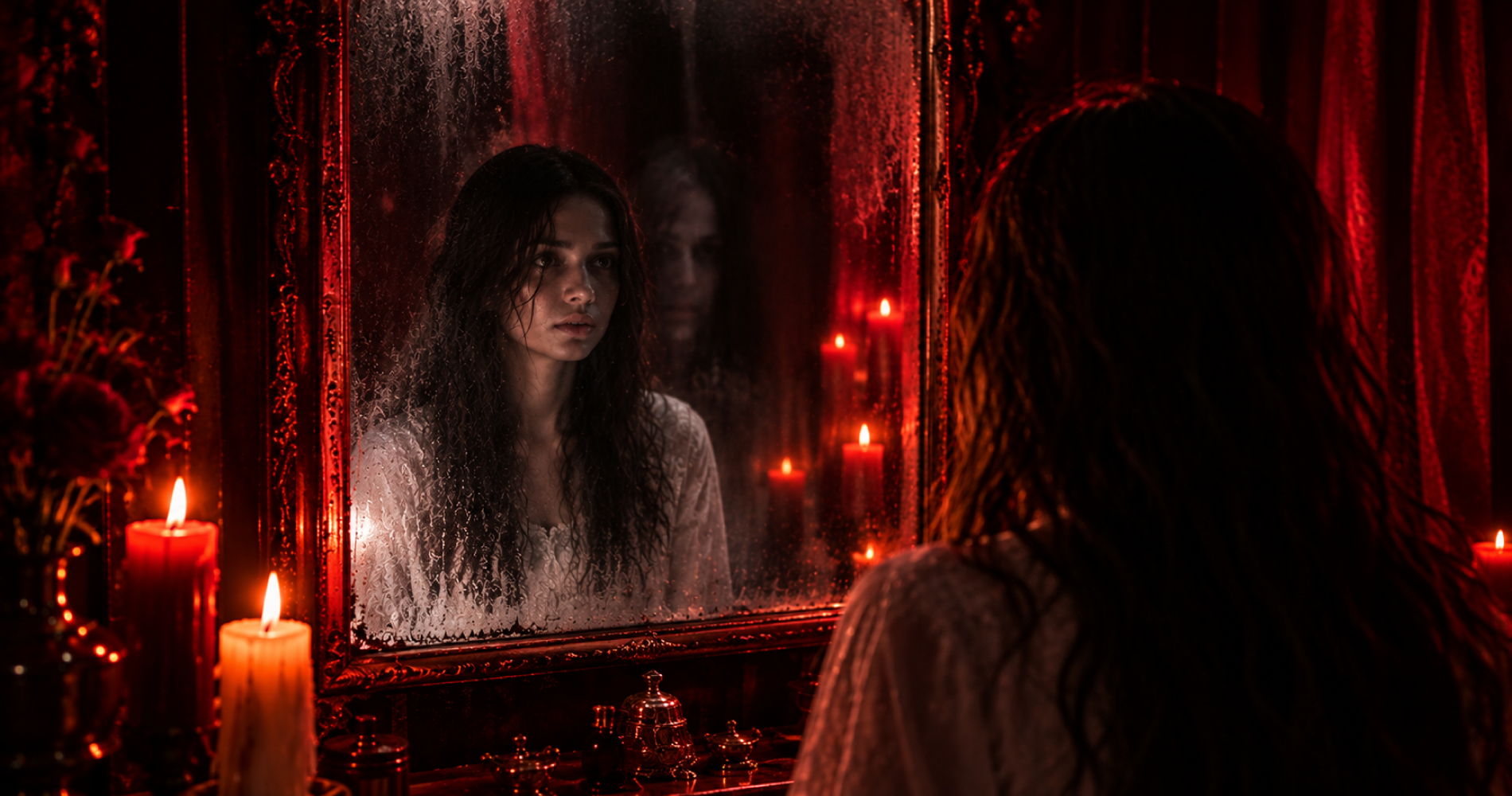
It is 2:13 a.m. The house is silent. The hallway behind you is swallowed by darkness, and the bathroom light flickers as if it is struggling to stay awake. You stand in front of the mirror, staring at your own reflection. Your eyes look tired. Your face looks familiar. Everything seems normal.
Then you whisper her name.
Bloody Mary.
Nothing happens.
You whisper it again.
Bloody Mary.
The room remains still. You almost laugh at yourself. It is just a silly childhood legend, a game people play at sleepovers to scare one another. There is no reason to be afraid.
But you say the name one last time.
And for a fraction of a second, your reflection seems different. The smile on your face disappears before you remember stopping it. The shadows beneath your eyes grow deeper. Your features seem to shift, ever so slightly, into the face of someone you do not recognize.
You blink and it is you again.
So, what happened? Did you imagine it? Did the darkness play a trick on your eyes? Or did your brain, desperate to make sense of the unfamiliar, turn your own reflection into something terrifying?
The legend of Bloody Mary has survived for generations because it touches one of our most uncomfortable fears: the possibility that something familiar might suddenly become strange. A mirror is supposed to show us exactly who we are. Darkness is supposed to hide what we cannot see. But when the two come together, the ordinary world can begin to feel deeply, disturbingly unfamiliar.
And the most unsettling part? You do not need a ghost in the room to experience the feeling that something is watching you. Sometimes, your own brain can create the perfect horror story.
Introduction: Look in the mirror. Don’t look away
Why does a simple mirror feel so much more frightening at midnight than it does in the daytime? During the day, the reflection you see in the mirror is simply your reflection. You fix your hair, look at your face, and move on without a second thought. But late at night, when the light is dim and an unusual silence hangs over the house, that same mirror suddenly begins to feel like something you would rather avoid looking at.
Perhaps it is because of a ghost story heard in childhood, a horror film that made you keep glancing at the corners of your room, or the strange unease that comes from staring at your own face for longer than usual. Whatever the reason, mirrors have become a recurring symbol of fear in folklore and horror entertainment. And among the frightening rituals associated with mirrors, few are as well known as Bloody Mary. It is a legend that challenges people to stand before a dark mirror, repeat a name again and again, and wait for a terrifying figure to appear.
When your reflection starts playing tricks on you
But what is it about this ritual that makes it so frightening? Why do some people, when they stare continuously at their reflection, report seeing unfamiliar faces or distorted figures? And why does even a slight shadow begin to seem much more terrifying when the lights are turned off?
The answer begins with how human visual perception works. Our brain is constantly interpreting visual information, recognizing patterns, and using its expectations to make sense of the world. When the light is dim and it becomes difficult to distinguish fine details, these same processes can sometimes lead us to perceive familiar things in unexpected ways.
Understanding the psychology behind these experiences does not diminish the appeal of the Bloody Mary legend. Instead, it explains why mirrors, darkness, and the fear of the unknown remain such powerful elements in horror stories. So, is the Bloody Mary really calling to you – or is there a scientific reason why familiar objects can suddenly seem frightening?
The Bloody Mary Legend: Why Does a Mirror Become Scary at Night?
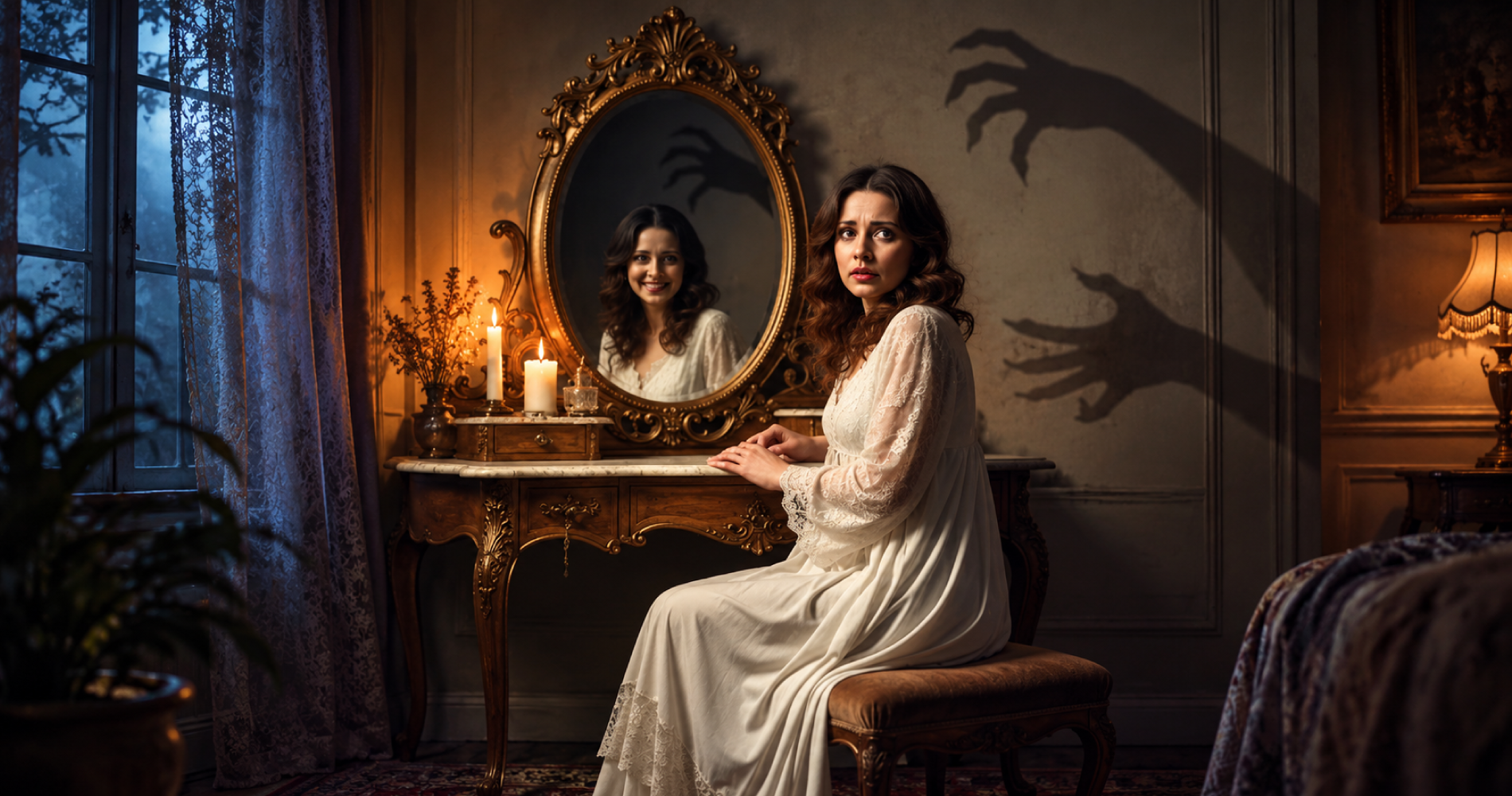
Imagine that you are standing with your friends in front of a bathroom mirror. Someone turns off the light. Another person whispers and repeats the name Bloody Mary three times. Everyone waits. Nothing happens. Someone nervously laughs. Another claims to have seen something move. Suddenly, no one wants to be the last person standing in front of the mirror.
This is the basic idea behind the legend of Bloody Mary. It is part of children’s folklore, which has circulated in different forms for generations. The details change in different versions of the story. Some versions say that if you repeat her name while looking in the mirror, her figure appears. Other versions describe her as a ghostly woman who appears behind the participant or gives them some frightening warning.
The impact of this story comes partly from its simplicity. It requires no abandoned building, elaborate costume, or detailed supernatural explanation. All it needs is an ordinary mirror, low light, the repeated chanting of a name, and someone willing to believe that something might happen.
Collections of folklore document different versions of this ritual and the ways people recall experiencing it in childhood. These accounts help researchers understand how stories spread within social groups, although they do not prove that the supernatural events described in the stories actually occurred. The University of Southern California’s Digital Folklore Archive documents various forms of the Bloody Mary game and its role in childhood stories.
Why does the ritual feel so convincing?
There is a reason for this, which is known as preexisting expectation. When someone tells you that a frightening figure may appear in the mirror, you begin looking for signs that prove something is happening. You may pay more attention to small movements, changes in shadows, or unusual details in your reflection.
The mirror has not changed. Your expectations have changed. This does not mean that you are deliberately imagining everything. Rather, what you expect to happen can affect how you interpret uncertain information. If you are already afraid, an ambiguous shape may seem more frightening than it would in broad daylight in a well-lit room.
The social environment can also amplify this effect. When friends whisper, scream, or claim that they have seen something, their reactions can influence the expectations of others. Even a person who is initially skeptical may become more alert after hearing someone else describe strange movement.
There is no scientific evidence that repeating the name Bloody Mary can summon any supernatural being. However, this ritual brings together several elements that can intensify fear: darkness, uncertainty, focused attention, and the expectation of a frightening event. And that combination is enough to make an ordinary bathroom feel like a scene from a horror film.
The mirror illusion: Why your own face can suddenly look unfamiliar?
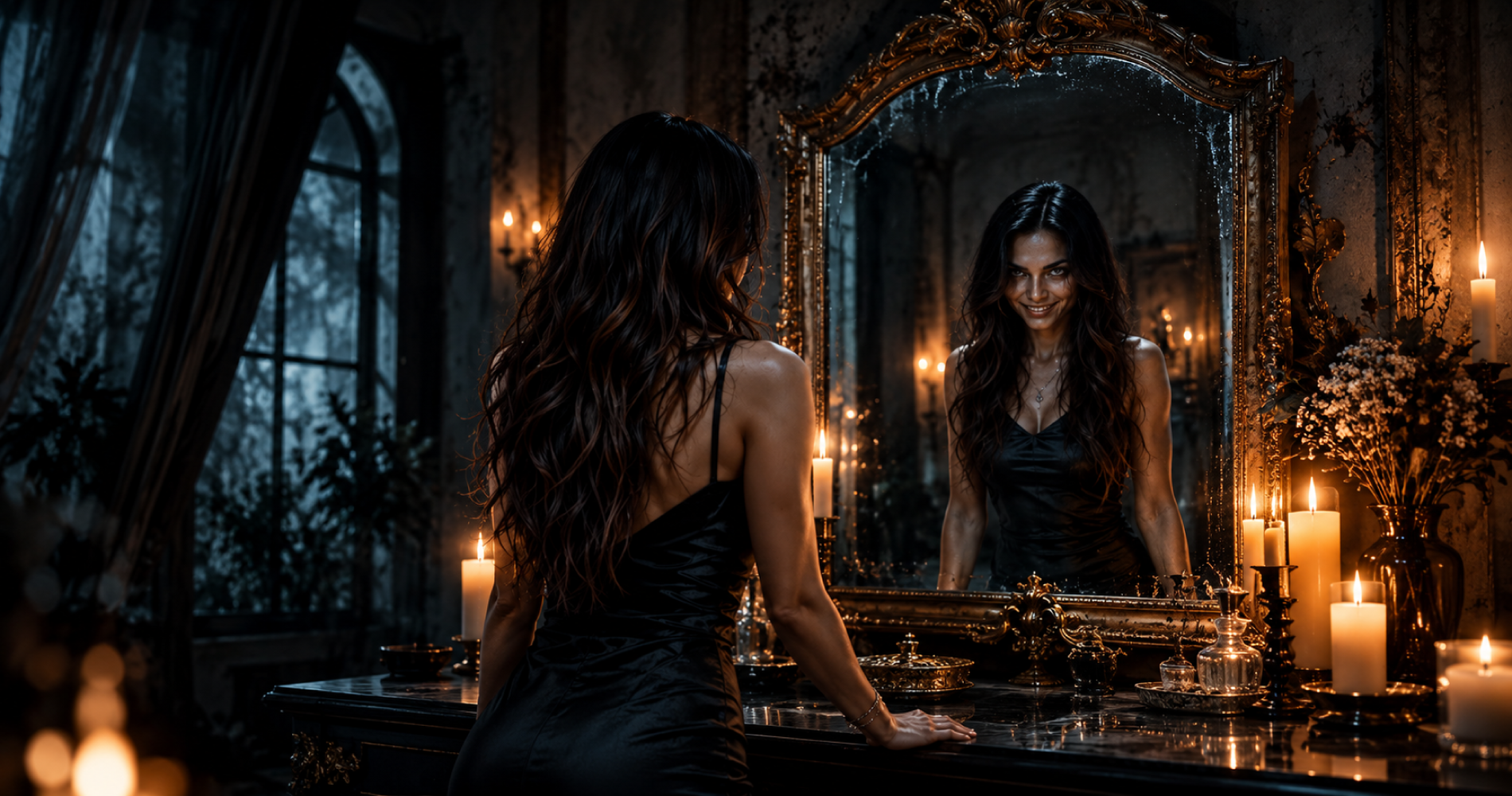
Your reflection should be one of the things you recognize best. You identify your eyes, nose, mouth, and facial expressions almost automatically. So why can looking in a mirror in dim light sometimes feel so unsettling?
The answer begins with a surprising finding from psychological research: under certain conditions, people have reported seeing facial distortions or unfamiliar faces while looking at their reflection. These experiences are commonly discussed under the name of the strange-face-in-the-mirror illusion.
What is the strange face illusion?
In a study published in Perception in 2010, psychologist Giovanni B. Caputo described a visual illusion in which people continuously observed their own reflection in a dimly lit room. Participants reported experiences ranging from changes in facial features to the appearance of unfamiliar faces, animals, and imaginary figures.
A related study published in Perceptual and Motor Skills examined looking into a mirror in low light and recorded experiences of faces appearing abnormal. The researchers described experiences in which participants felt that some strange figure was watching them from within the mirror or from beyond it.
These findings are interesting, but they must be interpreted carefully. They describe experiences reported under certain experimental conditions; they do not prove that anything supernatural was present. These studies also have some methodological limitations, so their results should not be taken as evidence that every person will experience the same illusion.
Why can your reflection appear distorted?
Vision depends on what kind of information reaches your eyes. When light is limited, it becomes difficult to recognize certain details. If you look at a nearly still image for a long time, the appearance of your reflection may seem less stable or may appear to be changing.
Researchers have examined several possible processes behind the strange-face illusion, including visual adaptation, the processing of facial features, and changes in the experience of the person viewing the reflected face. It is not reasonable to assume that a single explanation causes every reported experience.
A systematic review of strange-face illusions published in Consciousness and Cognition in 2023 examined the available research and identified some recurring experimental conditions, including low light, prolonged staring, and the presence of a face. The review also highlighted the limitations of the existing evidence, showing why more rigorous research is needed. The key difference is that an unusual visual experience can feel real, but that does not prove that the underlying cause actually exists outside of the observer’s perception.
Why does it feel like someone is staring back?
The social significance of faces is very great. We recognize people with the help of faces, understand their expressions, and try to make sense of social situations. Therefore, a face that seems unfamiliar can be more unsettling than an unfamiliar object.
When your reflection seems to be changing, a momentary mismatch can arise in your experience between the face you expect to see and the one you are actually seeing. The face is your own, but it does not feel entirely familiar. If the expectation of Bloody Mary is added to this, the experience can become even more frightening.
The frightening thing is this: an unsettling mirror does not need to contain a ghost. Sometimes, the very familiar face you expect to see is enough to make the feeling of unfamiliarity terrifying.
Why darkness makes ordinary things look like something else?
It is quite late at night. You pass by the door of your bedroom and see a tall shape in the corner.
It looks exactly like a person standing perfectly still. Your heart seems to skip a beat for a moment. You keep staring at it and hesitate to go closer. Then you switch on the light.
It turns out to be a jacket hanging on a chair.
You laugh at yourself, but one question remains in your mind: why did your brain identify a person before recognizing a piece of clothing?
Darkness limits the information available to your eyes
In good light, you can usually identify the outer shape, color, texture, and condition of an object much more easily. In low light, much of this information becomes difficult to see. The visual system has fewer details to work with, making it harder to identify unfamiliar or partially hidden objects.
This does not mean that your eyes stop functioning properly at night. Your visual system adapts to low light, but in dim conditions, information related to fine details and colors is less available. Therefore, a pile of clothes, a curtain, a door, or a reflection may seem unclear until you move closer or turn on the light.
The problem is not necessarily that you are seeing something that is not actually there. You may be looking at a real object but misinterpreting it.
What is pareidolia?
Pareidolia is the tendency to perceive a meaningful pattern in vague or random signals. A familiar example is seeing a face in the clouds. Another example is noticing a human-like face in the front of a car.
Face-related pareidolia is especially relevant to the psychology of fear, because the human visual system is highly sensitive to face-like patterns. Two dark spots and a curved line can be enough to create the impression of eyes and a mouth. Now place these shapes in a dark corridor, where you are already expecting something frightening. The same visual pattern may feel completely different from how it would appear on a sunny afternoon.
Pareidolia does not mean that the brain is malfunctioning. Pattern recognition is an important part of everyday perception. However, ambiguous information can sometimes lead to misinterpretations, especially when circumstances make accurate identification difficult.
Why does the brain sometimes choose the frightening explanation
Imagine that at night, in an unfamiliar house, you hear a faint sound. You are unable to identify its source. It could be the sound of a pipe, a curtain moving, or a branch brushing against a window. But if you have just watched a horror film, you may immediately imagine that someone is moving around inside the house.
Your interpretation is influenced not only by the sound itself. Your expectations, recent experiences, surrounding environment, and emotional state can also affect how you understand it. This is one reason why horror stories often use ordinary places. When audiences are led to expect something unusual, even a bedroom, stairs, or a bathroom can become frightening. The next time a shadow seems suspicious, remember that your brain’s first interpretation is not necessarily the correct one.
Your brain is on high alert: The science of fear
You hear a sound behind you, and before you can even identify it, your breathing changes. Your muscles tense, and you become more alert to your surroundings. For a moment, you become convinced that something is wrong.
This is the body’s response to a potential threat. When a situation seems dangerous, fear can prepare you to react quickly, even if the available information is incomplete.
Understanding the threat response
When the brain detects a potential threat, it activates interconnected systems involved in attention, emotion, memory, and bodily regulation. These processes can affect heart rate, breathing rate, muscle tension, and alertness.
This response is not controlled by a single isolated part of the brain. Different neural systems work together to assess information and prepare the body to respond. Uncertainty in the dark can make this process especially noticeable. You do not know whether the sound came from something harmless or from something that requires attention. Your brain continues gathering information while your body is already preparing to react.
This helps explain why a sudden sound in a quiet house can feel more frightening than the same sound in a busy afternoon.
Why uncertainty can be scarier than knowing?
Consider two situations. In the first situation, you see a plastic skeleton hanging from a tree in a well-lit garden. You recognize it immediately and know that there is no danger. And in the second situation, you see a vague figure behind a curtain in a dark room. You cannot identify it and do not know whether it will move or not.
In the second situation, there is less certainty. Your mind begins to consider many possible interpretations, including frightening ones. Horror films often create suspense in this way. A character slowly moves toward a closed door. The audience hears a sound, but its source remains hidden. The scene prompts viewers to wonder what might happen next. Sometimes, uncertainty is even more unsettling than the revelation that eventually appears.
Does feeling afraid mean you sensed something supernatural?
No. A strong fear response does not prove that there is a ghost, intruder, or other danger present. Fear is a response to a perceived threat, and our perceptions can be mistaken. A person may feel a racing heart, unease, or the sensation of being watched, but these sensations are not proof that something is actually nearby.
This distinction is important because fear can affect our interpretation of ambiguous events. When we begin to feel threatened, we may pay more attention to things that seem to confirm our suspicion. The practical lesson is simple: if something looks frightening in the dark, turn on the lights and check the situation before deciding what it means.
Your brain is trying to keep you safe, not prepare a report on paranormal investigations.
The feeling of being watched: Why empty rooms can feel occupied?
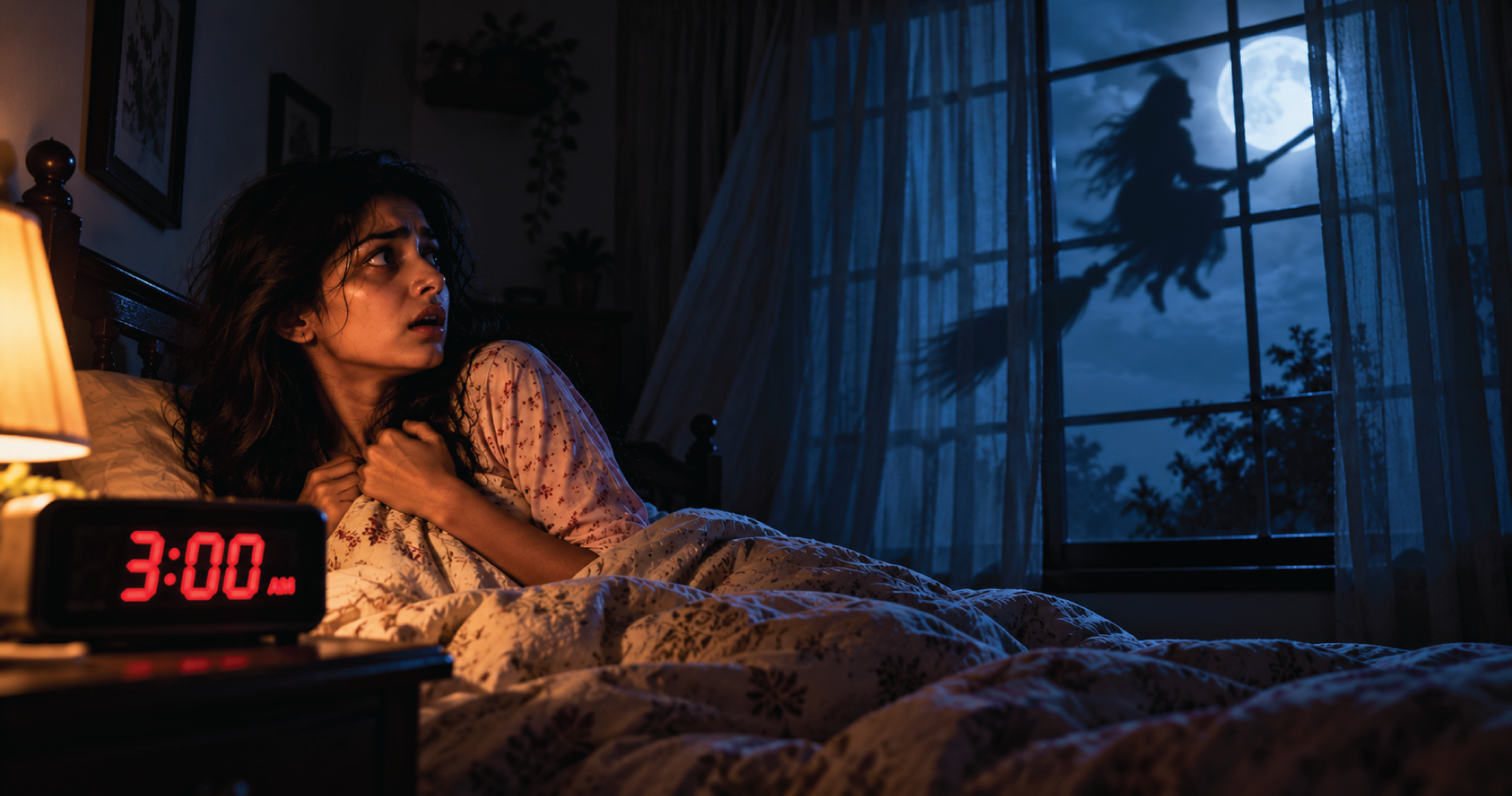
Have you ever been alone in a room and suddenly felt as if someone were standing behind you?
You turn around. Nothing.
You check the door. Look under the bed. Glance at the mirror. Still nothing.
The feeling may gradually fade, but even long after you have checked the room, the experience can remain in your mind.
Why do we experience this sensation?
The feeling of being watched can arise in different situations, and there is no single explanation for every experience. Uncertainty, attention, expectations, surrounding cues, and heightened vigilance can all contribute to interpreting ordinary sensations as signs that someone is nearby.
For example, a reflection seen at the edge of your vision may seem like movement. A sound coming from another room may feel closer than it really is. If you are already afraid, these details may attract more attention than they would under normal circumstances. The mind tries to make sense of what is happening, but incomplete information does not always lead to the correct conclusion.
How does expectation influence perception?
Suppose a friend tells you that a particular mirror is haunted. You might approach it already expecting something strange to happen. You notice a flicker of light, an unfamiliar shadow, or a change in your reflection. Under normal circumstances, you might have immediately dismissed this event. But because you are expecting something unusual, you may interpret it differently.
This is an example of how expectations can influence our perception and interpretation. It does not mean that people deliberately invent their experiences. It means that the brain uses both the information it receives from the outside world and the expectations it already has in order to make sense of the world.
In a dark room, where details are difficult to identify, these expectations may have more opportunities to affect the final interpretation.
When should you take the feeling seriously?
When you hear an unclear sound or see something unusual, it is wise to check your surroundings. At the same time, the feeling of being watched is not proof that someone is actually there. If you repeatedly experience frightening visions that cause significant distress, disrupt your sleep, or affect your daily life, consider speaking with a qualified health professional.
There may be several possible causes for such experiences, and a professional can help assess them without jumping to conclusions. The aim is not to deny your experience. The aim is to distinguish the experience itself from the assumptions made about its cause.
Social media and the fear of what you cannot see
You open TikTok for a few minutes before going to sleep. The first video is of a person recording an empty corridor. In the second, a shadow can be seen moving behind the curtain. The third video begins with these words: “I looked into the mirror at 3 a.m., and something happened whose reason I still do not understand.” Now your bedroom starts to feel a little too dark and suspicious.
Social media has made it easy to watch and share frightening content. Short videos, stories of supernatural events, makeup transformations, mirror-related challenges, and scary POV scenes can create a horror-film-like atmosphere in just a few seconds. But why can these videos be so unsettling?
The psychology of creepy videos
Short videos often rely on uncertainty. A creator may show an empty room for several seconds, add an unfamiliar sound to it, and then cut the video without revealing the source. The viewer is left to imagine what might have happened.
A story told from a first-person perspective can make the experience feel more real. Captions such as “POV: You hear your name whispered from the bathroom” prompt viewers to imagine themselves in the scene. The choice of sound, lighting, editing, and timing can also affect how a video feels. A sudden sound can startle, while prolonged silence can increase unease.
None of these techniques proves that the event shown in the video actually happened. They are storytelling methods that can make fictional or ambiguous scenes seem believable.
Why do we share creepy content?
Scary videos can provide entertainment, creative inspiration, and opportunities to take part in a shared trend. Friends may send one another scary clips, repeat mirror rituals, or challenge each other to watch a scary video without looking away.
The social aspect can also become part of the experience. People react to the content, compare their interpretations, and discuss whether the video seems real. However, popularity is not proof of truth. A video may receive thousands of views because it is frightening, funny, or well edited, not because it documents a verified supernatural event.
Does a creepy video prove that ghosts exist?
No. Something unusual may appear in a video, but there may not be enough information to determine what caused it. Before assuming a shadow is supernatural, consider ordinary possibilities such as reflections, moving objects, camera noise in low light, editing, or changes in viewing angle. Sometimes the footage is so unclear that it is not possible to draw a reliable conclusion.
It is extremely important to distinguish between a frightening story and verified evidence. A video may be genuinely unsettling, but that does not mean it is proof of a supernatural घटना. And if you find yourself watching yet another mirror video at 2 a.m., remember that the algorithm may know what kind of content keeps your attention. It does not know whether the figure visible in the reflection is a ghost or not.
Haunted mirrors and horror films: Why the setting matters
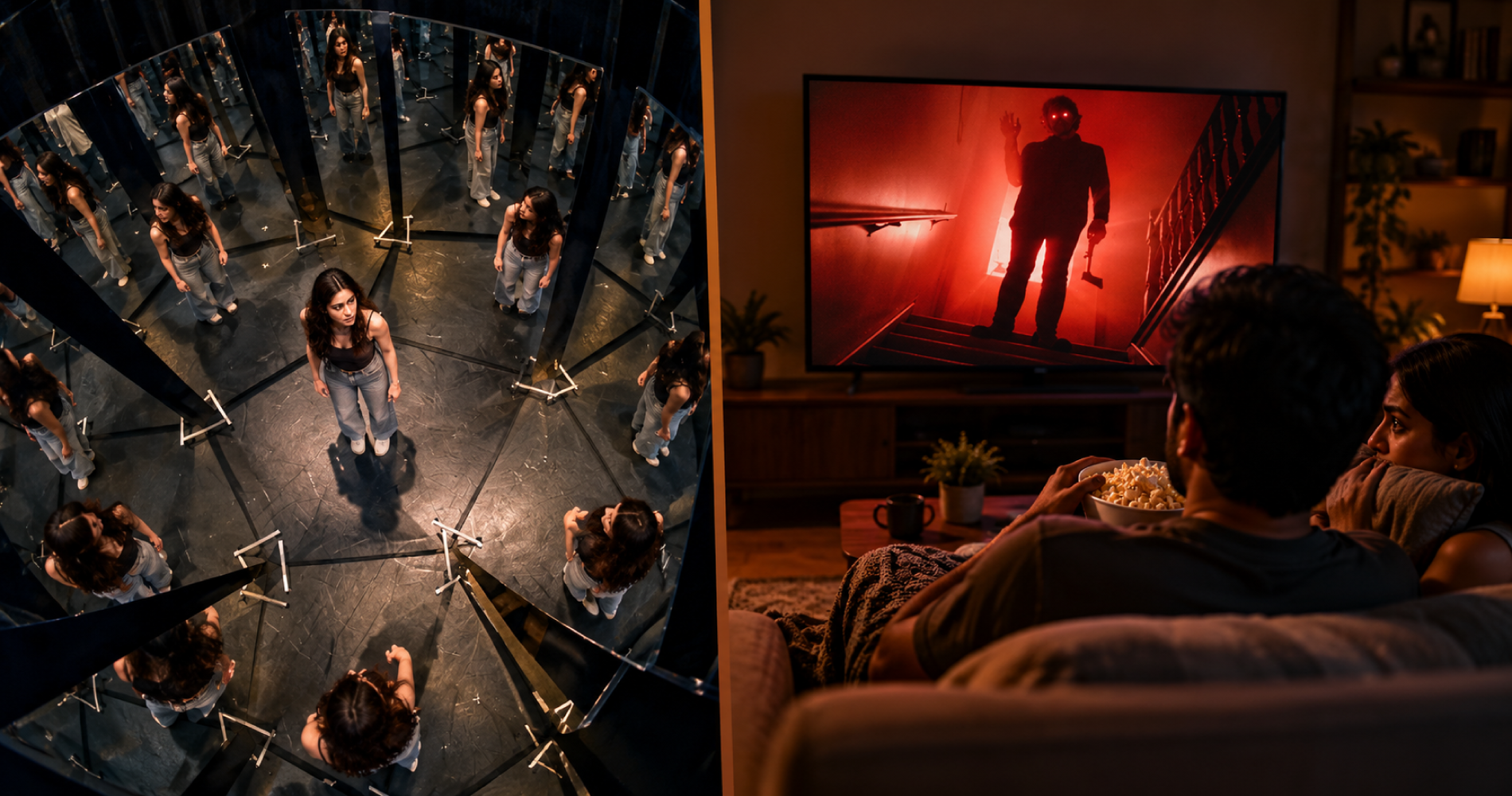
Why are mirrors so common in horror films? A mirror can show you something you already know, such as your own face. But it can also create uncertainty. It reverses the image, reflects objects outside your direct line of sight, and can reveal parts of a room that you are not looking at directly. For this reason, it is a powerful tool for storytelling.
The mirror as a source of suspense
Imagine a character brushing their teeth in front of a bathroom mirror. The camera first shows the character’s face and then their reflection. For a moment, the reflection appears normal.
But when the character looks away, something changes in the background.
The audience notices that change before the character does. This familiar horror technique creates suspense by focusing on the gap between the character’s gaze and the audience’s expectations. The mirror becomes frightening because it offers a second perspective on the scene, one that may reveal something unexpected.
This effect depends on the way the story is told. The mirror itself does not need to have any unusual property.
Why the darkness around a mirror feels unsettling
A mirror reflects everything present in front of it, including dark areas, doors, and objects behind the person looking into it. In low light, it can be difficult to identify these details. When a film shows a mirror in a dim room, viewers may begin searching the reflection for some movement or figure. An empty reflection can also feel tense, because viewers are waiting for something to appear. The longer a scene delays the reveal, the more time viewers have to imagine what might happen.
Why horror works without showing the monster
A frightening scene does not always require a visible creature. Sometimes, an indistinct sound or an empty doorway is enough. When a story withholds information, the audience fills that emptiness with possibilities. Imagination can create a more personal threat than a clearly shown monster, because each person brings their own expectations and fears to the scene.
That is why the most memorable part of a horror film can sometimes be the moment that comes just before the reveal. The door is still closed. The corridor is still empty. But now you are waiting for something to happen.
Myth vs fact: Is there really something behind the mirror?
The stories of Bloody Mary are entertaining, but distinguishing between folklore and scientific evidence helps us understand what may happen during frightening experiences.
Myth 1: By saying Bloody Mary’s name three times, a ghost can be summoned.
Fact: The Bloody Mary ritual is part of folklore. There is no reliable scientific evidence that repeating a name can summon any supernatural being. Even so, the ritual can feel frightening because expectation, darkness, and uncertainty are present together.
Myth 2: If your reflection appears distorted, then something is inside the mirror.
Fact: Research has documented strange face-like illusions during prolonged staring into a mirror in low light. These experiences include changes in the perceived appearance of faces, but they do not prove the presence of any external entity.
Myth 3: Seeing a face in the dark means that someone is standing there.
Fact: In low light, it can be difficult to identify objects. Due to pareidolia, vague patterns may also appear face-like. Increasing the light and examining the object can help clarify what you are seeing.
Myth 4: The feeling of being watched proves that someone is watching you.
Fact: A feeling is not proof of its cause. Expectations, uncertainty, attention, and surrounding cues can contribute to the sensation of being watched. If there is a genuine safety concern, check your surroundings appropriately rather than relying only on that feeling.
Myth 5: Everyone who looks in a mirror in low light will see a strange face.
Fact: Research has recorded such illusions under specific experimental conditions, but each person’s experience is different. The available evidence is not sufficient to claim that everyone will have this experience.
Myth 6: Every viral supernatural video is fake.
Fact: A video alone may not provide sufficient evidence to prove what actually happened. Some clips are fictional or edited, while others may be unclear or lack context. It is more accurate to assess the available evidence rather than assume either a supernatural explanation or the idea of deliberate deception.
Myth 7: Feeling afraid means your brain has stopped working.
Fact: Fear is a normal response that can prepare the body to deal with a potential threat. However, the interpretation of an uncertain situation may be incorrect. Feeling afraid does not mean that you have correctly identified a real danger.
The main lesson is that frightening experiences should be interpreted carefully. Science does not deny that a person felt fear; it asks what evidence supports the interpretation of that fear.
Why do we enjoy being scared if fear feels so uncomfortable
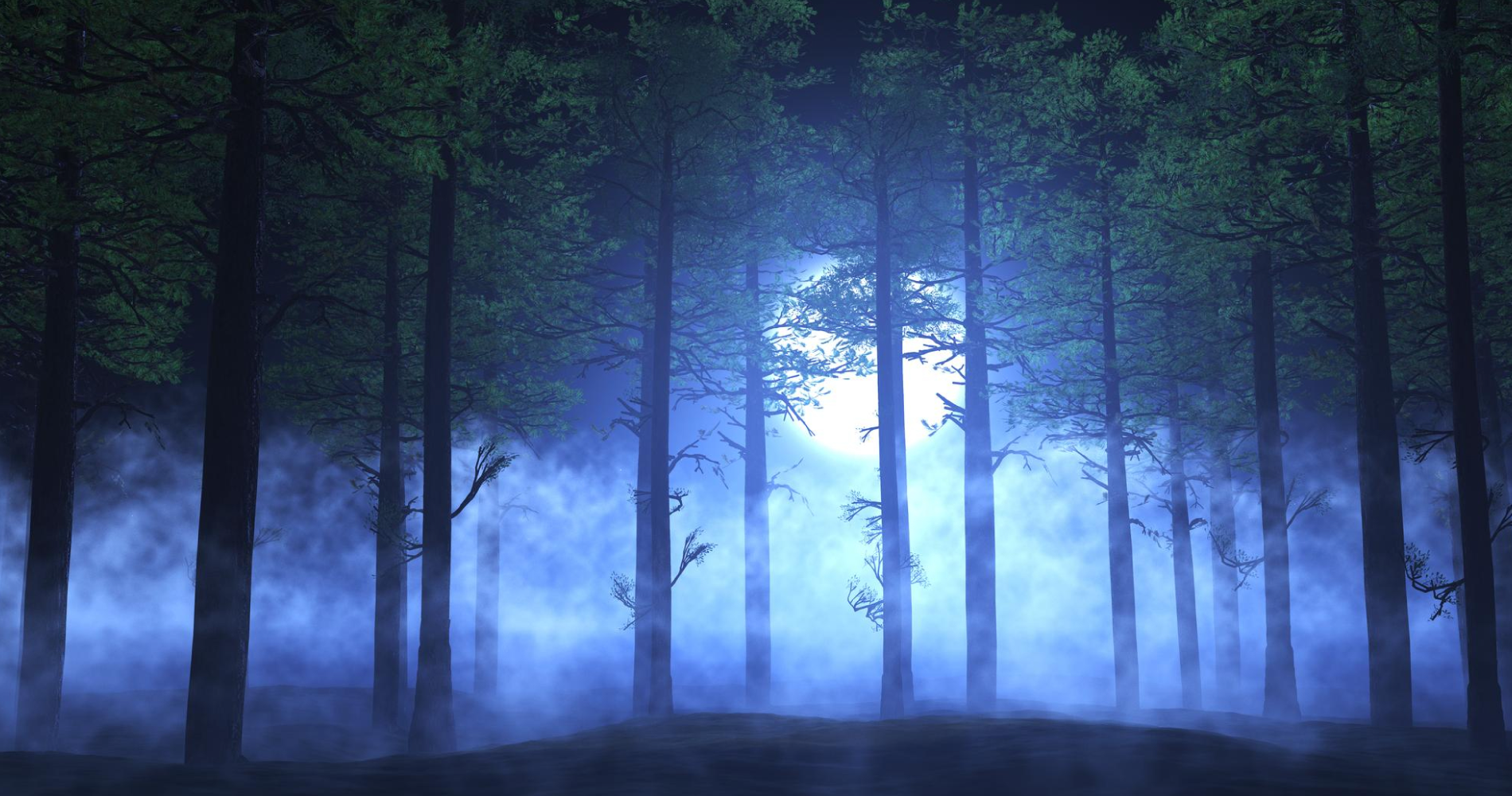
There is an interesting paradox in scary entertainment. People voluntarily go to haunted houses, watch horror films, read ghost stories, and challenge their friends to perform the Bloody Mary ritual. They choose experiences that can make their hearts race and their imaginations run wild. Why is that?
Fear can become entertainment in a chosen setting
One possible explanation for this is the difference between perceived threat and actual circumstances. When watching a horror film, people usually know that the events are fictional. Haunted attractions are designed to scare visitors, and people who take part in them generally understand that they are part of an entertainment experience.
For some people, this context makes the emotional intensity enjoyable. They can experience suspense without believing that the fictional danger is actually real.
However, not everyone finds such situations enjoyable. Some people like horror, while others find it stressful or unpleasant. Personal preference, past experiences, and sensitivity to frightening content can all influence the response.
The social experience of fear
Watching a horror film with friends can turn a scary scene into a shared memory. One person screams, another laughs, and someone immediately suggests watching another film. The conversation afterward can be just as memorable as the story itself.
The same is true for mirror-related challenges and places with haunted attractions. People may enjoy the suspense, their friends’ reactions, or the feeling of having completed something that initially seemed frightening. But enjoying a scary experience does not mean that a person is fearless, and choosing not to take part does not make anyone less brave.
Why the fear sometimes stays after the story ends
Even if you know that a horror film is fictional, some of its images may still remain in your mind for a while. If you watch something scary just before going to sleep, you may remember it when the room becomes quiet or dark. This does not mean that the film has changed reality. It may simply be that the content is still affecting what you pay attention to and what you imagine. If scary content makes you anxious or disturbs your sleep, it is advisable to take a short break from it, watch something comforting, or avoid watching very frightening things right before bed.
You do not need to watch something that makes you uncomfortable in order to prove your bravery.
How to tell the difference between a visual illusion and a real-world concern
A shadow in the corner of your room may look like a person. A reflection may seem unfamiliar. A sound may feel as though it is coming from a place where it is not actually coming from.
These experiences can be unsettling, but there are some practical ways to assess the situation instead of immediately assuming the worst.
- Increase the lighting. Turn on the lights or use a flashlight so that it becomes easier to identify the objects around you.
- Change the viewing angle. As you move, the reflection may look different. Check whether changing your position also changes the shape you see.
- Look for a common cause. Consider whether that shape could be a reflection of clothing, furniture, curtains, or some other part of the room.
- If you are distressed, avoid repeatedly testing yourself. If looking in the mirror repeatedly is making you uncomfortable, move away instead of continuing to search for a frightening experience.
- Pay attention to the entire situation. Low light, fatigue, stress, and the recent experience of watching frightening content can affect your interpretation of a vague visual impression.
- If the experiences persist, seek help. If you repeatedly see or hear things that cause distress, disrupt sleep, or affect daily activities, speak with a qualified health professional. A frightening experience should not automatically be considered a supernatural घटना, nor should it be used to diagnose a medical condition.
For these steps, it is not necessary to deny your experience. They only help you examine what actually happened before deciding why it happened.
Conclusion: The scariest thing in the room might be your perception
Mirrors, dark corridors, and empty rooms have become familiar settings in horror stories because they turn ordinary places into spaces filled with uncertainty. The mirror legend of Bloody Mary perfectly reflects this fear: a familiar reflection becomes the center of a story in which it is said that something may appear when the lights are turned off.
Psychology helps explain why these experiences can seem so convincing. Low light reduces visual detail, pareidolia can make vague shapes look like faces, and expectations can influence how we interpret uncertain information. Research on strange face-like illusions also shows that, under certain conditions, staring into a mirror for a long time can lead some people to experience unusual visual phenomena.
None of these things proves that ghosts or supernatural beings appear in mirrors. Rather, it shows something interesting about perception: our experience depends not only on what reaches our eyes but also on how our brain interprets that information.
The real plot twist: What if nothing is there?
The next time a shadow seems suspicious or your reflection appears unfamiliar, remember that the unsettling feeling is not proof of a supernatural presence. Turn on the light. Look again. Give yourself a moment to understand what you are seeing.
Perhaps the most frightening thing about Bloody Mary was never the woman said to be waiting behind the glass. Perhaps it was the fear that made every shadow seem meaningful and every reflection uncertain. Because sometimes, a mirror shows you exactly what is standing before it. Your mind decides what you are seeing. And that mystery is far more interesting than a ghost story.
Disclaimer
This article is intended for general educational and informational purposes only. It discusses folklore, visual perception, and the psychology of fear. It should not be considered a substitute for professional medical or mental health advice, diagnosis, or treatment. Research on illusions associated with looking into mirrors describes experiences reported under certain experimental conditions and does not prove the existence of supernatural beings. Different people may respond differently to darkness, mirrors, and frightening content. If unusual visual experiences cause persistent distress, disrupt sleep, or affect daily life, consult a qualified health professional. Do not deliberately place yourself in situations that make you feel unsafe or distressed in order to test a frightening legend.
FAQs
1. Is the Bloody Mary legend real?
The Bloody Mary legend is a form of childhood folklore, and there is no reliable scientific evidence that repeating her name in front of a mirror can summon a supernatural being.
2. Why do people sometimes see strange faces in mirrors at night?
Dim lighting and prolonged staring can make facial features appear distorted or unfamiliar. Psychological research has documented these strange-face illusions under certain experimental conditions.
3. What is the strange-face-in-the-mirror illusion?
The strange-face-in-the-mirror illusion is a visual experience in which people may perceive distorted facial features, unfamiliar faces, or unusual figures while staring at their reflection in low light.
4. What is pareidolia, and how is it related to fear?
Pareidolia is the tendency to perceive meaningful patterns in vague or random information, such as seeing a face in the clouds. In darkness, this tendency can make shadows and ordinary objects appear frightening.
5. Why does looking in the mirror at night feel scary?
Low lighting, uncertainty, expectations, and fear can influence how the brain interprets visual information. When you expect something frightening to happen, an ordinary reflection or shadow may seem more disturbing than it would in a well-lit room.
Content Writer with 3+ years of experience turning ideas into words people want to read, share, and remember. I create research-backed social media and lifestyle content that blends storytelling, creativity, and audience insights to make every piece feel fresh, relatable, and engaging.