
Abstract
We touch mobile phones, door handles, keyboards, money, and many other things throughout the day. During this time, not only dirt but also microorganisms that cannot be seen with the naked eye can reach our hands.
When we eat with these same hands or touch the eyes, nose, and mouth, the risk of spreading certain infections may increase. Therefore, handwashing is considered not merely a habit of cleanliness, but an important part of protecting personal and public health.
According to the Centers for Disease Control and Prevention (CDC), hands should be rubbed with soap for at least 20 seconds to ensure thorough cleaning of the palms, between the fingers, around the thumbs, and under the nails. However, washing hands alone is not enough. It is also important to wash them at the right time, use clean water, and dry them completely.
This article explains in detail the correct method of handwashing, the reasons infections spread through hands, the difference between soap and hand sanitizer, common mistakes made while washing hands, and measures to maintain hand hygiene at home, in school, and in the office.
Introduction: Handwashing is not just a habit, it is protection for health
We touch countless things throughout the day. Using a mobile phone after waking up in the morning, holding a door handle, traveling on public transport, counting money, working on a keyboard in the office.
And then eating with the same hands are all part of our daily lives. During these activities, many kinds of microorganisms and dirt can reach our hands.
Some of these microorganisms are harmless, while others can cause illness. When contaminated hands touch the eyes, nose, or mouth, handle food, or touch another surface, the risk of spreading infection can increase.
In such a situation, proper handwashing, that is, washing hands correctly, is one of the easiest and most effective ways to protect health. It does not require any expensive product or special equipment.
With clean running water, ordinary soap, and a few extra seconds, dirt and many harmful microorganisms can be removed from the hands. However, simply wetting the hands with water is not enough.
1. What is handwashing and why is it important?
Handwashing means removing dirt, grease, chemicals, and many types of microorganisms from the surface of the hands with the help of soap and clean running water.
Throughout the day, microorganisms can reach our hands from many objects and surfaces. These may include some bacteria, viruses, and other microorganisms. When hands are not cleaned properly, these can unknowingly be transferred to other parts of the body or to people nearby.
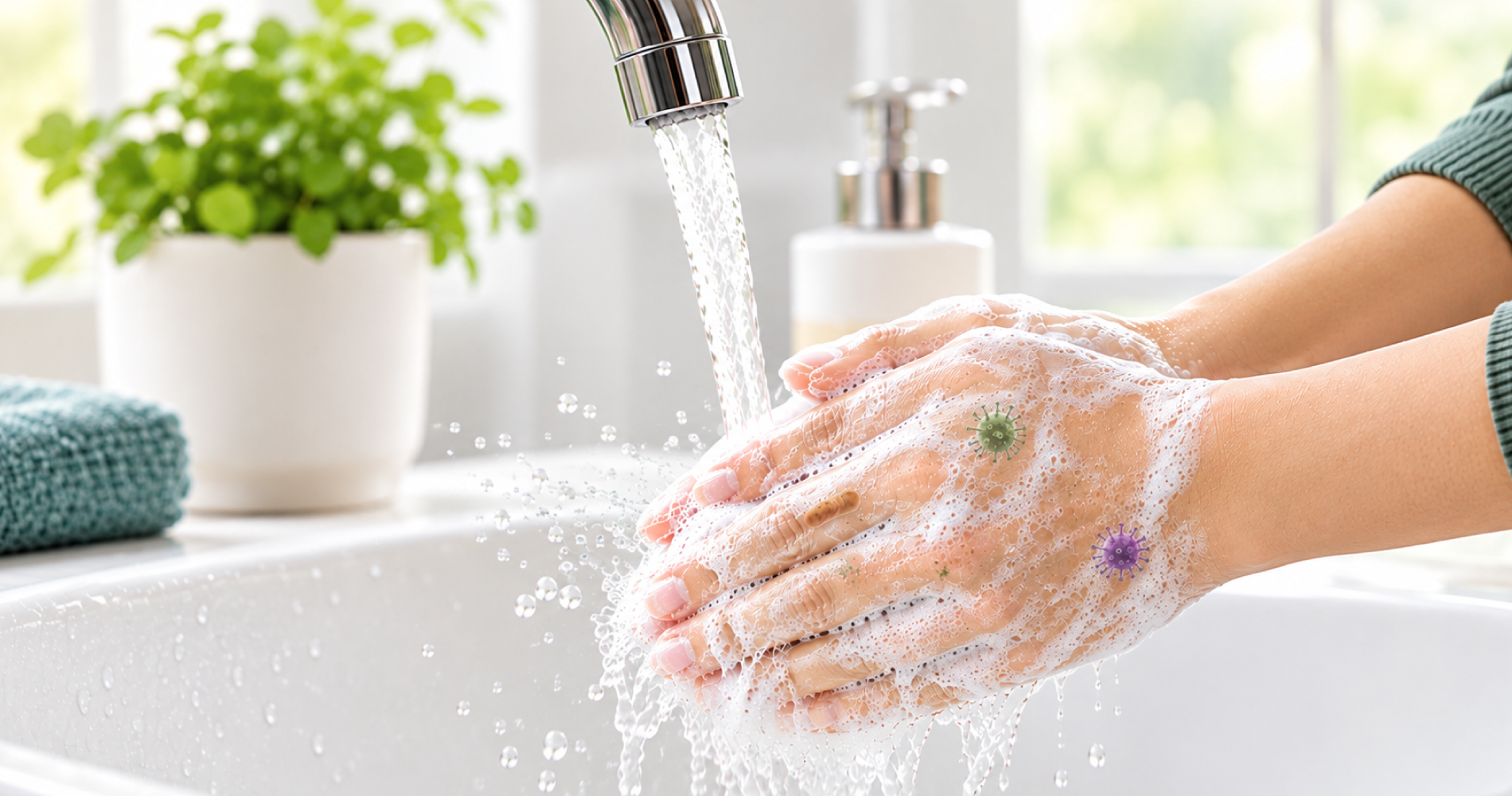
For example, after using the toilet, some disease-causing microorganisms on the hands can reach food. Similarly, after coughing or sneezing, touching door handles, mobile phones.
Or touching other shared objects without cleaning the hands can increase the likelihood of infection spreading through contaminated surfaces.
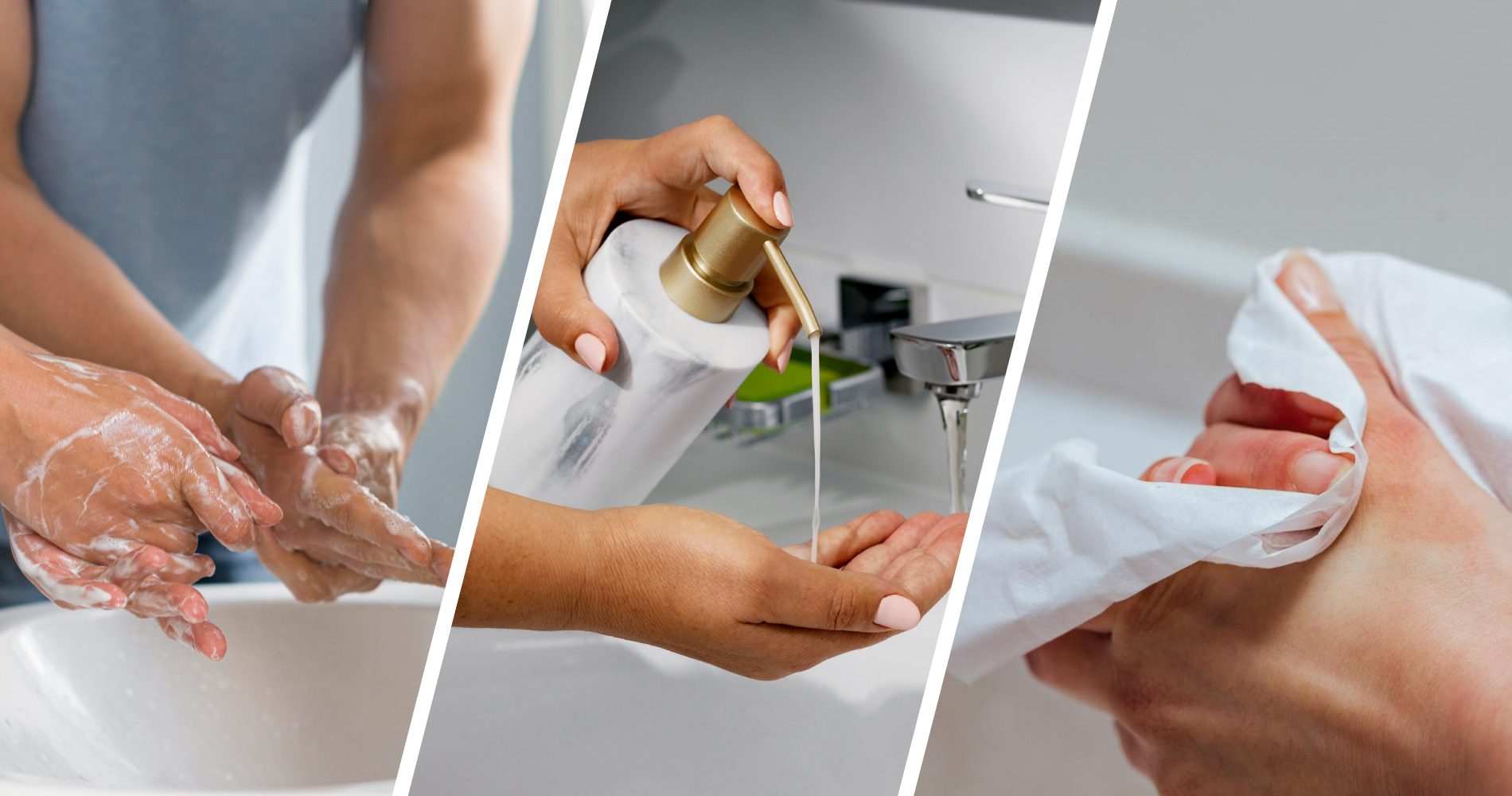
In the process of washing hands, soap, water, and rubbing play important roles. Soap helps loosen dirt and grease, while rubbing the hands helps remove microorganisms and dirt from the surface of the skin. After this, clean water is used to rinse away the loosened dirt and microorganisms.
2. How does infection spread through hands?
The process of infection spreading is not always associated with visible dirt. Many times, hands may appear clean, but they can still carry microorganisms that cannot be seen with the naked eye.
The process of infection spreading through hands can be understood through some common examples.
Touching contaminated surfaces: Microorganisms can reach the hands by touching mobile phones, door handles, elevator buttons, and shared surfaces in public places.
Not washing hands before eating: If disease-causing microorganisms are present on the hands, they can enter the body along with food. In some situations, this may increase the risk of foodborne infection.

Not cleaning hands after using the toilet: Some pathogenic microorganisms present in feces can reach food, water, and other surfaces through the hands. This is an important route for the spread of infection.
Touching the face repeatedly: Some infections can spread when contaminated hands touch the eyes, nose, or mouth.
Caring for a sick person: While caring for someone suffering from vomiting, diarrhea, or another infection, hands may become contaminated. In such situations, it is especially important to clean the hands at the right time.
In all these circumstances, hand hygiene is an important part of the strategy to prevent the spread of infection. Therefore, hands should not be washed only when dirt is visible on them, but also in situations where there is a possibility of coming into contact with disease-causing microorganisms.
3. The correct way to wash hands:
Knowing the correct way to wash hands is just as important as practicing it regularly. If some parts of the hands are not cleaned properly, dirt and microorganisms may remain there.
According to the general handwashing steps outlined by the CDC, hands should be cleaned in the following way.
Step 1: Wet your hands with clean running water
First, wet your hands under clean running water. Normal or lukewarm water can be used for this.
It is not necessary for the water to be very hot. The choice of temperature between warm and cold water can be made according to one’s convenience. In handwashing, the role of soap and proper rubbing is more important.
Step 2: Apply sufficient soap
Take an adequate amount of soap to cover the entire surface of the hands. Both bar soap and liquid soap can be used.
Do not limit the soap only to the palms. It should reach the backs of the hands, between the fingers, and around the nails.
Step 3: Rub the palms thoroughly
Rub both palms against each other to create lather. This process helps remove dirt and grease present on the surface of the hands.
Keep in mind that creating lather alone is not enough. It is also necessary to rub all parts of the hands.
Step 4: Clean the backs of the hands
Place the palm of one hand on the back of the other hand and rub thoroughly, including the fingers. Then repeat the same process on the other hand.
While washing hands, many people focus only on the palms. As a result, the back of the hands may remain incompletely cleaned.
Step 5: Clean between the fingers
Interlock the fingers of both hands and rub them together. This helps the soap reach the surfaces between the fingers.
This area is often missed when washing hands in a hurry. Therefore, enough time should be given to clean the spaces between each finger.
Step 6: Clean the thumbs separately
The cleaning of the thumbs should not be neglected. Hold the thumb of one hand with the other hand and rub it in a circular motion. Then clean the other thumb in the same way.
Step 7: Clean the fingertips and around the nails
Rub the fingertips against the opposite palm so that the surface around the nails is also cleaned.
If the nails are long, there may be a greater chance of dirt accumulating underneath them. Therefore, it is useful to keep the nails clean and wash thoroughly around them with soap.
Step 8: Rub your hands for at least 20 seconds
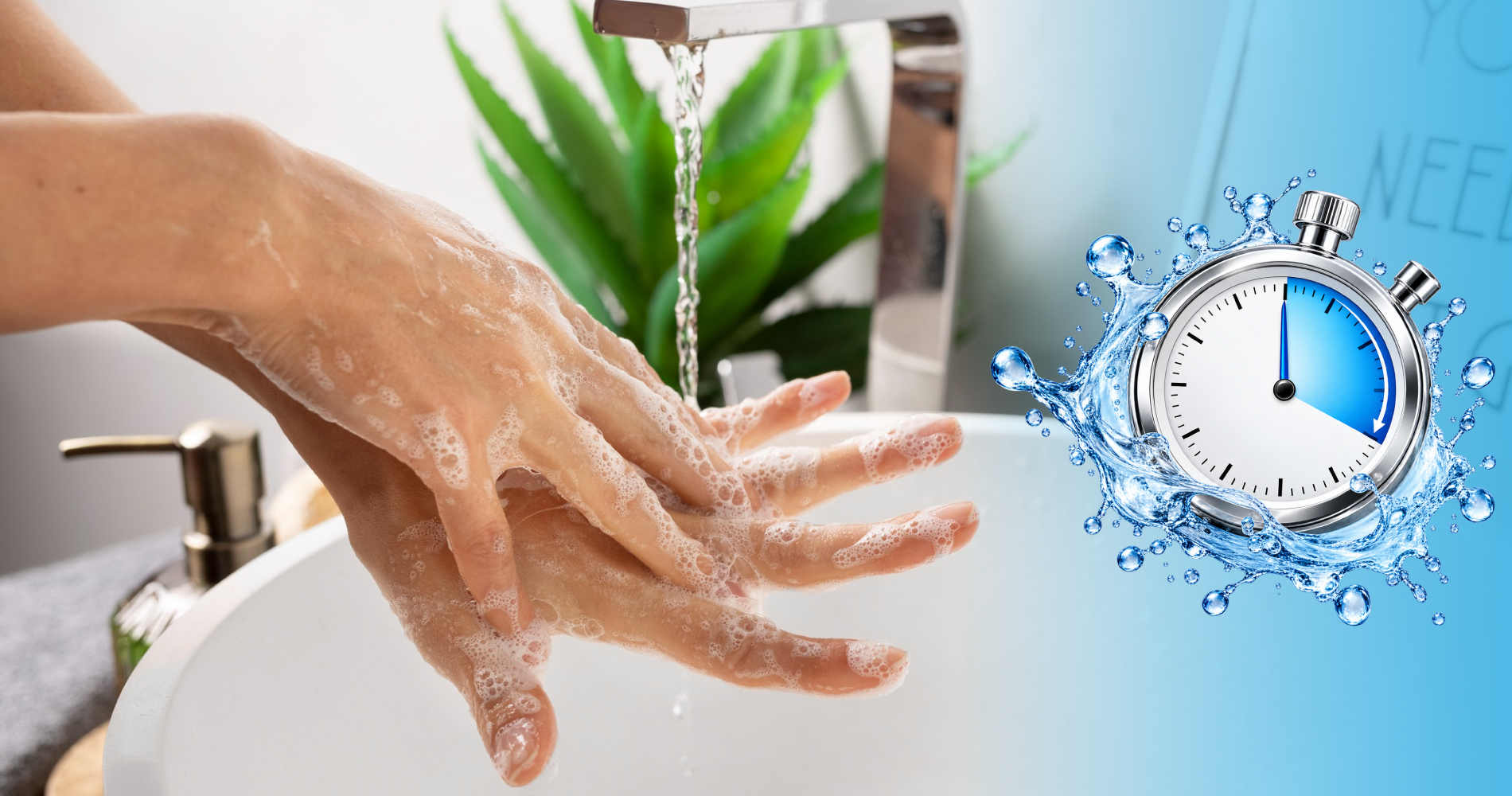
After applying soap, the hands should be rubbed thoroughly for at least 20 seconds. This should include cleaning the palms, the backs of the hands, between the fingers, the thumbs, and around the nails.
To estimate the time, you can count to 20 in your mind or hum a short song.
Note that 20 seconds is the time spent rubbing the hands with soap. Additional time may be needed for wetting the hands, rinsing with water, and drying.
Step 9: Wash your hands with clean running water
Remove the soap and the dirt loosened by it thoroughly with clean running water. No soap residue should remain on the hands.
If possible, use water that is not contaminated to wash your hands.
Step 10: Dry your hands completely
Hands can be dried with a clean towel, a clean disposable paper towel, or a suitable air dryer.
Microorganisms can easily transfer from one surface to another through wet hands. Therefore, drying the hands completely after washing is also an important part of hand hygiene.
Thus, to wash hands properly, attention should be paid not only to using water, but also to soap, sufficient time, cleaning all parts of the hands, and drying them properly.
4. How long should hands be washed?
This question is often asked: how long is it necessary to wash hands?
Under normal circumstances, the CDC recommends rubbing hands with soap for at least 20 seconds. This time is important for cleaning all surfaces of the hands.
If hands are washed by rubbing them for only a few seconds, cleaning of all areas may remain incomplete. The spaces between the fingers, the thumbs, and the areas around the nails may not receive enough time.
It is also important to understand that rubbing hands for a longer time is not the only basis for better cleanliness. Proper technique, the use of soap, clean water, and thorough drying are equally important.
Different hand hygiene protocols apply in certain situations for people working in health services. Therefore, in hospitals and clinical settings, the infection control guidelines of the relevant institution should be followed instead of general household handwashing instructions.
5. When should hands be washed?
Washing hands at the right time may be even more important than washing them for a long time. If hands are not cleaned after activities that may spread infection, pathogenic microorganisms can be transferred elsewhere.
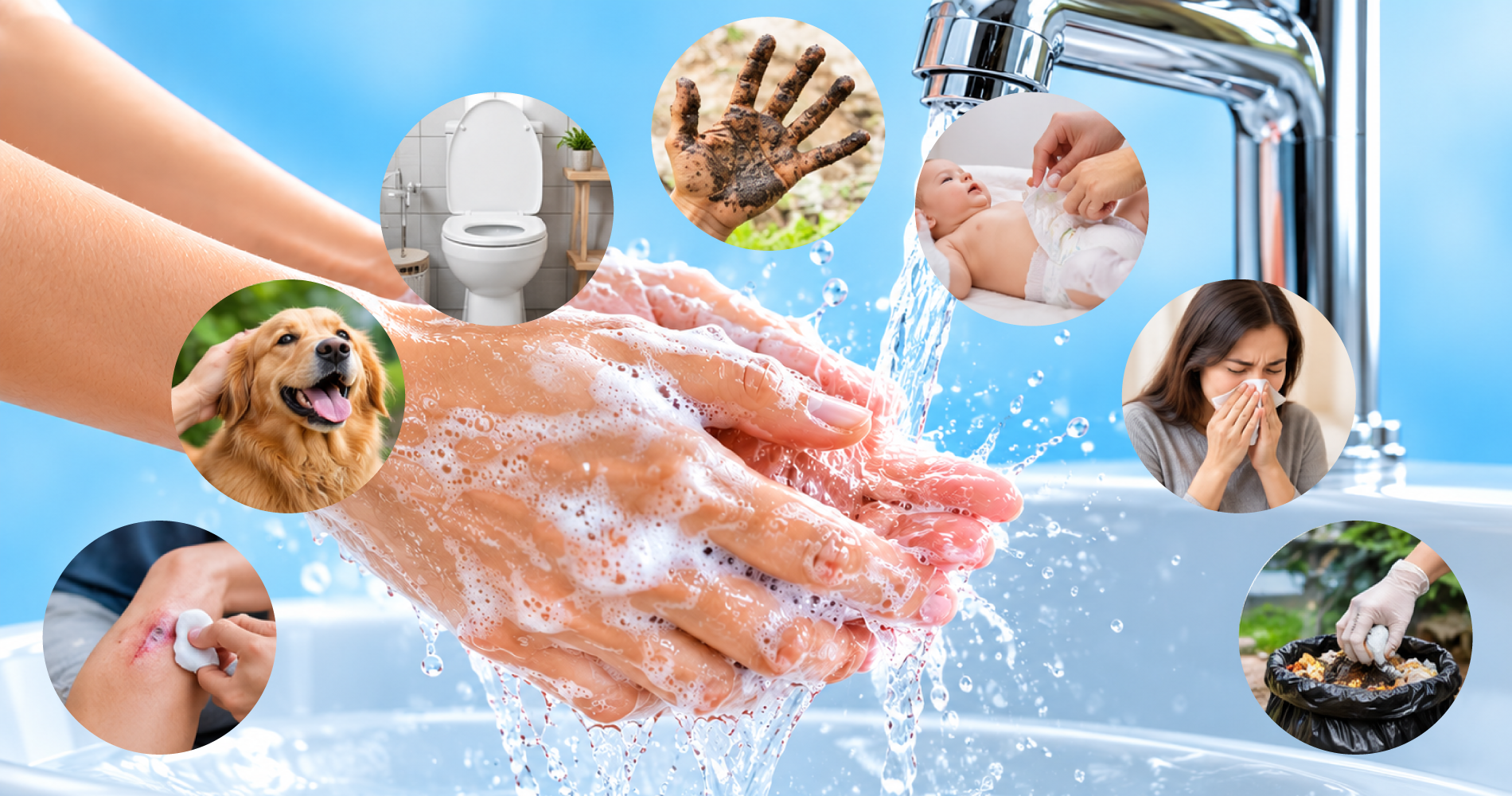
Handwashing is especially necessary in the following situations.
Before, during, and after cooking
Hands should be cleaned before preparing food. Wash your hands after touching raw meat, eggs, or other contaminated foods as well. This can reduce the likelihood of pathogens being transferred from one part of the food to another.
Before eating
Washing hands with soap and water before eating is an important hygiene habit. It is especially necessary for children and for people who eat food directly with their hands.
After using the toilet
After using the toilet, hands should be thoroughly washed with soap and clean water. This habit can help prevent pathogens spread through feces from being transmitted further.
After changing a baby’s diaper
It is necessary to wash hands after changing a diaper or after cleaning a child following use of the toilet. During this process, microorganisms present on the hands can be removed.
After coughing, sneezing, or blowing the nose
If respiratory secretions have come onto the hands after coughing or sneezing, they should be cleaned. Hands should also be cleaned after using a tissue.
While caring for a sick person
It is especially important to wash hands with soap and water after caring for a person suffering from vomiting or diarrhea. The need to clean hands before and after care may vary depending on the situation.
After touching animals

Wash your hands after touching pets, handling their food, or cleaning up their waste. It is useful to maintain this habit even when the animal appears healthy.
After touching garbage
Hands should be washed with soap and water after handling trash or cleaning a dustbin.
Upon returning home and after touching public surfaces
Cleaning your hands after returning from a market, public transport, or crowded places can be a good habit. However, it is not necessary to wash your hands after touching every surface; this should be followed according to the activity and the risk of possible infection.
6. 10 common mistakes made while washing hands
Even with the habit of washing hands, cleanliness may remain incomplete because of several small mistakes. These mistakes can be identified and corrected.
Mistake 1: Washing hands with water only
Washing hands with water alone may remove some dirt, but cleaning is more effective with the help of soap. Soap and water should be used, especially to remove grease and certain pathogens.
Mistake 2: Washing Hands Too Quickly
Washing your hands by simply wetting them for a few seconds is not considered sufficient. Hands should be rubbed with soap for at least 20 seconds.
Mistake 3: Not Cleaning Between the Fingers
If soap does not reach the spaces between the fingers, cleaning there may remain incomplete. Interlocking the fingers and rubbing them helps reduce this problem.
Mistake 4: Forgetting the Thumbs and Nails
While washing hands, the thumbs and the areas around the nails may be missed. These parts should be cleaned separately.
Mistake 5: Wiping Hands with a Dirty Towel
If hands are wiped with a dirty or constantly damp towel, their cleanliness may be affected. Use a clean towel and replace it regularly.
Mistake 6: Leaving Hands Wet
Not drying hands completely after washing can increase the likelihood of microorganisms being transferred. Therefore, it is important to dry hands properly.
Mistake 7: Assuming that only expensive or antibacterial soap is better
Under normal circumstances, washing hands with plain soap and water is sufficient. For ordinary consumers, there is not enough evidence to consider antibacterial soap better than regular soap. Different products may be needed in specialized healthcare settings.
Mistake 8: Assuming sanitizer is a substitute for soap in every situation
Sanitizer is convenient, but it cannot replace soap and water in every situation. If hands are visibly dirty or greasy, or if there is a possibility of exposure to certain types of pathogens, soap and water should be preferred.
Mistake 9: Recontaminating your hands while turning off the tap
In some public places, hands can become contaminated again by touching taps or other surfaces. If this is a concern, clean paper towels, if available, or a hands-free tap-closing arrangement can be used.
Mistake 10: Not Washing Hands When Needed
If hands are washed only in the morning and at night, opportunities to remove dirt and microorganisms from the hands after daily activities may be missed. Hands should be cleaned at the proper times, especially around activities related to food, using the toilet, and caring for a sick person.
7. What is the difference between hand sanitizer and washing hands with soap?
When water and soap are not readily available, hand sanitizer can be a useful alternative. However, the roles of the two methods are different.
Soap and water: Help remove dirt, grease, many pathogenic microorganisms, and some chemicals from the hands. This method should be preferred if the hands are visibly dirty.
Alcohol-based hand sanitizer: If soap and water are not available, a sanitizer containing at least 60% alcohol can be used. It should be applied to all surfaces of the hands, and the hands should be rubbed according to the product instructions until they are dry.
When using sanitizer, it is important to use an adequate amount so that the entire surface of the hands becomes wet. Using too little may leave the cleaning incomplete.
It should also be noted that alcohol-based sanitizer may not be as effective as soap and water against some pathogens, such as norovirus and certain other microorganisms. Sanitizer is also not a suitable option for removing certain types of chemicals and heavy dirt.
Sanitizer should be used with caution around children. Swallowing it can cause serious harm, so keep the bottle out of children’s reach.
Different guidelines apply to healthcare workers for hand hygiene in hospitals. There, alcohol-based hand rub is the preferred option in many situations, while soap and water may be needed when hands are visibly dirty or in certain specific infections.
8. Is washing hands with hot water more beneficial?
A common belief is that only washing hands with hot water can remove all germs properly. However, very hot water is not necessary for routine handwashing.
According to the CDC, both warm and cold water can be used to clean hands under normal conditions. The water temperature may be chosen according to personal comfort.
Using very hot water can dry out the skin or cause burns. Therefore, uncomfortably hot water should not be used to clean the hands.
The most important factors for cleanliness are using soap with clean running water, rubbing all parts of the hands thoroughly, and drying them completely.
9. Can frequent handwashing damage the skin?
Handwashing is important for health, but excessive washing, harsh soaps, and repeated exposure to chemicals can dry out the skin. In some people, this may also cause itching, redness, irritation, or cracked skin.
This does not mean that handwashing should be stopped in order to avoid infection. Instead, proper technique can be used to care for the skin.
– Use a mild, skin-friendly soap.
– Avoid very hot water for washing hands.
– Dry the hands gently with a clean towel.
– If the skin becomes dry, an fragrance-free moisturizer may be used.
– If there is persistent redness, pain, deep cracks, or swelling in the hands, consult a health professional.
The need to wash hands should be determined according to the activity and the risk of infection. It is not appropriate to skip hand hygiene after cooking, using the toilet, or handling contaminated materials merely out of fear of dry skin.
10. How can children be taught the correct habit of handwashing?
The habit of handwashing should be taught to children from early childhood. While playing, at school, with toys, and when touching outdoor surfaces, children may come into contact with many kinds of dirt and microorganisms.
Simply telling children to wash their hands is not always enough. They should be shown the correct way to wash their hands.
First, teach them to wet their hands, then apply soap and clean between the fingers and the thumbs. A short song or counting routine can be used to help children develop the habit of rubbing their hands for at least 20 seconds.
The handwashing area for children should be safe and easily accessible. If the sink is high, a stable stool can be used, but small children should not be left alone.
Parents and teachers can set an example by washing their own hands properly. Handwashing can be made part of the routine before meals, after using the toilet, and after returning from playing outside.
Children should also be explained that handwashing is not a punishment for a mistake, but a useful habit for staying healthy.
11. How can Hand Hygiene be improved at home, in school, and in the office?
A good handwashing habit can be adopted easily only when the necessary facilities are available. Clean water, soap, and proper arrangements for drying hands should be available at home, in schools, offices, and public places.
At home: Keep soap available near the kitchen and toilet. Remind children to wash their hands and keep towels clean.
At school: Children can be taught by demonstrating the correct way to wash hands. Handwashing facilities should be available near toilets and dining areas.
At the office: Soap, clean water, and facilities for drying hands should be ensured for employees. Hand hygiene reminders may be placed as needed.
In public places: Handwashing facilities in public toilets, dining areas, and health centers should be kept clean and usable.
The responsibility for hygiene should not be placed on individuals alone. If water and soap are not available, it may be difficult to adopt the habit of handwashing regularly. Therefore, improving access to facilities is also an important part of infection control.
12. Which infections can handwashing help prevent?
Proper handwashing can reduce the risk of the spread of many types of infections. These include diarrhea and some respiratory infections.
Handwashing cannot prevent all diseases. However, when practiced along with clean water, safe food, proper ventilation, essential vaccination, and other recommended health measures, it can help in controlling infections.
13. Common Myths Related to Handwashing and Their Facts
Myth 1: If hands look clean, there is no need to wash them
Fact: Many pathogenic microorganisms are not visible to the naked eye. Therefore, it is important to wash hands at the right time even if they appear clean.
Myth 2: Sanitizer is better than soap in every situation
Fact: Alcohol-based sanitizer is convenient, but soap and water are more suitable for dirty or greasy hands and in certain specific infection-related situations.
Myth 3: Expensive soap removes more germs
Fact: Under normal conditions, hands can be effectively cleaned with ordinary soap and water. A more expensive product does not guarantee better infection control.
Myth 4: Germs are killed only by hot water
Fact: Very hot water is not necessary for normal handwashing. Soap, proper rubbing technique, and clean water are important.
Myth 5: It is not necessary to dry hands after washing
Fact: Drying hands thoroughly is an important part of hand hygiene. Microorganisms can more easily transfer from one surface to another through wet hands.
Conclusion: Reduce the Risk of Infection with Proper Hand Hygiene
Washing hands is a common habit, but its importance is closely linked to our everyday health. While touching different things throughout the day, dirt and various microorganisms can accumulate on the hands. By cleaning them at the right time, the risk of spreading infection can be reduced.
Proper handwashing does not require any expensive soap or special equipment. Effective cleaning can be achieved with clean running water, ordinary soap, and by rubbing the hands thoroughly for at least 20 seconds. During this process, attention should also be paid to the areas between the fingers, the thumbs, and around the nails.
Where soap and water are not available, a hand sanitizer containing at least 60% alcohol can be a useful alternative. However, it should not be considered a substitute for handwashing in every situation.
The real benefit of hand hygiene is achieved only when it is practiced correctly and at the right time. Therefore, make hand hygiene a regular part of your routine before eating, after using the toilet, and during activities that carry a risk of infection. This small habit can make an important contribution to protecting your health and the health of those around you.
Disclaimer
This article has been prepared for general information and educational purposes only. The information provided herein regarding handwashing and hand hygiene is based on public health guidelines. Washing hands properly with soap and clean water can reduce the risk of the spread of many infections, but it does not guarantee complete protection against all types of infections.
Different hand hygiene guidelines may apply in healthcare services, hospitals, and special infection control settings. If persistent redness, itching, swelling, pain, or skin cracking occurs in the hands, seek advice from a qualified healthcare professional. This article should not be considered a substitute for medical examination, treatment, or personal medical advice.

Emanual Massey is a healthcare, lifestyle, and beauty content writer with over 7 years of professional experience. He specializes in writing SEO-optimized, research-based articles on health, wellness, nutrition, skincare, beauty, and Ayurveda. His mission is to simplify complex topics into practical, reader-friendly content that empowers people to make healthier lifestyle choices. Passionate about continuous learning and evidence-based writing, Emanual creates informative and engaging blogs that combine accuracy, readability, and search engine optimization.