Abstract
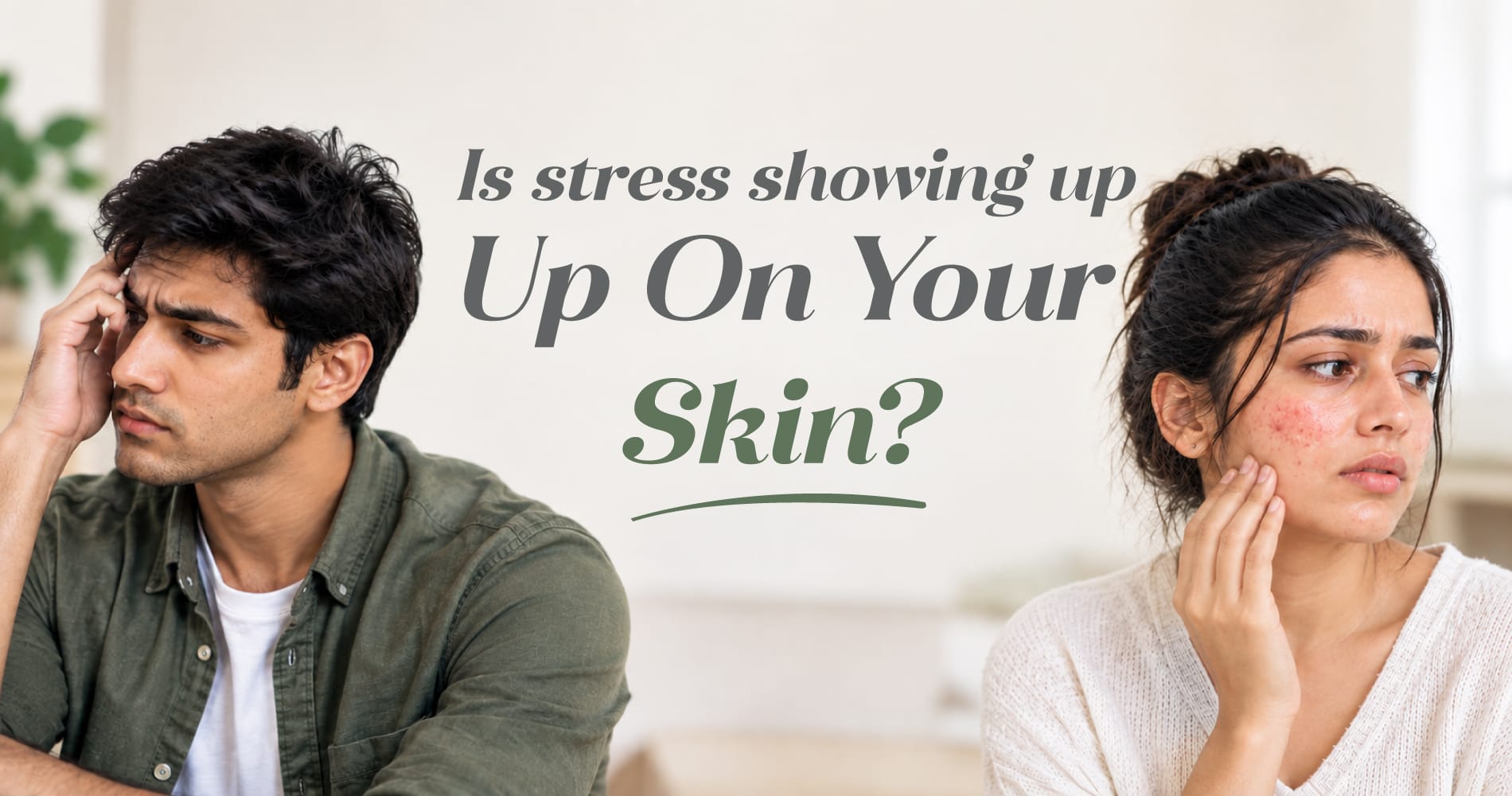
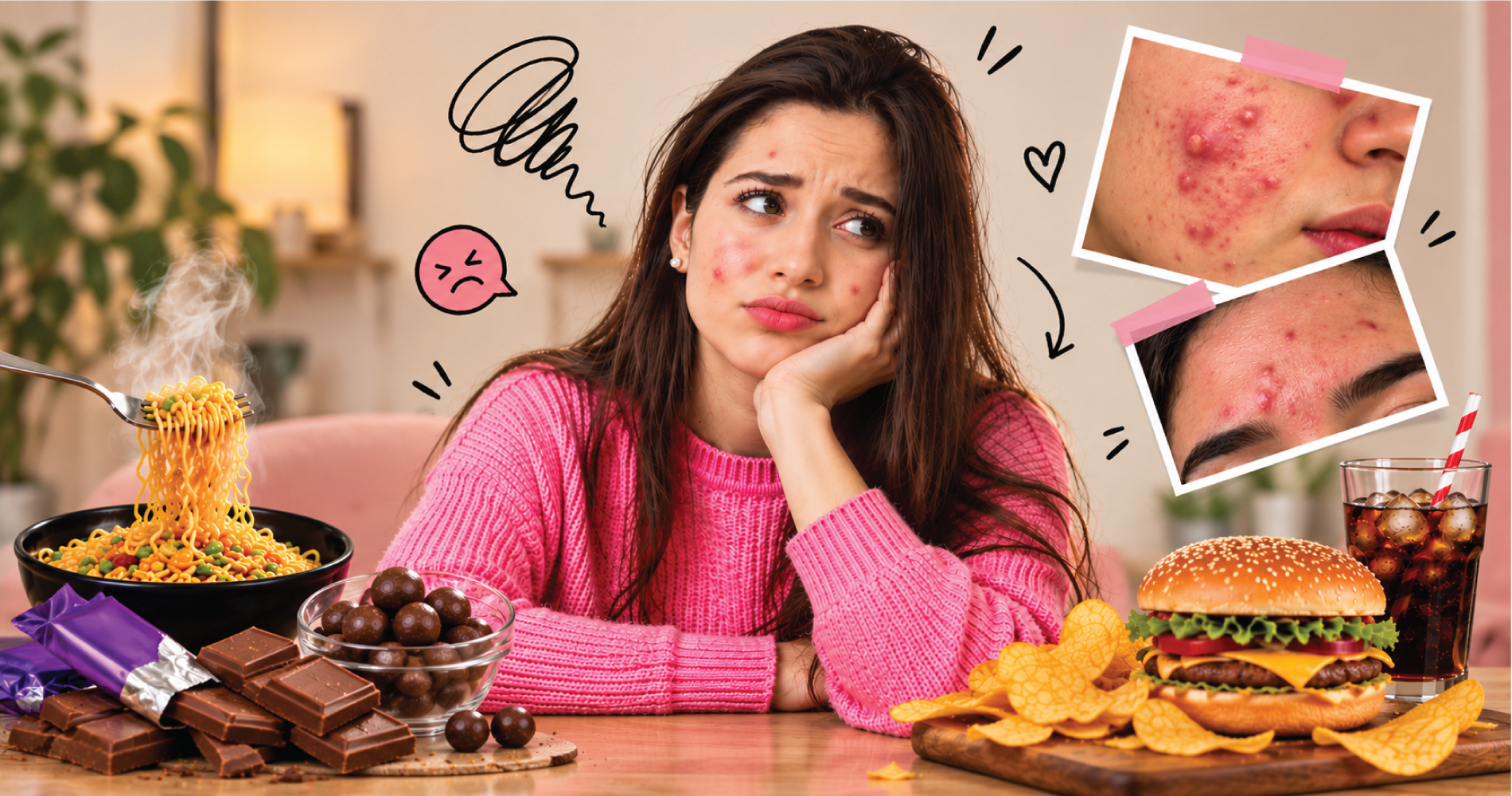
Your skincare is doing its job, but your Maggi-and-chocolate diet might be adding plot twists to your skin! From midnight cravings and sugary drinks to instant noodles and packaged snacks, your everyday food choices may influence your skin more than you think. Research suggests that high-glycemic foods may contribute to acne in some people, but diet isn’t the only culprit. Hormones, genetics, stress, sleep, and skincare habits matter too.
Let’s uncover the real connection between junk food, sugar, low appetite, and acne, separate skincare myths from science, and explore practical ways to support healthy-looking skin without breaking up with every food you love. Because clear skin is about balance, not food guilt.
Understanding acne and the role of diet
First, let us make one thing clear: there may be a connection between your diet and your skin, but diet is not the sole cause of every skin problem. The skin is the largest organ of our body. To function normally, repair itself, and carry out its protective functions, it needs sufficient energy and a variety of nutrients. We get these nutrients from our food. When you eat a balanced diet regularly, the body can receive protein, healthy fats, vitamins, minerals, and other essential nutrients. On the other hand, if your diet lacks variety and you consistently rely on only a few kinds of foods, the body may not get certain nutrients in sufficient amounts.
However, this does not mean that eating junk food for one day will ruin your skin, or that eating a healthy salad will make your face glow the next day. Changes in the skin occur due to the combined effect of many factors. For example, if you have suddenly started getting pimples, the cause could be hormonal changes, stress, lack of sleep, certain skincare products, or other reasons as well. In some people, diet may also be a contributing factor. That is why, instead of blaming a single food, it is more useful to understand your overall lifestyle and skin condition.
Why does acne develop?
Hormonal changes: Hormones called androgens can stimulate the sebaceous glands to produce more sebum. This is one reason acne often develops during puberty, although it can continue into adulthood. Some people also notice breakouts around their menstrual cycle.
Excess sebum and clogged pores: When oil and dead skin cells accumulate within hair follicles, they can contribute to blackheads, whiteheads, and inflamed pimples.
Inflammation: The immune system’s response to changes within the hair follicle contributes to redness, swelling, and tenderness.
Genetics: If there is a history of acne in your family, you may be more prone to developing it. Two people with similar lifestyles can have very different skin outcomes.
Lifestyle and dietary factors: Stress, sleep patterns, certain medications, irritation from skin care products, and possibly some dietary patterns can affect acne in susceptible individuals.
What is the connection between diet and acne?
Acne develops when oil and dead skin cells begin to accumulate in the hair follicles. As a result, pores can become blocked and inflammation may also develop in them. Bacteria and hormonal changes also play a role in this process. Some studies suggest that a high-glycemic diet may be associated with worsening acne in some people. Such a diet may include foods that raise blood glucose relatively quickly in the body.
However, it is important to note that this relationship is not the same for everyone. One person may benefit from making certain changes to their diet, while the same changes may have very little effect on another person’s skin. Therefore, if you feel that you repeatedly break out after eating a particular food, it is reasonable to pay attention to your skin’s patterns. But it is not necessary to permanently eliminate a food from your diet based on just one or two pimples.
How sugar and a sweet tooth may affect your skin?
Sometimes you feel like eating chocolate, sometimes ice cream, and sometimes the day feels incomplete without sweet biscuits. Eating sweets is not wrong in itself. The problem can arise when your daily diet includes too much refined carbohydrates and sweet foods, leaving little room for other nutrients.
What happens in the body when you eat sugar?
When you eat carbohydrate-containing foods, the body digests them and converts them into glucose. This glucose helps provide energy to the body. However, not all carbohydrates are the same. Some foods can raise blood glucose relatively quickly, while foods rich in fiber and other nutrients may have a different effect.
Research has been conducted on the possible link between a diet rich in high-glycemic foods and acne. One possible explanation is that changes related to blood glucose and insulin may affect hormonal pathways associated with oil production in the skin and the behavior of skin cells. However, it is important to understand that there is no definite rule that every time you eat something sweet, pimples will directly appear. The process of acne is complex, and research on this topic is still ongoing.
Does eating chocolate cause pimples?
Chocolate is often considered a direct cause of acne, but the answer is not that simple. Different types of chocolate can vary in their amounts of cocoa, sugar, milk, and fat. Therefore, it would not be correct to treat all chocolates as the same. Available research does not prove that eating chocolate necessarily worsens acne in every person.
If you eat chocolate and do not notice any clear problem, there is no need to give it up completely just out of fear. If you consistently feel that breakouts increase after eating a particular kind of chocolate, it would be better to pay attention to your overall diet, skincare, and other possible causes. It is not right to assume that coincidence is the cause.
So should sweet foods be stopped altogether?
No. To achieve healthy skin, it is not necessary to ban all sweet foods. Instead, look at what your overall diet is like. Do you eat regular meals? Does your diet include fruits, vegetables, protein, and sources of fiber? Are sweet foods a small part of your meals, or are they replacing more nutritious foods? If your diet is balanced, then eating chocolate or your favorite dessert occasionally is not, in itself, a cause for concern. Remember that in skincare, balance matters more than fearing everything you enjoy.
Living on Maggi, chips and fast food: What is the actual concern?
Instant noodles, packaged snacks, burgers, and fries are convenient, affordable, and often easy to prepare. For students, working professionals, and anyone with a busy schedule, they can feel like the most practical option. The concern is not that eating Maggi occasionally will ruin your skin. The more relevant question is whether a diet that regularly relies on highly processed foods leaves enough room for the variety of nutrients your body needs.
Does eating instant noodles affect your skin?
There is not enough evidence to directly blame Maggi or other instant noodles as a cause of pimples. This means it is not correct to claim that eating instant noodles alone will cause acne in everyone. However, if a large part of your diet comes from foods that are low in fiber, protein, and certain essential nutrients, it may be difficult for you to get balanced nutrition.
Instant noodles usually contain carbohydrates, but their nutritional composition can vary by brand and variety. If you eat them, you can make the meal more balanced by adding eggs, tofu, lentils, or vegetables, as long as these foods suit your diet. This approach can help improve the nutritional quality of your favorite meal instead of completely giving it up.
Does oily food make the skin oily?
It is a common belief that eating oily food makes the skin more oily as well. However, the process of sebum production, that is, the skin’s natural oil, does not depend only on the oil present in food. Sebum production is influenced by hormones, genetics, and other biological processes. Therefore, seeing oil on your face after eating fries does not mean that the fries directly increased the oil in your skin. There is research on a possible link between certain diet patterns and acne, but it would not be correct to say that any one fried food is the definite cause of everyone’s breakouts. Excessive consumption of junk food can become a concern when it reduces the variety in your diet and prevents you from getting enough nutrients.
Can eating junk food every day become a problem?
If you eat instant noodles, chips, biscuits, or other snacks almost every day instead of your main meals, it is possible that your diet may not include enough of some essential nutrients. The body needs not only calories, but also a variety of nutrients. It is important to include different sources of protein, vitamins, minerals, healthy fats, and fiber in your meals. The solution is not to give up your favorite foods forever. Instead, it is to see what is missing from your regular meals and how it can be filled in a practical way. You do not need to change your entire lifestyle in one day. Small changes can also help develop better eating habits.
Low appetite, irregular meals, and the clear skin dilemma
Not everyone has the same appetite. Some people feel hungry several times a day, while others forget to eat because they are busy, stressed, have an irregular routine, or for other reasons. If you often do not feel hungry and eat very little, it is important to see whether your body is getting enough energy and nutrition.
Can eating less cause pimples?
There is no simple or definite rule that eating less directly causes pimples. Acne is mainly linked to clogged pores, sebum, inflammation, hormones, and other factors. A reduced appetite by itself is not considered a direct cause of acne. However, if you do not eat enough for a long time, your body may receive fewer essential nutrients. This can potentially affect overall health and the functioning of the skin. For example, the body needs protein and many micronutrients for the normal maintenance of various tissues, including the skin. If food intake is very limited, it may be difficult to get enough of these nutrients.
However, the appearance of dryness, roughness, or other changes in the skin does not always mean a nutritional deficiency. Weather, skincare products, and other health-related factors can also play a role.
Possible causes of reduced appetite
There can be many causes of reduced appetite. These may include an irregular routine, stress, changes in sleep, certain medications, and other health conditions. Sometimes a person feels hungry, but does not eat because of being busy or short on time. Some people find small, regular meals more convenient than large meals. If your appetite remains consistently low, you are losing weight unintentionally, or you are having persistent difficulty eating, do not ignore it as merely a skin problem. In such cases, it is helpful to consult a doctor or a qualified health professional.
If you have a poor appetite, what can you do?
First, instead of forcing yourself to eat a lot, try to understand your routine.
- Try to set regular times for meals.
- If eating large meals feels difficult, consider having smaller, regular meals.
- Include sources of protein, fruits, vegetables, and other nutritious foods in your diet.
- Drink enough water and also pay attention to your sleep.
- If poor appetite has persisted for a long time, seek professional advice.
These changes can help you manage nutrition and overall health better. However, they are not a substitute for any acne treatment.
The nutrients your skin needs to be healthy
To keep the skin healthy, there is no need for any one superfood, expensive juice, or viral supplement. The most important thing is that your diet provides the body with enough energy and a variety of nutrients.
Protein: Essential for the body’s normal maintenance
Protein plays a role in building and repairing the body’s tissues. Skin is also a tissue of the body, so getting enough protein is important for overall health. Sources of protein may include lentils, beans, milk and dairy products, eggs, soy, and other protein-rich foods. You do not need to buy expensive supplements to include protein in your diet. Depending on your preferences and dietary needs, you can also get protein from ordinary foods.
Vitamin C: Helpful in Collagen Formation
Vitamin C is essential for the normal formation of collagen in the body. Collagen is a protein that plays a role in the structure of many tissues, including the skin. Guava, orange, lemon, amla, and some other fruits and vegetables are sources of vitamin C. However, eating foods rich in vitamin C does not mean that your pimples will disappear immediately. Its importance lies in meeting the body’s normal nutritional needs.
Healthy Fats: There Is No Need to Fear Fat Alone
Fat is one of the essential nutrients for the body. It plays a role in providing energy, the absorption of certain vitamins, and the body’s normal functions. Nuts, seeds, some vegetable oils, and other foods can be sources of healthy fats. It is not right to consider every kind of fat as an enemy of the skin. It is more useful to pay attention to what kinds of foods are included in the diet and what the overall nutrition is like.
Zinc and Other Minerals
Zinc plays a role in many normal biological processes in the body. It is essential for many functions, including the normal functioning of the skin. Pulses, beans, nuts, seeds, whole grains, and some other foods can be sources of zinc. However, just because zinc is important for the body does not mean that everyone should take zinc supplements. The need for supplements depends on an individual’s condition, and taking excessive amounts without need can also be harmful.
Fiber: An Important Part of a Balanced Diet
Fruits, vegetables, pulses, and whole grains provide fiber. These foods can be part of a balanced diet and help support digestive health. Including fiber-rich foods in meals is useful because they can add variety to your diet as well as other nutrients. But it would not be correct to claim that simply eating more fiber will cure acne. Many factors affect skin condition.
The most important thing is not to regard any single vitamin or mineral as a magical solution. A varied and balanced diet is the better starting point.
Can milk and dairy products also worsen acne?
There are many questions related to acne when it comes to milk and dairy products. Some studies have observed a possible link between dairy consumption and acne, but the available evidence is not conclusive enough to say that drinking milk will cause pimples in everyone. The results of research on different types of dairy products are also not the same. The changes visible on one person’s skin may differ from another person’s experience. If you consume milk, yogurt, or other dairy products and do not notice any clear problem, then there is no need to stop them only out of fear of acne.
Dairy products are also sources of nutrients such as protein and calcium for some people. If you decide to remove them from your diet, it is important to ensure that you continue to get the necessary nutrients from other food sources. If you consistently notice a connection between a particular food and breakouts, it may be helpful to pay attention to your overall diet and skin condition. Before making major changes, it is better to consult a qualified healthcare professional or dermatologist.
Why do some people eat junk food and still have clear skin?
You may have seen people who regularly eat pizza, chocolate, or other snacks, yet show very few pimples on their skin. At the same time, some people struggle with acne despite being careful about their diet. This is because skin health does not depend only on food.
The role of genetics
Your genetics can influence what your skin is like, how much sebum it produces, and how likely you are to develop acne. If a person’s skin is more sensitive to acne, they may experience breakouts due to the combined effect of several factors. Meanwhile, another person’s skin may react differently. This does not mean that diet has no importance. It only means that the same diet will not have the same effect on every person.
Hormonal Changes
Hormonal changes also play an important role in acne. During adolescence, the menstrual cycle, and certain other conditions, hormonal activity can change, which may affect sebum production and breakouts. Therefore, if you get pimples frequently, it would not be correct to blame only your diet.
Stress and Sleep
Stress and lack of sleep can also affect the condition of the skin. In some people, acne may worsen during periods of stress, or existing skin problems may become more bothersome. Getting enough sleep and adopting ways to manage stress are beneficial for overall health. However, it cannot be claimed that simply getting better sleep will cure every type of acne.
Every skin has its own story
Your skin’s needs do not have to be the same as someone else’s. Just because a friend does not have any problem with a particular food does not mean your experience will be exactly the same. Similarly, it is not right to decide that a food is bad for everyone based on another person’s experience. Instead of comparing your skin with others, focus on understanding your own skin patterns, your routine, and your needs.
How can you improve your diet for clear skin?
If you want to take care of your skin, you do not need to change your entire diet in one day. Adopting small and practical changes can be easier.
Try to add variety to every meal
If your diet is often limited to only Maggi, bread, or snacks, try gradually adding other foods to it. For example, you can include vegetables or some source of protein with instant noodles. With bread, you can have eggs, paneer, or another suitable source of protein. These are only examples. You can choose options according to your preferences, budget, and dietary needs. The goal is not to completely eliminate your favorite foods, but to make your meals more balanced.
Include fruits and vegetables in your diet
Fruits and vegetables provide a wide range of vitamins, minerals, and fiber. Eating them regularly can increase variety in your diet. You do not need to buy expensive or exotic fruits every day. Local and seasonal options can also be part of good nutrition.
Drink enough water
Water is essential for the body’s normal functioning. Drinking enough water is especially important when it is hot, when you are physically active, or when your body needs more fluids. But it is important to understand that simply drinking a lot of water will not eliminate acne. Water has its own role, while acne may require a different kind of care or treatment.
Do not turn food into a punishment or a reward
If you ate chocolate or pizza one day, skipping meals the next day or eating very little is not a good solution. Doing so can create a stressful relationship with food and may prevent the body from getting enough energy. A balanced diet can also make room for the things you enjoy. Rather than declaring your entire diet good or bad based on a single meal, it is more useful to focus on long-term habits.
Give your skin time
Do not expect immediate results after making changes to your diet. Changes in the skin may appear gradually, and the time it takes can vary from person to person. If you have acne, it is important not only to change your diet but also to follow an appropriate skincare routine and, if necessary, consult a dermatologist.
Why is a skincare routine important along with diet?
Your skin care is not determined only by what you eat. Daily skincare habits are also important.
Use a gentle cleanser
Cleaning the face regularly during the day can help remove excess oil, sweat, dirt, and other residue from the skin. Frequent use of very harsh cleansers or rubbing the face vigorously can cause irritation. Therefore, it is better to choose a gentle cleanser that suits your skin.
Do not ignore moisturizer
Having oily skin does not mean that you do not need a moisturizer. A moisturizer suited to your skin can help maintain skin hydration. If your skin is oily or acne-prone, choosing a lightweight and non-comedogenic option may be helpful.
Apply sunscreen
The sun’s ultraviolet rays can damage the skin. Therefore, using a broad-spectrum sunscreen suited to your skin during the day is an important part of a skincare routine.
Do not touch pimples repeatedly
Squeezing or repeatedly touching pimples can increase inflammation and also raise the risk of scarring. If acne persists, is painful, or is leaving scars, it is better to consult a dermatologist. Changing your diet alone cannot control every type of acne.
Common diet and acne myths you should stop believing
Myth 1: Eating chocolate always causes pimples
Truth: The evidence regarding the relationship between chocolate and acne is not conclusive. Eating chocolate does not cause breakouts in every person.
Myth 2: Eating junk food immediately ruins the skin
Truth: There is no definite rule that eating junk food once will ruin the skin. Long-term diet, nutritional quality, and other factors are also important.
Myth 3: Oily food directly increases facial oil
Truth: The process of sebum production in the skin is influenced by hormones, genetics, and other factors. It is not correct to assume a direct and simple connection between the oil in food and the natural oil produced on the face.
Myth 4: To get clear skin, sugar must be completely eliminated
Truth: In some people, a high-glycemic diet may affect acne, but not everyone needs to completely give up sugar. Balanced eating habits are more important.
Myth 5: Drinking a lot of water will cure all pimples
Truth: Drinking enough water is essential for overall health, but water alone is not a treatment for acne.
Myth 6: Expensive supplements will make your skin glow
Truth: The need for supplements depends on a person’s nutritional status. Taking supplements without a need does not guarantee benefits, and excessive intake of some supplements can be harmful.
Myth 7: If you have pimples, your diet is bad
Truth: There are many causes of acne. Hormones, genetics, stress, and skincare can also play a role. Having pimples is not proof that you are not taking proper care of your skin.
Conclusion: Is your diet really making your skin crash out?
If your day does not feel complete without Maggi, chocolates, and snacks, that does not mean your skin’s future is doomed. Eating the foods you like and taking care of your skin are not mutually exclusive. Yes, your diet can play a role in your skin’s health. In some people, a diet rich in high-glycemic foods may affect acne. At the same time, a very restricted diet may prevent the body from getting enough nutrients. But it is not right to blame chocolate, instant noodles, or any single food for all pimples. Instead, pay attention to your overall diet. Try to eat regularly, include a variety of nutritious foods, get enough sleep, and follow a skincare routine that suits your skin.
First and foremost, don’t blame yourself for having acne. Acne is a sign of poor hygiene, unhealthy habits, or a lack of discipline. Skin conditions are caused by various factors, and everyone’s needs are different. If you are consistently struggling with acne, it’s best to consult a dermatologist rather than simply changing your diet. And if you’ve experienced a significant decrease in appetite or unintentional weight loss, it’s important to speak with a healthcare professional.
Disclaimer
This article is intended for informational and educational purposes only and should not be considered a substitute for professional medical advice, diagnosis, or treatment. While research suggests that certain dietary patterns may influence acne in some individuals, the relationship between diet and skin health varies from person to person. Factors such as hormones, genetics, stress, sleep, skincare habits, and overall nutritional status can also affect the skin. No single food, including chocolate or instant noodles, is responsible for every breakout, and dietary changes alone may not be enough to manage acne. Avoid unnecessarily restricting foods or making drastic changes to your diet based solely on the information provided here. If you experience persistent, severe, or painful acne, consult a qualified dermatologist. If you have a consistently low appetite, unexplained weight loss, or concerns about nutritional deficiencies, seek guidance from a qualified healthcare professional.
FAQs
1. Can eating Maggi and chocolate every day cause pimples?
There is no definite evidence that everyone will get pimples from eating Maggi and chocolate. However, in some people, a diet rich in high-glycemic foods may contribute to worsening acne. It is more useful to maintain a balanced diet and pay attention to your skin’s patterns.
2. Does eating sugar cause acne on the face?
Some research suggests that high-glycemic foods, which can raise blood sugar quickly, may be linked to acne in some people. However, a direct relationship between eating sugar and developing pimples has not been proven for everyone.
3. Can eating too little or not feeling hungry affect the skin?
If you do not eat enough for a long time, the body may receive fewer essential nutrients and less energy. This can affect overall health and skin function. If your appetite remains low or you lose weight without reason, consult a doctor.
4. Which foods should be included in the diet for clear skin?
Try to include a variety of nutritious foods in your diet, such as fruits, vegetables, pulses, whole grains, sources of protein, nuts, and seeds. No single food guarantees clear skin, but a balanced diet supports overall health.
5. What should you do if you still get pimples even after eating a healthy diet?
Acne can have many causes, including hormonal changes, genetics, stress, sleep, and skincare habits. Therefore, pimples can occur even after eating a healthy diet. If acne persists, is painful, or leaves scars, consult a dermatologist.

Content Writer with 3+ years of experience turning ideas into words people want to read, share, and remember. I create research-backed social media and lifestyle content that blends storytelling, creativity, and audience insights to make every piece feel fresh, relatable, and engaging.